Your Facebook Ads Manager shows 50 conversions this month. Your Google Analytics dashboard reports 73. Your CRM tells you there were actually 94 new customers. Which number do you trust? If you're running ads targeting iOS users, this isn't just a reporting quirk—it's your new reality.
Apple's privacy-first approach has fundamentally reshaped digital advertising. What started as a single iOS update has evolved into a complete transformation of how marketers track, measure, and optimize campaigns. For many advertisers, iOS users now represent a significant blind spot—a portion of their audience that exists in a measurement gray zone where traditional tracking methods simply don't work anymore.
But here's the thing: this isn't a dead end. It's a pivot point. The marketers who understand what changed, why it matters, and how to adapt are finding ways not just to survive but to thrive in this new landscape. They're building measurement infrastructure that works with privacy restrictions rather than against them, feeding better data to ad platforms, and making decisions based on complete customer journey visibility rather than fragmented signals.
This guide breaks down everything you need to know about iOS privacy changes and their impact on tracking. We'll explore what actually changed under the hood, why your ad data looks different now, and most importantly—how to build a measurement strategy that works in 2026 and beyond.
The Privacy Shift: How Apple Rewrote the Rules of Ad Tracking
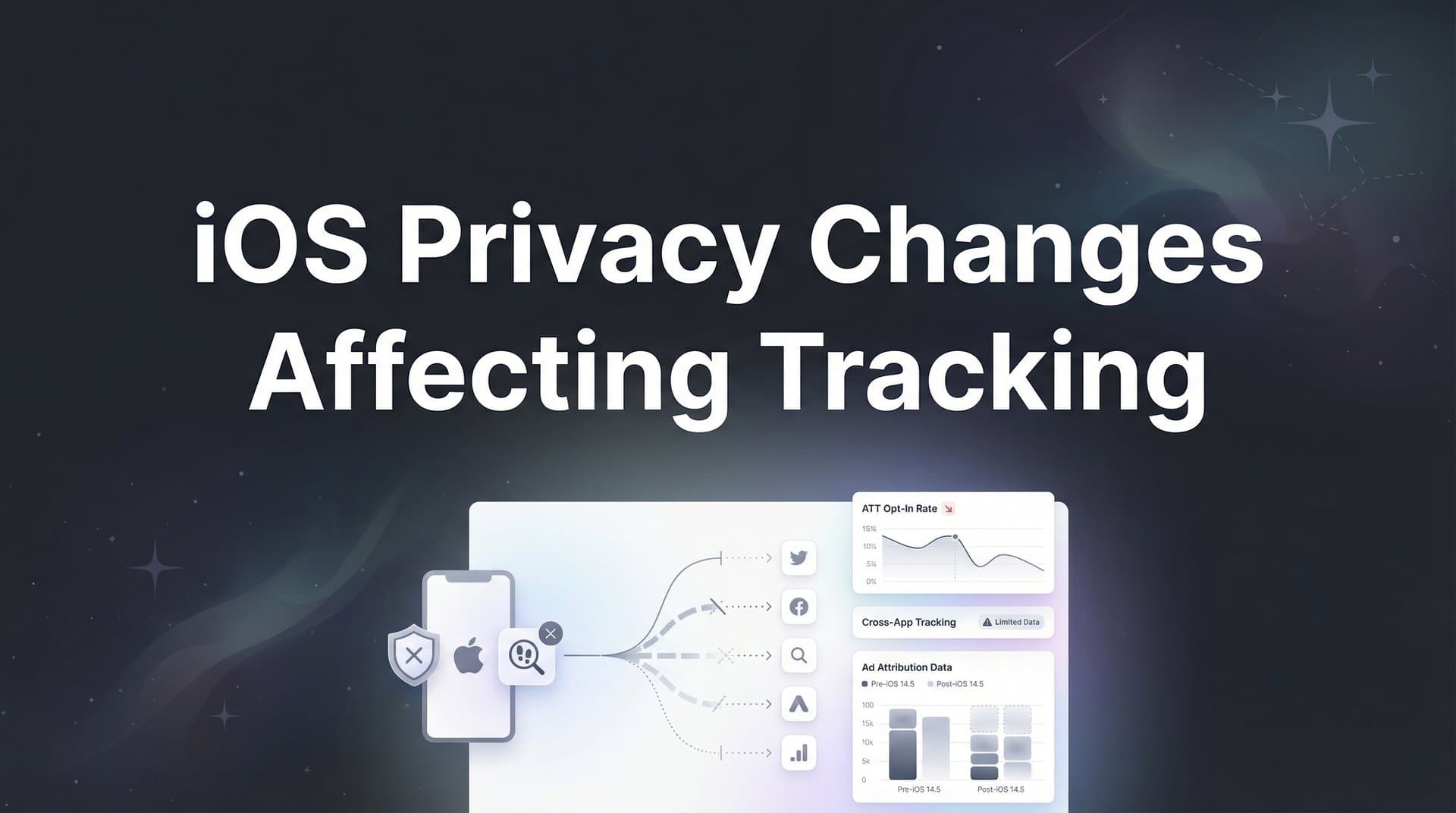
In April 2021, Apple introduced App Tracking Transparency (ATT) with iOS 14.5. The change was deceptively simple: apps now had to ask users for explicit permission before tracking their activity across other companies' apps and websites. That innocent-looking popup—"Allow [App] to track your activity across other companies' apps and websites?"—became one of the most consequential shifts in digital advertising history.
The impact was immediate. When given a clear choice, most users opted out. Industry reports consistently show that opt-in rates remain low, with many marketers reporting that significant portions of their iOS audience became unmeasurable through traditional tracking methods overnight. The Identifier for Advertisers (IDFA), which had been the backbone of mobile app attribution tracking, was suddenly unavailable for the majority of iOS users.
Apple didn't just restrict tracking—they provided an alternative called SKAdNetwork (SKAN). This privacy-preserving attribution framework allows advertisers to measure campaign performance without accessing user-level data. Sounds reasonable, right? Except SKAN comes with significant limitations that fundamentally change how attribution works.
First, there's the timing issue. SKAdNetwork reports conversions with a delay of 24 to 72 hours, and sometimes longer. In a world where marketers are used to real-time optimization, this lag creates a fundamental disconnect between ad spend and performance visibility.
Second, the data is aggregated rather than user-level. You can see that your campaign drove conversions, but you lose the granular insight into individual customer journeys. You can't see that a user clicked your ad on Monday, visited your site three times, and finally converted on Friday. You just get a conversion event tied back to the campaign.
Third, conversion values are limited. SKAN allows you to pass back a conversion value, but it's heavily restricted and requires careful setup. You can't simply send back the actual purchase amount or lifetime value—you need to work within Apple's privacy-preserving framework.
The evolution hasn't stopped. With each iOS update from 14.5 through current versions, Apple has continued refining and sometimes tightening these privacy protections. Understanding how to prepare for iOS17 Link Tracking Shield has become essential for forward-thinking marketers. Safari's Intelligent Tracking Prevention (ITP) has become increasingly sophisticated at blocking cross-site tracking. Device fingerprinting—the practice of identifying users based on their device characteristics—has been restricted. Third-party cookies in Safari are essentially non-functional for tracking purposes.
What we're experiencing isn't a temporary disruption. It's a fundamental shift in how tracking works on the world's second-largest mobile platform. The old playbook of dropping pixels, tracking users across the web, and building detailed behavioral profiles is simply incompatible with Apple's privacy-first philosophy.
Why Your Facebook and Google Ads Data Looks Different Now
Let's talk about what's actually happening inside your ad platforms. When you run campaigns targeting iOS users, the data you see in your Facebook Ads Manager or Google Ads dashboard is no longer a complete picture—it's an estimate based on limited signals.
Here's the mechanics: ad platform optimization algorithms need data to learn and improve. They need to know which audiences convert, which creative drives results, which placements perform best. Before iOS privacy changes, these algorithms had access to rich, user-level data. They could see the entire customer journey from ad impression to conversion and everything in between.
Now? That visibility is gone for opted-out iOS users. The algorithm sees an ad impression but might not see the resulting conversion if it happens in Safari with ITP blocking the tracking pixel. Or it sees a conversion but can't confidently attribute it to a specific ad because the IDFA is unavailable. The machine learning models that power ad optimization are essentially flying blind for a significant portion of your audience.
This creates what's known as the attribution gap. Your campaigns are driving conversions—real people are clicking your ads and buying your products. But those conversions aren't being reported back to the ad platform. So when you look at your Facebook Ads dashboard, the reported conversion count is lower than reality. Sometimes significantly lower. Many advertisers are now dealing with Facebook Ads tracking pixel issues that stem directly from these privacy restrictions.
The problem compounds because ad platforms use reported conversions to optimize delivery. If the algorithm doesn't know that iOS users from a particular audience are converting, it won't prioritize showing ads to similar users. You might have a high-performing segment that the platform is undervaluing simply because it can't see the results.
Then there's the delayed reporting challenge. Remember that 24-72 hour delay with SKAdNetwork? That means the conversion data feeding back to your ad platform is always lagging behind your actual performance. You might pause a campaign thinking it's not working, when in reality it drove conversions that just haven't been reported yet.
Google and Facebook have both implemented conversion modeling to fill these gaps. When they can't directly measure a conversion, they use statistical models to estimate what likely happened based on aggregated data from opted-in users. These models are sophisticated, but they're still estimates. They're the platform's best guess at what your actual performance looks like.
The result? Your dashboard shows numbers that don't match reality. Your attribution reports conflict with your actual revenue. Your optimization decisions are based on incomplete information. And the more your audience skews toward iOS users, the bigger this disconnect becomes.
The Real Business Impact: Beyond Vanity Metrics
Let's move past the technical details and talk about what this means for your business. The iOS privacy changes aren't just a measurement problem—they're a strategic business risk that affects your bottom line in tangible ways.
Start with ad spend allocation. You're making daily decisions about which campaigns to scale, which to optimize, and which to pause. Those decisions are based on performance data. But if your performance data undercounts conversions by 30% or more for iOS traffic, you're making decisions on false assumptions. You might be killing campaigns that are actually profitable. Or scaling campaigns that look good in the dashboard but don't drive real revenue.
The compounding effect is even more insidious. Poor data feeds poor algorithm optimization, which leads to worse performance, which generates more poor data. It's a negative feedback loop. When ad platforms don't see accurate conversion signals, they optimize toward the wrong outcomes. They show your ads to audiences that convert in ways the platform can measure, rather than audiences that actually drive revenue for your business.
Think about the strategic implications. You're trying to understand your customer acquisition cost, your return on ad spend, your customer lifetime value by channel. But if a significant portion of your conversions are invisible to your tracking, all those calculations are wrong. You might think a channel is unprofitable when it's actually your best performer. Or you might be pouring budget into a channel that looks great on paper but doesn't scale.
There's also the competitive angle. Your competitors are dealing with the same challenges. But the ones who solve measurement first gain a massive advantage. They can confidently scale campaigns while you're still trying to figure out what's working. They can outbid you for the best audiences because they know their true unit economics. They're making data-driven decisions while you're flying blind.
The risk extends beyond paid advertising. If you're using conversion data to inform product decisions, pricing strategies, or marketing messaging, incomplete data leads to flawed conclusions. You might think a product isn't resonating when actually it's selling well to iOS users whose conversions aren't being tracked. Or you might double down on a message that performs well in your tracked data but doesn't resonate with your full audience.
This isn't about vanity metrics or dashboard aesthetics. It's about having the accurate, complete data you need to make smart business decisions. And in a competitive market, the businesses with better data win.
Server-Side Tracking: The Foundation of Modern Attribution
So how do you solve this? The answer lies in fundamentally changing where and how you track conversions. Enter server-side tracking—the foundation of privacy-resilient measurement.
Traditional tracking works like this: you drop a JavaScript pixel on your website. When someone converts, their browser fires that pixel, which sends data to the ad platform or analytics tool. Simple, right? Except this entire flow depends on the browser cooperating. And with iOS privacy changes, Safari's Intelligent Tracking Prevention, and increasing ad blocker usage, browsers are actively working to prevent this kind of tracking.
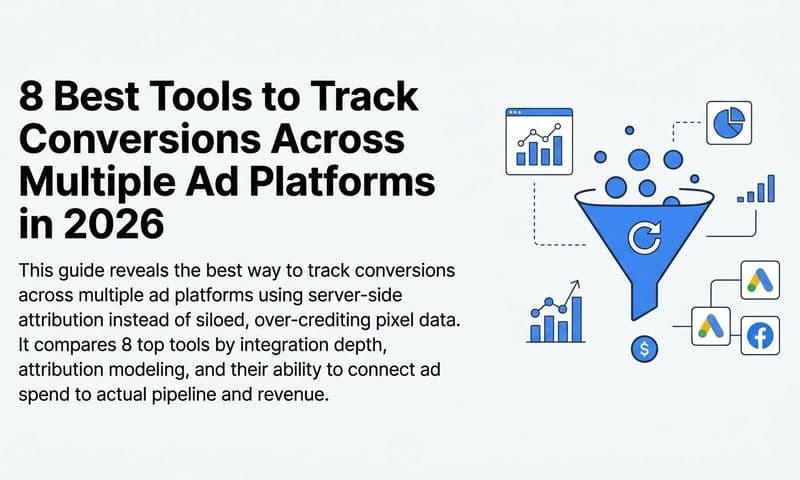
Server-side tracking flips the model. Instead of relying on the browser to send data, your server sends conversion data directly to ad platforms and analytics tools. The user's browser never touches the tracking mechanism. This bypasses device-level restrictions, browser privacy features, and ad blockers entirely. Understanding the differences between Google Analytics vs server-side tracking is crucial for making the right infrastructure decisions.
Here's why this matters: when someone converts on your site, your server has perfect visibility into that conversion. It knows the order value, the customer ID, the products purchased, everything. By sending that data server-to-server, you're providing ad platforms with accurate, complete conversion signals that would otherwise be blocked or lost.
The contrast with pixel-based tracking is stark. With pixels, you're at the mercy of browser restrictions. An iOS user with tracking disabled? Your pixel doesn't fire. A user with an ad blocker? Your pixel is blocked. Someone who bounces before the pixel loads? That conversion might not be tracked. Server-side tracking eliminates all these failure points.
There's another crucial advantage: first-party data collection. When you track conversions server-side, you're collecting data as the first party—the business the user is actually interacting with. This is fundamentally different from third-party tracking, where an external service tries to follow users across the web. Understanding what first-party data tracking means for your business is essential for building compliant, effective measurement systems.
Server-side tracking also enables you to enrich conversion data before sending it to ad platforms. You can look up the customer in your CRM, append their lifetime value, add product category information, or include any other business context that helps ad platforms optimize better. This enriched data feeds smarter algorithm optimization.
The technical implementation requires more setup than dropping a pixel on your site. You need server infrastructure to capture conversion events, logic to format and send data to various platforms, and systems to match website visitors to conversion events. But this infrastructure becomes your competitive moat—a measurement foundation that works regardless of what privacy restrictions come next.
Feeding Better Data Back to Ad Platforms
Server-side tracking solves the data collection problem. But there's a second piece: getting that data back to ad platforms in a way that improves campaign performance. This is where Conversions API and similar tools come into play.
Facebook's Conversions API (CAPI) and Google's Enhanced Conversions are designed to receive server-side conversion data. Instead of relying on browser pixels, these APIs let you send conversion events directly from your server to the ad platform. The platform receives accurate conversion data even for users who would otherwise be unmeasurable.
Why does this matter for campaign performance? Ad platform algorithms optimize based on the conversion data they receive. If they only see partial data from browser pixels, they optimize toward that partial view. But when you send complete conversion data via Conversions API, the algorithms have a full picture of campaign performance. They can identify which audiences, creative, and placements actually drive results.
The impact is particularly significant for offline and CRM events. Maybe someone clicks your ad, fills out a lead form, and then converts into a customer three weeks later through a sales call. Traditional pixel tracking would only see the lead form submission. But with server-side tracking connected to your CRM, you can send that closed deal back to the ad platform. Now the algorithm knows that this particular audience and creative combination drives high-value customers, not just leads. Implementing lead generation attribution tracking becomes essential for businesses with longer sales cycles.
This is what we mean by closing the loop between actual revenue and ad platform reporting. You're connecting the dots from ad impression all the way through to revenue, feeding that complete picture back to the platforms so they can optimize toward business outcomes rather than proxy metrics.
Enriched conversion data takes this further. Instead of just sending "conversion happened," you can send conversion value, product category, customer segment, predicted lifetime value, or any other signal that helps the platform understand what makes a valuable conversion. An algorithm that knows high-value conversions come from specific audience segments will naturally optimize toward those segments.
The technical details matter here. Conversions API requires you to send user identifiers that help the platform match the conversion to the original ad impression. This might be email addresses (hashed for privacy), phone numbers, IP addresses, or other matching parameters. The better your matching, the more conversions the platform can attribute correctly.
Many marketers are now running dual tracking: browser pixels for users who can be tracked that way, plus Conversions API to capture everyone else and provide enriched data. This hybrid approach maximizes data coverage while maintaining accuracy.
Building a Privacy-Resilient Measurement Strategy
Understanding the problem and knowing the solutions is one thing. Actually implementing a measurement strategy that works in 2026 requires bringing multiple pieces together into a coherent framework.
Start with first-party data as your foundation. Your website, your CRM, your customer database—these are sources of truth that no privacy restriction can take away. Build systems to capture and centralize this data. A proper first-party data tracking setup ensures every conversion, every customer touchpoint, every revenue event is logged in a system you control.
Layer server-side tracking on top of that foundation. Implement tracking infrastructure that captures conversion events server-side and sends them to ad platforms via Conversions APIs. This ensures you're feeding complete, accurate data to the algorithms that optimize your campaigns.
Connect everything in one view. Your ad platforms, CRM, and website data should flow into a unified attribution system. This gives you visibility into the complete customer journey—from first ad impression through every touchpoint to final conversion and beyond. When all your data lives in silos, you're still flying blind. When it's connected, you can see patterns and insights that would otherwise stay hidden. Investing in customer journey tracking tools helps you achieve this unified visibility.
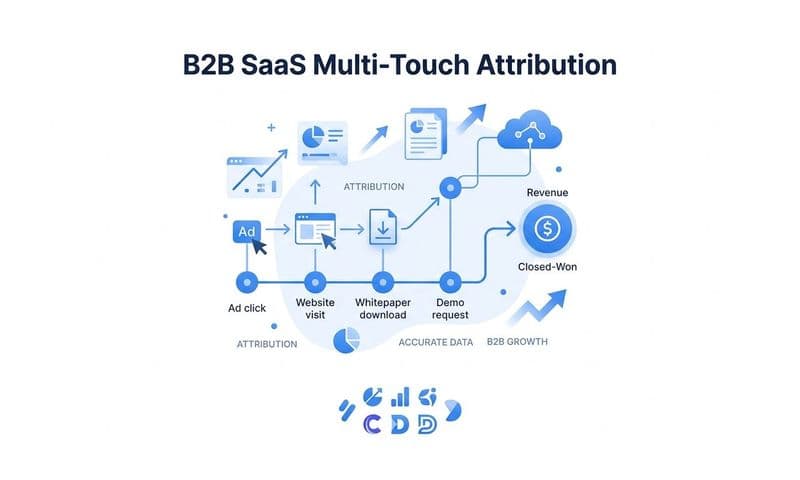
Implement multi-touch attribution to understand true channel performance. Last-click attribution—giving all credit to the final touchpoint before conversion—has always been flawed. But it's especially problematic now when many touchpoints are invisible due to tracking restrictions. Multi-touch attribution models distribute credit across the customer journey, helping you understand which channels are actually driving results versus which just happen to be present at the moment of conversion.
Test and compare attribution tracking methods regularly. First-touch, last-touch, linear, time-decay, data-driven—each model tells a different story about channel performance. The truth usually lies somewhere in between. By comparing models, you develop a more nuanced understanding of how your marketing works together to drive conversions.
Build flexibility into your measurement infrastructure. Privacy regulations and platform policies will continue evolving. The measurement strategy that works perfectly today might need adjustment tomorrow. By building on a foundation of first-party data and server-side tracking, you create a system that can adapt to whatever changes come next. Exploring cookieless attribution tracking solutions now prepares you for the inevitable deprecation of remaining tracking cookies.
Don't forget the human element. All the technical infrastructure in the world doesn't help if your team doesn't trust the data or know how to act on it. Invest in training, documentation, and processes that help your team make confident decisions based on your attribution data. Create feedback loops where campaign performance is regularly analyzed against attribution insights.
The New Measurement Reality
iOS privacy changes aren't temporary disruptions—they represent the new normal for digital marketing. Privacy-first tracking is here to stay, and it's likely to expand beyond Apple's ecosystem as regulations tighten and user expectations evolve. The question isn't whether you need to adapt, but how quickly you can build measurement infrastructure that works within this new reality.
Here's the perspective shift that matters: accurate attribution isn't just a technical fix to compensate for tracking restrictions. It's a competitive advantage. The marketers who solve measurement first can make confident decisions while their competitors guess. They can scale campaigns profitably while others struggle to understand what's working. They can feed better data to ad platform algorithms and unlock performance improvements that seemed impossible with pixel-based tracking.
The businesses thriving in 2026 are the ones that stopped trying to work around privacy restrictions and started building measurement strategies designed for privacy from the ground up. They've invested in server-side tracking, implemented Conversions APIs, connected their data sources, and built attribution systems that provide complete visibility into customer journeys.
This isn't just about surviving iOS privacy changes. It's about building a measurement foundation that works regardless of what platform policies or privacy regulations come next. First-party data, server-side tracking, and multi-touch attribution aren't workarounds—they're the future of marketing measurement.
The gap between businesses with modern attribution infrastructure and those still relying on outdated tracking methods will only widen. Every day you operate with incomplete data is a day you're making suboptimal decisions about budget allocation, creative strategy, and campaign optimization. The cost of inaction compounds over time.
Ready to elevate your marketing game with precision and confidence? Discover how Cometly's AI-driven recommendations can transform your ad strategy—Get your free demo today and start capturing every touchpoint to maximize your conversions.