Most coaches invest in ads, content, and social media without knowing which efforts actually bring in clients. The result is wasted budget, guesswork-driven decisions, and slow growth. Marketing analytics for coaches changes that equation entirely.
When you can see exactly which channels, campaigns, and touchpoints are driving discovery calls and program sign-ups, you stop spending on what does not work and double down on what does. The challenge is that coaching businesses have longer, more complex sales cycles than most. A prospect might see a Facebook ad, download a lead magnet, attend a webinar, open three emails, and then book a call. Without the right analytics setup, you only see the last step.
This guide covers seven practical strategies that help coaches build a data-driven marketing operation, from tracking the right metrics to understanding the full client journey. Whether you run a solo coaching practice or a growing team, these strategies will give you the clarity to make smarter decisions, scale your ad spend with confidence, and connect your marketing activity directly to revenue.
Each strategy is designed to be actionable, not theoretical. You can start applying these ideas to your business today.
1. Define the Metrics That Actually Matter for Your Coaching Business
The Challenge It Solves
Many coaches track what is easy to measure rather than what actually matters. Social media followers, video views, and website sessions are visible and satisfying to watch grow. But none of them tell you whether your marketing is generating clients or burning budget. Vanity metrics create a false sense of momentum while the real question, where are my clients coming from, goes unanswered.
The Strategy Explained
Build a metrics framework aligned to each stage of your coaching funnel. At the awareness stage, track cost per lead and lead volume by channel. At the consideration stage, track discovery call booking rate and cost per booked call. At the conversion stage, track close rate, cost per acquired client, and average client lifetime value.
These are the numbers that connect your marketing spend directly to revenue. When you know your cost per discovery call and your close rate, you can calculate exactly how much you need to spend to hit your revenue target. That is a fundamentally different operating model than hoping your content reaches the right people.
Implementation Steps
1. List every stage in your coaching funnel from first contact to signed client.
2. Assign one or two primary metrics to each stage that indicate progress toward revenue.
3. Set up tracking in your CRM and analytics platform so these metrics are captured automatically, not compiled manually.
4. Review these metrics weekly and use them as your primary decision-making filter when evaluating campaigns.
Pro Tips
Start with just three core metrics: cost per discovery call, discovery call to close rate, and cost per acquired client. Once you have clean data on these three numbers, you have enough to make confident decisions about where to invest your marketing budget. Learning how to evaluate marketing performance metrics properly will help you add complexity only after your foundation is solid.
2. Map Your Client Journey Before You Analyze Anything
The Challenge It Solves
Analytics data is only as useful as your understanding of the journey it is measuring. Many coaches set up tracking tools without first documenting the actual path a prospect takes before becoming a client. The result is data that does not reflect reality, and decisions based on incomplete information. Before you analyze, you need to know what you are actually measuring.
The Strategy Explained
Document every touchpoint a prospect encounters from first impression to signed client. For most coaches, this journey involves multiple channels over multiple days or weeks. A typical path might look like this: paid ad on Facebook, click to landing page, download of a lead magnet, email nurture sequence, webinar or free training, discovery call booking, and then a sales conversation.
Once you have mapped this journey, you can assign tracking to each stage. This means setting up conversion events in your analytics platform for each meaningful action: lead magnet download, webinar registration, discovery call booking, and program purchase. When every stage is tracked, your data analytics for digital marketing reflects the real path clients take, not just the last click before they converted.
Implementation Steps
1. Interview your last five to ten clients and ask them how they first discovered you and what steps they took before booking a call.
2. Document the common patterns into a single client journey map with defined stages.
3. Identify which stages currently have no tracking in place.
4. Set up conversion events in your analytics and ad platforms for each untracked stage.
Pro Tips
Pay close attention to the gap between lead magnet download and discovery call booking. This is often where the most prospects drop off, and it is also where email nurture and retargeting have the highest leverage. Tracking this stage separately gives you data to optimize the middle of your funnel, not just the top and bottom.
3. Use Multi-Touch Attribution to See the Full Picture
The Challenge It Solves
Last-click attribution is the default setting for most ad platforms, and it is particularly misleading for coaches. When a client books a discovery call after opening an email, last-click attribution gives full credit to email and zero credit to the Facebook ad that introduced them to you three weeks earlier. This causes coaches to undervalue awareness channels and over-invest in channels that close but do not generate new demand.
The Strategy Explained
Multi-touch attribution distributes credit across every touchpoint that contributed to a conversion. Instead of seeing only the final step, you see the full sequence: which ad created awareness, which content deepened consideration, and which channel triggered the final action.
For coaching businesses, a linear or time-decay attribution model often works well. Linear attribution gives equal credit to every touchpoint, which is useful when you are still learning your funnel. Time-decay attribution gives more credit to touchpoints closer to the conversion, which reflects the reality that later-stage interactions often require more deliberate investment. Platforms like Cometly let you compare multiple attribution models side by side so you can see how credit shifts depending on the model you apply.
Implementation Steps
1. Audit your current attribution setup and identify whether you are relying on last-click by default.
2. Choose an attribution model that fits your sales cycle length. If your cycle is longer than two weeks, time-decay or linear models are typically more accurate.
3. Set up multi-touch attribution tracking across your ad platforms, CRM, and website.
4. Compare attribution reports across models monthly to understand how channel credit changes and what that means for your budget allocation.
Pro Tips
Do not switch attribution models mid-campaign if you are comparing performance over time. Pick one model as your primary reporting standard and use secondary models for analysis. Understanding common attribution challenges in marketing analytics makes trend data meaningful and prevents you from drawing false conclusions when numbers shift.
4. Track Paid Ad Performance Down to Revenue, Not Just Clicks
The Challenge It Solves
Click-through rates and cost per click tell you how an ad performs on the platform. They do not tell you whether that ad generated a paying client. Many coaches run profitable-looking campaigns based on platform metrics, only to find that the leads those campaigns generate never convert. Without revenue-level tracking, you are optimizing for the wrong outcome.
The Strategy Explained
Connect your ad spend on Facebook and Google directly to program revenue using server-side tracking and Conversion API integration. Browser-based tracking has become significantly less reliable as privacy changes and ad blockers reduce the data that pixels can capture. Server-side tracking sends conversion data directly from your server to the ad platform, bypassing browser limitations and giving you a more complete and accurate picture of what your ads are actually driving.
With this setup, you can calculate true return on ad spend (ROAS) by connecting ad platform data to actual revenue from your CRM or payment processor. Instead of seeing "cost per lead," you see "cost per paying client" and "revenue generated per campaign." This level of visibility lets you make confident scaling decisions because you know exactly which campaigns are profitable. The best software for tracking marketing attribution connects these data points automatically so nothing falls through the cracks.
Implementation Steps
1. Implement Meta Conversion API (CAPI) and Google Enhanced Conversions to capture server-side conversion data.
2. Connect your CRM or payment processor to your attribution platform so revenue data flows back to your ad campaigns.
3. Set up revenue-based conversion events, not just lead events, so your ad platforms optimize toward actual client acquisition.
4. Calculate ROAS at the campaign level monthly and use it as your primary metric for scaling or pausing campaigns.
Pro Tips
If you use Stripe or another payment processor, integrating it with your attribution platform creates a direct line between ad spend and revenue. Cometly supports Stripe integration alongside ad platform data, which means you can see which specific campaigns and ad sets are generating actual program revenue, not just discovery calls that never closed.
5. Build a Centralized Marketing Dashboard for Real-Time Decisions
The Challenge It Solves
When your marketing data lives in five different platforms, making a fast, informed decision requires pulling reports from each one, reconciling inconsistencies, and manually building a picture of overall performance. This process is slow, error-prone, and often skipped entirely. The result is that decisions get made on gut feel rather than data, even when the data exists.
The Strategy Explained
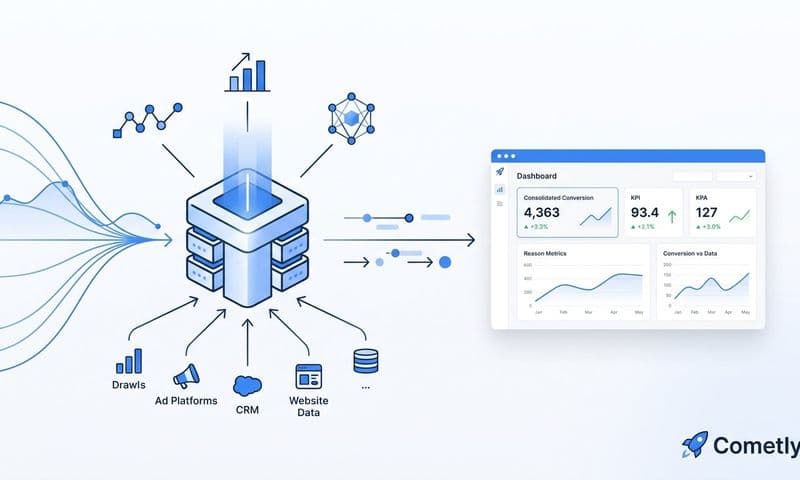
Consolidate data from your ad platforms, CRM, and website into a single dashboard so you always have a clear, current view of what is working. A well-built marketing analytics dashboard for coaches should show ad spend and ROAS by channel, discovery call bookings by source, lead-to-call conversion rate, cost per acquired client, and revenue attributed to each marketing channel.
The goal is not to display every metric you track. It is to surface the handful of numbers that drive your weekly decisions. When this dashboard is built correctly, your Monday morning review takes ten minutes instead of an hour, and you enter every week knowing exactly where to focus your energy and budget.
Implementation Steps
1. Identify the five to eight metrics that directly inform your weekly marketing decisions.
2. Connect your ad platforms, CRM, and website analytics to a centralized attribution tool that aggregates this data automatically.
3. Set up your dashboard to display these metrics with week-over-week and month-over-month comparisons.
4. Schedule a recurring weekly review using the dashboard as your single source of truth for marketing performance.
Pro Tips
Resist the temptation to add more metrics over time just because they are available. A dashboard that shows too much data becomes as unhelpful as having no dashboard at all. If a metric does not directly inform a decision you make regularly, remove it. Keep your dashboard lean, current, and focused on what drives action.
6. Analyze Channel Performance to Allocate Budget Intelligently
The Challenge It Solves
Traffic from multiple channels can look similar at the top of your funnel and perform very differently at the bottom. A channel that drives high lead volume might produce low-quality prospects who rarely book calls. A channel that drives fewer leads might produce prospects who close at twice the rate. Without cross-channel analytics, you cannot see this distinction and you end up allocating budget based on volume rather than value.
The Strategy Explained
Use cross-channel analytics to identify which sources drive discovery calls and paying clients, not just website traffic or lead form submissions. This requires tracking conversion events at every stage of your funnel and attributing them back to the originating channel.
Once you have this data, you can calculate the quality of each channel, not just its quantity. Look at metrics like lead-to-call rate by channel, close rate by channel, and average client value by channel. Applying proven marketing analytics techniques gives you a complete picture of which channels are worth scaling and which are generating activity without generating revenue. Build a monthly review process where you compare these metrics across channels and use the findings to guide your next month's budget allocation.
Implementation Steps
1. Tag all traffic sources consistently using UTM parameters so your analytics platform can attribute conversions to the correct channel.
2. Set up funnel-stage conversion tracking so you can measure progression from lead to call to close by channel.
3. Build a monthly channel performance report that shows cost per acquired client by source, not just cost per lead.
4. Use this report to shift budget toward channels with the lowest cost per acquired client and highest client lifetime value.
Pro Tips
Look for channels that assist conversions rather than close them. A podcast or organic content channel might rarely be the last touchpoint before a booking, but it might appear consistently in the early stages of your highest-value clients' journeys. Multi-touch attribution data, combined with channel performance analysis, reveals these assist patterns and helps you protect budget for channels that build demand even when they do not directly close it.
7. Use First-Party Data to Improve Ad Targeting and Reduce Wasted Spend
The Challenge It Solves
Third-party tracking has become less reliable across the industry as browsers restrict cookies and privacy regulations evolve. For coaches running Facebook and Google ads, this means the platforms have less data to work with when targeting and optimizing campaigns. The result is less accurate audience targeting, higher costs, and more wasted spend on prospects who are unlikely to convert.
The Strategy Explained
First-party data is information you collect directly from your own audience through your website, CRM, email list, and payment processor. When you enrich this data and feed it back to Meta and Google, you give the ad platforms a cleaner, more accurate signal about who your best clients are. This improves lookalike audience quality, sharpens retargeting, and helps the platform's optimization algorithms find more people who match your actual buyers.
The practical implementation involves sending enriched conversion events from your server to Meta via CAPI and to Google via Enhanced Conversions. These events should include customer data like email addresses and phone numbers, hashed for privacy, so the platforms can match conversions to real user profiles with higher accuracy. Platforms like Cometly support this process by connecting your CRM and website data and sending enriched conversion signals back to your ad platforms automatically.
Implementation Steps
1. Audit your current conversion tracking setup and identify gaps where browser-based pixels may be missing conversions.
2. Implement server-side event tracking to capture conversions that browser tracking misses.
3. Enable customer data matching by passing hashed email and phone data with your conversion events to Meta and Google.
4. Monitor your event match quality score in Meta Events Manager and your tag diagnostics in Google Ads to verify that your first-party data is improving signal quality over time.
Pro Tips
The quality of your first-party data matters as much as the volume. A smaller list of highly accurate conversion signals outperforms a large list of low-quality events. Focus on sending your most meaningful conversion events, such as discovery call bookings and program purchases, rather than every micro-interaction on your site. Cleaner signals produce better optimization results from the ad platform's machine learning. Choosing the right marketing analytics platform ensures this data flows seamlessly across every tool in your stack.
Putting It All Together
The coaches who scale fastest are not necessarily the ones with the biggest ad budgets. They are the ones who know exactly where their clients come from and how much it costs to acquire them. That clarity does not happen by accident. It comes from building the right analytics foundation and using it consistently to guide decisions.
Start with the fundamentals: define your core metrics and map your client journey. These two steps alone will give you more clarity than most coaches have. Then layer in multi-touch attribution and revenue-connected ad tracking to build a complete picture of what your marketing is actually producing. As your data matures, a centralized dashboard, cross-channel analysis, and first-party data strategies will help you squeeze more results from every dollar you spend.
Each strategy in this guide builds on the one before it. You do not need to implement all seven at once. Start with the first two, get clean data flowing, and add layers as your operation grows.
Cometly is built to support this entire process, connecting your ad platforms, CRM, and website into a single attribution and analytics platform so you always know what is driving growth. It captures every touchpoint, surfaces AI-driven recommendations, and feeds enriched conversion data back to Meta and Google to improve your targeting over time.
If you are ready to stop guessing and start scaling with confidence, Get your free demo today and start capturing every touchpoint to maximize your conversions.