If you're evaluating marketing analytics platforms, a free trial is the fastest way to validate whether a tool actually fits your stack before committing budget. But not all trials are created equal. Some give you a sandboxed demo environment. Others hand you full access to real data and integrations from day one.
The difference matters when you're trying to answer real questions: which ads are driving pipeline, where your attribution gaps are, and how to allocate spend more effectively. This list focuses on platforms that offer genuine free trials with meaningful access, not just a product tour.
Each tool is evaluated on attribution depth, integration quality, ease of setup, and how well it serves B2B SaaS marketing teams and growth leaders. Whether you need multi-touch attribution, server-side tracking, or cross-channel ad analytics, there's a platform here worth testing.
1. Cometly
Best for: B2B SaaS teams connecting ad spend to pipeline and closed-won revenue
Cometly is a marketing attribution and analytics platform built specifically for B2B SaaS companies that need to trace every ad dollar from first click to closed deal.
 9 Best Attribution Platforms for Agencies in 2026
Where This Tool Shines
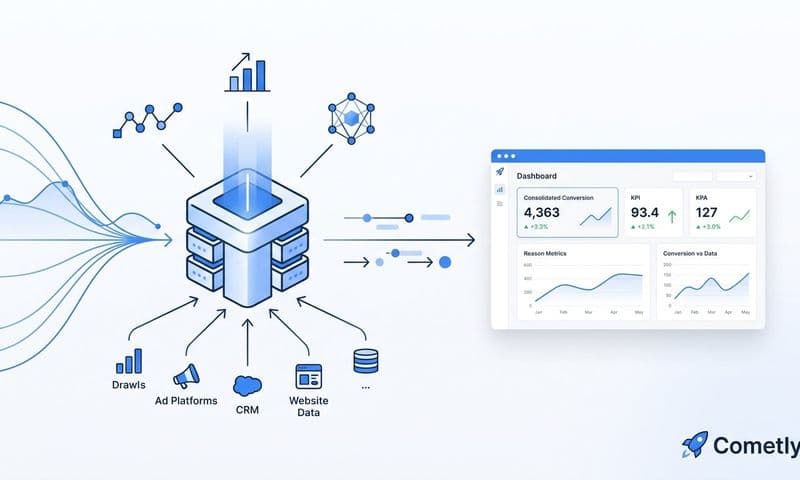
Most analytics platforms stop at the lead level. Cometly goes further by connecting your ad platforms, CRM, and Stripe billing data into a single attribution view. That means you can see not just which campaigns generate leads, but which ones generate revenue.
The server-side tracking and Conversion API integration address one of the biggest pain points in modern attribution: signal loss. As third-party cookies continue to disappear, Cometly's server-to-server event tracking keeps your conversion data clean and actionable. The AI ads manager adds another layer by surfacing high-performing campaigns and feeding enriched conversion data back to Meta, Google, and other ad platforms to improve their own optimization algorithms.
Key Features
Multi-Touch Attribution: Full customer journey visibility from first ad click to closed-won revenue across every channel.
Server-Side Tracking and Conversion API: Bypasses browser-level signal loss with server-to-server event tracking for more accurate conversion data.
AI Ads Manager: Identifies high-performing ads and campaigns across channels, then sends enriched conversion events back to ad platforms to improve targeting.
Pipeline and Revenue Attribution: Stripe integration connects billing data to marketing sources so you can attribute revenue, not just leads.
70+ Native Integrations: Connects with major CRMs, ad platforms, and marketing tools without custom engineering work.
Best For
Cometly is the strongest fit for B2B SaaS marketing teams and growth leaders who run paid campaigns across multiple channels and need to connect that spend to actual revenue. If your sales cycle is longer than a few days and you're tired of attribution stopping at the lead level, this is the platform to test first.
Pricing
Free trial available with access to core attribution features. Paid plans are based on usage and team size. Contact Cometly for specific pricing details.
2. Google Analytics 4
Best for: Teams wanting free, baseline web analytics with Google Ads integration
Google Analytics 4 is Google's free web analytics platform featuring an event-based tracking model and built-in data-driven attribution at no cost.
 11 Best Marketing Analytics Tools to Track and Optimize Campaign Performance in 2026
Where This Tool Shines
GA4's biggest advantage is its native integration with the Google ecosystem. If you're running Google Ads and Search Console, the data flows together without any additional configuration. The data-driven attribution model, which uses machine learning to distribute credit across touchpoints, is available on the free tier, which is genuinely rare in this space.
The Exploration reports give analysts flexibility to build custom funnel and path analyses beyond the standard dashboards. For teams that need to push data further, the BigQuery export enables advanced modeling without additional data infrastructure costs.
Key Features
Data-Driven Attribution: Machine learning-based attribution model available at no cost, distributing credit across multiple touchpoints in the customer journey.
Google Ads and Search Console Integration: Native connection to Google's ad and search platforms with no setup required.
Event-Based Tracking: Custom event configuration gives teams granular control over what actions are tracked and reported.
Exploration Reports: Flexible funnel, path, and segment analysis tools for deeper behavioral insights.
BigQuery Export: Raw data export for teams that want to build custom models or combine GA4 data with other sources.
Best For
GA4 is ideal for teams that are primarily invested in the Google Ads ecosystem and need solid baseline web analytics without paying for a dedicated platform. It's a strong starting point but requires additional tooling to connect session data to CRM deals or revenue.
Pricing
Completely free for standard use. Google Analytics 360, the enterprise tier, is a paid product with additional features and SLA guarantees.
3. HubSpot Marketing Hub
Best for: B2B teams that want attribution tied directly to CRM contacts and deal stages
HubSpot Marketing Hub is an inbound marketing platform with native CRM integration that connects attribution data directly to contact records, deal stages, and closed revenue.
 9 Best Ad Attribution Platforms Compared for B2B SaaS Teams in 2026
Where This Tool Shines
HubSpot's core strength is the tight connection between marketing activity and CRM data. When a contact fills out a form, clicks an ad, or opens an email, that touchpoint is logged against their contact record and the associated deal. For B2B teams with an established HubSpot CRM, this creates a natural attribution layer without needing a separate platform.
Revenue attribution reporting on the Professional and Enterprise tiers lets teams see which campaigns and channels are influencing closed deals, not just leads. That said, the depth of multi-touch attribution is more limited compared to dedicated attribution platforms.
Key Features
CRM-Native Attribution: Attribution data flows directly into contact records and deal stages without manual syncing or data transformation.
Multi-Touch Attribution Models: Available on Professional and Enterprise tiers, covering first touch, last touch, linear, and other model types.
Campaign Analytics: Cross-channel reporting across email, ads, landing pages, and social from a single dashboard.
Revenue Attribution Reporting: Connects marketing activity to closed deals for bottom-of-funnel visibility.
Free CRM Tier: Entry-level access to contact management and basic analytics without a paid commitment.
Best For
HubSpot Marketing Hub is the right choice for B2B teams already using HubSpot CRM who want attribution built into their existing workflow. Teams looking for deep multi-touch attribution across complex ad channel mixes may find it limiting at lower tiers.
Pricing
Free tier available with limited analytics. Paid plans start at $800 per month for the Professional tier, which includes multi-touch attribution reporting.
4. Triple Whale
Best for: Ecommerce and DTC brands running paid social across Meta, Google, and TikTok
Triple Whale is a data platform that centralizes attribution from paid social and search channels, with a strong focus on creative analytics and pixel-level conversion tracking.
 9 Best Marketing Analytics Platforms With Free Trials in 2026
Where This Tool Shines
Triple Whale was built with ecommerce in mind, and that focus shows in the product. The creative analytics capability is particularly strong: you can see which specific ad creatives are driving conversions, not just which campaigns or ad sets. For teams managing large volumes of creative assets across Meta and TikTok, this level of granularity is genuinely useful.
Blended ROAS reporting pulls together data from multiple ad platforms into a single view, reducing the time spent reconciling numbers across platform dashboards. Cohort analysis and lifetime value tracking add depth for teams thinking beyond first-purchase attribution.
Key Features
Pixel-Based Multi-Touch Attribution: Tracks conversion paths across paid social channels independent of platform-reported data.
Creative Analytics: Identifies top-performing ad assets at the creative level, including images, videos, and copy variations.
Blended ROAS Reporting: Combines ad spend and revenue data across channels into a single performance view.
Cohort and LTV Analysis: Tracks customer behavior and value over time beyond the initial conversion event.
Shopify Integration: Deep native integration with Shopify and other ecommerce platforms for revenue-level attribution.
Best For
Triple Whale is best suited for ecommerce and DTC brands with significant paid social spend. It is less suited for B2B SaaS companies with long sales cycles or complex CRM-based attribution needs.
Pricing
Free trial available. Paid plans scale based on ad spend and store revenue. Contact Triple Whale for specific pricing tiers.
5. Northbeam
Best for: Media-heavy brands that want attribution independent of ad platform reporting
Northbeam is an algorithmic attribution platform that combines multi-touch attribution with media mix modeling, designed for brands that need to move beyond what ad platforms self-report.
 9 Best Marketing Analytics Platforms With Free Trials in 2026
Where This Tool Shines
The core problem Northbeam solves is ad platform bias. When you rely on Meta or Google to report their own attribution, each platform tends to overclaim credit for conversions. Northbeam builds its own attribution model using algorithmic analysis, giving you a more neutral view of which channels are actually contributing to results.
The media mix modeling capability adds a forecasting dimension that most attribution tools lack. Instead of only looking backward at what happened, teams can use Northbeam to model how budget shifts across channels might affect future outcomes.
Key Features
Algorithmic Multi-Touch Attribution: Independent attribution model that doesn't rely on ad platform-reported conversion data.
Media Mix Modeling: Budget forecasting and scenario planning across channels based on historical performance data.
Cross-Channel Visualization: Unified view of spend and performance across all paid media channels.
Custom Attribution Windows: Configurable lookback windows to match your actual sales cycle length.
Incrementality Testing: Tools to measure the true incremental lift of campaigns beyond correlation-based attribution.
Best For
Northbeam is a strong fit for brands with substantial paid media investment across multiple channels who need attribution that goes beyond platform-reported numbers. The demo and trial process is request-based rather than self-serve.
Pricing
Demo and trial available on request. Pricing is based on ad spend volume. Contact Northbeam directly for a quote.
6. Ruler Analytics
Best for: B2B teams with phone-based sales or long lead-to-close cycles
Ruler Analytics is a B2B-focused attribution platform that tracks visitors from first touch through to CRM revenue, with built-in call tracking and form submission attribution.
 8 Best Attribution Tools with Onboarding Support in 2026
Where This Tool Shines
Ruler Analytics fills a gap that most web analytics tools leave open: connecting offline conversions, particularly phone calls, back to the marketing source that generated them. For B2B teams where a significant portion of leads come in through phone inquiries or form submissions that lead to long sales cycles, this visitor-level tracking is critical for accurate attribution.
The CRM integration means that when a deal closes in Salesforce or HubSpot, Ruler can attribute that revenue back to the original marketing source. This creates a closed-loop attribution model without requiring a major platform overhaul.
Key Features
Visitor-Level Tracking: Tracks individual visitors across sessions and ties their journey to CRM contacts and revenue data.
Call Tracking: Attributes phone call conversions to the marketing source, channel, and campaign that drove the visitor.
Form Submission Attribution: Connects form fills to the full visitor journey before and after submission.
Multi-Touch Attribution: Distributes credit across multiple sessions and channels for a more complete conversion picture.
CRM and Ad Platform Integrations: Native connections to Salesforce, HubSpot, Google Ads, and Meta Ads for closed-loop reporting.
Best For
Ruler Analytics is particularly valuable for B2B marketing teams where phone calls are a significant lead source, or where sales cycles extend weeks or months beyond the initial digital touchpoint. It's a solid choice for teams that want CRM revenue attribution without switching their entire analytics stack.
Pricing
Free trial available. Paid plans are based on the number of tracked visitors and calls. Contact Ruler Analytics for specific pricing.
7. Rockerbox
Best for: Mid-market teams managing complex media mixes across paid, organic, and direct channels
Rockerbox is a marketing measurement platform that centralizes attribution across all channels and supports both multi-touch attribution and media mix modeling in a single environment.
 9 Best Ad Performance Tracking Tools to Buy in 2026
Where This Tool Shines
Rockerbox's primary value is de-duplication. When multiple channels touch a single conversion, most platforms will each claim full credit, inflating total reported conversions. Rockerbox applies a unified attribution layer that assigns credit once, giving teams a more accurate picture of what's actually driving results.
The combination of multi-touch attribution and media mix modeling in one platform is a meaningful differentiator. Teams don't need to maintain separate tools for path-based attribution and statistical modeling, which simplifies both the tech stack and the reporting workflow.
Key Features
Unified Attribution Layer: Single attribution model applied across paid, organic, and direct channels to eliminate double-counting.
Multi-Touch Attribution and MMM: Both path-based and statistical attribution approaches available within the same platform.
De-Duplicated Conversion Reporting: Ensures each conversion is counted once across all channels and platforms.
Custom Attribution Model Builder: Allows teams to configure attribution logic to match their specific business model and sales cycle.
Data Warehouse Integrations: Connects to major data warehouses for teams that want to combine attribution data with other business intelligence sources.
Best For
Rockerbox suits mid-market and enterprise marketing teams that run campaigns across a wide range of channels and need a single source of truth for attribution. The trial and demo process is request-based rather than instant self-serve access.
Pricing
Demo and trial available on request. Pricing is based on team size and the number of channels tracked. Contact Rockerbox for a custom quote.
8. Heap
Best for: Product and marketing teams focused on funnel optimization and behavioral analytics
Heap is a digital insights platform that automatically captures all user interactions on web and mobile without requiring manual event tagging or engineering resources.
Where This Tool Shines
The defining feature of Heap is its auto-capture model. Most analytics platforms require you to manually instrument every event you want to track. Heap captures everything by default, which means you can go back and analyze user behavior retroactively, even for events you didn't think to track when you first set up the platform.
This makes Heap particularly powerful for funnel analysis and identifying conversion drop-off points. You're not limited to the events you anticipated when you wrote your tracking plan.
Key Features
Automatic Event Capture: Records all user interactions by default without manual instrumentation, enabling retroactive analysis.
Funnel Analysis: Visualizes conversion paths and identifies where users drop off in key workflows.
Session Replay and Heatmap Integrations: Connects with session replay tools to add qualitative context to quantitative funnel data.
Cohort and Retention Analysis: Tracks how different user segments behave over time after specific actions or events.
Data Warehouse Integrations: Exports event data to Snowflake, BigQuery, and other warehouses for advanced modeling.
Best For
Heap is best suited for product teams and growth marketers focused on in-product behavior and funnel optimization. It is not a dedicated ad attribution platform, so teams looking to connect ad spend to pipeline will need to pair it with a dedicated attribution tool.
Pricing
Free plan available up to a session limit. Paid plans are available on request and scale based on session volume and feature access.
9. Mixpanel
Best for: SaaS and product-led growth teams tracking activation, retention, and conversion funnels
Mixpanel is an event-based analytics platform built for SaaS and PLG teams that need detailed visibility into user behavior, activation paths, and retention patterns.
Where This Tool Shines
Mixpanel's strength is user-level behavioral analytics. You can track exactly what individual users do inside your product, group them into cohorts based on shared behaviors, and analyze how those behaviors correlate with retention and conversion. For product-led growth teams, this level of granularity is essential for identifying activation milestones and optimizing onboarding flows.
The free plan is genuinely usable, not just a stripped-down preview. Teams can get meaningful insights from Mixpanel without a paid commitment, which makes it one of the more accessible options on this list for teams in earlier growth stages.
Key Features
Event-Based Tracking: Flexible tracking with both no-code and code-based options to capture user actions across web and mobile.
Funnel and Retention Analysis: Visualizes conversion funnels and measures how well different user segments retain over time.
User-Level Journey Tracking: Follows individual users across sessions to understand the full path from signup to conversion.
Cohort Analysis: Groups users by shared behaviors or properties to compare activation and retention across segments.
A/B Test and Experiment Reporting: Connects experiment results to behavioral outcomes for data-driven product decisions.
Best For
Mixpanel is the right choice for SaaS teams focused on product analytics, user activation, and retention rather than ad attribution. It complements a dedicated attribution platform rather than replacing one for teams with significant paid media investment.
Pricing
Free plan available up to 20 million monthly events. Growth plan starts at $28 per month. Enterprise pricing available for larger teams.
Which Platform Is Right for Your Team
The right marketing analytics platform depends on three things: your attribution model needs, your sales cycle length, and the ad channels you're actively managing.
If you're a B2B SaaS team running paid campaigns and need to connect ad spend to pipeline and closed-won revenue, Cometly is the strongest starting point. Its combination of multi-touch attribution, server-side tracking, Conversion API integration, and Stripe revenue data gives you a complete picture that most platforms simply can't match out of the box.
For teams already invested in HubSpot CRM, HubSpot Marketing Hub adds attribution without changing your core workflow. If you're focused on product analytics and PLG growth, Mixpanel or Heap will give you the behavioral depth you need. Ecommerce and DTC brands running heavy paid social will find Triple Whale or Northbeam more aligned with their specific measurement challenges.
For B2B teams with phone-based sales or long lead-to-close cycles, Ruler Analytics offers visitor-level tracking that connects offline conversions back to marketing source. And for teams managing complex media mixes across many channels, Rockerbox's unified attribution layer reduces the noise of cross-channel double-counting.
One practical note on free trials: use your trial period to test the integrations that matter most to your stack, not just the dashboard. The real value of any attribution platform shows up when your ad data, CRM data, and revenue data are all connected and talking to each other.
If you're a B2B SaaS marketing team ready to move beyond surface-level metrics and start attributing revenue to the campaigns that actually earned it, start with Cometly. Get your free demo and see how every touchpoint connects to the deals your team is closing.