Choosing the right marketing analytics platform can mean the difference between scaling campaigns profitably and wasting budget on underperforming channels. With tracking challenges from iOS privacy updates and the deprecation of third-party cookies, marketers need platforms that deliver accurate, actionable data across every touchpoint. This comparison breaks down nine leading marketing analytics platforms, examining their core strengths, ideal use cases, and pricing to help you find the right fit for your team's needs and budget.
1. Cometly
Best for: Marketers running multi-channel paid campaigns who need accurate attribution and AI-powered optimization.
Cometly is an AI-powered marketing attribution platform that tracks the complete customer journey from ad click to revenue.
 9 Best Marketing Analytics Platforms Compared for 2026
Where This Tool Shines
Cometly stands out with its server-side tracking architecture that bypasses iOS limitations and third-party cookie restrictions. This means you get accurate attribution data even when browser-based tracking fails.
The platform's AI Chat feature lets you query your marketing data conversationally, while the AI Ads Manager analyzes performance across channels and delivers specific optimization recommendations. Instead of just showing what happened, Cometly tells you what to do next.
Key Features
Multi-Touch Attribution: Track every touchpoint across all marketing channels with customizable attribution models that show which interactions actually drive conversions.
Server-Side Tracking: Capture conversion data directly from your server, eliminating reliance on browser pixels that fail with iOS and privacy-focused browsers.
Conversion Sync: Send enriched conversion data back to Meta, Google, and other ad platforms to improve their AI targeting and optimization algorithms.
AI-Powered Recommendations: Get specific suggestions on which campaigns to scale, pause, or adjust based on real-time performance analysis.
Real-Time Dashboard: Monitor campaign performance across all channels in a unified interface with instant data updates.
Best For
Digital marketing teams and agencies managing significant ad spend across multiple platforms who need accurate attribution despite iOS tracking challenges. Particularly valuable for businesses that have struggled with attribution gaps after iOS 14.5 updates.
Pricing
Custom pricing based on ad spend volume. Contact Cometly for a personalized demo and quote tailored to your campaign scale.
2. Google Analytics 4
Best for: Businesses wanting comprehensive free analytics with strong Google Ads integration.
Google Analytics 4 is Google's event-based analytics platform offering comprehensive web and app tracking.
 11 Best Marketing Analytics Tools to Track and Optimize Campaign Performance in 2026
Where This Tool Shines
GA4's event-based tracking model represents a fundamental shift from the session-based approach of Universal Analytics. Every user interaction becomes an event, giving you granular control over what you measure.
The platform's machine learning capabilities automatically surface insights about user behavior trends and predict future actions like purchase probability. For businesses already invested in the Google ecosystem, the native integration with Google Ads makes campaign optimization seamless.
Key Features
Event-Based Tracking: Flexible event model that captures any user interaction you define, from video plays to form submissions.
Cross-Platform Analytics: Unified tracking across websites and mobile apps with consistent user identification.
Predictive Metrics: Machine learning models that predict purchase probability, churn likelihood, and revenue potential.
Google Ads Integration: Direct connection to Google Ads for seamless campaign optimization and audience creation.
Custom Reporting: Build tailored reports and dashboards using the Analysis Hub with funnel, path, and cohort analysis.
Best For
Small to mid-sized businesses seeking a comprehensive analytics solution without upfront costs, especially those running Google Ads campaigns. Also suitable for organizations with technical resources to configure the more complex setup.
We break down the leading options in our AI ad design generator guide.
Pricing
Free for most businesses. GA4 360 for enterprises starts at $50,000 annually with higher data limits and SLA guarantees.
3. Adobe Analytics
Best for: Large enterprises requiring advanced segmentation, customization, and predictive analytics capabilities.
Adobe Analytics is an enterprise-grade analytics platform offering deep customization and advanced analysis for large organizations.
 11 Best Marketing Analytics Tools to Track and Optimize Campaign Performance in 2026
Where This Tool Shines
Adobe Analytics delivers unmatched depth in segmentation and analysis capabilities. You can create incredibly complex segments based on sequential behaviors, time-based conditions, and predictive attributes.
The platform's real-time data processing handles massive traffic volumes without delay, while its integration with Adobe Experience Cloud creates a unified customer data ecosystem. For organizations with dedicated analytics teams, the customization possibilities are virtually limitless.
Key Features
Advanced Segmentation: Build sophisticated segments using sequential logic, containers, and predictive attributes for precise audience analysis.
For a deeper dive into this space, see our AI ad design tool guide.
Attribution IQ: Compare multiple attribution models side by side, including algorithmic attribution that uses machine learning to weight touchpoints.
Real-Time Processing: Handle millions of events per second with instant data availability across reports and dashboards.
Cohort Analysis: Track user groups over time to measure retention, engagement, and lifetime value patterns.
Experience Cloud Integration: Connect with Adobe Target, Campaign, and Audience Manager for unified marketing orchestration.
Best For
Enterprise organizations with substantial analytics budgets and dedicated data teams who need enterprise-grade customization and can leverage the full Adobe Experience Cloud ecosystem.
Pricing
Custom enterprise pricing typically starting at $100,000+ annually depending on traffic volume and features. Requires annual contract commitment.
4. Mixpanel
Best for: SaaS and mobile app companies focused on product analytics and user retention.
Mixpanel is a product analytics platform focused on user behavior tracking, funnel analysis, and retention metrics.
 9 Best Cross Platform Analytics Tools: Pricing Compared for 2026
Where This Tool Shines
Mixpanel excels at answering product-focused questions about user behavior. Its interface makes complex analyses like funnel conversion and retention cohorts accessible to non-technical team members.
The platform's real strength lies in tracking individual user journeys through your product. You can see exactly which features drive retention, where users drop off in onboarding flows, and which user segments have the highest lifetime value.
Key Features
Funnel Analysis: Visualize conversion rates through multi-step processes with automatic drop-off identification and segment comparison.
Retention Reports: Track how user cohorts engage over time with customizable retention definitions and comparison periods.
User Profiles: View complete individual user timelines showing every action, property change, and engagement pattern.
Flow Visualization: See the most common paths users take through your product to identify popular features and friction points.
Mobile SDKs: Native iOS and Android libraries with automatic event tracking and push notification integration.
Best For
Product-led growth companies, SaaS businesses, and mobile app developers who prioritize understanding in-app user behavior and optimizing product engagement over marketing attribution.
Pricing
Free tier supports up to 20 million events monthly. Growth plan starts at $20/month with usage-based scaling. Enterprise pricing available for larger volumes.
5. HubSpot Marketing Analytics
Best for: Teams already using HubSpot CRM who want integrated marketing attribution and reporting.
HubSpot Marketing Analytics provides built-in analytics and attribution reporting within the HubSpot ecosystem.
 9 Best Marketing Analytics Automation Platforms in 2026
Where This Tool Shines
HubSpot's analytics shine when you're already using their CRM and marketing automation tools. The platform automatically connects marketing activities to contact records, deals, and revenue without requiring complex integrations.
Multi-touch attribution reports show which marketing interactions influenced deals throughout the buyer's journey. Since everything lives in one system, you can trace a contact's path from first website visit through email nurture sequences to closed deal.
Key Features
Multi-Touch Attribution: Track how marketing touchpoints contribute to revenue with multiple attribution models including first-touch, last-touch, and custom weighting.
Campaign Analytics: Unified reporting across email, social, ads, and content with ROI calculations tied to actual revenue.
Contact Journey Tracking: See every interaction a contact has had with your brand in chronological order with automatic activity logging.
Custom Report Builder: Create tailored reports combining marketing, sales, and service data with drag-and-drop functionality.
Native CRM Integration: Automatic connection between marketing metrics and sales pipeline without requiring third-party tools.
Best For
B2B companies and marketing teams already invested in the HubSpot ecosystem who want attribution insights without managing separate analytics platforms or complex integrations.
Pricing
Included with Marketing Hub Professional at $800/month and Marketing Hub Enterprise. Attribution reporting requires Professional tier or higher.
6. Amplitude
Best for: Product teams at growth-stage companies who need self-serve behavioral analytics.
Amplitude is a behavioral analytics platform designed for product-led growth companies with strong self-serve capabilities.
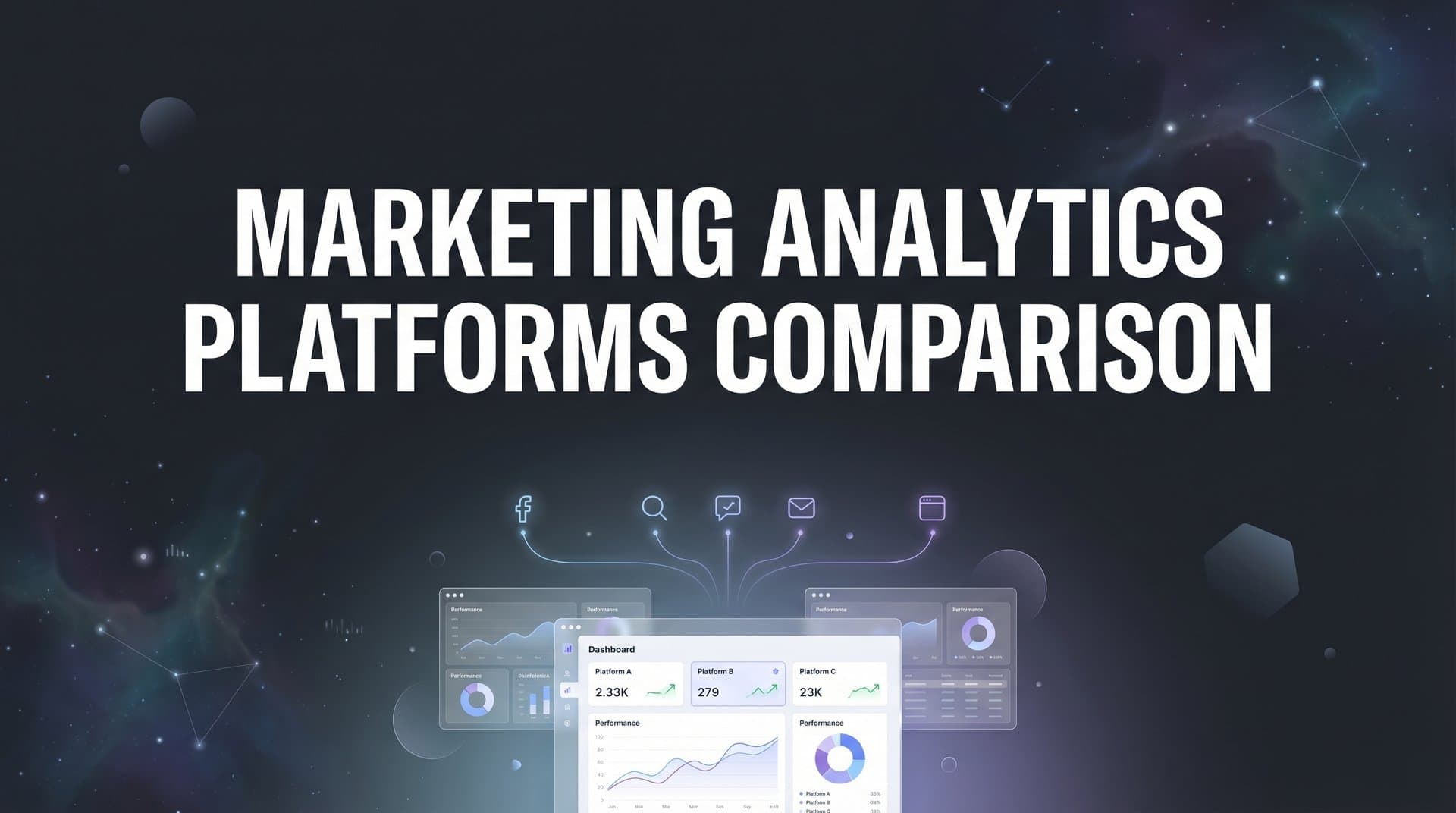
 9 Best Marketing Analytics Platforms Compared for 2026
Where This Tool Shines
Amplitude makes sophisticated behavioral analysis accessible to entire product teams, not just data analysts. The platform's Behavioral Cohorts feature lets you create user segments based on action sequences and engagement patterns.
The experimentation platform integrates directly with analytics, so you can run A/B tests and immediately see impact on key metrics. Amplitude's data governance tools help maintain clean, consistent tracking as your product and team scale.
Key Features
Behavioral Cohorts: Build dynamic user segments based on action sequences, frequency, and recency with automatic updating.
User Journey Mapping: Visualize the paths users take through your product with Pathfinder analysis showing common flows and drop-off points.
Experimentation Platform: Run feature flags and A/B tests with integrated impact analysis on conversion and retention metrics.
Self-Serve Interface: Empower non-technical team members to explore data and build reports without SQL knowledge.
Data Governance: Maintain tracking consistency with taxonomy management, data validation, and team collaboration features.
Best For
Growth-stage SaaS companies and consumer apps where product teams need to quickly test hypotheses and measure feature impact without relying on data teams for every analysis.
Pricing
Free tier covers up to 10 million events monthly. Growth and Enterprise tiers available with custom pricing based on event volume and features.
7. Triple Whale
Best for: Shopify stores and DTC brands needing ecommerce-specific attribution and creative analytics.
Triple Whale is an ecommerce-focused analytics platform built specifically for Shopify stores and direct-to-consumer brands.
 7 Best Funnel.io Alternatives for Marketing Data Analytics in 2026
Where This Tool Shines
Triple Whale was built by DTC marketers for DTC marketers, and it shows in the platform's ecommerce-specific features. The first-party pixel captures conversion data that iOS privacy restrictions often block from standard tracking.
Creative analytics let you see which ad creatives drive the highest ROAS across Meta, Google, and TikTok campaigns. The Shopify-native integration means setup takes minutes instead of hours, with automatic revenue and order syncing.
For a deeper dive into this space, see our AI ad creative generator guide.
Key Features
First-Party Pixel: Proprietary tracking pixel that captures conversion data with higher accuracy than standard Facebook or Google pixels.
Creative Analytics: Track performance by specific ad creative across platforms to identify winning images, videos, and copy variations.
Shopify Integration: Native connection to Shopify with automatic product, order, and customer data syncing.
Real-Time ROAS: Live return on ad spend tracking across all channels with blended and platform-specific metrics.
Customer Journey: Visualize the complete path from first ad click through purchase with multi-touch attribution.
Best For
Shopify store owners and DTC brands running significant paid social campaigns who need better attribution data than native ad platform reporting provides.
Pricing
Plans start at $129/month for stores doing up to $250,000 in monthly revenue, scaling upward based on revenue tiers.
8. Northbeam
Best for: Performance marketers seeking incrementality measurement and machine learning attribution models.
Northbeam is an attribution platform using machine learning and media mix modeling to measure marketing incrementality.
Where This Tool Shines
Northbeam takes a fundamentally different approach to attribution by combining clickstream data with media mix modeling. This methodology measures the incremental impact of each marketing channel, not just the last click.
The platform's machine learning models analyze historical performance to predict which channels and campaigns will drive the best results. Northbeam excels at answering questions like "What would happen to revenue if I cut my Meta budget by 30%?" with data-driven predictions.
Key Features
Machine Learning Attribution: Algorithmic models that weight touchpoints based on their actual contribution to conversions, not arbitrary rules.
Media Mix Modeling: Statistical analysis that measures channel effectiveness and budget allocation efficiency across all marketing activities.
Incrementality Testing: Built-in tools to run holdout tests and measure the true lift each channel provides.
Cross-Channel Optimization: Recommendations on how to reallocate budget across channels for maximum efficiency.
Custom Attribution Windows: Set different lookback periods for different channels based on typical customer journey length.
Best For
Performance marketing teams with substantial budgets across multiple channels who want to move beyond last-click attribution and understand true incrementality.
Pricing
Custom pricing based on monthly ad spend volume. Typically suited for businesses spending $50,000+ monthly on paid advertising.
9. Ruler Analytics
Best for: B2B and lead generation businesses tracking offline conversions and phone call attribution.
Ruler Analytics is a revenue attribution platform focused on B2B companies with call tracking and offline conversion capabilities.
Where This Tool Shines
Ruler Analytics solves a critical gap in B2B attribution by tracking phone calls and form submissions back to their original marketing source. The platform assigns unique phone numbers dynamically to track which campaigns drive calls.
CRM integration connects marketing touchpoints to actual closed revenue, not just leads. You can see which keywords, campaigns, and channels generate qualified opportunities that turn into customers, making it valuable for businesses with longer sales cycles.
Key Features
Call Tracking Attribution: Dynamic number insertion that attributes phone calls to specific marketing sources, campaigns, and keywords.
Form Tracking: Capture form submissions with full attribution data showing the complete journey before conversion.
CRM Revenue Integration: Connect to Salesforce, HubSpot, and other CRMs to attribute closed revenue back to marketing touchpoints.
Multi-Touch Attribution: Apply different attribution models to leads and revenue to understand channel contribution throughout the funnel.
Offline Conversion Tracking: Track conversions that happen offline or in-store back to digital marketing activities.
Best For
B2B companies and lead generation businesses where phone calls represent a significant conversion channel and sales cycles extend beyond initial website interactions.
Pricing
Plans start at $199/month for basic tracking, with pricing scaling based on call volume and advanced features like CRM integration.
Finding Your Perfect Analytics Match
The right marketing analytics platform depends on your specific business model, technical resources, and what questions you need answered. Here's how to narrow your choice.
For multi-channel paid advertisers dealing with iOS tracking challenges, Cometly delivers accurate attribution with server-side tracking and AI-powered optimization recommendations. If you're already deep in the Google ecosystem and want comprehensive free analytics, GA4 provides solid tracking despite its steeper learning curve.
Product-focused teams at SaaS companies should consider Mixpanel or Amplitude for their behavioral analytics and retention tracking capabilities. Shopify stores running significant DTC campaigns will find Triple Whale's ecommerce-specific features and creative analytics particularly valuable.
B2B companies tracking phone calls and offline conversions need Ruler Analytics' call tracking attribution, while enterprises requiring deep customization should evaluate Adobe Analytics despite its substantial investment requirement. HubSpot users benefit from native integration, and performance marketers seeking incrementality measurement should explore Northbeam's machine learning approach.
Think about your primary use case. Are you optimizing ad spend across channels? Choose platforms with strong attribution and conversion sync. Improving product engagement? Go with behavioral analytics tools. Connecting marketing to closed revenue? Pick platforms with robust CRM integration.
Consider implementation complexity too. Some platforms require significant technical setup, while others offer quick Shopify or CRM integrations. Match the platform's complexity to your team's technical capabilities and available resources.
Ready to elevate your marketing game with precision and confidence? Discover how Cometly's AI-driven recommendations can transform your ad strategy. Get your free demo today and start capturing every touchpoint to maximize your conversions.