

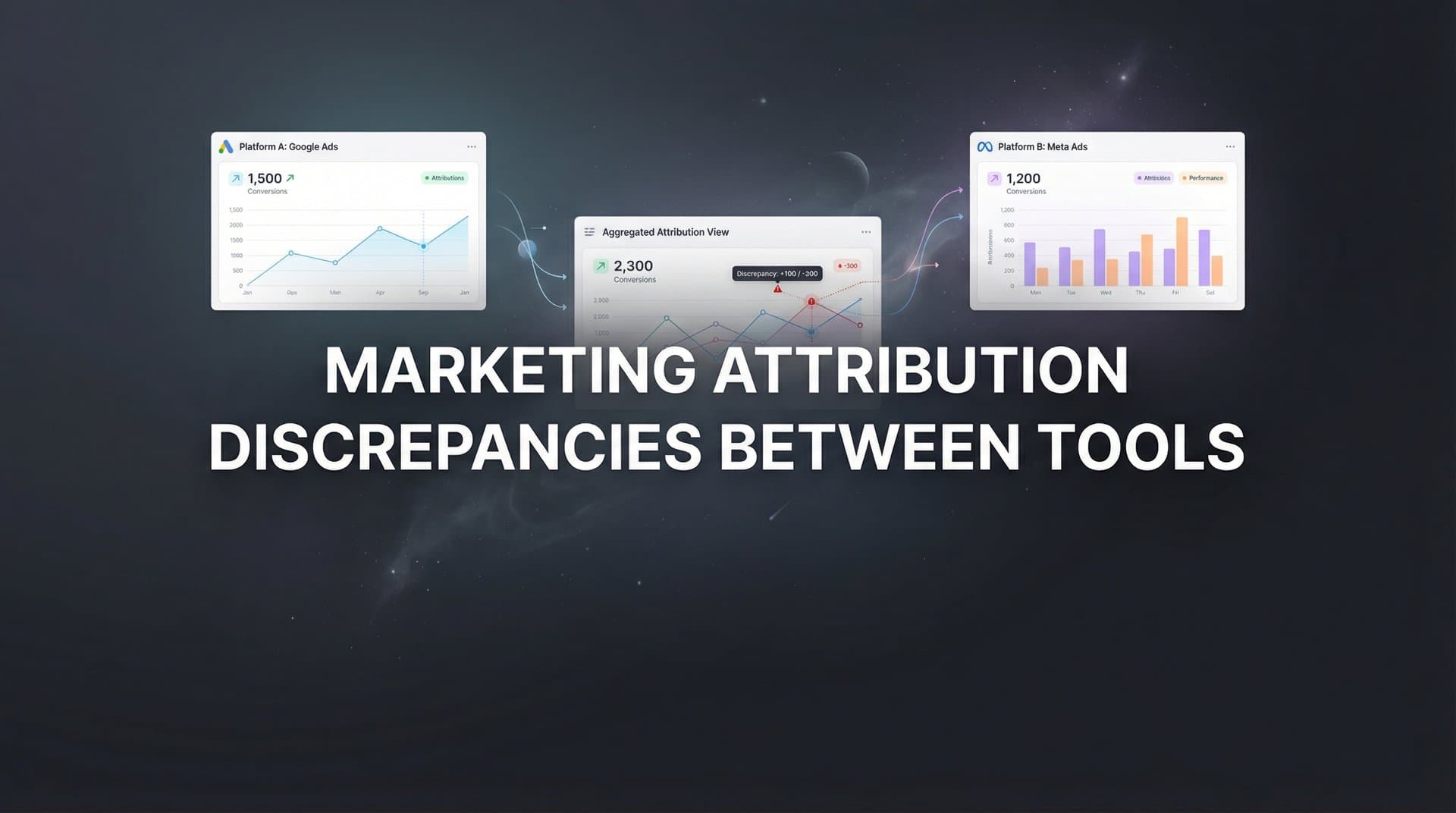
When your Google Ads dashboard shows 50 conversions, Meta claims 65, and your CRM only recorded 40 actual sales, you have an attribution discrepancy problem. These mismatches between platforms make it nearly impossible to know which channels actually drive revenue and where to invest your budget.
The root causes range from different attribution windows and tracking methodologies to iOS privacy changes and cross-device journey gaps. Meta defaults to a 7-day click and 1-day view window, while Google Ads uses 30 days. Each platform defines "conversion" differently, and browser limitations mean you're often missing 20-40% of the complete customer journey.
The good news: specialized attribution tools can reconcile these differences and give you a unified view of marketing performance. Here are the top solutions for resolving attribution discrepancies and getting clarity on what's actually working.
1. Cometly
Best for: Marketers who need AI-powered attribution with server-side tracking to resolve cross-platform discrepancies.
Cometly is a marketing attribution platform that unifies data from ad platforms, CRMs, and analytics tools while using server-side tracking to capture conversions that browser-based solutions miss.
 8 Best Tools to Fix Marketing Attribution Discrepancies in 2026
Where This Tool Shines
Cometly addresses attribution discrepancies at the source by implementing server-side tracking that bypasses browser limitations and ad blockers. This means you capture conversion data before iOS restrictions or cookie policies can interfere with accuracy.
The platform's AI analyzes your complete attribution data to identify high-performing ads and campaigns across every channel. Instead of juggling conflicting reports from different platforms, you get AI-powered recommendations on where to scale with confidence.
Key Features
Server-Side Tracking: Captures conversion data directly from your server, eliminating browser-based tracking gaps that cause discrepancies.
AI Attribution Analysis: Machine learning identifies which ads and channels actually drive revenue, cutting through conflicting platform reports.
Conversion Sync: Feeds enriched, accurate conversion data back to Meta, Google, and other ad platforms to improve their targeting algorithms.
Multi-Touch Attribution Models: Compare first-touch, last-touch, linear, and custom models to understand the full customer journey.
Real-Time Discrepancy Detection: Automatically flags when platform-reported conversions diverge from actual CRM data.
Best For
Digital marketers and agencies running multi-channel campaigns who need accurate attribution despite iOS changes and browser restrictions. Particularly valuable for teams spending significant budgets across Meta, Google, and other platforms where discrepancies create budget allocation confusion.
Pricing
Custom pricing based on ad spend volume. Demo available to evaluate fit for your specific attribution challenges.
2. Triple Whale
Best for: Shopify brands needing cookieless tracking and blended ecommerce metrics in one dashboard.
Triple Whale is an ecommerce-focused attribution platform with first-party pixel tracking designed specifically for Shopify stores.
 7 Best Funnel.io Alternatives for Marketing Data Analytics in 2026
Where This Tool Shines
Triple Whale's first-party Triple Pixel operates independently of third-party cookies, making it particularly effective for tracking post-iOS 14 conversions that other tools miss. The platform pulls data directly from your Shopify store, creating a source of truth for actual sales.
The blended ROAS metric combines data from all your marketing channels into a single performance view. Instead of reconciling conflicting reports manually, you see unified metrics that account for discrepancies between platform attribution and actual store revenue.
Key Features
Triple Pixel First-Party Tracking: Cookieless tracking solution that captures conversions without relying on third-party cookies.
Blended ROAS Dashboard: Unified return on ad spend across all channels based on actual Shopify order data.
Native Shopify Integration: Deep connection to store data including products, collections, and customer lifetime value.
Post-Purchase Surveys: Ask customers directly how they found you to validate attribution data.
Creative Performance Analytics: Track which specific ad creatives drive conversions across platforms.
Best For
Ecommerce brands built on Shopify who need cookieless tracking and want a single dashboard that reconciles ad platform claims with actual store sales. Especially useful for DTC brands spending heavily on Meta and Google.
Pricing
Growth plan starts at $129/month. Higher tiers available for larger stores and additional features.
3. Northbeam
Best for: DTC brands using machine learning attribution combined with media mix modeling for budget decisions.
Northbeam is a machine learning attribution platform that combines multi-touch attribution with media mix modeling to resolve discrepancies through advanced statistical analysis.
 8 Best Attribution Platforms vs Google Analytics: Which Tracking Solution Fits Your Marketing Stack in 2026
Where This Tool Shines
Northbeam uses machine learning models trained on your specific business data to determine which touchpoints actually influence conversions. This approach cuts through platform-reported attribution by analyzing patterns in your complete customer journey data.
The media mix modeling component helps you understand incremental impact, answering questions like "What would happen if we cut Facebook spend by 20%?" This addresses discrepancies by focusing on incrementality rather than last-click attribution that platforms favor.
Key Features
ML-Based Attribution Models: Machine learning analyzes your data to build custom attribution models specific to your customer behavior.
Media Mix Modeling: Statistical analysis of how different channels work together and their incremental contribution to revenue.
Cross-Device Identity Resolution: Connects customer journeys across devices to reduce attribution gaps from device switching.
Incrementality Testing: Built-in tools to measure true incremental lift from each marketing channel.
Custom Attribution Windows: Set attribution windows that match your actual sales cycle instead of platform defaults.
Best For
Growing DTC brands with complex customer journeys who need sophisticated attribution that goes beyond simple multi-touch models. Best suited for companies with sufficient conversion volume to train machine learning models effectively.
Pricing
Custom enterprise pricing, typically starting around $1,000 per month depending on data volume and complexity.
4. Rockerbox
Best for: Enterprise marketers measuring both online and offline channels with long, complex customer journeys.
Rockerbox is an enterprise marketing measurement platform that unifies online and offline attribution data for comprehensive cross-channel analysis.
 8 Best Tools to Fix Marketing Attribution Discrepancies in 2026
Where This Tool Shines
Rockerbox excels at connecting online digital touchpoints with offline conversions like in-store purchases, phone calls, and direct mail responses. This unified view resolves discrepancies that occur when platforms only see part of the customer journey.
The platform provides granular attribution down to specific creatives and audience segments, helping you understand exactly which campaign elements drive results. When your ad platforms disagree on performance, Rockerbox's independent measurement cuts through the noise.
Key Features
Unified Online-Offline Measurement: Connects digital touchpoints with in-store, phone, and direct mail conversions.
Granular Channel Attribution: Track performance at the channel, campaign, ad set, and creative level with consistent methodology.
Customer Journey Visualization: See complete paths to conversion including all online and offline touchpoints.
TV and Podcast Integration: Measure impact of traditional media channels alongside digital performance.
Custom Reporting and Exports: Build tailored reports and export clean data to your business intelligence tools.
Best For
Enterprise marketing teams with omnichannel strategies that include both online and offline touchpoints. Particularly valuable for retail brands, financial services, and healthcare companies with complex attribution needs.
Pricing
Enterprise pricing model with custom quotes based on data volume and feature requirements. Contact their sales team for specific pricing.
5. Segment
Best for: Fixing attribution discrepancies at the data infrastructure level before they reach reporting tools.
Segment is a customer data platform that standardizes and routes data from all sources, creating a clean foundation that reduces discrepancies before they reach attribution tools.
 8 Best Attribution-Focused Platforms vs Segment: Which Approach Fits Your Marketing Stack in 2026
Where This Tool Shines
Segment addresses attribution discrepancies by ensuring every platform receives the same standardized event data. When Meta, Google, and your CRM all receive identical conversion events from Segment, you eliminate discrepancies caused by inconsistent tracking implementation.
The identity resolution feature connects anonymous browsing sessions to known users across devices and platforms. This unified customer profile reduces the cross-device attribution gaps that cause platforms to under-report or double-count conversions.
Key Features
Unified Data Collection: Single implementation captures events from websites, apps, servers, and cloud tools with consistent formatting.
Identity Resolution: Connects user activity across devices and sessions into unified customer profiles.
300+ Pre-Built Integrations: Send clean, standardized data to all your marketing and analytics platforms simultaneously.
Data Governance Controls: Set rules for data quality, privacy compliance, and event validation before data reaches destinations.
Real-Time Data Routing: Stream events to any connected platform in real time for immediate attribution accuracy.
Best For
Companies whose attribution discrepancies stem from inconsistent tracking implementation across platforms. Particularly valuable for technical teams who want to fix data infrastructure issues rather than just reconciling reports after the fact.
Pricing
Free tier available for up to 1,000 monthly tracked users. Team plan starts at $120/month with volume-based pricing for larger implementations.
6. Supermetrics
Best for: Pulling raw data from all platforms into spreadsheets for manual discrepancy analysis and custom reporting.
Supermetrics is a data pipeline tool that extracts marketing data from over 100 platforms and loads it into Google Sheets, Excel, Looker Studio, and business intelligence tools.
 8 Best Tools to Fix Marketing Attribution Discrepancies in 2026
Where This Tool Shines
Supermetrics gives you direct access to raw platform data so you can build custom reconciliation reports. When Google Ads and Meta show different conversion numbers, you can pull both datasets into a single spreadsheet and analyze the discrepancies with your own logic.
The tool shines for teams who want full control over their attribution methodology. Instead of relying on a platform's black-box attribution model, you extract the raw data and apply your own business rules for crediting conversions.
Key Features
100+ Marketing Data Sources: Connect Google Ads, Meta, LinkedIn, TikTok, analytics platforms, CRMs, and more.
Google Sheets and Excel Integration: Pull platform data directly into spreadsheets for custom analysis and reporting.
Automated Data Refresh: Schedule automatic data updates daily, hourly, or in real time to keep reports current.
Custom Metric Calculations: Build calculated fields and custom metrics using data from multiple sources.
Data Blending Across Platforms: Combine metrics from different platforms in a single report for unified analysis.
Best For
Marketing analysts and data-savvy teams who want to build custom attribution models and reconciliation reports. Ideal for companies that need flexibility to analyze discrepancies using their own methodologies rather than pre-built attribution tools.
Pricing
Starts at $39/month per data source connector. Essential plan covers most common platforms, with higher tiers for advanced features and more data sources.
7. Wicked Reports
Best for: Subscription businesses and lead generation with long sales cycles requiring deep CRM attribution.
Wicked Reports is an attribution platform designed specifically for businesses with extended sales cycles, connecting marketing touchpoints to CRM conversions and subscription revenue.
 7 Best Northbeam Alternatives for Small Business in 2026
Where This Tool Shines
Wicked Reports excels at tracking attribution for leads that convert weeks or months after initial contact. The platform connects marketing touchpoints to CRM deal closures, resolving discrepancies between ad platform conversion reports and actual revenue generated.
For subscription businesses, Wicked Reports attributes not just the initial sale but ongoing subscription revenue back to the original marketing source. This lifetime value attribution reveals which channels drive the most valuable customers, even when ad platforms only see the first transaction.
Key Features
CRM-Connected Attribution: Deep integration with HubSpot, Salesforce, and other CRMs to track leads through the entire sales cycle.
Long Sales Cycle Tracking: Attribution windows up to 365 days to capture B2B and high-consideration purchases.
Subscription Revenue Attribution: Track recurring revenue back to original marketing sources for true LTV analysis.
Lead Quality Scoring: Identify which marketing sources generate leads that actually close into customers.
Cohort-Based LTV Analysis: Compare customer lifetime value by acquisition source and time period.
Best For
B2B companies, SaaS businesses, and subscription services where the gap between ad click and revenue is measured in weeks or months. Essential for teams whose attribution discrepancies stem from ad platforms only seeing lead captures, not final revenue.
Pricing
Plans start at $250/month with pricing scaling based on monthly revenue and number of marketing channels tracked.
8. Google Analytics 4
Best for: Free baseline attribution measurement to identify where discrepancies occur across your marketing stack.
Google Analytics 4 is a free cross-channel analytics platform that provides baseline attribution measurement and helps identify where discrepancies occur between platforms.
Where This Tool Shines
GA4 serves as an independent source of truth for website conversions, helping you validate claims from paid advertising platforms. When Meta and Google Ads show different conversion numbers, GA4's conversion path reports reveal which touchpoints users actually engaged with before converting.
The data-driven attribution model uses machine learning to credit conversions across channels based on how touchpoints actually contribute to conversions. This provides a more nuanced view than the last-click attribution that many ad platforms favor.
Key Features
Free Cross-Channel Measurement: Track website and app conversions without licensing costs, providing independent validation of ad platform claims.
Data-Driven Attribution Model: ML-based attribution that credits touchpoints based on their actual contribution to conversions.
Conversion Path Analysis: See the complete sequence of touchpoints leading to conversions to understand where platforms disagree.
BigQuery Export: Export raw event data for advanced custom analysis and attribution modeling.
Google Ads Integration: Direct connection to Google Ads for consistent conversion tracking and attribution reporting.
Best For
Any business tracking website conversions who needs a free baseline attribution tool to identify discrepancies. Particularly useful as a starting point before investing in specialized attribution platforms, or as an independent validator of paid platform claims.
Pricing
Free for standard implementation. GA4 360 enterprise version available with advanced features, SLAs, and higher data limits for large organizations.
Making the Right Choice for Your Attribution Challenges
Your tool choice should match your primary discrepancy source. If conflicting platform reports make it impossible to know which channels drive real revenue, you need a comprehensive attribution solution with server-side tracking and AI-powered reconciliation.
Cometly provides the most complete approach by capturing conversions before browser limitations affect accuracy, then feeding that enriched data back to ad platforms to improve their targeting. The AI recommendations cut through conflicting reports to show you exactly where to scale with confidence.
For Shopify-specific needs, Triple Whale's native integration and cookieless tracking make it a strong choice for ecommerce brands. Enterprise teams juggling online and offline touchpoints should evaluate Rockerbox's unified measurement capabilities.
If your discrepancies stem from messy data infrastructure, start with Segment to standardize event tracking across all platforms. This foundation-level fix prevents discrepancies before they reach reporting tools. Teams with long sales cycles need Wicked Reports' CRM-connected attribution to bridge the gap between ad clicks and actual revenue.
For budget-conscious teams just beginning to tackle attribution, GA4 offers a free starting point to identify where discrepancies occur. Once you understand the gaps, you can invest in specialized tools that address your specific challenges.
The key is matching your solution to whether you're dealing with tracking gaps, attribution model differences, or data infrastructure issues. Most discrepancies involve some combination of all three, which is why comprehensive platforms that address multiple layers typically deliver the clearest results.
Ready to elevate your marketing game with precision and confidence? Discover how Cometly's AI-driven recommendations can transform your ad strategy. Get your free demo today and start capturing every touchpoint to maximize your conversions.



