You're running paid search, LinkedIn campaigns, and retargeting. Leads are coming in. But when someone asks which channel is actually driving revenue, you're stuck piecing together platform dashboards that each tell a different story. Sound familiar?
This is the central frustration for most B2B SaaS marketing teams. Budget is spread across multiple channels, but the data to justify that allocation is fragmented, incomplete, or just plain wrong. Marketing data attribution is the framework that solves this problem. It connects your marketing activity to actual business outcomes, not just clicks or impressions, but pipeline and revenue.
This article breaks down exactly how attribution works, from the data infrastructure that makes it possible to the models that assign credit across touchpoints. We'll cover where attribution commonly breaks down, how to connect it to real revenue, and how modern platforms turn that data into smarter ad decisions. If you're a growth leader or marketing operator who wants to spend with confidence, this is the foundation you need.
The Signal Behind Every Conversion
Marketing data attribution is the process of connecting marketing touchpoints to business outcomes. Not just tracking that someone clicked an ad, but understanding which combination of interactions across which channels ultimately drove a qualified lead, a signed contract, or a dollar of revenue.
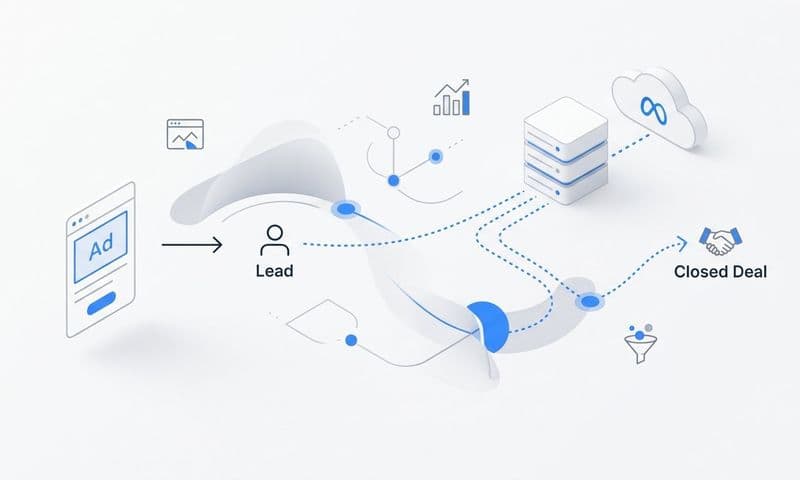
At its core, attribution works by collecting event data from multiple sources and stitching it together into a unified customer journey. Those sources typically include ad platforms like Google and Meta, your website, your CRM, and in the most complete setups, your payment system. Each of these systems captures a piece of the story. Attribution is what assembles those pieces into a coherent sequence you can actually act on.
The data layer underneath attribution is what makes it meaningful. When a prospect clicks a LinkedIn ad, visits your pricing page three days later through organic search, and then converts on a retargeting ad two weeks after that, every one of those events needs to be captured, linked to the same user, and recorded in sequence. That's the technical challenge attribution infrastructure is designed to solve.
Here's where the distinction between attribution data and vanity metrics becomes critical. Impressions, clicks, and even cost-per-click tell you how your ads are performing in isolation. They do not tell you whether those ads are generating revenue. B2B SaaS teams with sales cycles of 30, 60, or 90 days cannot make sound budget decisions based on click volume alone. They need outcome-level data: which channels are generating pipeline, which campaigns are closing deals, and what the actual return on ad spend looks like when you trace it all the way to closed-won revenue.
Without that outcome-level view, budget decisions default to gut feel or platform-reported metrics, both of which are unreliable. Platform-reported metrics are particularly problematic because each ad platform attributes conversions using its own methodology, which almost always overstates its own contribution. A neutral, cross-channel attribution system gives you a ground truth that no single platform can provide on its own.
This is why attribution is not a reporting exercise. It is an operational foundation. When you know which touchpoints are actually driving revenue, you can allocate budget with precision, scale what works, and stop funding what doesn't. That's the signal that matters.
How the Customer Journey Becomes Trackable Data
Understanding what attribution is conceptually is one thing. Understanding how it actually captures data across a fragmented digital landscape is another. The mechanics matter because the quality of your attribution is only as good as the completeness of your tracking.
Modern attribution relies on a combination of tracking methods working together. UTM parameters are the starting point: query string values appended to your URLs that tell your analytics system where traffic came from, which campaign drove it, and which specific ad or keyword was involved. When someone clicks a paid ad with proper UTM tagging, that source information follows them into your website session and gets stored in your analytics and CRM data.
Pixel-based tracking adds behavioral depth. A JavaScript pixel fires on key pages and events, capturing actions like page views, form submissions, and button clicks. This client-side data is sent directly from the user's browser to your analytics platform or ad network. It's fast and relatively easy to implement, but it has a significant vulnerability: it depends entirely on the browser cooperating.
This is where server-side tracking has become essential. Instead of relying on a browser pixel to fire, server-side tracking sends event data directly from your web server or application to the attribution platform or ad network. The user's browser is no longer in the loop. This means ad blockers, browser privacy settings, and iOS tracking restrictions cannot interfere with the data collection. The event fires reliably regardless of what the user's device or browser is doing.
Conversion API integrations extend this further. Meta's Conversions API, Google's Enhanced Conversions, and similar server-side solutions allow you to send conversion events directly to ad platforms from your server. This preserves the quality of conversion signals that those platforms use for optimization, even in environments where pixel data would otherwise be lost.
CRM sync is the third critical layer. Your CRM holds the truth about what happened after the lead was captured: whether they became a qualified opportunity, whether they closed, and what revenue they generated. Without syncing CRM data back into your attribution system, you can only attribute to lead generation. You cannot attribute to revenue. That gap is where most B2B SaaS attribution breaks down.
The foundation underlying all of this is first-party data. Unlike third-party cookies, which track users across sites they don't own, first-party data is collected directly from your own users through your own properties. As browser restrictions continue to tighten and third-party cookies become less reliable, first-party data is the most durable and accurate foundation for attribution. Teams that invest in server-side infrastructure and first-party data collection are building attribution that will hold up as the privacy landscape continues to evolve.
Attribution Models and What Each One Tells You
Once you have the data infrastructure in place, the next question is how to assign credit across the touchpoints in a journey. This is where attribution models come in. Different models answer different business questions, and choosing the wrong one can lead to systematically bad budget decisions.
First-touch attribution gives 100% of the credit to the very first interaction a prospect had with your brand. If someone first discovered you through an organic search result, that channel gets full credit for the eventual conversion. First-touch is useful when you want to understand which channels are driving awareness and bringing new prospects into your funnel. It helps you evaluate top-of-funnel investment.
Last-click attribution does the opposite: it assigns all credit to the final touchpoint before conversion. If a prospect clicked a retargeting ad right before filling out a demo request form, that retargeting ad gets full credit. Last-click is the default model in many platforms and tools, which makes it widely used but also widely misleading. It systematically overvalues bottom-of-funnel channels and undervalues everything that built awareness and consideration earlier in the journey.
Linear attribution distributes credit equally across every touchpoint in the journey. If a prospect had five interactions before converting, each gets 20% of the credit. This model provides a more balanced view of channel contribution, but it treats a brief homepage visit the same as a product demo registration, which does not reflect how influence actually works in a real sales process.
Time-decay attribution weights credit toward touchpoints that occurred closer to the conversion event. Interactions that happened days before conversion receive more credit than those that happened weeks earlier. This model is often a better fit for shorter sales cycles where recent touchpoints are genuinely more influential in the decision.
Data-driven attribution is the most sophisticated model available. Rather than applying a fixed rule, it uses machine learning to analyze actual conversion path patterns and assign credit based on which touchpoints statistically correlate with successful outcomes. It requires a sufficient volume of conversion data to function accurately, but when it has enough data to work with, it produces the most realistic picture of channel contribution.
For B2B SaaS companies specifically, multi-touch attribution models are not optional. They are necessary. Sales cycles in B2B SaaS commonly span weeks or months and involve multiple interactions across organic search, paid search, LinkedIn, email nurture, and direct traffic. A prospect might discover you through a blog post, attend a webinar, click a LinkedIn ad, and then convert after a sales rep follows up. If you're using last-click, the sales rep's email gets all the credit and the blog post gets none. That leads directly to under-investment in the content and channels that are actually building pipeline.
Multi-touch attribution, particularly data-driven models, gives B2B SaaS teams the cross-channel view they need to see which campaigns are contributing at each stage of the funnel and allocate budget accordingly. You can explore the full range of marketing attribution model types to find the best fit for your sales cycle and data maturity.
Where Attribution Data Breaks Down
Even teams that invest in attribution infrastructure run into problems. Attribution failures are common, and they tend to compound quietly: the data looks reasonable on the surface while budget decisions drift further from reality underneath.
The most frequent failure point is incomplete UTM tagging. When paid traffic arrives without proper UTM parameters, it typically gets bucketed into direct traffic or unattributed sessions. Over time, this creates a growing blind spot in your attribution data. You cannot credit a channel you cannot identify. Teams that run campaigns without consistent UTM governance end up with attribution data that systematically undercounts paid channel contribution.
Cross-device journeys are another significant gap. A B2B buyer might first see your LinkedIn ad on their phone during a commute, then research your product on their work laptop, and finally convert on a desktop at home. Without identity resolution that links these sessions to the same user, your attribution system treats them as three separate anonymous visitors. The journey is fragmented, and no single touchpoint gets the full context of the path that led to conversion.
CRM disconnection is perhaps the most damaging gap for B2B SaaS teams. Many marketing teams track attribution up to the lead or signup stage and stop there. But if your CRM data about opportunity stage, deal value, and closed-won status is never connected to your ad spend data, you are making budget decisions based on lead volume rather than revenue. Channels that generate lots of leads but few closed deals look great in a lead-attribution view and terrible in a revenue-attribution view. Without the CRM connection, you cannot tell the difference.
Platform-native attribution adds another layer of distortion. When you look at Meta's attribution dashboard, it reports conversions based on Meta's own attribution window and methodology. Google does the same. LinkedIn does the same. Each platform sees only the touchpoints that occurred within its own ecosystem, so each one tends to overclaim credit for conversions that involved multiple channels. When you add up the conversions each platform claims, the total often far exceeds your actual conversion count.
The downstream impact of these attribution gaps is real. Channels that are quietly driving pipeline get cut because they don't show up clearly in last-click or platform-native reports. Spend shifts toward channels that look strong in incomplete data but don't actually close deals. Over time, budget allocation drifts away from what's working and toward what looks good in a flawed measurement system. Understanding the most common attribution challenges in marketing analytics is the first step toward building a system that doesn't mislead you.
Connecting Attribution to Revenue and Pipeline
Most marketing teams do attribution to the lead. The best ones do attribution to the revenue. That distinction is where the real value of marketing data attribution lives for B2B SaaS companies.
Lead attribution tells you which channels and campaigns generated form fills, signups, or demo requests. It's useful, but it's incomplete. In B2B SaaS, the quality of leads varies enormously by channel. A lead from a branded search campaign might close at a very different rate than a lead from a broad awareness campaign on LinkedIn. If you're only measuring at the lead level, you cannot see that difference, and you cannot optimize for it.
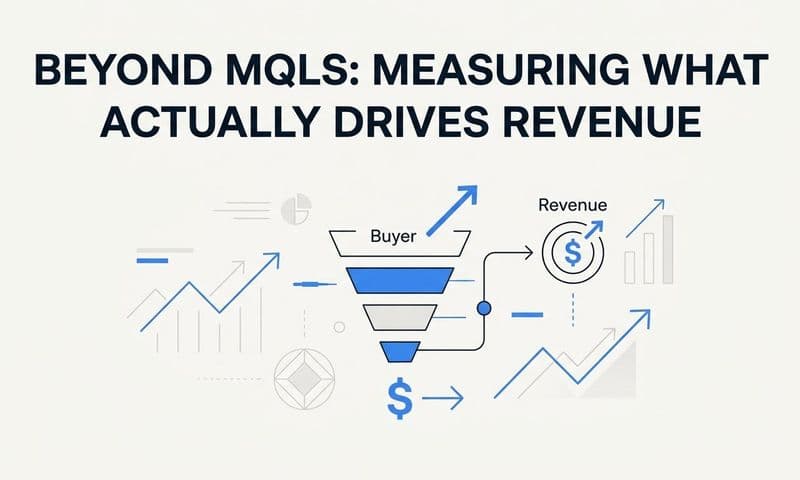
Revenue attribution closes that loop. It maps closed-won deals back through every touchpoint in the customer journey to calculate the true return on ad spend at a channel and campaign level. This requires connecting three data sources that are often kept separate: your ad platform data, your CRM data, and your payment data. When those three systems talk to each other, you can answer the question that actually matters: for every dollar we spent on this campaign, how much closed revenue did it generate?
Integrating payment data, such as Stripe transaction data, with ad platform and CRM data creates a closed-loop attribution system. You can see not just that a customer converted, but what they paid, when they paid it, and which marketing touchpoints preceded their decision. This makes it possible to calculate true cost per acquired customer by channel, not cost per lead, not cost per trial signup, but cost per customer who paid.
Pipeline attribution operates as a forward-looking complement to revenue attribution. Rather than looking back at closed deals, pipeline attribution tracks which campaigns are generating qualified opportunities that are currently moving through your sales process. This gives marketing teams a leading indicator of revenue impact before deals close. You can see which channels are filling the pipeline with deals that your sales team is excited about, and shift spend toward those channels before waiting months for closed-won data to confirm it.
Together, revenue attribution and pipeline attribution give B2B SaaS marketing teams a complete financial picture of their ad spend. Not just what converted, but what converted into revenue, and what is likely to convert into revenue in the coming months. The right marketing attribution tools for B2B SaaS are specifically designed to bridge this gap between lead data and closed revenue. That is the level of insight that makes confident budget decisions possible.
Turning Attribution Data Into Smarter Ad Decisions
Attribution data is only valuable if it changes how you act. The operational payoff of a well-built attribution system is the ability to make faster, more confident decisions about where to spend and where to cut.
One of the most powerful applications is feeding enriched conversion data back to ad platforms. When you send high-quality, server-side conversion signals back to Meta, Google, or LinkedIn, you are giving those platforms' algorithms a more accurate picture of what a valuable conversion looks like. Instead of optimizing toward any form fill, the algorithm learns to optimize toward the types of users who actually become customers. This improves targeting efficiency over time, often meaningfully, without requiring you to increase your budget.
This is why the quality of your attribution data directly affects the performance of your campaigns. Platforms like Meta and Google use conversion signals to train their bidding and targeting models. If those signals are incomplete or inaccurate because of tracking gaps or pixel-only data collection, the algorithm is working with bad inputs. Better attribution infrastructure produces better conversion signals, which produces better algorithmic performance.
AI-driven attribution analysis adds another layer of value on top of this. Modern digital marketing attribution software can analyze conversion paths across all your channels simultaneously and surface which campaigns and creatives are driving the best outcomes. Instead of manually reviewing dashboards for each platform, you get a unified view that highlights what's working and flags what isn't, across every channel at once. This allows teams to scale winners and cut underperformers faster than any manual review process can match.
The broader shift that attribution enables is moving from scattered data to a single source of truth. Most B2B SaaS marketing teams are currently managing separate dashboards for Google Ads, Meta, LinkedIn, their CRM, and their analytics platform. Each tells a partial story. Reconciling them into a coherent picture takes time, introduces errors, and still leaves gaps where channels interact with each other across the journey.
A unified attribution platform replaces that fragmented workflow. It pulls data from every source, stitches it together into complete customer journeys, and surfaces the insights that matter at the campaign, channel, and creative level. Budget decisions that used to take days of data gathering can happen in minutes. And because the data is grounded in actual revenue outcomes rather than platform-reported metrics, those decisions carry real confidence behind them. Reviewing the best marketing attribution analytics platforms available today can help you identify the right fit for your team's scale and needs.
This is the operational value of getting attribution right: not just better reporting, but faster, smarter decisions at every point in the campaign cycle.
Building on a Foundation That Lasts
Marketing data attribution is not a dashboard feature or a reporting checkbox. It is the operational foundation that determines whether your marketing team can make confident, revenue-backed decisions about where to spend and where to scale.
B2B SaaS companies that invest in proper attribution infrastructure, complete touchpoint capture, server-side tracking, CRM integration, and revenue-level analysis, gain a compounding advantage. Every campaign cycle produces better data. Better data produces better signals for ad platforms. Better signals produce more efficient campaigns. And more efficient campaigns generate more pipeline from the same budget.
The teams that struggle are the ones still relying on last-click attribution, platform-native dashboards, and disconnected spreadsheets to answer questions that require a unified, cross-channel view. They are making budget decisions in the dark, and the cost shows up in wasted spend and missed pipeline.
Getting attribution right means connecting every dollar of ad spend to the pipeline and revenue it actually generates. That is the standard B2B SaaS marketing teams should hold themselves to, and it is achievable with the right platform and infrastructure in place.
Cometly is built specifically for this. It provides multi-touch attribution, server-side tracking, Conversion API integration, and AI-powered insights in a single platform designed for B2B SaaS marketing teams. From the first ad click to closed-won revenue, Cometly gives you the complete picture you need to spend with confidence. Get your free demo today and start capturing every touchpoint to maximize your conversions.