
Marketing budgets are under pressure, and gut-feel reporting no longer satisfies leadership. Every dollar needs a clear line back to pipeline and revenue. The problem is that most teams are working with fragmented data scattered across ad platforms, CRMs, and analytics tools that rarely tell the same story.
Marketing performance measurement tools solve this by connecting your channels, tracking conversions accurately, and surfacing the insights that actually drive decisions. This list covers the top tools available in 2026, evaluated on attribution depth, integration breadth, ease of use, and how well they connect ad spend to real revenue outcomes.
Whether you are a growth marketer at a B2B SaaS company, a performance team managing multi-channel campaigns, or an agency handling multiple clients, there is a tool here built for your workflow. Cometly leads the list as the most purpose-built solution for B2B SaaS attribution, but every tool earns its place.
1. Cometly
Best for: B2B SaaS teams that need end-to-end attribution from first ad click to closed revenue
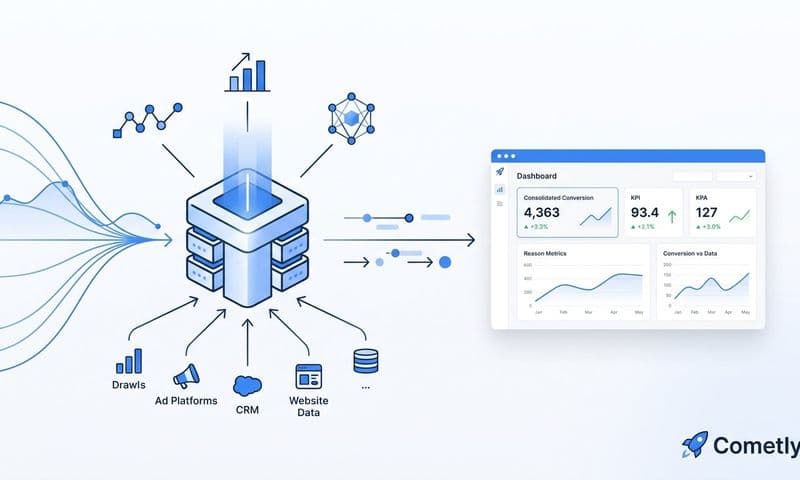
Cometly is a marketing attribution and analytics platform built specifically for B2B SaaS companies, connecting ad platforms, CRM, and website data to track every customer journey touchpoint in real time.
 9 Best Attribution Platforms for Agencies in 2026
Where This Tool Shines
Most attribution tools stop at the lead. Cometly goes further by integrating with Stripe to connect ad spend directly to closed-won revenue, giving you a true picture of which campaigns are actually generating customers, not just form fills. This makes it genuinely useful for SaaS teams where the gap between a lead and a paying customer can span weeks or months.
The server-side conversion tracking and Conversion API integration for Meta and Google is another standout capability. By sending enriched, conversion-ready events back to ad platforms, Cometly improves the quality of data feeding those platforms' own AI targeting systems, which means better optimization over time, not just better reporting.
Key Features
Multi-Touch Attribution: Compare multiple attribution models side by side to understand which channels and touchpoints are driving conversions across the full funnel.
Server-Side Conversion Tracking: Conversion API integration for Meta and Google ensures accurate event capture even when browsers block pixel-based tracking.
Stripe Revenue Integration: Connects closed revenue data directly to ad spend so you can measure true ROI, not just cost per lead.
AI Ads Manager: Surfaces recommendations for scaling high-performing campaigns and identifying underperformers across every ad channel.
Customer Journey Analytics: Visualizes the full path from first touch through pipeline stages to closed deal, with pipeline and revenue attribution built in.
70+ Native Integrations: Connects with major ad platforms, CRMs, and data tools without requiring custom engineering work.
Best For
Cometly is purpose-built for B2B SaaS marketing teams, growth leaders, and performance marketers who need a single source of truth connecting ad spend to pipeline and revenue. It is especially valuable for teams running paid campaigns across multiple channels who want to move beyond platform-reported ROAS and see what is actually closing deals.
Pricing
Paid plans available. Pricing is based on data volume and team size. Contact Cometly directly for a quote tailored to your setup.
2. HubSpot Marketing Hub
Best for: Teams already operating within the HubSpot ecosystem who want attribution tied to CRM contacts
HubSpot Marketing Hub is an all-in-one marketing platform with built-in attribution reporting connected directly to HubSpot CRM contacts and deal data.
 9 Best Campaign Attribution Tracking Solutions for B2B SaaS in 2026
Where This Tool Shines
HubSpot's attribution strength comes from its native CRM connection. Because contacts, deals, and marketing activities all live in the same system, you can trace a closed deal back to the campaigns, emails, and content that influenced it without any data stitching. For teams that live in HubSpot daily, this is a significant advantage.
The platform supports first-touch, last-touch, and linear attribution models at the contact level. This works well for straightforward B2B lead generation workflows, though teams with complex multi-stakeholder buying cycles may find the attribution depth limiting compared to dedicated account-level tools.
Key Features
Contact-Level Attribution: Tracks first-touch, last-touch, and linear attribution tied directly to individual CRM contacts.
Native CRM Integration: Deal and revenue data flows automatically from HubSpot CRM into attribution reports with no additional setup.
Campaign Reporting: Consolidated performance reporting across email, paid ads, and content assets in a single dashboard.
Revenue Attribution Reports: Links marketing activity to closed deals, giving revenue-level visibility into campaign performance.
Best For
Marketing teams already committed to the HubSpot ecosystem who want attribution reporting without adding another tool. It is particularly effective for B2B teams running email, content, and paid campaigns together and needing contact-level visibility into what is driving pipeline.
Pricing
Free tier available. Professional plans start at $800 per month. Enterprise plans start at $3,600 per month.
3. Google Analytics 4
Best for: Teams wanting free, machine-learning-powered attribution with deep Google Ads integration
Google Analytics 4 is Google's free web analytics platform offering data-driven attribution modeling and comprehensive cross-channel traffic analysis.
 11 Best Marketing Analytics Tools to Track and Optimize Campaign Performance in 2026
Where This Tool Shines
GA4's data-driven attribution model uses machine learning to distribute conversion credit across touchpoints based on actual contribution, rather than applying a fixed rule like last click. For teams running Google Ads alongside organic and direct channels, this provides a more nuanced picture of what is working without any additional cost.
The event-based tracking architecture is a genuine improvement over the old session-based model. You can define custom events for granular conversion measurement, and the Exploration reports allow you to build custom funnel analysis and path reports that go well beyond standard dashboards. The main limitations are around cross-device accuracy without a User ID setup and the absence of any native CRM connection for revenue-level attribution.
Key Features
Data-Driven Attribution: Machine learning distributes conversion credit across touchpoints based on actual influence rather than fixed rules.
Cross-Channel Traffic Analysis: Covers organic, paid, direct, referral, and social traffic in a unified reporting view.
Event-Based Tracking: Granular conversion measurement using custom events across any user action on your site or app.
Native Google Ads Integration: Campaign performance data flows directly from Google Ads into GA4 for unified reporting.
Exploration Reports: Custom funnel analysis, path exploration, and cohort reports for deeper behavioral insights.
Best For
Teams that rely heavily on Google Ads and organic search, and want a free, capable analytics foundation. Best suited as a core web analytics layer rather than a complete attribution solution for complex B2B buying cycles.
Pricing
Free. Google Analytics 360, the enterprise version, starts at $50,000 per year.
4. Northbeam
Best for: High-spend performance marketing teams that need media mix modeling alongside multi-touch attribution
Northbeam is a marketing measurement platform combining multi-touch attribution and media mix modeling, designed for teams managing significant advertising budgets across multiple channels.
 9 Best Cookieless Tracking Solutions for Marketers in 2026
Where This Tool Shines
Northbeam's combination of MTA and media mix modeling in a single platform is what sets it apart. Most tools offer one or the other. Having both means you can validate your channel-level attribution with MMM-based budget allocation recommendations, which is particularly useful when scaling spend and needing confidence in where to invest next.
The predictive ROAS and revenue forecasting by channel gives performance teams a forward-looking view rather than just historical reporting. This is valuable for budget planning conversations and for identifying channels with headroom before over-investing in diminishing returns.
Key Features
Multi-Touch Attribution: Tracks paid social, search, and display touchpoints across the full customer journey.
Media Mix Modeling: Provides budget allocation recommendations based on channel contribution modeling.
Predictive ROAS Forecasting: Projects revenue and return by channel to support forward-looking budget decisions.
Creative Performance Analytics: Identifies top-performing ad assets to inform creative strategy and budget allocation.
Best For
Performance marketing teams in e-commerce and DTC managing large monthly ad budgets who need both attribution and modeling capabilities in one place. Less suited for early-stage teams or those with lower ad spend volumes.
Pricing
Custom pricing based on ad spend. Typically positioned for teams with significant monthly advertising budgets. Contact Northbeam directly for a quote.
5. Triple Whale
Best for: Shopify brands managing creative performance and multi-channel attribution at scale
Triple Whale is a unified analytics and attribution platform built specifically for Shopify brands, combining pixel-based attribution, creative analytics, and cohort-level revenue reporting.
 9 Best Marketing Performance Measurement Tools in 2026
Where This Tool Shines
Triple Whale was designed with DTC e-commerce teams in mind, and it shows. The summary dashboard aggregates spend, revenue, and ROAS across Meta, Google, TikTok, and other channels in a single view, which eliminates the tab-switching that plagues most performance marketers every morning. The Shopify integration is deep and reliable, making it easy to connect purchase data to ad spend without custom development.
The creative analytics layer is particularly strong. Performance scoring by individual ad asset helps teams understand which creative concepts are driving results, not just which campaigns, which is essential for teams running high volumes of creative tests across paid social.
Key Features
First-Party Pixel Attribution: Tracks conversions across Meta, Google, TikTok, and additional channels using Triple Whale's own pixel.
Creative Analytics: Scores individual ad assets by performance to guide creative strategy and budget allocation.
Cohort Analysis: Links customer acquisition cohorts to lifetime value for long-term revenue measurement.
Summary Dashboard: Aggregates spend, revenue, and ROAS across all channels in a single unified view.
Sonar Post-Purchase Survey: Collects attribution data directly from customers to supplement pixel-based tracking.
Best For
Shopify-based DTC brands running paid campaigns across multiple social and search channels who need unified attribution and creative performance analytics in one platform. Not designed for B2B or non-Shopify e-commerce.
Pricing
Plans start at $129 per month. Pricing scales with monthly order volume.
6. Rockerbox
Best for: Mid-market and enterprise brands wanting unified MTA, MMM, and incrementality testing in one place
Rockerbox is a marketing measurement platform that unifies multi-touch attribution, media mix modeling, and incrementality testing in a single solution for both digital and offline channels.
 9 Best Marketing Performance Measurement Tools in 2026
Where This Tool Shines
Rockerbox's positioning around measurement methodology unification is its clearest differentiator. Rather than treating MTA, MMM, and incrementality as separate workstreams requiring different tools or vendors, Rockerbox brings them together. This is meaningful for teams that have struggled with conflicting signals from different measurement approaches and want a consistent framework.
The offline channel tracking capability extends measurement beyond digital touchpoints, which matters for brands running TV, direct mail, or event-based marketing alongside their digital campaigns. Deduplicated conversion reporting across all channels helps avoid the double-counting that inflates reported performance when multiple platforms claim credit for the same conversion.
Key Features
Unified Measurement: Combines MTA, media mix modeling, and incrementality testing in a single platform.
Digital and Offline Tracking: Extends attribution beyond digital channels to include offline marketing touchpoints.
Deduplicated Conversion Reporting: Eliminates double-counting across channels for accurate total performance measurement.
Customizable Attribution Models: Flexible model configuration and reporting views to match your specific measurement needs.
Best For
Mid-market and enterprise brands running complex, multi-channel marketing programs that include both digital and offline channels and want a single measurement framework rather than managing multiple tools.
Pricing
Custom pricing. Designed for mid-market and enterprise brands. Contact Rockerbox for a tailored quote.
7. Ruler Analytics
Best for: B2B lead generation teams that need visitor-level journey tracking tied to CRM revenue data
Ruler Analytics is a B2B marketing attribution platform that tracks visitor journeys from first touch, ties them to CRM contacts, and syncs revenue data back when deals close.
Where This Tool Shines
Ruler Analytics fills a specific and important gap for B2B teams: the connection between anonymous website visitors, identified CRM contacts, and closed revenue. By tracking visitors from their very first session and then associating that history with a contact when they convert, Ruler gives you attribution data that reflects the full pre-conversion journey rather than just the last session before a form fill.
The offline conversion tracking for phone calls and form submissions is particularly valuable for B2B teams where a significant portion of leads come through non-digital touchpoints. Combined with multiple attribution model comparisons in a single dashboard, it gives teams the flexibility to evaluate performance from different analytical perspectives without switching tools.
Key Features
Visitor-Level Journey Tracking: Captures the complete journey from first anonymous visit through to conversion and revenue.
CRM Revenue Syncing: Integrates with Salesforce, HubSpot, and other CRMs to pull closed revenue data back into attribution reports.
Multi-Channel Attribution: Covers paid, organic, email, and referral channels in a unified attribution view.
Offline Conversion Tracking: Attributes phone calls and form submissions alongside digital touchpoints.
Attribution Model Comparisons: Compare multiple models side by side in a single reporting dashboard.
Best For
B2B marketing teams running lead generation across paid and organic channels who need visitor-level attribution connected to CRM deal data. Well-suited for teams that rely on phone calls or offline touchpoints alongside digital campaigns.
Pricing
Plans start at approximately $199 per month. Pricing scales with monthly tracked sessions.
8. Dreamdata
Best for: Enterprise B2B teams with long sales cycles and multi-stakeholder buying groups
Dreamdata is a B2B revenue attribution platform focused on account-level measurement across complex buying cycles involving multiple stakeholders and extended timelines.
Where This Tool Shines
Dreamdata's account-level approach is what makes it stand out for enterprise B2B. Most attribution tools measure at the individual contact level, which misses the reality of B2B buying: multiple people from the same company interact with your marketing before a deal closes. Dreamdata maps touchpoints across the entire buying group, giving you a more accurate picture of which channels and campaigns influenced the account, not just one individual.
The go-to-market analytics layer adds reporting on deal velocity and time-to-close by channel, which is useful for understanding not just which campaigns drive revenue but which ones accelerate it. This level of insight is particularly valuable for revenue operations teams trying to optimize the full pipeline, not just top-of-funnel acquisition.
Key Features
Account-Level Attribution: Maps touchpoints across every member of a buying group rather than individual contacts only.
Pipeline and Revenue Attribution: Attributes pipeline creation and closed revenue to specific channels, campaigns, and content.
Go-to-Market Analytics: Reports on time-to-close and deal velocity by channel for pipeline optimization insights.
CRM and Ad Platform Integrations: Connects with Salesforce, HubSpot, and major ad platforms for unified data.
Best For
Enterprise B2B companies with long sales cycles, large deal sizes, and buying committees involving multiple stakeholders. Also well-suited for revenue operations and demand generation teams that need account-level visibility into pipeline influence.
Pricing
Free tier available with limited features. Paid plans start at $999 per month.
9. Supermetrics
Best for: Data and analytics teams that want to centralize marketing data in their own BI infrastructure
Supermetrics is a data connector and aggregation platform that pulls marketing data from 100+ sources into BI tools, spreadsheets, and data warehouses for custom reporting and analysis.
Where This Tool Shines
Supermetrics is not an attribution tool in the traditional sense. It is the infrastructure layer that makes custom attribution and reporting possible. If your team wants to build its own attribution models, blend data from sources that no single platform natively connects, or maintain a centralized data warehouse for marketing analytics, Supermetrics is the connector that makes that work without custom engineering for each source.
The breadth of data sources is genuinely impressive: Meta, Google, LinkedIn, TikTok, and dozens of other platforms feed into destinations like Google Sheets, Looker Studio, BigQuery, and Snowflake. Automated refresh schedules mean your reports stay current without manual exports, which eliminates a significant operational burden for teams managing multiple client accounts or complex multi-channel programs.
Key Features
100+ Data Source Connectors: Pulls data from Meta, Google, LinkedIn, TikTok, and many more marketing platforms.
Flexible Destinations: Sends data to Google Sheets, Looker Studio, BigQuery, Snowflake, and other BI tools.
Automated Data Refresh: Keeps reporting current with scheduled data syncs that eliminate manual exports.
Custom Blended Reports: Combines data from multiple sources into unified reports tailored to your specific needs.
Best For
Data analysts, marketing operations teams, and agencies that want to build custom attribution models or reporting dashboards using their own BI infrastructure. Best for teams with analytical resources who want data ownership and flexibility over a pre-built attribution solution.
Pricing
Plans start at $29 per month for single-destination connectors. Team and enterprise plans are available at higher price points depending on the number of sources, destinations, and users.
Which Tool Is Right for Your Team
No single tool fits every team, and the right choice depends on three core factors: how deep you need your attribution to go, how much you value owning your own data infrastructure, and how closely your reporting needs to connect to actual revenue rather than just leads or traffic.
For B2B SaaS teams that need the full picture from first ad click to closed-won revenue, Cometly is the strongest purpose-built option. Its combination of multi-touch attribution, server-side tracking, Stripe revenue integration, and AI-powered recommendations gives growth teams a single source of truth that most platforms simply cannot match at this level of specificity.
If you are already running on HubSpot, the Marketing Hub's native CRM attribution is a natural fit. For enterprise B2B with complex buying groups, Dreamdata's account-level approach is worth exploring. Teams in the Shopify ecosystem will find Triple Whale purpose-built for their needs, while high-spend performance teams will benefit from Northbeam's MTA and MMM combination.
For teams that want to build their own reporting layer on top of raw data, Supermetrics provides the connectors. And for B2B lead generation teams that need visitor-level journey tracking tied to CRM revenue, Ruler Analytics delivers that specific capability well.
The best measurement tool is the one your team will actually use consistently to make better decisions. Start with the platform that matches your current workflow, and build from there.
If you are a B2B SaaS team ready to move beyond fragmented reporting and connect every touchpoint to real revenue, Get your free demo and see how Cometly brings it all together.