
Organic social media drives real pipeline for B2B SaaS companies, but most marketing teams have no reliable way to prove it. A prospect sees your LinkedIn post on a Tuesday, saves it, visits your website the following week, and eventually books a demo a month later. Without a structured attribution approach, that entire journey stays invisible in your reporting.
The result is a familiar problem: organic social gets undervalued in budget conversations because it cannot show its contribution to revenue. You know the content is working. You can feel it in the quality of conversations at events and the "I've been following you on LinkedIn" comments during sales calls. But feelings do not hold up in a board meeting.
This guide changes that. You will learn how to set up a repeatable system for tracking organic social media attribution from first touchpoint to closed deal. Each step builds on the previous one, so by the end you will have a working framework that connects your LinkedIn posts, Twitter threads, and other organic content directly to leads, pipeline, and revenue.
This is not about vanity metrics like impressions or follower counts. It is about understanding which organic social content actually influences buying decisions. For B2B SaaS teams running multi-touch customer journeys, this level of clarity can reshape how you prioritize content, allocate resources, and report marketing impact to leadership.
Whether you are a marketing manager trying to justify your organic social investment or a growth leader building a full-funnel attribution model, this guide gives you the practical steps to get there. Let's get into it.
Step 1: Define What You Are Attributing and Why It Matters
Before you touch a single tracking setting, you need to answer a deceptively simple question: what counts as a meaningful conversion for your organic social program? If you skip this step, you will end up with data that looks complete but tells you nothing useful.
Start by listing the specific conversion events you want to attribute to organic social. For most B2B SaaS teams, these include demo requests, free trial signups, newsletter subscriptions, MQL form fills, or content downloads. Pick the events that actually matter to your revenue team, not just the ones that are easy to track.
Next, draw a clear line between two types of attribution you will be measuring. Direct conversions happen when someone clicks a link in your organic social post and converts in that same session. Assisted conversions happen when organic social was a touchpoint earlier in the journey, perhaps the very first interaction, but the final conversion happened through a different channel days or weeks later. Both matter. In B2B SaaS, assisted conversions are often where organic social delivers its greatest value.
Your attribution window is the next decision. This defines how far back you look when crediting a touchpoint. A 30-day window might be appropriate for a product-led growth motion with short trial cycles. A 90-day or longer window is often necessary for enterprise SaaS deals where the buying process involves multiple stakeholders and extended evaluation periods. Choose a window that reflects your actual sales cycle, not the one you wish you had. Understanding attribution window performance in detail will help you make this decision with confidence.
One of the most overlooked parts of this step is stakeholder alignment. Before you build anything, sit down with your revenue team and agree on what counts as a meaningful attribution signal. If your CRO thinks only closed-won deals matter and your content team is reporting on MQLs, you will be speaking different languages when it comes time to present results. Get that alignment in writing, even if it is just a shared document or a Slack message you can reference later.
A note on dark social: A meaningful portion of B2B social sharing happens in private channels like Slack groups, WhatsApp threads, and email forwards where UTM parameters often get stripped. This means your organic social attribution data will typically represent a floor, not a ceiling, of actual social influence. Acknowledge this honestly in your reporting and use it to argue for conservative but credible attribution numbers rather than inflated ones.
Success indicator: You have a written list of conversion events, a defined attribution window, and documented stakeholder alignment before you touch any tracking setup. This document becomes your north star for every decision that follows.
Step 2: Build a UTM Tagging System for Every Organic Social Link
UTM parameters are the foundation of organic social media attribution. Without them, your analytics platform has no reliable way to distinguish a visitor who arrived from your LinkedIn post from one who typed your URL directly into a browser. Google Analytics and most other platforms will often misattribute organic social traffic as direct or referral traffic when UTMs are missing. This is how organic social loses credit it has already earned.
The core UTM structure you need uses three required parameters. Use utm_source to identify the specific platform: linkedin, twitter, facebook, or instagram. Use utm_medium as "organic-social" consistently across every platform to create a clean channel grouping that separates organic social from paid social, email, and other traffic sources. Use utm_campaign to identify the broader initiative, content theme, or campaign the post belongs to.
Two optional but highly valuable parameters extend your attribution to the content level. utm_content lets you differentiate between individual posts or creative formats within the same campaign. For example, you might tag one post as "thought-leadership-ceo" and another as "product-feature-update" within the same campaign. This is what allows you to eventually attribute revenue not just to LinkedIn as a channel but to specific content types and topics. Effective social media measurement depends on this kind of granular tagging discipline.
Consistency in your naming conventions is not optional. It is the difference between attribution data you can trust and a fragmented mess that requires hours of cleanup before every report. The most common mistake teams make is using inconsistent capitalization and formatting: "LinkedIn" versus "linkedin" versus "linked-in" will appear as three separate sources in your analytics, splitting your data and making it impossible to get accurate totals.
Build a shared UTM template that your entire team uses. A simple Google Sheet works well. Include columns for the destination URL, each UTM parameter, and the final tagged URL. Use a URL builder formula or a tool like Google's Campaign URL Builder to generate the complete tagged link. Make it a rule that no link goes live on any organic social channel without a properly structured UTM parameter.
Here is a practical example of what a well-structured UTM tag looks like for a LinkedIn post promoting a blog article:
utm_source=linkedin | utm_medium=organic-social | utm_campaign=thought-leadership-q3 | utm_content=ceo-post-saas-growth
Every team member who publishes content should have access to the UTM template and understand why the naming conventions matter. A five-minute onboarding conversation about UTM hygiene prevents months of data cleanup later.
Success indicator: Every link published to organic social channels carries a properly structured UTM parameter before it goes live. Your UTM naming convention is documented, shared, and consistently applied across every platform and every team member who publishes content.
Step 3: Configure Your Analytics Platform to Capture Social Touchpoints
Having UTM parameters on your links is only half the equation. Your analytics platform needs to be configured correctly to capture those parameters and store them in a way that supports multi-touch attribution across long sales cycles. This step is where many teams fall short, often because they assume the default setup handles everything automatically.
Start by verifying that your analytics platform recognizes organic social as a distinct channel, separate from paid social, direct, and referral traffic. In Google Analytics 4, this requires checking your channel groupings to confirm that sessions tagged with utm_medium=organic-social are being classified correctly. If your platform groups all social traffic together regardless of medium, you will not be able to compare organic and paid social performance accurately. Teams that encounter persistent misclassification issues should review common attribution discrepancies in data and how to resolve them.
Next, confirm that UTM parameters are being captured and stored at both the session and user level. Session-level tracking tells you how a visitor arrived in a specific visit. User-level tracking allows you to reconstruct the complete journey across multiple visits over time. For B2B SaaS attribution, user-level data is what makes it possible to see that a prospect first arrived from a LinkedIn post, returned twice through organic search, and finally converted after clicking a retargeting ad three weeks later.
Cross-session tracking is essential for organic social attribution to work in B2B contexts. Organic social rarely drives direct conversions. The value is almost always in influenced pipeline, where your content creates awareness and familiarity that pays off in a later session. Without cross-session tracking, you will systematically undercount organic social's contribution because the final conversion session almost never has a social source attached to it.
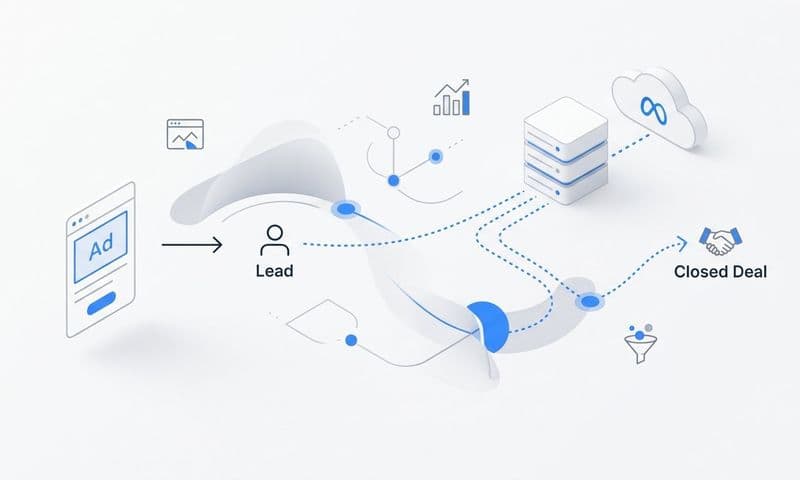
For B2B SaaS teams using a dedicated attribution platform like Cometly, this is where the integration layer becomes critical. Connecting your website tracking to your CRM means that organic social touchpoints do not just live in your analytics platform. They flow through to lead records, opportunity records, and eventually closed-won deals. This is what transforms organic social attribution from a website metric into a revenue conversation.
Test your entire setup before relying on it for reporting. Click your own UTM-tagged links from each platform and verify that the source, medium, and campaign data appear correctly in your analytics reports. Check that the data persists across sessions by returning to the site directly and confirming the original touchpoint is still recorded. This testing step takes less than an hour and prevents weeks of bad data from accumulating.
Success indicator: You can filter your analytics by organic social and see a clean, consistent data stream with no misattributed sessions. The channel grouping is correct, cross-session tracking is confirmed, and your CRM is receiving touchpoint data from your analytics platform.
Step 4: Map the Full Customer Journey from Social Touchpoint to Revenue
With your tracking infrastructure in place, you can now start asking the questions that actually matter. Not just "how many sessions did our LinkedIn posts drive?" but "what happens to a prospect after they first encounter us through organic social, and where does that journey lead?"
Pull the complete touchpoint history for leads that converted after interacting with your organic social content. Look at the full sequence of interactions, from the first social touchpoint through every subsequent visit, channel, and content piece, until the conversion event. This is where you start to see patterns that would be completely invisible in a last-click attribution model. Understanding customer attribution tracking at this level of detail is what separates teams that optimize on instinct from those that optimize on evidence.
Some patterns you are likely to discover: organic social visitors often require multiple visits before converting, the gap between first social touchpoint and conversion can span weeks or months for enterprise prospects, and organic social frequently appears as the very first touchpoint in journeys that eventually close through direct or paid channels. Each of these insights has direct implications for how you think about your content strategy and your attribution model.
Connect your CRM data to your attribution data to go beyond visit counts and form fills. When you can see whether leads that touched organic social content at any point in their journey have different close rates, different deal sizes, or different time-to-close compared to leads that never interacted with organic social, you are having a revenue conversation rather than a traffic conversation. This is the data that changes budget allocations.
This is also the step where your choice of attribution model matters most. Last-click attribution will give organic social almost no credit in a typical B2B SaaS journey because the final conversion rarely happens in a social session. Multi-touch attribution models, whether linear, time-decay, or position-based, distribute credit across all touchpoints in the journey. For organic social, which typically operates at the top and middle of the funnel, a position-based model that gives extra weight to first touch and last touch while crediting middle touches proportionally often reflects the actual business contribution most accurately.
This step also reveals organic social's functional role in your marketing mix. Is it primarily a top-of-funnel awareness driver that introduces your brand to new prospects? A mid-funnel nurture channel that keeps warm leads engaged between sales touchpoints? Or occasionally a direct conversion source for bottom-of-funnel content like case studies and product comparisons? Understanding this shapes every content decision you make going forward.
Success indicator: You can produce a report showing the average number of touchpoints before conversion for organic social leads, where in the journey social typically appears, and how organic social leads compare to other lead sources in terms of deal quality and close rate.
Step 5: Attribute Pipeline and Revenue Back to Specific Content
This is the step that transforms your organic social program from a brand awareness initiative into a revenue-generating function with measurable business impact. The goal here is to connect specific posts, content types, and campaigns to actual pipeline value and closed revenue.
Start by linking your CRM opportunity data to your UTM tracking records. For every opportunity in your CRM, you want to know whether organic social appeared anywhere in that prospect's journey. When it did, the deal value of that opportunity becomes part of your organic social influenced revenue figure. Sum those deal values across all opportunities where organic social was a touchpoint and you have a number that leadership can evaluate alongside your content investment. B2B SaaS teams can deepen this practice by studying how SaaS revenue attribution connects content touchpoints to customer acquisition at scale.
The influenced revenue calculation is important to understand correctly. You are not claiming that organic social alone closed those deals. You are showing that organic social was part of the journey for a set of opportunities worth a specific total value. This is a credible, defensible number that accurately represents how multi-touch attribution works in practice.
Now go deeper and segment your attribution data by platform, content type, and campaign. Which specific themes generate the highest-value pipeline? Do your CEO thought leadership posts on LinkedIn appear more frequently in enterprise deal journeys than your product update posts? Does your Twitter content attract a different buyer profile than your LinkedIn content? These are the questions that content-level UTM tracking makes answerable.
For B2B SaaS teams, this is where a platform like Cometly adds significant value. By connecting ad data, CRM events, and revenue in a single view, Cometly allows you to see organic social alongside paid channels in the same attribution report. You can compare the cost-per-pipeline contribution of your organic social program against your paid social spend, your paid search investment, and your other demand generation activities. That comparison is often where organic social's true ROI becomes undeniable.
Use this data to make content investment decisions with confidence. If a particular content category consistently appears in the journeys of high-value deals, you now have a data-driven argument for producing more of it. If another content type drives high session volume but rarely appears in deals that close, you have an equally data-driven argument for deprioritizing it regardless of how well it performs on engagement metrics.
Success indicator: You have a revenue-attributed report for organic social that you can present to leadership showing pipeline influenced and closed-won revenue connected to specific content efforts, platforms, and campaigns. The numbers are sourced from real CRM and analytics data, not estimates.
Step 6: Build a Reporting Dashboard and Optimize Based on Attribution Data
Attribution data is only valuable if it informs decisions on a consistent basis. A one-time analysis that lives in a spreadsheet and never gets revisited is not a system. It is a project. This final step is about turning your attribution work into an ongoing practice that gets sharper and more actionable over time.
Build a recurring organic social attribution report that tracks the metrics that matter: sessions from organic social by platform, conversion rate by platform and content type, leads generated, pipeline influenced, and revenue attributed. These metrics tell the complete story from awareness to revenue and give you a consistent framework for evaluating performance month over month. The best marketing attribution analytics platforms make this kind of recurring reporting significantly easier to maintain.
Set a reporting cadence that aligns with your content planning cycle. Monthly attribution reviews work well for most B2B SaaS teams because they give you enough data to see meaningful patterns without waiting so long that the insights are no longer actionable. Review attribution data alongside your content calendar so you can directly connect what you published to what it generated in pipeline.
Use attribution insights to make specific content decisions rather than general ones. If LinkedIn thought leadership posts consistently appear in the journeys of high-value deals, the data is telling you to increase that content type and potentially invest in amplifying it. If Instagram drives sessions but those sessions never appear in deal journeys, the data is telling you something about where your buyers actually spend their time.
Compare organic social performance against paid social in the same attribution view. When you can see the cost-per-lead and cost-per-pipeline contribution of each channel side by side, you have the information you need to make intelligent budget allocation decisions rather than defaulting to paid channels simply because they are easier to track. A strong cross-channel attribution framework is what makes this comparison credible and actionable.
Share attribution reports with your broader team and leadership regularly. One of the most valuable outcomes of a well-built organic social attribution system is organizational understanding of how content contributes to revenue. When your sales team sees that prospects who engaged with your LinkedIn content before entering the pipeline have higher close rates, they become advocates for your content program in ways that change how the entire company thinks about organic social.
Success indicator: You have a live dashboard that updates with organic social attribution data on your defined reporting cadence, and you are making content decisions based on what the data shows rather than intuition or engagement metrics alone.
Putting It All Together
Organic social media attribution is not a one-time setup. It is an ongoing practice that gets more accurate and more valuable the longer you maintain it. By defining your conversion events, tagging every link with UTMs, configuring your analytics to capture full journeys, and connecting touchpoints to pipeline and revenue, you build a system that finally gives organic social the credit it deserves.
Use this checklist to confirm your setup is complete before you start reporting:
Conversion events defined: Your list of meaningful conversion events is documented and agreed upon with your revenue team.
UTM naming conventions documented: Your naming system is written down, shared with everyone who publishes content, and consistently applied across every platform.
Analytics platform configured correctly: Organic social is recognized as a distinct channel, cross-session tracking is enabled, and you have tested the setup by verifying your own UTM-tagged sessions.
Customer journey data flowing to CRM: Website touchpoints are connected to lead and opportunity records so you can evaluate deal quality, not just lead volume.
Revenue attribution connected to specific content: You can tie pipeline influenced and closed-won revenue to specific platforms, campaigns, and content types.
Reporting dashboard live and reviewed regularly: Attribution data is being reviewed on a consistent schedule and informing content decisions.
For B2B SaaS marketing teams looking to scale this further, Cometly brings all of these attribution signals together in one place. It connects your ad platforms, CRM, and website tracking so you can see every touchpoint across the full customer journey, compare attribution models, and make faster decisions with confidence. When you can show leadership exactly which organic social content is driving pipeline, you stop defending your budget and start expanding it.
Ready to see every touchpoint in your customer journey and connect organic social directly to revenue? Get your free demo today and start capturing every touchpoint to maximize your conversions.