
For B2B SaaS marketing teams, knowing which ads drive pipeline and revenue is not optional. It is the difference between scaling campaigns that work and burning budget on channels that look good on paper but deliver nothing. Paid advertising attribution methods are the frameworks that connect ad spend to outcomes, giving you a clear picture of what is actually moving the needle.
The challenge is that no single attribution method tells the complete story. First-touch models ignore the nurturing journey. Last-click models give all the credit to the final touchpoint and overlook everything that came before. Data-driven models require volume and setup that many teams are not ready for. The result is fragmented data, misaligned budgets, and marketing decisions made on incomplete information.
This article breaks down seven paid advertising attribution methods, explaining how each one works, when to use it, and how to implement it in a way that gives your team actionable, trustworthy data. Whether you are just starting to build your attribution stack or looking to move beyond basic last-click reporting, these strategies will help you make smarter decisions about where to invest your ad spend.
1. First-Touch Attribution
The Challenge It Solves
Most B2B SaaS teams struggle to justify top-of-funnel ad spend. When your reporting only shows what closed the deal, awareness-driving channels like LinkedIn prospecting campaigns or paid search for broad keywords look like they contribute nothing. First-touch attribution solves this by giving full credit to the channel that started the conversation.
The Strategy Explained
First-touch attribution assigns 100% of conversion credit to the very first ad or channel a prospect engaged with before eventually converting. Think of it as answering one specific question: where did this customer come from originally?
This model is particularly valuable for demand generation budgeting decisions. If you want to understand which paid channels are most effective at introducing your brand to net-new prospects, first-touch data gives you that answer directly. It helps you allocate budget toward the channels that consistently fill the top of your funnel with qualified buyers.
For B2B SaaS companies running campaigns across LinkedIn, Google, and paid social simultaneously, first-touch data can reveal which platform is generating the initial awareness that eventually leads to pipeline, even when the final conversion happens through a different channel weeks or months later. Understanding what attribution in marketing actually measures is the foundation for making this model work effectively.
Implementation Steps
1. Configure your attribution tool to capture and store the very first UTM parameters and traffic source associated with each prospect, including paid ad click data from all active platforms.
2. Ensure your tracking persists across sessions. A prospect who first clicks a LinkedIn ad and returns organically three weeks later should still have their original paid touchpoint recorded. This requires first-party cookies or server-side tracking to avoid data loss.
3. Build a reporting view that segments conversion data by first-touch source, allowing you to compare which paid channels generate the most high-quality initial touchpoints over time.
Pro Tips
Do not use first-touch attribution in isolation. It will systematically undervalue retargeting and nurture campaigns that play a critical role in moving prospects toward conversion. Use it as one lens alongside other models, particularly when making decisions about where to invest in new audience acquisition.
2. Last-Click Attribution
The Challenge It Solves
When you need to understand what is directly closing deals, last-click attribution provides a clean, simple answer. Many teams default to this model because it is built into most ad platforms, but it creates blind spots that can lead to cutting channels that were actually doing important work earlier in the journey.
The Strategy Explained
Last-click attribution assigns 100% of conversion credit to the final touchpoint a prospect interacted with before converting. It is the default model in platforms like Google Ads and has historically been the most widely used attribution approach across digital marketing.
This model answers a specific and legitimate question: what was the final push that got a prospect to take action? For teams focused on conversion rate optimization or evaluating bottom-of-funnel campaigns like branded search or retargeting, last-click data is genuinely useful. It tells you which ads are effective at driving the final decision.
The limitation is significant in B2B SaaS contexts where buying journeys span weeks or months. A prospect who first discovered your product through a LinkedIn thought leadership ad, engaged with a retargeting campaign, and then converted via a branded Google search will give all the credit to Google, making LinkedIn look invisible. This is one of the most common attribution challenges in marketing analytics that teams encounter when relying on a single-touch model.
Implementation Steps
1. Use last-click as your baseline model to understand what your current ad platform reporting is showing you. Document which campaigns and channels appear to be driving conversions under this model.
2. Cross-reference last-click data against your CRM to see whether the leads and opportunities attributed to specific channels are actually progressing to closed-won revenue, or just generating low-quality form fills.
3. Run last-click alongside at least one multi-touch model to identify discrepancies. Channels that look underperforming in last-click but show strong contribution in multi-touch models are likely doing important nurturing work that deserves budget.
Pro Tips
Last-click is a useful sanity check and a good starting point, but treat it as one data point rather than the definitive answer. The most dangerous thing you can do is optimize your entire ad budget based solely on last-click data, because you will systematically defund the channels that generate awareness and nurture intent.
3. Linear Attribution
The Challenge It Solves
B2B SaaS buying cycles are rarely a straight line. A single deal might involve a prospect touching your brand through paid search, a LinkedIn ad, a retargeting campaign, a webinar registration, and a demo request before the opportunity is created. Linear attribution acknowledges that every one of those touchpoints mattered.
The Strategy Explained
Linear attribution distributes conversion credit equally across every touchpoint in the customer journey. If a prospect had five interactions with your paid ads before converting, each touchpoint receives 20% of the credit. No single channel is treated as more important than another.
This model is well-suited to B2B SaaS companies with longer, multi-touch sales cycles because it avoids the extremes of single-touch models. It gives your team a balanced view of how different channels contribute across the full journey, which is particularly useful when you are trying to understand the combined effect of a cross-channel campaign strategy.
Linear attribution also makes it easier to justify investment in mid-funnel channels like nurture-focused display ads or LinkedIn engagement campaigns that rarely show up as first or last touches but consistently appear in the journeys of converted customers.
Implementation Steps
1. Map out the typical touchpoints in your customer journey before configuring linear attribution. Identify which paid channels appear most frequently across the journeys of your best customers to understand what a realistic multi-touch path looks like.
2. Configure your attribution platform to capture all paid touchpoints per user, not just the first and last. This requires cross-session tracking and a tool that can store and process multiple events per prospect over an extended window.
3. Set an appropriate attribution lookback window that reflects your actual sales cycle length. For B2B SaaS teams with 30-to-90-day cycles, a lookback window of 90 days or more is often necessary to capture all relevant touchpoints.
Pro Tips
Linear attribution can sometimes make it harder to prioritize budget because every touchpoint looks equally valuable. Pair it with pipeline velocity data to understand which channels are not just appearing in journeys, but appearing in the journeys of deals that close fastest and at the highest value.
4. Time-Decay Attribution
The Challenge It Solves
Not every touchpoint in a customer journey carries equal weight in the final decision. A prospect who clicked a retargeting ad the day before requesting a demo was likely more influenced by that interaction than by the LinkedIn ad they saw two months earlier. Time-decay attribution reflects this reality by weighting recency.
The Strategy Explained
Time-decay attribution assigns more credit to touchpoints that occurred closer to the conversion event and less credit to earlier interactions. The closer a touchpoint is to the moment of conversion, the more influence it is assumed to have had on the buying decision.
This model is particularly useful for teams running retargeting-heavy strategies, where the goal is to re-engage warm prospects who are already familiar with your product. It is also a strong fit for B2B SaaS companies with shorter sales cycles, where the buying decision happens relatively quickly and recent interactions genuinely do carry more weight.
Time-decay attribution helps teams optimize for the bottom of the funnel without completely ignoring earlier touchpoints. It acknowledges the full journey while placing appropriate emphasis on the interactions that drove the final push toward conversion. Reviewing a detailed comparison of attribution models can help you decide whether time-decay is the right fit for your sales cycle length.
Implementation Steps
1. Define your decay rate, which determines how quickly credit diminishes as touchpoints move further from the conversion date. A steeper decay rate gives significantly more credit to the most recent interactions, while a gentler rate distributes credit more evenly across the timeline.
2. Analyze your historical conversion data to understand the typical time between first touch and conversion for your best customers. This will help you calibrate the decay rate to reflect your actual sales cycle rather than a generic default.
3. Use time-decay reporting to evaluate the performance of your retargeting campaigns specifically. If your retargeting ads are consistently appearing as high-credit touchpoints in time-decay models, that is strong evidence they are playing a meaningful role in closing deals.
Pro Tips
Be cautious about applying time-decay attribution to campaigns targeting early-stage awareness. This model will systematically undervalue those channels, which can lead to cutting prospecting campaigns that are actually feeding your retargeting audiences with qualified prospects.
5. Position-Based Attribution
The Challenge It Solves
Most B2B SaaS marketing teams care deeply about two things: which channels generate awareness and which channels close deals. Position-based attribution is built around exactly that insight, giving disproportionate credit to the touchpoints that matter most at the beginning and end of the journey without ignoring what happened in between.
The Strategy Explained
Position-based attribution, often called U-shaped attribution, typically assigns a larger share of credit to the first and last touchpoints in the customer journey, with the remaining credit distributed across all middle interactions. A common configuration gives 40% of credit to the first touch, 40% to the last touch, and splits the remaining 20% across every touchpoint in between.
For B2B SaaS teams, this model offers a practical middle ground. It values the channel that generated initial awareness and the channel that drove the final conversion, while still acknowledging that the nurturing journey in between contributed something meaningful. W-shaped attribution extends this further by adding a third weighted position at the opportunity creation stage, which is particularly relevant for teams tracking pipeline in a CRM. Understanding the importance of attribution models in marketing helps clarify why these weighted configurations exist in the first place.
This model is a strong choice for teams that want more nuance than single-touch models but are not yet ready to implement full data-driven attribution. It is intuitive, easy to explain to stakeholders, and reflects a reasonable assumption about where influence is concentrated in a typical B2B buying journey.
Implementation Steps
1. Decide whether a U-shaped or W-shaped configuration makes more sense for your business. If your sales team plays a significant role in moving deals from awareness to close, W-shaped attribution that weights the opportunity creation stage may give you more accurate pipeline insights.
2. Configure your attribution tool to apply position-based weighting across all captured paid touchpoints. Ensure your tracking is capturing both the first interaction and the final pre-conversion touchpoint accurately for every prospect.
3. Compare position-based results against your last-click data to identify channels that are generating strong first-touch contribution but receiving no credit under last-click. These are often your most undervalued awareness channels.
Pro Tips
Position-based attribution works best when your tracking is capturing a complete picture of the journey. If you have gaps in your touchpoint data due to ad blockers or browser restrictions, the model will misidentify which interactions were truly first or last, skewing your results. Server-side tracking is essential for keeping this data clean.
6. Data-Driven Attribution
The Challenge It Solves
Every rule-based attribution model, from first-touch to position-based, makes assumptions about how credit should be distributed. Data-driven attribution removes those assumptions entirely, using machine learning to analyze your actual conversion data and determine which touchpoints genuinely contributed to outcomes.
The Strategy Explained
Data-driven attribution uses machine learning algorithms to analyze all of the touchpoints in your conversion paths and assign credit based on their actual contribution to conversions. Rather than applying a fixed rule like "40% to first touch," it evaluates patterns across thousands of customer journeys to identify which interactions are statistically associated with conversion outcomes.
This approach requires two things that many teams underestimate: sufficient conversion volume and clean, enriched event data. Without enough conversion events for the algorithm to learn from, the model will produce unreliable results. Without high-quality data, it will learn from noise rather than signal. Teams evaluating their options should explore digital marketing attribution software that supports machine learning models with proper data enrichment built in.
This is where server-side tracking and Conversion API integration become critical. Browser-based pixels are increasingly unreliable due to ad blockers, browser privacy restrictions, and the ongoing effects of iOS privacy changes. Server-side tracking sends conversion events directly from your server to ad platforms, ensuring that the data feeding your data-driven attribution model is as complete and accurate as possible.
Implementation Steps
1. Audit your current conversion tracking setup to identify gaps. Determine what percentage of your conversion events are being captured accurately and whether you have significant data loss from browser-side tracking limitations.
2. Implement server-side tracking and Conversion API integrations for your primary ad platforms. This is the foundation that makes data-driven attribution reliable. Without it, the model is working with incomplete data and will produce skewed credit assignments.
3. Ensure you are generating sufficient conversion volume before relying on data-driven attribution as your primary model. If your conversion volume is low, use rule-based models as your primary reference and treat data-driven attribution as a supplementary signal to monitor over time.
Pro Tips
First-party data enrichment significantly improves the quality of data-driven attribution. When your conversion events contain rich contextual information about the prospect, such as company size, job title, or CRM stage, the model can identify patterns that go beyond simple channel attribution and reveal which combinations of touchpoints drive your highest-value customers.
7. Multi-Touch Attribution with Revenue Integration
The Challenge It Solves
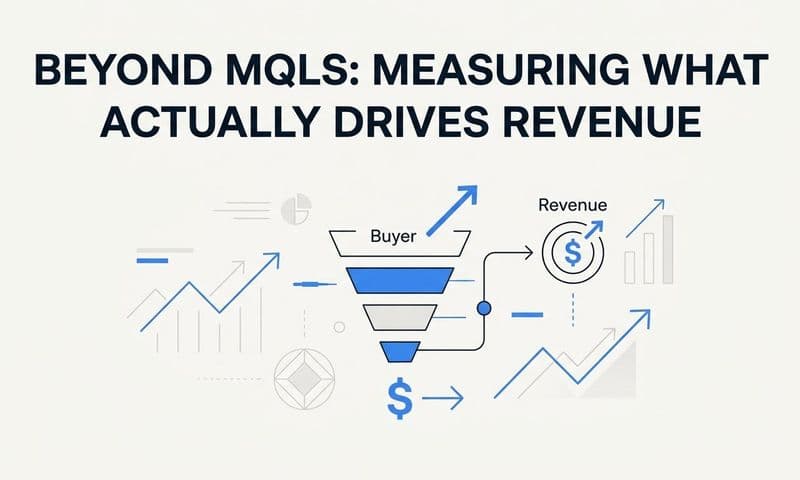
Most attribution methods stop at the lead or MQL stage. They tell you which ads drove form fills, but not which ads drove closed-won revenue. For B2B SaaS teams where a significant portion of leads never convert to paying customers, optimizing for leads alone can send your budget in entirely the wrong direction.
The Strategy Explained
Multi-touch attribution with revenue integration connects every paid advertising touchpoint across the full customer journey to actual closed-won revenue. This is not just about tracking which channel generated the lead. It is about understanding which channels, campaigns, and ads are responsible for the customers who actually paid and stayed. Exploring dedicated multi-touch marketing attribution software is the most practical way to build this capability without rebuilding your entire data stack.
This model requires two integrations that many teams have not yet built: CRM integration and revenue data syncing. Your CRM holds the ground truth about which leads became opportunities and which opportunities became closed deals. Your revenue data, whether from Stripe or another billing system, tells you the actual value of those deals. When you connect that data to your ad platform touchpoints, you can see the full picture from first ad click to closed-won revenue.
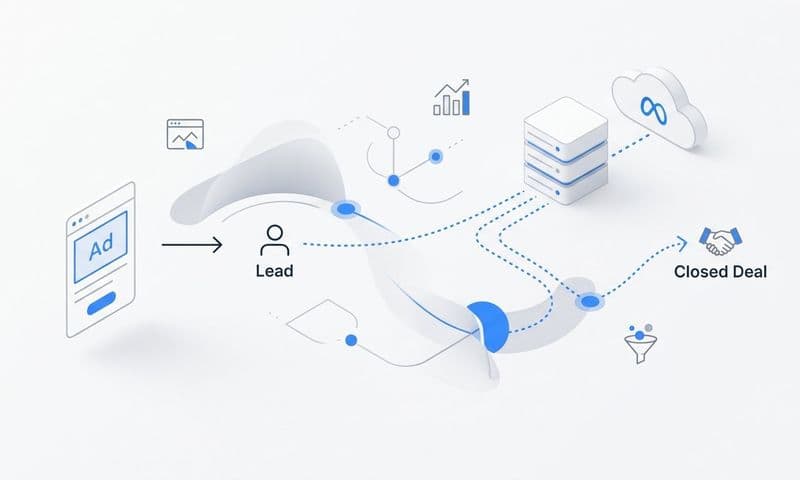
Platforms like Cometly are built specifically for this kind of end-to-end attribution. By integrating with your CRM, Stripe, and ad platforms simultaneously, Cometly creates a single source of truth that connects ad spend directly to pipeline and revenue. This allows B2B SaaS teams to move beyond optimizing for leads and start optimizing for the customers who actually drive growth.
For sales-led SaaS companies, this means attributing to demos, opportunities, and closed deals. For product-led growth companies, it means attributing to trial activations, product-qualified leads, and subscription revenue. The configuration differs, but the principle is the same: connect your paid advertising data to the outcomes that actually matter to your business.
Implementation Steps
1. Connect your CRM to your attribution platform so that deal stage data, opportunity creation events, and closed-won records are flowing into your attribution reporting. This is the step that transforms lead attribution into pipeline attribution.
2. Integrate your revenue data by syncing Stripe or your billing system with your attribution tool. This allows you to see not just which channels drove closed deals, but which channels drove the highest-value deals with the best retention profiles.
3. Build reporting views that segment attribution data by revenue outcome rather than just conversion volume. Compare cost-per-closed-won across channels, not just cost-per-lead, and use that data to make budget allocation decisions that reflect actual business impact.
Pro Tips
Pipeline velocity is a powerful companion metric to revenue attribution. Once you can see which channels drive closed-won revenue, layer in deal velocity data to understand which channels drive deals that close fastest. Channels that generate high-value deals that close quickly are your most efficient growth levers, and they deserve disproportionate investment.
Your Implementation Roadmap
The seven attribution methods covered in this article are not mutually exclusive. The most effective B2B SaaS marketing teams do not pick one model and commit to it permanently. They start with a model that matches their current data maturity, layer in additional models over time, and use the comparison between models to build a more complete understanding of channel contribution.
If you are just getting started, begin with last-click to understand your baseline, then add first-touch to identify your top awareness channels. As your tracking infrastructure improves, introduce linear or position-based attribution to capture the full journey. Once you have clean, enriched conversion data at sufficient volume, data-driven attribution becomes a reliable option.
The most important step at any stage is connecting your attribution data to actual revenue. Optimizing for leads without knowing which leads become customers is one of the most common and costly mistakes in B2B SaaS marketing. When your attribution stack is connected to your CRM and revenue data, every budget decision becomes grounded in real business outcomes rather than surface-level metrics.
Cometly brings all of this together in a single platform. From multi-touch attribution and server-side conversion tracking to Stripe revenue integration and AI-powered campaign recommendations, Cometly gives B2B SaaS marketing teams the complete picture they need to scale with confidence. Every touchpoint is captured, every channel is evaluated against real revenue, and every budget decision is backed by data you can trust.
Ready to elevate your marketing game with precision and confidence? Discover how Cometly's AI-driven recommendations can transform your ad strategy. Get your free demo today and start capturing every touchpoint to maximize your conversions.