If you are running paid ads and cannot tell which campaigns are actually driving purchases, you are flying blind. Purchase conversion tracking tools close that gap by connecting ad clicks to real revenue events, giving marketing teams the data they need to scale what works and cut what does not.
But not all tracking tools are built the same. Some stop at the click. Others track the full journey from first touch to closed deal. The right tool depends on your business model, tech stack, and how much attribution depth you need.
This list covers the best purchase conversion tracking tools in 2026, evaluated on tracking accuracy, attribution depth, integration ecosystem, and ease of use. Whether you are a B2B SaaS team trying to connect ad spend to pipeline, or a growth marketer optimizing for ROAS, there is a tool here built for your workflow.
1. Cometly
Best for: B2B SaaS teams that need full-funnel attribution from first ad click to closed revenue.
Cometly is a marketing attribution and analytics platform built specifically for B2B SaaS companies and marketing teams that need accurate, end-to-end visibility into what drives revenue.
 9 Best Marketing Attribution Platforms to Compare in 2026
Where This Tool Shines
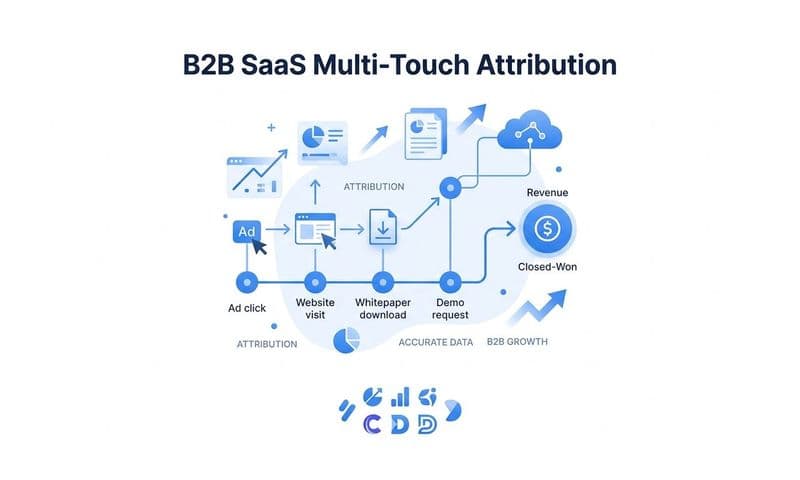
Most purchase conversion tracking tools were designed with e-commerce in mind. Cometly is different. It is built for the reality of B2B SaaS buying cycles, where a prospect might click an ad in January and convert in March. By connecting your ad platforms, CRM, and website into a single source of truth, Cometly gives you the attribution depth that shorter-window tools simply cannot provide.
The Stripe integration is a standout feature. It allows teams to connect actual subscription revenue directly to ad spend, so you are not just tracking form fills or trials. You are seeing which campaigns are generating real, recurring revenue. Pair that with server-side Conversion API integration and you have a setup that maintains data accuracy even as browser-based tracking becomes less reliable.
Key Features
Multi-Touch Attribution: Tracks every touchpoint across all major ad channels to give a complete picture of what influenced each purchase.
Server-Side Conversion Tracking: Sends accurate conversion data server-side to reduce data loss from ad blockers and iOS privacy restrictions.
AI Ads Manager: Analyzes ad performance across channels and surfaces recommendations for which campaigns to scale or cut.
Pipeline and Revenue Attribution: Connects closed-won deals and subscription revenue from Stripe back to the original ad touchpoints.
Customer Journey Analytics: Visualizes the full customer journey with 70+ native integrations across ad platforms, CRMs, and analytics tools.
Best For
Cometly is purpose-built for B2B SaaS companies, growth marketers, and marketing agencies managing campaigns across multiple channels who need to connect ad spend directly to pipeline and revenue. It is particularly valuable for teams frustrated by last-click attribution models that misrepresent complex, multi-touch buying journeys.
Pricing
Cometly offers custom pricing tailored to B2B SaaS teams and marketing agencies. Contact their team directly for a demo and pricing details.
2. Google Tag Manager + Google Ads Conversion Tracking
Best for: Teams running Google Ads who need free, reliable in-platform purchase conversion tracking.
Google Tag Manager paired with Google Ads Conversion Tracking is the most widely used free setup for tracking purchase events driven by Google campaigns.
 9 Best Server Side Tracking Solutions for Accurate Marketing Data in 2026
Where This Tool Shines
The combination of GTM and Google Ads Conversion Tracking gives teams the ability to deploy and manage conversion tags without requiring code changes from a developer every time. For teams running significant Google Ads budgets, this setup is essentially table stakes. It feeds conversion data directly into Google's Smart Bidding algorithms, which directly affects campaign performance.
The addition of Enhanced Conversions brings server-side accuracy to what was previously a fully browser-dependent setup. By hashing and sending first-party customer data server-side, teams can recover conversion signals that would otherwise be lost to ad blockers or cookie restrictions.
Key Features
Native Google Ads Integration: Conversion data flows directly into Google Ads for Smart Bidding optimization without any third-party middleware.
Tag Management Without Code: GTM allows marketers to deploy, edit, and manage tracking tags through a visual interface.
Enhanced Conversions: Server-side matching improves conversion accuracy by using hashed first-party data.
Goal-Based Configuration: Supports multiple conversion actions including purchases, sign-ups, and custom events.
GA4 Integration: Connects seamlessly with Google Analytics 4 for deeper behavioral and funnel analysis.
Best For
Any team running Google Ads campaigns who wants accurate purchase conversion tracking without paying for an additional tool. It is the foundation most teams build on before layering in cross-channel attribution platforms.
Pricing
Both Google Tag Manager and Google Ads Conversion Tracking are free to use. A Google Ads account is required.
3. Meta Pixel + Conversions API
Best for: Advertisers running Facebook and Instagram campaigns who need accurate purchase event tracking.
Meta Pixel combined with the Conversions API is Meta's recommended approach for capturing purchase events from both browser and server-side sources.
 9 Best Ad Budget Optimization Tools to Maximize ROAS in 2026
Where This Tool Shines
The Meta Pixel alone has become increasingly unreliable as iOS privacy updates and browser restrictions block browser-based tracking. The Conversions API solves this by sending purchase events directly from your server to Meta, bypassing the browser entirely. The result is higher Event Match Quality scores, which Meta uses to optimize ad delivery and targeting.
For teams heavily invested in Meta advertising, getting the CAPI setup right is one of the highest-leverage technical improvements available. Better conversion signals mean Meta's algorithm can find more buyers who look like your actual customers, improving ROAS without increasing spend.
Key Features
Browser-Side Pixel Tracking: Captures standard purchase events and behavioral data from website visitors.
Server-Side Conversions API: Sends purchase events directly from your server to Meta to reduce data loss.
Event Match Quality Scoring: Rates how well your conversion data matches Meta user profiles, directly influencing optimization quality.
Native Ads Manager Integration: Conversion data flows directly into Meta Ads Manager for reporting and bidding.
Custom and Standard Events: Supports both standard purchase events and custom conversion definitions.
Best For
Any business running paid campaigns on Facebook or Instagram. Essential for e-commerce and DTC brands, and increasingly important for B2B SaaS teams running lead generation campaigns on Meta platforms.
Pricing
Free to implement. Requires an active Meta Ads account. Technical setup for CAPI may require developer resources depending on your platform.
4. Triple Whale
Best for: Shopify-based e-commerce brands that need a unified attribution dashboard across Meta, TikTok, and Google.
Triple Whale is an e-commerce attribution and analytics platform built natively for Shopify brands running multi-channel paid advertising.
 9 Best Purchase Conversion Tracking Tools in 2026
Where This Tool Shines
Triple Whale's strength is consolidation. Instead of jumping between Meta Ads Manager, Google Ads, and TikTok Ads to piece together performance, it pulls everything into a single dashboard with blended ROAS calculations. Its Shopify-native pixel and server-side tracking setup means it captures purchase data accurately without requiring a complex technical implementation.
Creative analytics is another area where Triple Whale stands out. Teams can analyze performance at the individual ad creative level, making it easier to identify which visuals and copy are actually driving purchases rather than just impressions.
Key Features
Shopify-Native Pixel: Purpose-built for Shopify stores with straightforward installation and reliable purchase event capture.
Unified ROAS Dashboard: Combines performance data from Meta, TikTok, Google, and other channels in one view.
Creative Analytics: Breaks down performance by individual ad creative to identify top-performing assets.
Blended Attribution Models: Offers multiple attribution model options to give a more realistic view of channel contribution.
Cohort and LTV Reporting: Tracks customer lifetime value and purchase behavior over time for deeper profitability analysis.
Best For
DTC and e-commerce brands on Shopify managing significant ad budgets across multiple paid channels. Less suited for B2B SaaS companies or businesses not using Shopify as their primary commerce platform.
Pricing
Starts at approximately $129/month and scales based on monthly revenue. Enterprise plans are available for larger brands.
5. Northbeam
Best for: Growth-stage and mid-market brands running complex, multi-channel media mixes who need ML-driven attribution.
Northbeam is a multi-touch attribution platform that uses machine learning to model how purchases are influenced across a complex combination of paid and organic channels.
 9 Best Purchase Conversion Tracking Tools in 2026
Where This Tool Shines
Where most attribution tools apply fixed models like last-click or linear, Northbeam uses machine learning to dynamically model attribution based on your actual customer journey data. This makes it particularly valuable for brands running media across many channels simultaneously, where the interaction effects between channels are difficult to untangle manually.
Custom attribution windows are a practical advantage for brands with longer consideration cycles. Rather than forcing a 7-day or 28-day window, teams can configure windows that match their actual buying behavior, leading to more accurate credit assignment across channels.
Key Features
ML-Based Attribution Modeling: Uses machine learning to dynamically assign purchase credit rather than applying fixed attribution rules.
Custom Attribution Windows: Configurable lookback windows to match the actual length of your customer buying cycle.
Channel and Campaign Analysis: Drill down from channel-level performance to campaign and ad-level attribution.
Media Mix Modeling: Provides upper-funnel channel analysis for channels that are difficult to track at the click level.
Cross-Channel Journey Visualization: Maps the purchase journey across touchpoints to show how channels work together.
Best For
Mid-market and enterprise e-commerce and DTC brands managing large media budgets across five or more channels. Best suited for teams with dedicated analytics or growth functions who can act on detailed attribution data.
Pricing
Custom pricing based on media spend and business size. Typically positioned for mid-market and enterprise brands. Contact Northbeam directly for a quote.
6. HubSpot Marketing Hub
Best for: B2B teams that want CRM-native attribution connecting marketing touchpoints to pipeline and closed revenue.
HubSpot Marketing Hub is a full-featured marketing platform with built-in attribution reporting that ties contact-level touchpoints to deals and revenue inside the HubSpot CRM.
 9 Best Attribution Software for B2B SaaS in 2026
Where This Tool Shines
HubSpot's attribution strength is its native connection to the CRM. Rather than tracking anonymous sessions, it tracks named contacts through their entire journey from first touch to deal close. For B2B teams where a "purchase" is actually a signed contract tied to a specific account, this contact-level tracking is far more meaningful than session-based conversion data.
The multi-touch attribution reporting in Marketing Hub Professional allows teams to see how email, paid ads, organic search, and social media collectively influenced revenue. It is not the most granular ad-level attribution tool, but for teams already living in HubSpot, it removes the need for a separate attribution platform.
Key Features
Contact-Level Attribution: Tracks individual contact touchpoints and connects them to associated deals in the CRM.
Multi-Touch Revenue Attribution: Distributes revenue credit across marketing touchpoints including email, ads, and organic channels.
Ad Performance Tracking: Connects Google Ads and Facebook Ads data to contact records and pipeline.
CRM and Sales Hub Integration: Attribution data lives natively alongside deal stages, contact history, and revenue data.
Campaign Reporting: Measures the impact of individual campaigns on pipeline creation and closed revenue.
Best For
B2B companies already using HubSpot CRM who want attribution reporting without adding another tool to their stack. Most valuable when the sales cycle is long and the buying journey involves multiple marketing touchpoints before a purchase decision.
Pricing
Marketing Hub Professional starts at $800/month. Enterprise plans are available at higher price points. A free CRM tier exists but does not include advanced attribution reporting.
7. Segment
Best for: Engineering and data teams that need a centralized event collection layer to feed purchase data to downstream tools.
Segment is a customer data platform that collects, normalizes, and routes purchase events and other behavioral data to 400+ downstream analytics, attribution, and ad platforms.
Where This Tool Shines
Segment is not an attribution tool in the traditional sense. It is the data infrastructure layer that makes accurate attribution possible. Instead of installing separate tracking pixels for every tool in your stack, Segment lets you instrument your purchase events once and route that data wherever it needs to go, whether that is your attribution platform, your data warehouse, or your ad platforms for conversion signal enrichment.
For teams managing complex tech stacks, this single-instrumentation approach reduces data inconsistency and maintenance overhead significantly. When a new analytics tool gets added to the stack, it connects to Segment rather than requiring a new round of developer work.
Key Features
Centralized Event Collection: Instruments purchase events once and distributes them to all connected tools automatically.
400+ Integrations: Routes data to virtually any downstream analytics, attribution, CRM, or ad platform.
Server-Side Tracking: Captures purchase events server-side for accuracy independent of browser restrictions.
Identity Resolution: Stitches together user identities across devices and sessions for a unified customer profile.
Real-Time Data Streaming: Sends purchase events to downstream tools in real time for up-to-date reporting and optimization.
Best For
Engineering-led teams and data-mature organizations that want a scalable, maintainable event tracking infrastructure. Less suited for small teams without developer resources, as implementation requires technical expertise to set up correctly.
Pricing
A free tier is available for startups with lower data volumes. Team plans start at $120/month. Enterprise pricing is custom based on data volume and features required.
8. Rockerbox
Best for: Mid-market marketing teams that want a clean, unified view of purchase attribution across paid, organic, and direct channels.
Rockerbox is a managed attribution platform that normalizes marketing data across all channels into a single, deduplicated view of what is driving purchases.
Where This Tool Shines
One of the most common problems in multi-channel attribution is double-counting. Every ad platform claims credit for the same conversion, making it nearly impossible to understand true channel contribution. Rockerbox addresses this by normalizing and deduplicating conversion data across all your channels, so you see one clean number rather than inflated platform-reported figures.
Its managed approach also means teams spend less time on data plumbing. Rather than building custom attribution infrastructure or stitching together platform exports in spreadsheets, Rockerbox handles the data normalization and presents a unified performance view that marketing teams can act on directly.
Key Features
Unified Attribution View: Combines paid, organic, email, and direct channel data into a single normalized dashboard.
Data Deduplication: Removes the double-counting that inflates conversion numbers in platform-reported attribution.
Multi-Touch Attribution Models: Supports multiple attribution models so teams can compare how credit is distributed across different frameworks.
Marketing Mix Modeling: Provides upper-funnel analysis for channels that are difficult to track at the individual click level.
Clean Conversion Reporting: Delivers deduplicated, consistent conversion data that can be trusted for budget allocation decisions.
Best For
Mid-market marketing teams managing budgets across multiple paid and organic channels who are frustrated by the inconsistency between platform-reported attribution and actual business results. Works well for both e-commerce and lead generation businesses.
Pricing
Custom pricing based on media spend and team size. Designed for mid-market marketing organizations. Contact Rockerbox directly for a quote.
9. Heap
Best for: SaaS product teams that need retroactive purchase and upgrade conversion tracking without manual event instrumentation.
Heap is a digital analytics platform that auto-captures all user interactions and allows teams to retroactively define and analyze purchase conversion events without writing tracking code upfront.
Where This Tool Shines
Heap flips the traditional tracking model on its head. Most tools require you to decide in advance which events to track and instrument them manually. Heap captures everything automatically and lets you define what counts as a conversion event after the fact. For SaaS teams where the definition of a "purchase" might evolve as the product grows, this retroactive flexibility is genuinely valuable.
The ability to analyze conversion paths without pre-instrumentation also means teams can investigate questions they did not know to ask at setup time. If you want to understand which onboarding steps correlate with upgrade conversions, you can build that analysis in Heap without waiting for a new tracking implementation to collect data.
Key Features
Auto-Capture: Records all user interactions automatically without requiring manual event tagging or developer instrumentation.
Retroactive Event Definition: Define purchase and conversion events after the fact using data that has already been collected.
Funnel and Path Analysis: Visualizes the steps users take before completing a purchase or upgrade conversion.
Session Replay: Provides qualitative context alongside quantitative conversion data by replaying actual user sessions.
Data Warehouse and CRM Integrations: Connects to downstream data infrastructure for teams that want to combine Heap data with other sources.
Best For
Product-led SaaS companies and product analytics teams that need flexible, retroactive conversion tracking for in-app purchase and upgrade events. Less suited for teams primarily focused on cross-channel ad attribution rather than in-product behavior analysis.
Pricing
A free tier is available for teams getting started. Paid plans are custom-priced based on session volume. Contact Heap for enterprise pricing details.
Which Purchase Conversion Tracking Tool Is Right for You
The best purchase conversion tracking tool is the one that matches how your business actually acquires customers, not just the one with the most features on the spec sheet.
For B2B SaaS teams, Cometly is the strongest choice. It is built for the reality of long sales cycles, multi-touch buying journeys, and the need to connect ad spend directly to pipeline and subscription revenue. The combination of server-side tracking, Conversion API integration, and Stripe revenue attribution makes it a genuine single source of truth for marketing data.
For e-commerce and DTC brands, Triple Whale and Northbeam are purpose-built for your world. Triple Whale wins on simplicity and Shopify integration. Northbeam wins on attribution sophistication for teams managing large, complex media mixes.
If your team lives in HubSpot, Marketing Hub's native attribution reporting removes the need for a separate tool, especially for B2B organizations where deal-level revenue attribution matters more than ad-level ROAS.
For data infrastructure teams, Segment is the foundation that makes everything else more accurate. It is not an attribution tool itself, but it is the layer that ensures your purchase events are captured reliably and routed consistently to every tool that needs them.
Heap fills a specific niche for product-led SaaS teams that need flexible, retroactive conversion analysis inside the product itself rather than across paid channels.
The common thread across all of these tools is this: capturing clicks is table stakes. What separates good conversion tracking from great attribution is the ability to connect those clicks to actual revenue. That connection is where budget decisions get made, campaigns get scaled, and growth teams prove their impact.
If you are a B2B SaaS company or marketing team ready to move beyond surface-level metrics and connect every touchpoint to real revenue, Get your free demo of Cometly today and see exactly which campaigns are driving your pipeline.