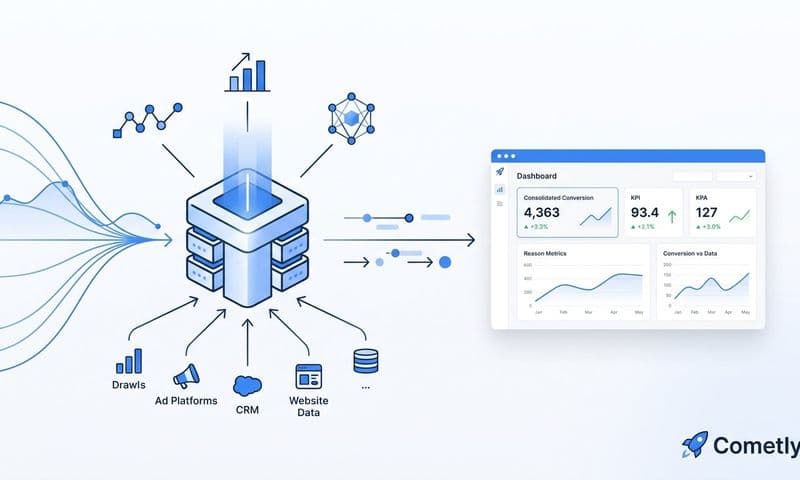
If you are running paid ads for a B2B SaaS company and still relying on platform-native dashboards to measure performance, you are likely making budget decisions based on incomplete data. Meta tells you one story. Google tells you another. Your CRM tells you something different entirely. None of them agree, and none of them show you the full picture.
Marketing analytics platforms solve this by giving you a unified view of every touchpoint, from the first ad click to closed-won revenue. Instead of patching together data from five different sources, you get a single source of truth that connects your ad spend directly to pipeline and revenue.
This guide walks you through exactly how to sign up for a marketing analytics platform and get it fully configured so your team can start making data-driven decisions fast. You will learn how to choose the right platform, complete the signup process, connect your ad channels and CRM, configure conversion tracking, select your attribution model, and start analyzing campaign performance.
By the end, you will have a working marketing analytics setup that ties every dollar of ad spend to actual business outcomes. Whether you are a growth marketer, a demand gen lead, or a SaaS founder trying to understand which channels are actually driving growth, this guide is built for you. No technical background required. Each step includes clear success indicators so you know exactly when you are ready to move forward.
Step 1: Choose the Right Marketing Analytics Platform for B2B SaaS
Not all analytics tools are built for the same job. Before you sign up for anything, get clear on what you actually need. Are you trying to track ad ROI across multiple channels? Attribute pipeline to specific campaigns? Understand the full customer journey from first touch to closed deal? Your answer shapes which platform is the right fit.
For B2B SaaS companies, the requirements are specific. You need a platform that supports multi-touch attribution, integrates with your CRM, handles server-side tracking, and connects marketing activity to pipeline and revenue, not just website sessions or form fills. Generic web analytics tools like Google Analytics are useful for understanding site behavior, but they were not built for ad attribution and revenue tracking across a complex B2B buying journey.
Here is what to evaluate when comparing platforms:
Multi-touch attribution support: The platform should be able to credit multiple touchpoints across the customer journey, not just the last click before a conversion. B2B deals often involve dozens of interactions over weeks or months.
CRM and revenue integrations: Look for native connections to HubSpot, Salesforce, and billing tools like Stripe. This is what allows you to trace a closed-won deal back to the original ad that started the conversation.
Server-side tracking capabilities: Browser-based pixels are increasingly unreliable due to ad blockers and iOS privacy changes. A platform with Conversion API support captures events that client-side tracking misses.
Native ad channel integrations: Confirm the platform connects directly to Meta Ads, Google Ads, LinkedIn Ads, TikTok Ads, and any other channels you are actively running. You want data flowing automatically, not manually exported.
B2B-specific features: Pipeline attribution, deal stage mapping, and revenue attribution are features built specifically for B2B use cases. If a platform does not offer these, it is likely designed for e-commerce or B2C workflows.
Cometly is purpose-built for B2B SaaS companies and checks all of these boxes. It connects ad spend directly to pipeline and revenue with 70+ native integrations, and its AI-powered recommendations help teams identify which campaigns are worth scaling and which are wasting budget.
A common mistake at this stage is defaulting to a free or familiar tool that handles part of the job but not all of it. The goal is a platform that covers the entire journey in one place. If you are unsure whether your current setup is falling short, reviewing the signs you need better marketing analytics can help clarify the gaps.
Success indicator: You have a shortlist of platforms that support multi-touch attribution, server-side tracking, and CRM data syncing, and you have identified which one aligns best with your current stack.
Step 2: Create Your Account and Configure Workspace Settings
Once you have chosen your platform, the signup process itself is straightforward. Navigate to the platform's signup page and create your account using a business email address. Avoid using a personal email here. Platforms like Cometly are built for teams, and using a business email makes it easier to manage access, hand off accounts, and maintain continuity if team members change.
After creating your account, you will be prompted to set up your workspace. Take this step seriously. The settings you configure here affect how data is organized and reported across your entire team.
Here is what to configure during workspace setup:
Company name and industry: Enter your company name and select B2B SaaS as your industry if the option is available. Some platforms use this to surface relevant templates or default settings.
Team size and structure: This helps the platform calibrate recommendations and onboarding flows. Be accurate here.
Reporting currency: Set this to match the currency you use for ad spend and revenue tracking. Mismatched currencies create reporting headaches later, especially if you run campaigns across multiple regions.
Time zone: Set your time zone to match your primary business operations. If your team is distributed, align on a single time zone for reporting consistency.
Attribution window: This defines how far back the platform looks when crediting a touchpoint for a conversion. A 30-day or 90-day attribution window is common for B2B SaaS, where sales cycles can extend over several weeks. A window that is too short will undercount the contribution of early-funnel touchpoints.
Next, invite your team members and assign appropriate roles. Most platforms offer at minimum three permission levels: admin, analyst, and viewer. Admins can configure integrations and settings. Analysts can build reports and access full campaign data. Viewers can see dashboards but cannot make changes.
Setting up roles during onboarding prevents data access bottlenecks later. If your demand gen manager needs campaign-level data and your CEO needs a summary dashboard, configure that now rather than troubleshooting access issues mid-quarter. Understanding the right marketing analytics metrics to track for each role will help you structure dashboards effectively from the start.
Success indicator: Your workspace is live, team members have received invitations and confirmed access, and your reporting currency, time zone, and attribution window are all configured to reflect your actual business context.
Step 3: Connect Your Ad Platforms and Marketing Channels
This is where your analytics platform starts earning its keep. Connecting your ad channels pulls campaign, ad set, and ad-level data directly into your dashboard, giving you a cross-channel view of performance without manual exports or spreadsheet stitching.
Start with your highest-spend channels and work outward. For most B2B SaaS companies, that means Meta Ads, Google Ads, and LinkedIn Ads. If you are running TikTok campaigns, connect those as well.
Here is how to approach each connection:
Meta Ads: Navigate to the integrations section of your analytics platform and select Meta Ads. You will be prompted to log in with your Facebook account and authorize access to your ad account. Grant read permissions so the platform can pull campaign data. If you manage multiple ad accounts, select all relevant accounts during the authorization flow.
Google Ads: Connect your Google Ads account using your Google credentials. Verify that campaign, ad group, and keyword-level data is flowing in correctly. This is also where you will later configure Google Enhanced Conversions as part of your server-side tracking setup.
LinkedIn Ads: LinkedIn's API provides campaign and ad-level performance data. Connect your LinkedIn Campaign Manager account and confirm that impression, click, and spend data is syncing.
TikTok Ads and other channels: Follow the same authorization process for any additional paid channels. The goal is to have every active ad account connected so no spend goes untracked.
Beyond paid channels, connect any organic or email channels that the platform supports. While paid attribution is typically the priority, having organic traffic and email engagement data in the same view helps you understand the full mix of touchpoints contributing to conversions. This is a core principle of effective data analytics for digital marketing.
After connecting each channel, verify that historical campaign data is visible in the dashboard. Most platforms pull in 30 to 90 days of historical data by default. Confirm that campaign names, ad set names, and spend figures match what you see in the native ad platforms. Discrepancies at this stage are usually a sign that the wrong ad account was connected or that permissions were not granted correctly.
A common mistake here is connecting only one or two channels and assuming the picture is complete. If you are running LinkedIn campaigns but have not connected LinkedIn Ads, you are missing attribution data from an entire channel, which will skew your performance analysis.
Success indicator: All active ad channels are connected, historical campaign data is visible in the platform, and spend figures are consistent with what you see in your native ad dashboards.
Step 4: Set Up Conversion Tracking and Server-Side Events
Connecting your ad channels shows you where money is being spent. Conversion tracking shows you what that spending is actually producing. This step is where accurate measurement begins.
Start by installing the platform's tracking pixel or JavaScript snippet on your website. Most platforms provide a single snippet that you add to the header of every page, either directly in your site's code or through a tag manager like Google Tag Manager. Follow your platform's specific installation instructions, as the exact method varies.
Once the pixel is installed, configure your conversion events. These are the high-value actions you want to track on your site. For most B2B SaaS companies, the core conversion events include:
Demo requests: Any form submission or calendar booking that represents a request for a product demo.
Free trial signups: Users who create an account and begin a trial. This is often the most direct signal of purchase intent.
Pricing page visits: While not a conversion in the traditional sense, tracking pricing page visits helps you understand bottom-funnel intent signals.
Form submissions: Contact forms, content downloads, or any other gated interaction that captures a lead.
After configuring each event, test it by completing the action yourself on your website and verifying that the event appears in your analytics platform within a few minutes. Do not skip this step. Untested conversion events are one of the most common sources of reporting errors.
Now for the critical upgrade: server-side tracking. Browser-based pixels are increasingly limited by ad blockers, iOS privacy restrictions, and browser-level tracking prevention. In practice, this means a meaningful portion of your conversions may never be recorded by a client-side pixel alone. These are exactly the kinds of attribution challenges in marketing analytics that server-side solutions are designed to solve.
Server-side tracking through Conversion APIs addresses this gap. Instead of relying entirely on the user's browser to fire an event, your server sends conversion data directly to the ad platform. This captures events that the pixel would have missed and provides a more complete picture of campaign performance.
For Meta, this means setting up Meta Conversion API (CAPI). For Google, it means configuring Enhanced Conversions. Cometly handles this natively, sending enriched, first-party conversion data back to Meta, Google, and other ad platforms automatically. This not only improves your attribution data but also feeds the ad platform's AI better signals for targeting and optimization.
A common mistake at this stage is relying solely on pixel tracking and assuming it is capturing everything. It is not. Server-side tracking is not optional for teams that want accurate data in 2026.
Success indicator: At least three conversion events are configured, tested, and firing correctly. Events are visible in both your analytics platform and your connected ad platform dashboards, confirming that data is flowing in both directions.
Step 5: Integrate Your CRM to Connect Leads to Revenue
This step is what separates marketing analytics from marketing attribution. Connecting your CRM transforms your platform from a lead-tracking tool into a revenue attribution engine.
Without CRM integration, you can see which campaigns are generating form fills. With it, you can see which campaigns are generating qualified pipeline and closed-won revenue. That distinction changes every budget decision you make.
Start by connecting your CRM. Most platforms support HubSpot and Salesforce as primary integrations, with additional options depending on the platform. In Cometly, the CRM connection is handled through the integrations panel. Authorize the connection using your CRM credentials and grant the necessary data access permissions.
Once connected, map your CRM pipeline stages to marketing touchpoints. This tells the analytics platform which deal stages correspond to which points in the buying journey. For example, a deal moving from "Marketing Qualified Lead" to "Sales Qualified Lead" to "Closed Won" should each be visible as distinct milestones that can be traced back to their originating ad source. This is the foundation of a complete B2B marketing analytics strategy.
Enable revenue data syncing so that closed-won deal values are attributed back to the campaigns that started the conversation. This is the core of revenue attribution: knowing that a specific LinkedIn campaign contributed to a deal that closed at a specific value, not just that it drove a form fill.
If you use Stripe or another billing tool, connect it as well. Stripe integration allows you to tie subscription revenue, including monthly recurring revenue and annual contract values, directly to the ad campaigns that acquired those customers. For SaaS companies measuring customer lifetime value, this connection is particularly valuable.
A common mistake at this stage is treating lead volume as the primary success metric and skipping the CRM integration entirely. Lead volume is a lagging indicator of pipeline health at best. Revenue attribution is what allows you to make confident decisions about where to scale and where to cut.
Success indicator: Your CRM is connected and syncing data. You can see deal stages and revenue values attributed to specific campaigns in your analytics dashboard. A closed-won deal should be traceable back to its original ad source.
Step 6: Select Your Attribution Model and Analyze Campaign Performance
You have connected your channels, configured conversion tracking, and integrated your CRM. Now it is time to choose how credit gets assigned across the customer journey and start drawing insights from your data.
Attribution models determine how the platform distributes credit for a conversion across the multiple touchpoints that preceded it. The model you choose shapes how you interpret channel performance and where you allocate budget. Here is a quick breakdown of the main options:
First-touch attribution: Gives 100% of the credit to the first channel that introduced the prospect to your brand. Useful for understanding what drives awareness, but ignores everything that happened afterward.
Last-click attribution: Gives 100% of the credit to the final touchpoint before conversion. Easy to understand but tends to over-reward bottom-funnel channels like branded search while undervaluing the awareness and nurture activity that built intent in the first place.
Linear attribution: Distributes credit evenly across all touchpoints in the customer journey. More balanced than first or last-touch, and a reasonable starting point for teams new to multi-touch measurement.
Data-driven multi-touch attribution: Uses algorithmic weighting based on actual conversion patterns to assign credit. This is the most accurate model for B2B SaaS companies with complex buying journeys, as it reflects the real contribution of each touchpoint rather than applying a fixed rule.
For most B2B SaaS teams, linear or data-driven multi-touch attribution will provide the most honest picture of channel contribution. The longer your sales cycle, the more important it is to use a model that credits multiple touchpoints rather than defaulting to the last click. Reviewing the best marketing attribution analytics options available can help you validate which approach fits your specific sales cycle.
Once your model is selected, use the attribution dashboard to compare channel performance across a few key dimensions. Look at cost per acquisition by channel, revenue generated per campaign, and pipeline contribution by source. Identify which campaigns are consistently producing high-value deals and which are generating volume without downstream impact.
Cometly's AI-powered recommendations surface high-performing ads and campaigns across every channel, helping you identify where to scale budget with confidence rather than relying on intuition. As more conversion data accumulates, these recommendations become increasingly precise. This is where the power of AI marketing analytics becomes most visible in day-to-day decision making.
Set up a regular reporting cadence. A weekly performance review keeps your team aligned on what is working. A monthly attribution analysis gives you the longer view needed to spot trends, evaluate new channels, and adjust your budget allocation based on revenue contribution rather than lead volume.
A common mistake at this stage is sticking with last-click attribution because it is the default. Defaulting to last-click systematically undervalues top-funnel awareness campaigns and can lead to cutting channels that are actually playing a critical role in starting conversations that eventually convert.
Success indicator: You can view multi-touch attribution data across all connected channels and identify your top-performing campaigns by revenue contribution, not just click volume or lead count.
Your Marketing Analytics Setup Is Ready: What to Do Next
You have now completed all six steps. Your workspace is configured, your ad channels are connected, conversion events are firing, your CRM is syncing, and you have selected an attribution model that reflects how your customers actually buy. That is a meaningful foundation.
Here is a quick-start checklist to confirm everything is in place before you start acting on the data:
Workspace configured: Currency, time zone, attribution window, and team roles are all set correctly.
All ad channels connected: Meta, Google, LinkedIn, and any other active channels are authorized and syncing historical data.
Conversion events firing: At least three conversion events are configured, tested, and confirmed in both your analytics platform and your ad platforms.
Server-side tracking active: Conversion API connections are live for Meta and Google, capturing events that browser pixels would miss.
CRM syncing: Deal stages and revenue values are flowing into your attribution dashboard.
Attribution model selected: You are using a multi-touch model that reflects your sales cycle, not just last-click defaults.
Your immediate next actions: share your first attribution report with your team, review ad spend against revenue attribution across your active campaigns, and identify one campaign to either optimize or scale based on what the data shows. That first decision, made with real attribution data rather than platform-native guesswork, is where the value of this setup becomes tangible.
Going forward, audit your conversion events monthly to confirm they are still firing correctly. Review your attribution model fit as your sales cycle evolves. Use AI-powered recommendations to guide budget allocation decisions rather than relying on gut feel or the loudest voice in the room.
The data is there. The setup is done. Now it is time to use it.
Ready to connect your ads, CRM, and revenue data in one place and see exactly which campaigns are driving growth? Get your free demo and start capturing every touchpoint to maximize your conversions with Cometly.