
You've just spent three hours analyzing your Meta Ads dashboard. Campaign performance looks mediocre at best. The numbers say you're barely breaking even. So you make the logical call: pause the underperforming ad sets, shift budget to what's "working," and move on.
Two weeks later, your sales team mentions something odd. Revenue from new customers hasn't dropped—it's actually up. You check your CRM. The leads are still flowing. The purchases are still happening. But according to your ad platform, those conversions never existed.
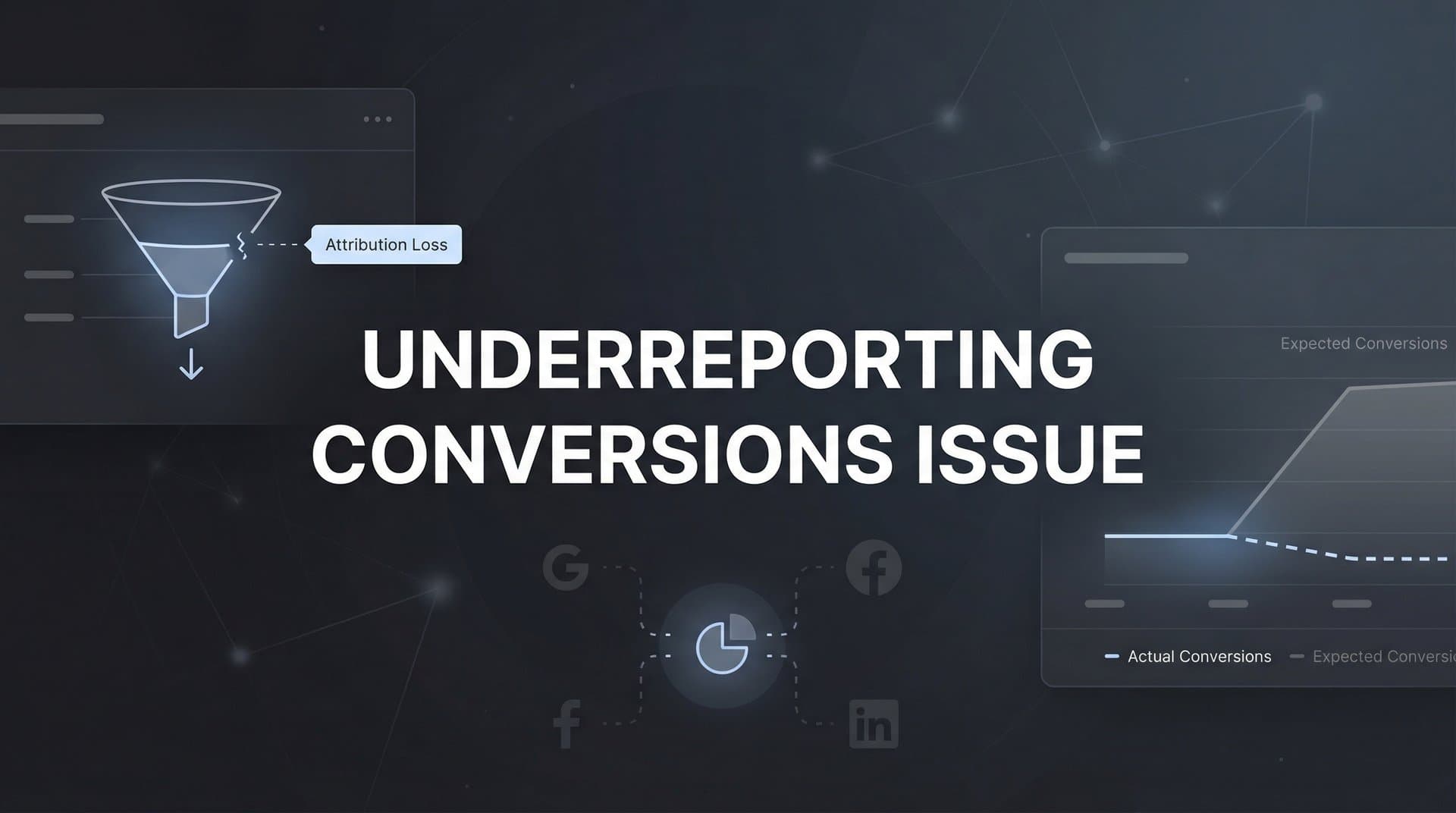
Welcome to the underreporting conversions issue, one of the most frustrating and costly problems facing digital marketers today. Your ads are driving real results. Your platforms just can't see them anymore. And when you make decisions based on incomplete data, you're essentially flying blind while convinced you can see perfectly.
Why Ad Platforms Miss Conversions (And It's Getting Worse)
The tracking infrastructure that powered digital advertising for over a decade has fundamentally broken. What changed? Privacy.
When Apple rolled out iOS 14.5 in 2021, it introduced App Tracking Transparency—a feature that lets users opt out of cross-app tracking. The result? Meta reported that the update would reduce their 2022 revenue by approximately $10 billion. But the real impact went far beyond one company's bottom line. It fundamentally altered how conversion tracking works across the entire digital advertising ecosystem. Understanding how to fix iOS 14 tracking issues has become essential for marketers navigating this new landscape.
Here's what happens now. A potential customer sees your Facebook ad on their iPhone while browsing during lunch. They're interested, but not ready to buy. Three days later, they're on their laptop at home, searching Google for your product category. They click a search ad, browse your site, but still don't convert. A week passes. They finally decide to purchase, typing your URL directly into their browser.
From the customer's perspective, this is a normal buying journey. From your ad platform's perspective? That conversion is invisible.
The gap between client-side pixel tracking and actual customer behavior continues to widen. Browser-based pixels—the JavaScript snippets that have powered conversion tracking for years—face an increasingly hostile environment. Safari blocks third-party cookies by default. Firefox does the same. Chrome has announced plans to phase them out. Ad blockers remove tracking scripts entirely. Incognito mode prevents cookies from persisting.
Even when pixels do fire, they're often too slow. A customer completes a purchase and immediately closes the browser tab. The pixel never loads. The conversion never registers. Your platform thinks the ad failed when it actually drove a sale. This is why many marketers discover their Facebook pixel is missing conversions at alarming rates.
Cross-device journeys make attribution increasingly difficult for native platform tools. Meta's pixel can track behavior within Meta properties, but it struggles to connect that iPhone user to the same person on a desktop browser days later. Google faces similar challenges connecting mobile app interactions to desktop conversions.
The problem compounds for businesses with longer sales cycles. If your customers research for weeks before buying, take sales calls, or involve multiple decision-makers, client-side tracking becomes nearly useless. The pixel might capture the initial click, but by the time the deal closes in your CRM weeks later, that connection is long gone.
Privacy regulations have accelerated these challenges. GDPR in Europe and CCPA in California restrict how companies can track users. Cookie consent banners give users the option to reject tracking entirely. Many do. The result is that even perfectly implemented tracking pixels miss significant portions of actual conversion activity.
The Hidden Cost of Making Decisions on Incomplete Data
Underreporting isn't just an analytics annoyance. It's a strategic liability that costs you money in ways you might not immediately recognize.
The most direct impact? You pause winning campaigns. When a campaign shows a 2x return in your ad dashboard but actually delivers 4x return in reality, you're making decisions based on fiction. You cut budget from channels that are profitably driving growth. You miss opportunities to scale what's working because the data tells you it isn't.
Think about the compounding effect of this mistake. You pause a campaign that was actually generating $50,000 in monthly revenue but only showed $25,000 in platform attribution. That's $50,000 in lost revenue this month. But it's also lost customer lifetime value, lost referrals, and lost momentum in market penetration. The true cost extends far beyond the immediate number.
Budget misallocation occurs when high-performing channels appear to underperform. Your Google Search campaigns might be capturing demand created by your Meta awareness campaigns. But if Meta's conversions are severely underreported, you'll naturally shift budget toward search. You're rewarding the channel that captures demand while starving the channel that creates it. Understanding what assisted conversions are helps reveal these hidden channel interactions.
This misallocation creates a negative spiral. As you reduce spend on awareness channels, fewer people enter your funnel. Your search campaigns start to struggle because there's less demand to capture. Now both channels appear to be underperforming, and you're left wondering why your entire marketing program is deteriorating.
Ad platform algorithms optimize toward incomplete conversion data, creating another layer of dysfunction. Meta's algorithm needs conversion signals to learn which audiences are most likely to purchase. When it only sees half your actual conversions, it optimizes toward a partial picture of your ideal customer.
The algorithm might be serving ads to people who browse but don't buy, while missing the audience segment that actually converts—simply because those conversions aren't being reported back to the platform. You're teaching the machine learning system to find the wrong people.
This creates a feedback loop that's difficult to escape. Incomplete data leads to suboptimal targeting. Suboptimal targeting leads to worse performance. Worse performance leads to budget cuts. Budget cuts reduce the volume of conversion signals. Fewer signals make the algorithm even less effective. The cycle continues.
Perhaps most frustratingly, underreporting makes it nearly impossible to run meaningful experiments. You launch a new creative approach or test a different audience segment. The results look flat in your dashboard. But in reality, the test was a success—you just can't see it. You abandon winning strategies before they have a chance to prove themselves.
How to Spot Underreporting in Your Own Campaigns
Identifying the underreporting conversions issue in your campaigns requires detective work, but the clues are usually hiding in plain sight.
Start by comparing platform-reported conversions against CRM or backend sales data. Export your conversion data from Meta, Google, or whatever platforms you're running. Pull your actual sales data from your CRM, payment processor, or order management system. Line them up side by side for the same time period.
The gap between these numbers tells you how severe your underreporting problem is. If your ad platforms show 100 conversions but your backend shows 150, you're missing 33% of your actual results. That's a significant blind spot affecting every decision you make. This is a common symptom of paid ads underreporting conversions.
Look for discrepancies between ad spend increases and actual revenue trends. Did you increase Meta spend by 50% last month? Check your bank account. If revenue increased proportionally but Meta's reported conversions barely moved, you've found your smoking gun.
This pattern is especially revealing because it shows the disconnect between what's actually happening in your business and what your dashboards are telling you. Your customers are responding to your ads. Your platforms just can't track them.
Identify patterns where certain channels consistently show lower attributed conversions than expected. Some channels are hit harder by underreporting than others. Top-of-funnel awareness campaigns on Meta and TikTok often show severe underreporting because they start customer journeys that conclude days or weeks later through other channels.
If your awareness campaigns consistently show poor return while your business is growing, that's a red flag. The conversions are happening—they're just being attributed elsewhere or not attributed at all.
Pay attention to attribution window discrepancies. Most ad platforms use a 7-day click or 1-day view attribution window by default. But if your sales cycle is longer than that, you're automatically missing conversions that happen outside those windows. A customer who clicks your ad and purchases 10 days later won't show up in standard reporting.
Check your Google Analytics data against platform reporting. While Google Analytics has its own tracking limitations, comparing multiple data sources can reveal patterns. If GA shows significantly more conversions from paid social than Meta reports, you've identified a gap that needs addressing. Many marketers find that Google Analytics is missing conversions as well, compounding the visibility problem.
Talk to your sales team. This might sound obvious, but your sales reps often have insights that don't show up in any dashboard. Are they fielding calls from people who mention seeing your ads? Are demo requests increasing even though ad-attributed conversions are flat? That qualitative feedback can confirm what the quantitative data is hinting at.
Server-Side Tracking: The Foundation for Accurate Data
If client-side tracking is broken, the solution is to track conversions where browsers and privacy restrictions can't interfere: on your server.
Server-side tracking bypasses browser limitations and ad blockers entirely. Instead of relying on JavaScript pixels that load in a user's browser, server-side tracking sends conversion data directly from your server to ad platforms. No browser can block this connection. No privacy setting can prevent it. No slow page load can interrupt it.
Here's how it works in practice. A customer completes a purchase on your website. Your server processes the order, updates your database, and charges the customer's credit card. At that same moment, your server sends a conversion event directly to Meta's Conversions API or Google's Enhanced Conversions endpoint.
The entire process happens server-to-server. The customer's browser isn't involved. Their privacy settings don't matter. Whether they're using an ad blocker or browsing in incognito mode becomes irrelevant. The conversion is captured because it's happening where the actual transaction occurs—on your backend. Implementing the Meta Conversions API is one of the most effective ways to recover lost conversion data.
First-party data collection provides more reliable conversion signals. Server-side tracking lets you send information that client-side pixels can't access: order values, product categories, customer lifetime value, subscription status, and other business-critical data that exists in your database but not in the browser.
This enriched data isn't just more complete—it's more accurate. You're reporting conversions based on what actually happened in your system of record, not what a pixel thinks happened based on browser behavior.
Connecting your CRM directly to attribution systems captures conversions that pixels miss entirely. Many conversions happen outside the browser: phone calls, in-person sales, deals closed through sales teams, or purchases that occur weeks after the initial ad interaction. Learning how to track offline conversions is critical for businesses with sales teams or phone-based closing processes.
When your CRM feeds conversion data into your attribution system, these offline conversions become visible. A lead fills out a form after clicking your ad. They go through a sales process. Three weeks later, they become a customer. Server-side tracking connects that closed deal back to the original ad that started the journey.
Implementation requires technical setup, but it's increasingly accessible. Most modern e-commerce platforms and CRMs offer built-in integrations or plugins that handle server-side tracking. The technical barrier that once made this enterprise-only technology is rapidly disappearing.
The impact is immediate and measurable. Businesses that implement server-side tracking typically see reported conversions increase by 20-40% or more—not because performance improved, but because they're finally seeing conversions that were always there.
Feeding Better Data Back to Ad Platforms
Capturing accurate conversion data solves half the problem. The other half is getting that data back to your ad platforms so their algorithms can use it.
Conversion APIs and server-side events improve ad platform algorithm optimization in ways that directly impact your campaign performance. When Meta's algorithm receives complete conversion data, it can identify patterns in who actually buys from you, not just who clicks your ads. Understanding how to sync conversions to ad platforms is essential for maximizing algorithm performance.
This distinction matters enormously. A pixel might show that 25-year-old males in urban areas click your ads frequently. But your server-side data reveals that 35-year-old suburban professionals actually purchase. With complete data, the algorithm stops optimizing for clicks and starts optimizing for revenue.
Enriched conversion data helps platforms find more customers like your actual buyers. Standard pixel tracking sends basic signals: someone converted, here's when. Server-side tracking sends rich signals: someone purchased $500 worth of specific products, they're a repeat customer with a lifetime value of $2,000, and they typically buy during evening hours.
Ad platforms use this enriched data to build more accurate lookalike audiences and refine their targeting models. Instead of finding people similar to your clickers, they find people similar to your high-value customers. The quality of traffic improves because the algorithm is learning from better examples.
Real-time syncing ensures platforms receive accurate signals for bidding and targeting. When conversion data flows back to ad platforms immediately, their algorithms can react quickly. A campaign that's driving conversions gets more budget. Creative that's working gets more delivery. Audiences that are converting get priority. Resolving conversion sync issues with ad platforms eliminates the delays that hurt campaign optimization.
Without real-time data, there's a lag between what's working and when the algorithm knows it's working. You might run a winning campaign for days before the platform's algorithm recognizes it and scales it up. Real-time syncing eliminates this delay.
The feedback loop becomes virtuous instead of vicious. Complete conversion data leads to better targeting. Better targeting leads to more conversions. More conversions provide more data. More data improves targeting further. Each cycle makes your campaigns more effective.
This is particularly powerful for conversion optimization campaigns. When you tell Meta or Google to optimize for purchases, they need purchase data to learn from. If they only see 60% of actual purchases, they're learning from an incomplete dataset. Feed them 100% of purchases, and the optimization becomes dramatically more effective. For Google specifically, implementing Google Enhanced Conversions can significantly improve data quality.
The technical implementation typically involves setting up Conversions API for Meta, Enhanced Conversions for Google, or equivalent server-side event tracking for other platforms. Most marketing attribution platforms handle this syncing automatically, sending enriched conversion events to multiple ad platforms simultaneously.
Building a Reliable Attribution System
Fixing underreporting requires more than just better tracking technology. It requires rethinking how you attribute conversions across your entire marketing mix.
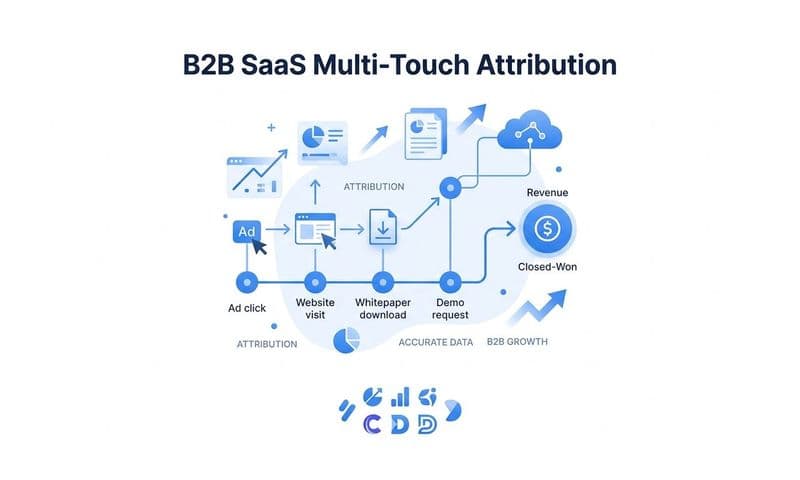
Multi-touch attribution reveals the full customer journey across touchpoints. Instead of giving all credit to the last click before conversion, multi-touch attribution recognizes that customers interact with multiple channels before purchasing. That Meta ad created awareness. The Google search captured intent. The email reminder closed the deal. Knowing how to track conversions across platforms is fundamental to building this complete picture.
When you can see the complete journey, you stop making false choices between channels. You recognize that your awareness campaigns and conversion campaigns work together, not in competition. Budget decisions become about optimizing the entire funnel, not just rewarding the last touchpoint.
Comparing attribution models helps identify where underreporting is most severe. Run the same conversion data through last-click attribution, first-click attribution, linear attribution, and time-decay models. The differences between these models reveal which channels are being systematically undervalued by standard reporting.
If a channel shows dramatically different results depending on the attribution model, that's a signal. Top-of-funnel channels that look weak in last-click attribution but strong in first-click attribution are likely suffering from severe underreporting in standard platform metrics. Understanding the difference between first touch conversions and last touch conversions helps you interpret these discrepancies.
Centralizing data from all channels provides a single source of truth for decision-making. When your attribution platform connects to Meta, Google, LinkedIn, your CRM, your email system, and your website analytics, you can finally see how these channels interact and influence each other.
This centralized view eliminates the problem of comparing apples to oranges. You're not trying to reconcile Meta's attribution logic with Google's attribution logic with your CRM's reporting. You're looking at one unified dataset that applies consistent methodology across all channels.
The goal isn't perfect attribution—that's impossible. The goal is directionally accurate attribution that gives you confidence in your decisions. You might not know exactly which touchpoint deserves credit for a conversion, but you know which channels are contributing to revenue and which aren't.
Making Decisions You Can Actually Trust
The underreporting conversions issue isn't an inevitable reality of modern marketing. It's a solvable problem with clear solutions and measurable results.
Start by identifying the gap between what your platforms report and what's actually happening in your business. Compare platform data to backend revenue. Look for patterns in discrepancies. Quantify how much conversion activity you're missing. You can't fix a problem you haven't measured.
Implement server-side tracking to capture conversions that client-side pixels miss. Whether you build custom integrations or use a platform that handles it for you, moving conversion tracking to the server eliminates the browser-based limitations causing most underreporting.
Feed that better data back to your ad platforms through Conversion APIs and server-side events. Let the algorithms optimize based on complete information about who's actually buying from you. Watch your campaign performance improve as targeting becomes more accurate.
Build a comprehensive attribution system that connects all your marketing channels and reveals the full customer journey. Stop making decisions based on isolated platform metrics. Start making decisions based on unified data that shows how your channels work together to drive revenue.
The difference this makes is profound. You'll stop pausing campaigns that are actually working. You'll allocate budget based on real contribution to revenue, not incomplete attribution. You'll scale with confidence because you trust the data informing your decisions.
Marketing has always been part art and part science. But when the science is based on incomplete data, you're forced to rely more heavily on intuition and guesswork. Fix the data problem, and you can make decisions that are both strategically sound and empirically validated.
Your ads are probably working better than you think. The question is whether you have the visibility to recognize it and the confidence to act on it. With accurate conversion tracking, proper attribution, and complete data flowing through your systems, you finally can.
Ready to elevate your marketing game with precision and confidence? Discover how Cometly's AI-driven recommendations can transform your ad strategy—Get your free demo today and start capturing every touchpoint to maximize your conversions.