UTM parameters are the backbone of campaign tracking. Without them, you are essentially guessing which channels, ads, and campaigns are driving traffic and conversions. But building UTMs manually is error-prone, and tracking them without a proper system means losing the data that matters most when it comes time to justify spend or scale what is working.
The right UTM builder and tracker does more than generate links. It enforces naming conventions, stores your parameters, and connects campaign data to real business outcomes like leads, pipeline, and revenue. That last part is where most tools fall short, especially for B2B SaaS teams managing long sales cycles across multiple channels.
This guide covers the top UTM builder and tracker tools available in 2026, ranging from lightweight link generators to full attribution platforms. Each tool is evaluated on ease of use, tracking depth, integrations, and value for B2B SaaS marketing teams.
1. Cometly
Best for: B2B SaaS teams that need UTM tracking connected to pipeline and closed revenue
Cometly is a marketing attribution platform built specifically for B2B SaaS companies that tracks UTM parameters through the full funnel, from first ad click to closed-won revenue.
 9 Best Marketing Attribution Platforms to Compare in 2026
Where This Tool Shines
Most UTM tools stop at the click or lead level. Cometly keeps tracking through the entire sales cycle, attributing pipeline and revenue back to the original UTM source. This matters enormously for B2B SaaS companies where a deal might take weeks or months to close, and last-click attribution would completely misrepresent which campaigns actually drove the result.
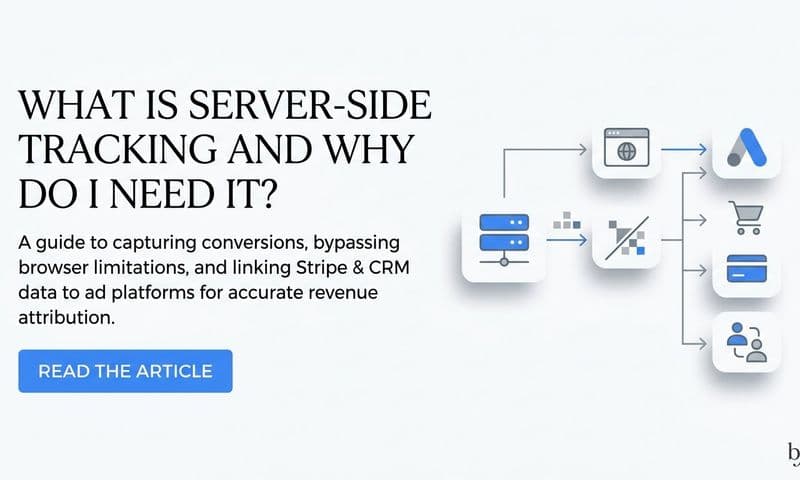
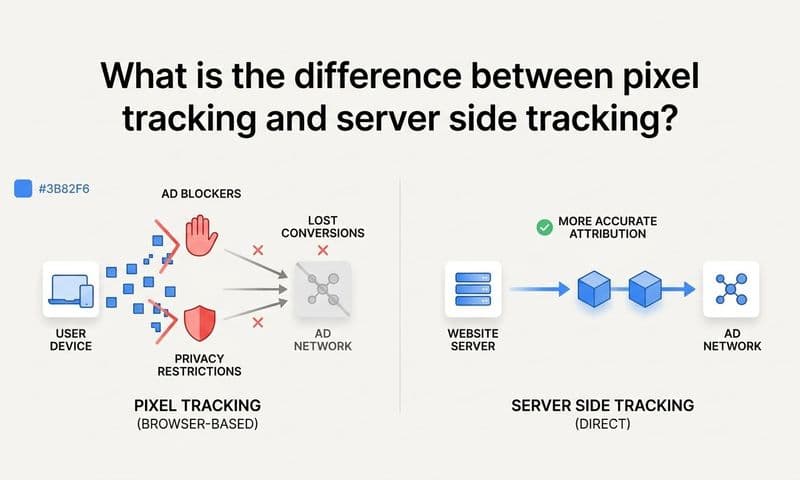
Cometly also addresses one of the most common gaps in UTM tracking: data loss from ad blockers and cookie restrictions. Server-side conversion tracking and Conversion API integration mean UTM data is captured even when client-side tracking fails. The AI ads manager then surfaces which UTM-tagged campaigns and ad sets are performing, so you can scale with confidence rather than assumption.
Key Features
Multi-touch attribution: Connects UTM-tagged campaigns to pipeline and revenue across the full buyer journey, not just the first or last click.
Server-side tracking and Conversion API integration: Captures UTM data reliably even when browsers block cookies or users have ad blockers active.
AI ads manager: Surfaces high-performing campaigns and ad sets based on actual revenue contribution, not just click volume or surface-level metrics.
Customer journey analytics: Shows every UTM-tagged touchpoint in the buyer journey so you can see exactly how prospects move from first touch to conversion.
70+ native integrations: Connects with major ad platforms, CRMs, and Stripe, bringing all your campaign data into one place without manual exports.
Best For
Cometly is the right fit for B2B SaaS marketing teams and growth leaders who need more than click data. If you are running paid, organic, and email programs and need to connect UTM-tagged campaigns directly to pipeline and revenue, this is the platform built for that job. It is particularly strong for teams that have outgrown GA4 or HubSpot attribution and need a single source of truth across the full funnel.
Pricing
Contact Cometly directly for current pricing details. Given the depth of attribution and integrations offered, it is positioned as a premium solution for growth-stage and scaling B2B SaaS teams.
2. Google Analytics 4 (GA4)
Best for: Teams that want free UTM reporting integrated with Google Ads
Google Analytics 4 is Google's web analytics platform that natively ingests UTM parameters and reports on traffic by source, medium, and campaign.
 11 Best Marketing Analytics Tools to Track and Optimize Campaign Performance in 2026
Where This Tool Shines
GA4 is the default starting point for most marketing teams because it is free, widely understood, and requires no extra setup to read UTM parameters. Tag a URL correctly and GA4 automatically categorizes that session by source, medium, and campaign in your reports. For teams running Google Ads, the native integration adds another layer of campaign-level visibility without additional configuration.
The Exploration reports in GA4 let you build custom analyses around UTM data, which is useful for teams comfortable with the interface. That said, GA4 has real limitations for B2B SaaS: it does not connect to your CRM, it cannot track long sales cycles, and session-level attribution is often misleading for multi-touch buyer journeys.
Key Features
Automatic UTM ingestion: Reads utm_source, utm_medium, utm_campaign, utm_term, and utm_content parameters from tagged URLs without additional setup.
Session and event-level reporting: Breaks down traffic and conversions by source, medium, and campaign across your entire site.
Google Ads integration: Connects paid campaign data directly with website behavior for campaign-level performance reporting.
Exploration reports: Custom analysis workspace where you can build UTM-specific reports and funnels.
Free tier: Covers the needs of most small to mid-size teams with no cost barrier to entry.
Best For
GA4 is ideal for teams in the early stages of UTM tracking or those primarily running Google Ads campaigns. It is less suited to B2B SaaS companies with complex sales cycles that need UTM data connected to CRM opportunities and closed revenue.
For a deeper dive into this space, see our AI ad graphic generator guide.
Pricing
Free for standard use. GA4 360 is available for enterprise teams at a significantly higher price point, available on request from Google.
3. UTM.io
Best for: Marketing teams that need consistent UTM naming conventions and centralized link management
UTM.io is a dedicated UTM management platform that centralizes link building, storage, and team collaboration to eliminate inconsistent campaign data.
 9 Best UTM Parameter Tracking Tools for Marketers in 2026
Where This Tool Shines
The biggest UTM problem most teams face is not building the links. It is the fact that different people on the same team create inconsistent parameters. One person writes "Google" and another writes "google_ads" and suddenly your analytics platform treats them as separate sources. UTM.io solves this by giving teams shared templates and a centralized workspace where naming conventions are enforced before a link is ever created.
The platform also stores every UTM-tagged link your team creates, making it searchable and organized by campaign. This is genuinely useful when you are trying to audit past campaigns or onboard new team members who need to follow established conventions.
Key Features
Centralized UTM workspace: Stores all campaign links in one searchable location, organized by campaign and team.
UTM templates: Enforces consistent naming conventions across the team so your analytics data stays clean and reliable.
Built-in link shortener: Creates cleaner, shorter URLs for use in social media, email, and paid ads.
We compare the leading options in our AI ads generator roundup.
Team collaboration: Shared workspaces and user permissions so multiple team members work from the same source of truth.
Campaign-level organization: Groups links by campaign for easier management across multi-channel programs.
Best For
UTM.io is a strong fit for marketing teams of two or more people where naming convention inconsistency is already causing problems in reporting. It is a workflow tool rather than an attribution platform, so it works best alongside an analytics or attribution tool that handles the reporting side.
Pricing
Free plan available. Paid plans start at approximately $29 per month with additional features for larger teams and higher link volumes.
For a deeper dive into this space, see our AI ad creative generator guide.
4. HubSpot
Best for: B2B teams already using HubSpot CRM that want UTM data on contact and deal records
HubSpot Marketing Hub includes UTM tracking that stores campaign source data directly on contact and deal records inside the CRM, connecting marketing touchpoints to sales pipeline.
 9 Best UTM Builder and Tracker Tools in 2026
Where This Tool Shines
HubSpot's advantage is that UTM data does not stay isolated in an analytics tool. When a contact submits a form or visits your site through a UTM-tagged link, HubSpot stores those parameters as contact properties. This means your sales team can see which campaign sourced a lead, and your marketing team can build attribution reports that connect UTM sources to actual deals and revenue inside the CRM.
For B2B teams already running HubSpot as their CRM and marketing automation platform, this integration is seamless. You do not need a separate tool to bridge the gap between campaign data and contact records. The built-in UTM URL builder inside Marketing Hub makes link creation straightforward without leaving the platform.
Key Features
UTM parameters as contact properties: Stores source, medium, and campaign data directly on contact records for CRM-level visibility.
Campaign attribution reports: Connects UTM sources to deals and revenue within HubSpot's reporting suite.
Built-in UTM URL builder: Generates tagged URLs without leaving the Marketing Hub interface.
Ads integration: Connects paid campaign data from Google, Facebook, and LinkedIn with contact and deal attribution.
Original source tracking: Captures first-touch attribution at the contact level for lifecycle reporting.
Best For
HubSpot is the right choice for B2B SaaS teams that are already invested in the HubSpot ecosystem and want UTM data connected to their CRM without adding another tool. Teams that need more sophisticated multi-touch attribution or cross-channel revenue reporting often find HubSpot's native attribution somewhat limited.
Pricing
Marketing Hub Starter begins at $20 per month. Full attribution reporting features require Professional or Enterprise tiers, which are priced significantly higher.
5. Bitly
Best for: Social media and email marketers who need clean, short UTM-tagged links with basic click analytics
Bitly is a link management platform that combines URL shortening with UTM parameter tagging and click analytics, popular for campaigns where long URLs are impractical.
 9 Best UTM Builder and Tracker Tools in 2026
Where This Tool Shines
Bitly's core strength is presentation. Long UTM-tagged URLs are ugly, and in social media or SMS campaigns they can undermine trust and click-through rates. Bitly wraps those long tagged URLs into short, branded links that look clean and professional while still passing UTM data through to your analytics platform when clicked.
The click analytics Bitly provides, including geographic data, device breakdown, and referrer information, are useful for surface-level campaign monitoring. You can see whether a link is getting engagement and where clicks are coming from without opening GA4 or another analytics tool. That said, Bitly does not offer deep funnel attribution. It tells you about clicks, not conversions, pipeline, or revenue.
Key Features
Branded short links with UTM parameters: Creates clean, short URLs that still carry full UTM tagging through to your analytics platform.
Click analytics: Provides geographic, device, and referrer data for each link without needing to open a separate analytics tool.
Bulk link creation: Handles large volumes of UTM-tagged links for campaigns with many variations.
QR code generation: Creates QR codes linked to UTM-tagged URLs for offline-to-online campaign tracking.
Link management dashboard: Organizes all campaign links in one place with search and filtering.
Best For
Bitly is well suited for content marketers, social media managers, and email teams who need clean links with basic engagement data. It is not a fit for teams that need attribution beyond the click level.
Pricing
Free plan available with limited features. Paid plans start at approximately $8 per month, with higher tiers adding branded domains and advanced analytics.
6. Improvado
Best for: Enterprise marketing teams that need to unify UTM data from dozens of sources into a BI tool
Improvado is an enterprise marketing data aggregation platform that pulls UTM-tagged campaign data from 300+ sources, normalizes it, and delivers it to BI tools and dashboards for cross-channel analysis.
 9 Best AI Marketing Analytics Tools to Maximize Ad ROI in 2026
Where This Tool Shines
Improvado operates at a different level than most tools on this list. It is not a UTM builder or an attribution platform in the traditional sense. It is a data pipeline that pulls UTM-tagged campaign data from every ad platform, social channel, and marketing tool your team uses, normalizes it into a consistent format, and pushes it into your data warehouse or BI tool of choice.
For enterprise marketing teams running campaigns across ten or more channels, the normalization piece is genuinely valuable. Different platforms use different naming conventions for campaign data, and Improvado handles the translation so your Tableau or Looker dashboards show apples-to-apples comparisons across channels.
Key Features
300+ data source connectors: Pulls UTM-tagged campaign data from all major ad platforms, analytics tools, and marketing channels.
UTM data normalization: Standardizes campaign naming and UTM parameters across sources to enable consistent cross-channel reporting.
ETL pipeline to BI tools: Pushes normalized data into Tableau, Looker, BigQuery, and other business intelligence platforms.
Cross-channel performance reporting: Enables unified campaign analysis across paid, organic, email, and social channels.
Custom data transformation: Allows enterprise teams to map and transform data to match their internal reporting schemas.
Best For
Improvado is built for large marketing teams or agencies managing significant ad spend across many channels who already have a BI infrastructure in place. It is not suited to small teams or those looking for a simple UTM builder.
Pricing
Enterprise pricing available on request. Improvado is typically positioned for larger marketing organizations with substantial data volumes and dedicated analytics resources.
7. Ruler Analytics
Best for: B2B companies with offline conversion touchpoints like phone calls and live chat
Ruler Analytics is a B2B marketing attribution and call tracking platform that connects UTM source data to CRM opportunities and revenue, including offline touchpoints.
Where This Tool Shines
Ruler Analytics addresses a real gap that most UTM tracking tools ignore: what happens when a prospect picks up the phone instead of filling out a form. If your business generates leads through phone calls, live chat, or in-person inquiries, standard UTM tracking misses those conversions entirely. Ruler captures UTM data at the first website visit and then ties it to the eventual conversion, whether that happens online or offline.
The platform connects those UTM-attributed conversions back to CRM deals and closed revenue, giving B2B teams a more complete picture of which campaigns are actually driving business outcomes. Multi-touch attribution models let you choose how credit is distributed across the touchpoints in the buyer journey.
Key Features
Offline conversion tracking: Captures UTM attribution across phone calls, form submissions, and live chat interactions, not just online form fills.
CRM revenue connection: Links UTM source data to CRM deals and closed revenue for full-funnel attribution.
Multi-touch attribution models: Supports first click, last click, linear, and other attribution models for flexible analysis.
Visitor-level journey tracking: Follows individual visitors from their first UTM-tagged visit through to conversion across multiple sessions.
CRM and ad platform integrations: Connects with Salesforce, HubSpot, and major ad platforms to close the loop between marketing and sales data.
Best For
Ruler Analytics is a strong fit for B2B companies in industries where phone calls and offline touchpoints are a significant part of the conversion journey. It is particularly useful for teams that have struggled to attribute revenue to marketing campaigns because a portion of their conversions happen outside of web forms.
Pricing
Plans start at approximately $199 per month, with pricing varying based on call volume and the specific features required.
8. Google Campaign URL Builder
Best for: Anyone who needs to generate a properly formatted UTM URL quickly and for free
Google Campaign URL Builder is Google's free, official tool for generating UTM-tagged URLs with no account or login required.
Where This Tool Shines
There is something to be said for a tool that does exactly one thing well. The Google Campaign URL Builder takes your destination URL and your UTM parameters, then outputs a properly formatted tagged URL. That is it. No account, no subscription, no learning curve. For a solo marketer or a team that only needs to generate UTM links occasionally, this is a perfectly adequate solution.
It is also useful as a reference tool for teams that want to verify their UTM formatting before using a more advanced platform. Because it is Google's official tool, the output format is guaranteed to be compatible with GA4 and other Google products.
Key Features
No account required: Generates UTM-tagged URLs instantly without signing in or creating an account.
All five UTM parameters supported: Covers utm_source, utm_medium, utm_campaign, utm_term, and utm_content in a simple form interface.
Instant URL output: Produces a properly formatted tagged URL immediately upon entering your parameters.
GA4 compatible: Output is guaranteed to be read correctly by Google Analytics 4 without additional configuration.
Mobile app variant: Also available as a URL builder for app campaign tracking alongside the standard web version.
Best For
The Google Campaign URL Builder is ideal as a starting point for marketers new to UTM tracking, or as an occasional utility for teams that mostly use another platform but need a quick link now and then. It has no storage, no team features, and no reporting, so it is not a long-term solution for growing teams.
Pricing
Completely free with no paid tiers or usage limits.
9. Triple Whale
Best for: Ecommerce and DTC brands that need UTM attribution connected to Shopify revenue data
Triple Whale is a marketing analytics platform that combines UTM attribution with first-party pixel tracking to connect ad spend to revenue at the campaign and ad level, primarily for ecommerce brands.
Where This Tool Shines
Triple Whale was built for a specific problem that DTC and ecommerce brands face: ad platform reporting is increasingly unreliable due to iOS privacy changes and cookie restrictions, and UTM data alone does not always match what Shopify shows in revenue. Triple Whale combines its own first-party pixel with UTM tracking to triangulate attribution more accurately than either data source alone.
The unified dashboard is genuinely useful for ecommerce teams who want to see ad spend, UTM-attributed revenue, and ROAS in one view without toggling between Shopify, Meta Ads Manager, and Google Ads. Creative analytics tied to the utm_content parameter also helps teams understand which ad creatives are driving actual purchases, not just clicks.
Key Features
First-party pixel with UTM tracking: Combines pixel-level attribution with UTM parameters for more accurate revenue attribution than UTM data alone.
Unified analytics dashboard: Shows ad spend, UTM-attributed revenue, and ROAS in one view across all major ad platforms.
Creative analytics: Ties ad-level performance to the utm_content parameter so you can identify which creatives are driving revenue.
Post-purchase survey integration: Blends survey-based attribution with UTM data for a more complete picture of how customers discovered the brand.
Shopify integration: Connects directly with Shopify to match UTM-attributed sessions to actual order revenue.
Best For
Triple Whale is built for ecommerce and DTC brands running on Shopify with meaningful ad spend across Meta, Google, and TikTok. It is not designed for B2B SaaS companies or businesses with long sales cycles and CRM-based revenue tracking.
Pricing
Plans start at approximately $129 per month, with pricing scaling based on monthly order volume and the features included.
Which UTM Tool Is Right for Your Team
The right UTM builder and tracker depends entirely on what you need to do with the data after the click. If you just need to generate properly formatted links quickly, the Google Campaign URL Builder is free and reliable. If naming convention consistency is your biggest problem, UTM.io solves that specific issue well. For social and email teams that need clean, short links with basic engagement data, Bitly is a practical choice.
For B2B SaaS teams, the more important question is not how to build UTM links but what happens to that data once a prospect enters your funnel. GA4 shows you sessions and events. HubSpot connects UTM parameters to contact records. But neither platform tracks UTM-tagged campaigns through a multi-week sales cycle and connects them to closed-won revenue. That is the gap Cometly was built to fill.
If you are running paid, organic, and email campaigns and need to know which UTM-tagged sources are actually driving pipeline and revenue, not just clicks and leads, Cometly gives you that visibility in real time. Server-side tracking ensures UTM data is captured even when client-side methods fail, and AI-powered insights surface which campaigns deserve more budget based on actual business outcomes.
Ready to connect your UTM tracking to real revenue? Get your free demo and see how Cometly gives your team a single source of truth from first ad click to closed deal.