You are running paid ads on LinkedIn, Google, and Meta. You are generating leads, booking demos, and closing deals. But when someone asks which campaigns actually drove revenue this quarter, you hesitate. The data is scattered across ad dashboards, your CRM, and Google Analytics, and none of it tells the same story.
This is the defining challenge for modern B2B SaaS marketers. It is not a lack of data. It is a lack of connected data. And at the root of that problem is a missing framework: the customer journey.
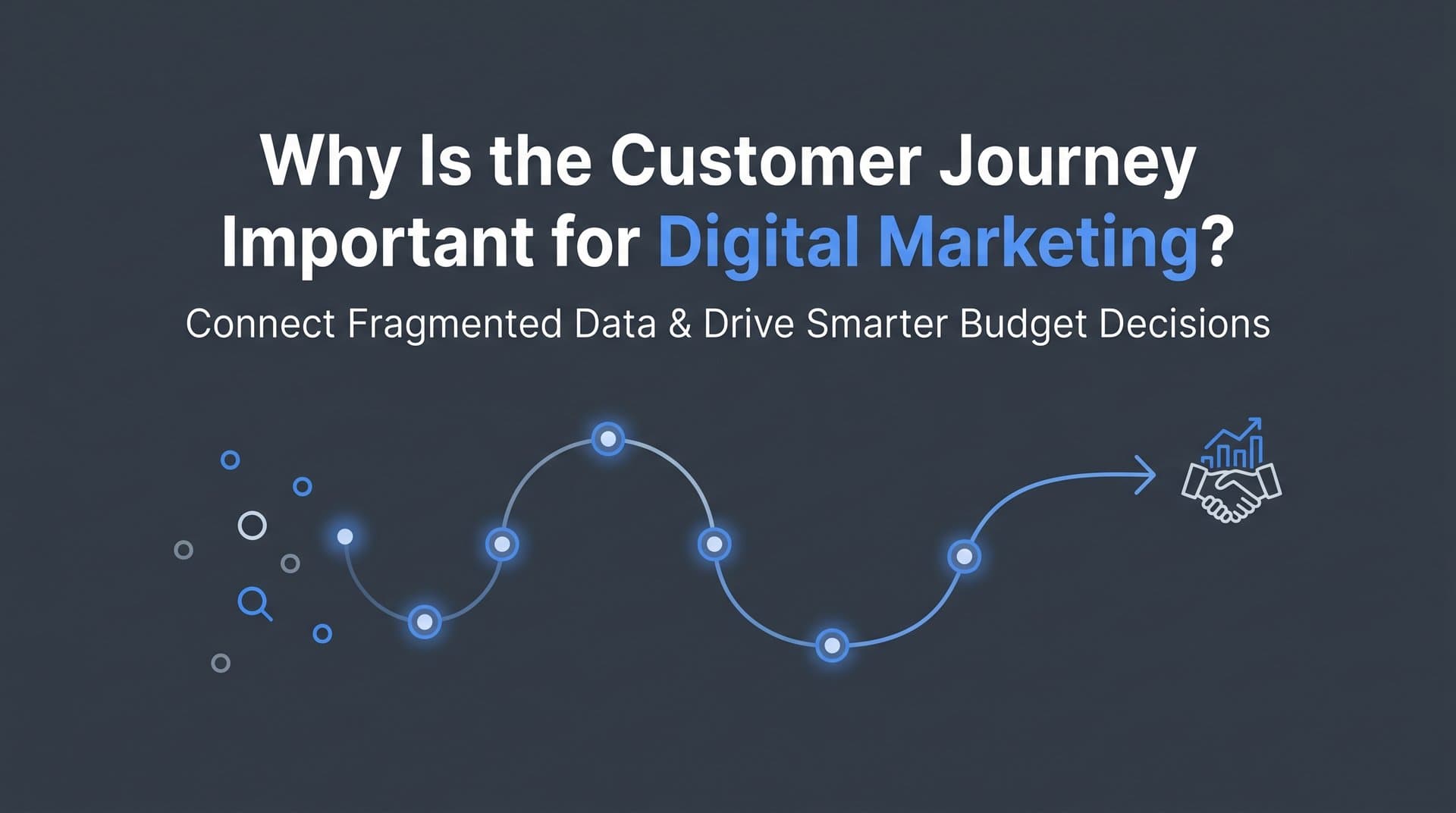
The customer journey is not a soft, conceptual exercise reserved for brand strategy decks. It is the structural backbone of effective digital marketing. It is the sequence of interactions a prospect has with your brand from the first time they see an ad to the moment they become a paying customer, and it is the only lens through which marketing spend can be measured accurately. Without it, you are optimizing individual channels in isolation, making budget decisions based on incomplete signals, and scaling campaigns that may be winning on vanity metrics while losing on revenue.
This article breaks down exactly why the customer journey matters for digital marketing, what it looks like in practice for B2B SaaS companies, and how understanding it changes the way you measure performance, allocate budget, and make confident scaling decisions.
The Hidden Cost of Ignoring the Customer Journey
Most digital marketing failures do not happen because of bad creative or poor targeting. They trace back to something more fundamental: treating every channel and touchpoint as an isolated event rather than part of a connected sequence.
When marketers optimize in silos, the consequences compound quickly. Channels get evaluated based on their individual performance metrics rather than their contribution to the overall journey. That LinkedIn campaign with a high cost per click looks inefficient in isolation. But if it is consistently the first touchpoint for prospects who eventually convert to high-value customers, cutting it would quietly destroy your pipeline.
This is the core problem with last-click attribution, which remains the default measurement approach for many marketing teams. Last-click gives 100 percent of the conversion credit to the final interaction before a form fill or demo request. Everything that happened before that final click, every awareness ad, every piece of content, every retargeting impression, is rendered invisible.
In B2B SaaS, this creates a particularly dangerous distortion. Buyers in this space rarely convert on a first interaction. A realistic journey might look like this: a prospect sees a paid ad on LinkedIn, clicks through and reads a blog post, returns a week later via organic search, gets retargeted on Meta, downloads a comparison guide, attends a webinar, and then books a demo. That journey might span four to eight weeks and involve a dozen touchpoints across five channels.
Under last-click attribution, the demo confirmation page gets all the credit. The LinkedIn ad that initiated the entire sequence gets none. The webinar that accelerated the decision gets none. Budget decisions made on this data will systematically defund the channels that warm up prospects early and mid-funnel, because their contribution simply does not show up in standard reporting.
The financial consequence is not abstract. When early-funnel channels lose budget because their value is invisible, the top of the funnel dries up. Fewer prospects enter the journey, fewer reach the decision stage, and pipeline shrinks. By the time the impact shows up in revenue numbers, the connection back to the attribution error is nearly impossible to trace.
Understanding the customer journey is not a strategic nicety. It is a prerequisite for accurate ROI measurement. Without it, every budget decision is built on a distorted foundation. Learn more about how digital marketing attribution works and why it matters for connecting spend to revenue.
What a B2B SaaS Customer Journey Actually Looks Like
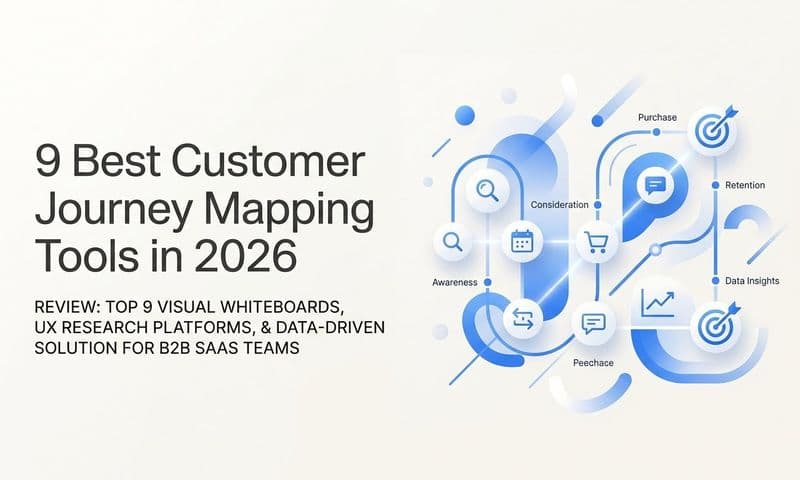
To make the customer journey actionable, it helps to understand its structure in the specific context of B2B SaaS buying behavior. The journey typically moves through four broad stages, each with distinct channel behaviors and conversion signals.
Awareness: This is where prospects first encounter your brand. Common channels include paid social ads on LinkedIn and Meta, Google search ads targeting problem-aware queries, content marketing, and organic search. The conversion signals here are soft: ad clicks, blog page visits, content downloads, and video views. These interactions rarely produce immediate revenue, but they initiate the journey.
Consideration: Prospects who have identified a problem are now evaluating solutions. They engage with retargeting ads, read case studies and comparison pages, watch product demos on your website, and explore review platforms. Conversion signals include return visits, time on page, and high-intent content engagement. This stage is where brand preference is built.
Decision: The prospect is ready to evaluate your product directly. They request a demo, start a free trial, or engage with a sales conversation. This is the stage most attribution models focus on exclusively, which is precisely why they miss so much of the story.
Post-conversion: The journey does not end at the closed-won stage. Onboarding experience, product adoption, and expansion opportunities are all part of the broader customer journey and have implications for retention and lifetime value.
Here is the critical insight: this journey is not linear in practice. Prospects stall between stages. They re-enter the consideration phase after a sales conversation. They go quiet for three weeks and then come back through a different channel entirely. A static funnel model that assumes prospects move cleanly from stage to stage will consistently misrepresent reality.
This is why real-time, multi-touchpoint tracking matters. The goal is not to draw a tidy diagram of the journey. It is to capture the actual sequence of interactions for each prospect and understand which touchpoints at each stage correlate with eventual conversion to closed-won revenue. Understanding the distinct stages of the customer journey gives you a structured framework for identifying where prospects drop off and where to focus optimization efforts.
When you can do that, the customer journey stops being a theoretical framework and becomes a measurement system. You can see which awareness channels produce prospects who actually convert. You can identify which consideration-stage content accelerates decisions. You can pinpoint the touchpoint sequences that consistently precede high-value deals. That is where journey mapping earns its place in your marketing operation.
Attribution: The Engine Behind Journey Intelligence
Understanding the customer journey conceptually is one thing. Turning it into actionable marketing intelligence requires attribution, the mechanism that assigns credit to touchpoints and translates journey data into budget decisions.
The attribution model you choose fundamentally changes how you see performance and how you allocate spend. It is worth understanding the main options clearly.
First-touch attribution gives all credit to the first interaction a prospect had with your brand. It is useful for understanding which channels drive awareness, but it ignores everything that happened between that first touch and the conversion.
Last-click attribution gives all credit to the final touchpoint before conversion. As described earlier, this systematically undervalues early and mid-funnel channels and distorts budget decisions in B2B contexts.
Linear attribution distributes credit equally across all touchpoints in the journey. It is more balanced than single-touch models, but it treats every interaction as equally valuable, which is rarely accurate.
Time-decay attribution gives more credit to touchpoints closer to the conversion event. This makes intuitive sense for shorter sales cycles but can undervalue awareness channels in longer B2B journeys.
Data-driven attribution uses algorithmic modeling to assign fractional credit based on actual conversion patterns in your data. It is the most accurate model when you have sufficient volume, because it reflects how touchpoints actually contribute to conversions rather than applying a fixed rule.
For B2B SaaS specifically, multi-touch attribution is not optional. It is essential. Sales cycles in this space often run four to twelve weeks and involve multiple stakeholders researching independently. Giving credit to only one touchpoint in a journey that spans dozens of interactions systematically undervalues the channels that build awareness and nurture consideration. Over time, those channels get defunded, the pipeline weakens, and the root cause is invisible in the data.
The most powerful version of attribution connects touchpoints not just to lead generation events but to pipeline value and closed-won revenue. When you can see that a specific LinkedIn campaign consistently appears in the journeys of deals that close at high contract values, you have the intelligence to scale that campaign with confidence. Explore the best marketing attribution tools for B2B SaaS to find the right solution for connecting marketing activity all the way to revenue outcomes.
How Tracking Technology Makes the Journey Visible
Knowing that you need to track the customer journey and actually having the infrastructure to do it accurately are two different challenges. The tracking landscape has changed significantly, and the methods that were standard practice a few years ago are no longer reliable.
Browser-based pixel tracking, the approach most ad platforms relied on historically, has become increasingly unreliable. Safari's Intelligent Tracking Prevention, Firefox's enhanced privacy protections, and the growing use of ad blockers all reduce the share of conversion events that pixel-based tracking can capture. When a meaningful portion of your conversion events go unrecorded, the journey data you are working with is incomplete, and incomplete data produces inaccurate attribution.
Server-side tracking via Conversion APIs has become the industry standard for addressing this problem. Meta's Conversion API (CAPI) and Google's Enhanced Conversions send event data directly from your server to the ad platform, bypassing browser-level restrictions entirely. This captures events that pixel tracking would have missed and produces a more complete picture of the journey.
But server-side tracking alone is not enough. The real goal is connecting ad platform data, CRM data, and website behavior into a single data layer. When those three sources are unified, you can track a prospect from their first ad click through every content interaction, through the demo request, through the sales process, and into closed-won revenue in your CRM. That end-to-end view is what makes the customer journey visible in a way that drives real decisions.
Two technical concepts are worth understanding here. First, event deduplication: when you run both server-side and client-side tracking, the same conversion event can be recorded twice. Deduplication logic ensures each event is counted once, keeping your attribution data clean. Second, data enrichment: each tracked event should carry contextual information beyond a basic confirmation that the event occurred. Lead quality signals, deal stage, revenue value, and account-level data all make conversion events more useful for optimization.
First-party data has become the foundation of reliable journey intelligence. As third-party cookie reliability continues to decline, the marketers who have invested in first-party data infrastructure, connecting their own CRM and website data directly to their ad platforms, will have a durable advantage in attribution accuracy. Understanding how digital marketing strategies track users across the web is essential context for building a tracking infrastructure that remains reliable as privacy standards evolve.
Turning Journey Data Into Smarter Campaign Decisions
Once the customer journey is visible and attribution is accurate, the nature of marketing decision-making changes. You shift from reactive reporting, explaining what happened last month, to proactive optimization, knowing what to do next.
The most immediate application is channel mix decisions. Journey data reveals which channels initiate customer relationships and which channels close them. These are often different channels, and treating them as interchangeable leads to poor budget allocation. A channel that consistently appears as the first touchpoint in high-value journeys deserves investment even if its direct conversion rate looks modest. A channel that frequently appears as the final touchpoint before a demo request deserves investment in closing-stage budget, not awareness-stage budget.
This kind of channel-role clarity is impossible without journey data. With it, you can build a budget allocation strategy that reflects how your buyers actually move through the funnel rather than how you assumed they would. Tracking the right digital marketing performance metrics at each stage of the journey is what separates teams that optimize on instinct from those that optimize on evidence.
AI-driven analysis layered on top of journey data takes this further. Human analysis can identify broad patterns, but machine learning can surface correlations that would be invisible to manual review. Which specific ad creatives consistently appear in the journeys of accounts that close at above-average contract values? Which touchpoint sequences have the highest conversion rates from consideration to decision? Which audience segments move through the journey fastest? These are the kinds of insights that turn journey data into a competitive advantage. The impact of artificial intelligence on marketing strategies is most powerful when it is applied directly to multi-touchpoint journey data rather than single-channel reporting.
There is also a direct performance benefit to feeding enriched journey data back to ad platforms. Meta and Google both use machine learning to optimize ad delivery toward users most likely to convert. The quality of that optimization depends entirely on the quality of the conversion signals you send back. When you feed these platforms basic pixel fire events, they optimize toward surface-level conversions. When you send enriched, revenue-connected events that reflect actual closed-won deals and pipeline value, their algorithms learn to find audiences that generate real revenue, not just form fills.
This creates a compounding advantage. Better signals produce better targeting, which produces higher-quality leads, which produces more revenue data to feed back into the system. The journey data infrastructure you build today improves the performance of every campaign you run going forward.
Building a Customer Journey Strategy That Scales
Understanding the customer journey intellectually is the starting point. Building the operational infrastructure to track, analyze, and act on it consistently is where strategy becomes execution. Here is how to approach it practically.
Start by mapping the stages relevant to your specific buyer. Not every B2B SaaS company has the same journey. A product-led growth motion with a free trial looks different from an enterprise sales motion with a six-month evaluation cycle. Define the stages that reflect how your buyers actually behave, identify the key conversion events at each stage, and map the channels most active at each point.
Next, instrument every touchpoint with proper tracking. This means implementing server-side tracking alongside your existing pixel setup, connecting your CRM to your attribution layer so that deal stage and revenue data flows into your marketing analytics, and ensuring that every significant conversion event carries the contextual data needed for meaningful analysis. Tools like customer journey software can help unify these data sources and make the full sequence of touchpoints visible in one place.
Then connect your ad platforms and CRM into a unified attribution layer. The goal is a single view of the journey from first ad click to closed-won revenue, with every touchpoint in between accounted for. This is what eliminates the data fragmentation problem where your ad dashboards, analytics platform, and CRM each report different numbers for the same campaigns.
Choose an attribution model that reflects your sales cycle length and the complexity of your buyer journey. For most B2B SaaS companies with multi-week or multi-month sales cycles, a multi-touch model, ideally data-driven attribution if you have the volume, will produce more accurate budget allocation guidance than any single-touch model.
Critically, treat this as an ongoing operation rather than a one-time project. As you add new channels, run new campaign types, and as buyer behavior evolves, your tracking infrastructure and attribution model need to be reviewed and updated. A journey strategy that was accurate six months ago may have blind spots today.
The operational goal is a single source of truth for marketing data. When every team member, from paid media managers to growth leaders to executives, is working from the same journey data, decision-making becomes faster, more aligned, and more directly connected to revenue outcomes. That alignment is itself a competitive advantage.
The Bottom Line on Customer Journey Intelligence
The customer journey is not a marketing concept. It is a measurement and decision-making framework. Marketers who understand and track the full journey can attribute revenue accurately, optimize spend confidently, and scale what works without guessing at what is driving results.
Every section of this article points to the same conclusion: the quality of your marketing decisions is directly limited by the quality of your journey data. Bad data produces bad decisions, even when the strategy behind them is sound. Good data, connected across every touchpoint from first ad click to closed-won revenue, transforms how a marketing team operates.
This is exactly what Cometly is built to do for B2B SaaS companies. Cometly connects your ad platforms, CRM, and website behavior into a real-time attribution layer that shows you exactly which touchpoints drive pipeline and revenue. It captures every touchpoint with server-side tracking, enriches conversion events with deal-stage and revenue data, feeds accurate signals back to Meta and Google to improve algorithmic targeting, and surfaces AI-driven recommendations so you can identify what is working and scale it with confidence.
If you are ready to move beyond fragmented dashboards and start making budget decisions based on the full customer journey, Get your free demo and see how Cometly maps and measures every step of your customer journey in real time.