You open Meta Ads Manager on a Tuesday morning and see 47 conversions from yesterday. You feel good for a moment. Then you check your CRM and count 29 actual sales. Then you look at Google Ads and notice it's claiming credit for 35 conversions from the same day. Do the math and something clearly does not add up. In fact, the platforms together are reporting more conversions than you actually made in revenue.
If this sounds familiar, you are not alone. This disconnect between what ad platforms report and what your business actually generates is one of the most common and costly problems in digital marketing. It is not a glitch. It is not a coincidence. It is the result of several converging technical, structural, and privacy-related forces that distort the numbers you rely on to make budget decisions.
The frustrating part is that bad conversion data does not just cause confusion. It causes real financial harm. When you scale a campaign based on inflated conversion numbers, you are essentially pouring money into a black box. When you cut a channel because it looks underperforming, you might be killing a major revenue driver that just is not getting proper credit.
This article breaks down exactly why your ad conversion numbers are wrong, what is happening behind the scenes, and what you can do to build a tracking system that reflects reality. By the end, you will have a clear picture of the problem and a practical path forward.
The Trust Gap Between Ad Platforms and Reality
Here is something worth saying plainly: ad platforms are self-reporting systems. Meta grades its own homework. Google grades its own homework. TikTok grades its own homework. Each platform has a financial incentive to show you as many conversions as possible, because more conversions justify more ad spend.
That does not mean these platforms are intentionally deceiving you. But it does mean their reporting is shaped by methodologies designed to maximize attributed conversions, not to give you a clean, conservative picture of what actually happened.
The core issue is that every major ad platform uses its own attribution window and counting logic. Meta's default is a 7-day click and 1-day view attribution window. Google Ads defaults to a 30-day click window. TikTok uses 7-day click and 1-day view. These windows define how long after an ad interaction a platform can claim credit for a conversion.
Now picture a real customer journey. A user sees your Meta ad on Monday but does not click. On Wednesday, they click a Google Shopping ad. On Friday, they buy. Under Meta's view-through attribution, Meta claims that conversion. Under Google's click attribution, Google claims it too. Both platforms count one real sale as their own conversion, and your total reported numbers balloon past what actually happened.
This overlap is not an edge case. It happens constantly across any account running ads on multiple platforms simultaneously. And the result is a significant gap between the total conversions reported across your dashboards and the actual revenue sitting in your CRM or order management system.
The business consequences are serious. When you look at inflated numbers and decide to increase budget on a channel, you may be scaling based on phantom conversions. This is one of the primary causes of wasted ad spend on wrong channels, and it erodes profitability quickly. When you try to calculate return on ad spend, your denominator is wrong. When you present results to stakeholders, the story you are telling is built on data that does not reflect reality.
Understanding this trust gap is the first step. The next step is understanding the specific technical and structural reasons why the numbers diverge so dramatically.
Six Common Reasons Your Conversion Numbers Are Off
Conversion discrepancies do not have a single cause. They are usually the result of several overlapping issues happening at the same time. Here are the most common culprits worth investigating.
Pixel firing issues: Browser-based tracking pixels are surprisingly fragile. A pixel can be installed twice on the same page, causing every conversion event to fire twice and double your reported numbers. Alternatively, a pixel might fail to fire on certain pages due to a tag manager misconfiguration, causing under-counting. Incorrect conversion event setup, such as firing a "purchase" event on the order confirmation page but also on the checkout initiation page, can create significant inflation.
Privacy restrictions and iOS limitations: Apple's App Tracking Transparency framework, introduced with iOS 14.5, fundamentally changed mobile tracking. Users who opt out of tracking cannot be followed across apps and websites, which means a significant portion of conversions from iPhone users are either not tracked at all or estimated using statistical modeling. Subsequent iOS versions have continued tightening these restrictions, and the effect compounds over time as more users upgrade.
Browser privacy features and ad blockers: Safari's Intelligent Tracking Prevention limits first-party cookie lifespans and blocks third-party cookies entirely. Firefox has similar protections. Chrome has been moving toward restricting third-party cookies as well. On top of browser-level restrictions, a meaningful portion of your audience likely uses ad blockers that prevent tracking pixels from loading at all. These gaps mean platform pixels simply miss conversions that actually happened, which is a key reason why businesses need dedicated tracking software for performance marketing.
Attribution window mismatches: As mentioned above, different platforms using different attribution windows will claim the same conversion. But there is another layer: your own attribution window settings may not match your actual sales cycle. If your product takes two weeks to research and buy, a 7-day click window will miss conversions that were genuinely influenced by your ads.
View-through attribution inflation: View-through conversions give a platform credit when a user saw an ad but never clicked it. This is the most aggressive form of attribution and the most prone to over-counting. A user who saw your ad three weeks ago and then converted through a direct visit will still be claimed as a conversion by the platform that served the impression, even if the ad had little to do with the decision.
UTM parameter and tracking link failures: If your UTM parameters are inconsistently applied or break due to URL redirects, you lose the ability to tie ad clicks to downstream behavior in your analytics. This creates a separate layer of discrepancy between what platforms report and what you can verify in tools like Google Analytics or your CRM. Missing or malformed UTMs are a silent killer of attribution accuracy.
How Modeled Conversions Quietly Distort Your Data
There is a category of conversion data that many marketers do not fully understand: modeled or estimated conversions. These are not conversions that were directly observed. They are conversions that a platform believes probably happened, based on statistical inference from the data it could observe.
When privacy restrictions prevent a platform from tracking a specific user, the platform does not just leave a blank in its reporting. Instead, it uses machine learning models trained on historical data to estimate how many conversions likely occurred among users it could not track. The result gets added to your reported conversion totals, often without a clear label indicating that these numbers are estimates rather than observations.
Meta's Aggregated Event Measurement system, introduced in response to iOS 14.5, is one example of this approach. Google's consent mode works similarly, using modeling to fill in conversion gaps when user consent is not granted. These systems are genuinely trying to give advertisers useful data in a privacy-constrained environment. But they introduce estimation error, and that error can be significant.
The problem is especially pronounced for smaller ad accounts and niche audiences. Modeling works best when there is a large volume of observed data to learn from. If your account has a limited conversion history or targets a narrow audience, the platform's model has less to work with and the estimates become less reliable. Understanding the difference between unique conversions and modeled totals is critical for interpreting your data correctly.
To identify modeled versus observed conversions in Meta Ads Manager, look for the breakdown options in your reporting columns. Meta provides some visibility into data-driven versus modeled attribution in certain reports. In Google Ads, you can check the "Conversions" column breakdowns to see if modeled conversions are a significant portion of your totals.
Understanding the ratio of modeled to observed conversions in your account is important for calibrating how much trust to place in your platform data. An account where a large share of reported conversions are modeled requires a more skeptical eye and a stronger need for independent verification through your own tracking infrastructure.
Server-Side Tracking: Closing the Data Gap
If browser-based pixels are the source of so many tracking problems, the logical fix is to move tracking off the browser entirely. That is exactly what server-side tracking does.
With traditional browser-side tracking, a pixel fires from the user's browser when they take an action on your site. This means the pixel is subject to everything that can go wrong in a browser: ad blockers, cookie restrictions, iOS privacy settings, slow page loads that prevent the pixel from firing, and browser extensions that strip tracking parameters. Any of these can cause a conversion to go unrecorded.
Server-side tracking works differently. Instead of relying on the user's browser to send conversion data to an ad platform, your own server sends that data directly to the platform's API after a conversion occurs. The conversion event travels from your infrastructure to the platform's infrastructure, completely bypassing the browser environment and all its restrictions.
The practical benefits are significant. Ad blockers cannot intercept a server-to-server API call. iOS privacy settings do not affect it. Cookie restrictions are irrelevant because you are using your own first-party data to identify and match conversions. The result is more complete conversion capture and higher event match quality scores, which matter because platforms use match quality to determine how well they can attribute conversions and optimize delivery.
Meta's Conversions API, Google's enhanced conversions, and TikTok's Events API are the platform-native implementations of server-side tracking. Setting these up properly requires technical work, and maintaining them requires ongoing attention as your tech stack evolves.
This is where platforms like Cometly provide meaningful value. Cometly uses server-side tracking combined with multi-touch attribution to connect ad interactions across every channel to actual revenue data in your CRM. Rather than relying on each platform's self-reported numbers, you get a unified view of which ads and campaigns are genuinely driving conversions, tracked through infrastructure that bypasses the limitations of browser-based pixels. The enriched conversion data then gets sent back to ad platforms through conversion sync, giving their algorithms better signal to optimize toward your real customers rather than modeled guesses.
Auditing Your Conversion Setup: A Step-by-Step Approach
Before you can fix a conversion tracking problem, you need to understand exactly where the discrepancy is coming from. A structured audit is the fastest way to get there.
Step 1: Quantify the gap. Pull platform-reported conversions for a specific date range, ideally the last 30 days, and compare them against your CRM or order management system for the same period. Use the same conversion definition on both sides. If you are comparing "purchases" in Meta Ads to "closed deals" in your CRM, make sure these represent the same action. Calculate the percentage difference between platform totals and actual business results. This number is your baseline discrepancy, and it tells you how serious the problem is.
Step 2: Check for duplicate pixels. Use Meta's Pixel Helper browser extension and Google Tag Assistant to inspect your key pages, especially your order confirmation or thank-you page. Look for multiple instances of the same pixel or tag firing on a single page load. A duplicated pixel will double-count every conversion event that fires on that page, which is one of the most common causes of inflated numbers.
Step 3: Verify conversion event configurations. Review your conversion actions in each platform to confirm they are firing on the correct page or action. A "purchase" event should fire exactly once per completed transaction, on the order confirmation page only. If it is also firing on the cart page, checkout page, or any other step in the funnel, you are over-counting. Check event parameters too: are you passing revenue values, currency, and order IDs correctly? Missing or incorrect parameters reduce match quality and can cause attribution errors.
Step 4: Audit your UTM parameters. Review your ad URLs to confirm UTMs and how marketers use them are present, correctly formatted, and not being stripped by redirects. Check your Google Analytics or analytics platform to see what percentage of sessions from paid channels arrive with UTM data intact. A high percentage of untagged sessions from paid sources indicates a UTM coverage problem that is creating blind spots in your attribution.
Step 5: Align your attribution windows. Compare the attribution window settings across your platforms. If Meta is set to 7-day click and 1-day view while Google is set to 30-day click, you are almost certainly seeing significant overlap. Consider standardizing your windows to match your actual sales cycle, and turn off view-through attribution if you want a more conservative and realistic picture of ad-driven conversions.
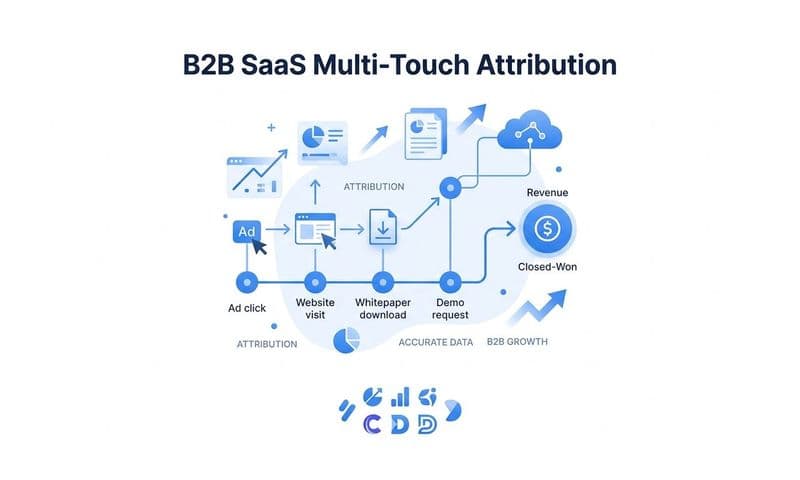
Step 6: Establish a single source of truth. Connect your ad spend data to your actual revenue data using a tool that tracks the full customer journey from the first ad click to the closed deal. This gives you an independent reference point that is not subject to the self-reporting biases of individual ad platforms.
Building a Conversion Tracking System You Can Actually Trust
Fixing your conversion data is not a one-time project. It requires building a system that continuously produces reliable numbers and catches discrepancies before they compound into major budget mistakes.
Implement independent attribution: Stop relying solely on ad platform dashboards as your primary source of conversion truth. Each platform will always have an incentive to claim as much credit as possible. Independent attribution, the kind that sits outside any individual platform and connects ad clicks to actual revenue in your CRM, gives you an unbiased view of performance. Investing in the right software for tracking marketing attribution is one of the most impactful decisions you can make for your data quality. This means you can see which campaigns are genuinely driving revenue versus which ones are benefiting from attribution overlap or modeled inflation.
Use conversion sync to improve platform optimization: One of the underappreciated benefits of accurate conversion tracking is what it does for your ad platform algorithms. When you feed enriched, first-party conversion data back to Meta, Google, and TikTok through their respective APIs, you are giving their optimization systems better signal. Instead of optimizing toward modeled or incomplete conversion data, the algorithms can learn from your real customers, which improves targeting accuracy and return on ad spend over time. Cometly's conversion sync feature is built specifically for this purpose, sending accurate conversion events back to ad platforms so their AI optimizes toward outcomes that actually matter to your business.
Set up regular reconciliation routines: Build a weekly habit of comparing your platform-reported conversions against your CRM data. This does not need to be a deep audit every time. A simple comparison of total reported conversions versus total actual transactions, broken down by channel, will surface discrepancies quickly. Understanding the role of post-click conversions versus other conversion types helps you interpret these comparisons more accurately. When you catch a gap early, it is much easier to diagnose than when you are trying to untangle months of bad data.
Create dashboards that blend platform and business data: The goal is a single view that shows ad spend, platform-reported conversions, and actual revenue side by side. When these numbers are visible together, discrepancies become obvious immediately. Cometly's analytics dashboard is designed to provide exactly this kind of unified view, connecting your ad platform data to your actual revenue outcomes so you can make decisions based on what is real rather than what each platform wants you to believe.
Document your tracking setup: Keep a living document that describes exactly how your conversion tracking is configured across every platform. Include which events fire on which pages, what attribution windows you are using, how your UTM parameters are structured, and which server-side integrations are active. This documentation makes audits faster and helps new team members understand the system without having to reverse-engineer it from scratch.
The Bottom Line: Accurate Data Is a Revenue Decision
Wrong conversion numbers are not just a reporting inconvenience. They are a direct threat to profitability. Every dollar you allocate based on inflated or misattributed conversion data is a dollar that could be working harder somewhere else. Every campaign you scale because of phantom conversions is a budget decision built on a foundation that does not exist.
The good news is that this problem is solvable. The key takeaways are straightforward: understand that ad platforms are self-reporting systems with structural incentives to claim maximum credit, recognize the specific technical and privacy-related causes of inaccurate data, and take action by implementing server-side tracking and independent attribution that connects your ad spend to real revenue.
The shift from trusting platform dashboards to building your own source of truth is one of the highest-leverage moves a marketing team can make. It changes how you allocate budget, how you evaluate channel performance, and how confidently you can scale what is actually working.
Cometly is built for exactly this challenge. It connects your ad platforms, CRM, and website to track every touchpoint in the customer journey, uses server-side tracking to capture conversions that browser pixels miss, and syncs enriched data back to ad platforms so their algorithms optimize toward your real customers. The result is attribution data you can actually trust, and budget decisions you can make with confidence.
Ready to stop guessing and start knowing? Get your free demo today and see exactly which ads are driving real revenue for your business.