
Picture this: you're running campaigns across Google Ads, Meta, TikTok, LinkedIn, and email all at once. It's a busy quarter, and the results look promising. Then you pull the reports from each platform and realize something unsettling. Google says it drove 120 conversions. Meta claims 95. TikTok reports another 40. Add it all up, and you've apparently generated over 250 sales. But your CRM tells a different story: 80 actual customers converted this month.
Sound familiar? This is the daily reality for marketers running multi-channel campaigns without a unified tracking strategy. Each platform operates in its own silo, counts conversions by its own rules, and naturally paints itself as the hero of your marketing story. The result is inflated numbers, misallocated budgets, and decisions based on data that doesn't reflect reality.
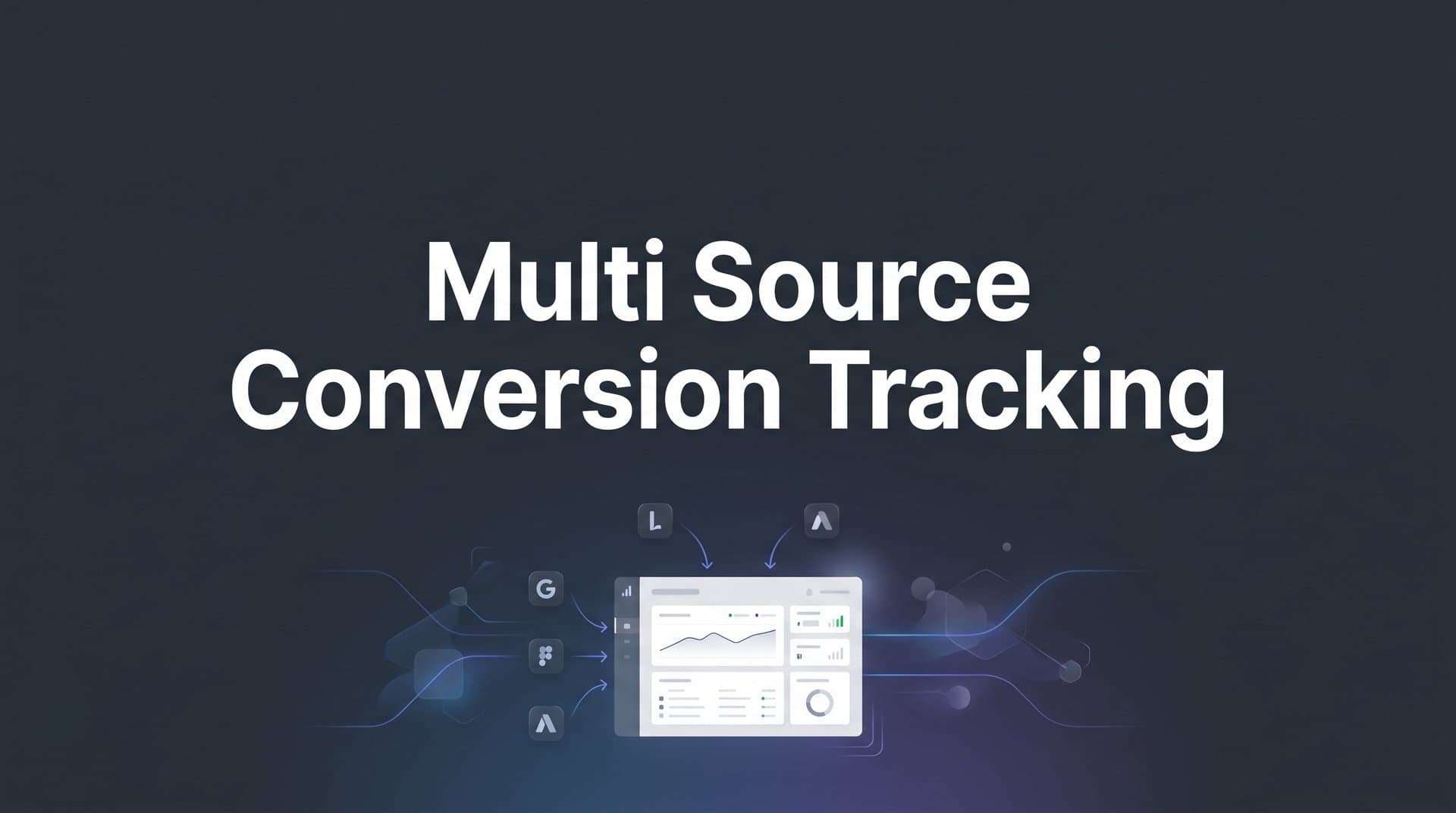
Multi source conversion tracking is the practice of capturing conversion data from every marketing touchpoint and unifying it into a single, reliable view of what's actually happening. Instead of trusting each platform's self-reported numbers, you build an independent source of truth that shows the real customer journey from first impression to final purchase.
In 2025 and 2026, this isn't a nice-to-have. Privacy changes, cookie deprecation, and increasingly complex customer journeys have made platform-native tracking less reliable than ever. Marketers who haven't adapted are flying blind while spending real money. This article breaks down how multi source conversion tracking works, why it matters, and how to implement it in a way that actually improves your decisions and your results.
Why Every Ad Platform Tells a Different Story
Every major ad platform comes with its own tracking pixel, its own attribution window, and its own definition of what counts as a conversion. Google Ads might attribute a sale to a search ad click that happened seven days ago. Meta might claim the same sale because the customer saw a Facebook ad 28 days prior. TikTok might also count it because the user watched a video ad in the same window. One real customer, three platforms claiming full credit.
This overlap isn't a bug in the system. It's a natural consequence of how each platform is designed. They each measure success from their own perspective, optimizing their reporting to demonstrate value to advertisers. Attribution windows vary widely, view-through conversions are counted differently, and the methodologies are rarely aligned. When you add up conversions across platforms, you're not adding up real customers. You're stacking overlapping claims.
The problem has grown significantly more complex in recent years. Apple's App Tracking Transparency framework, browser-level cookie restrictions, and evolving privacy regulations have degraded the accuracy of client-side pixel tracking. When a user browses in Safari with Intelligent Tracking Prevention enabled, or on a device that has opted out of tracking, the pixel often fails to fire. Data gaps accumulate, attribution becomes even less reliable, and the numbers platforms report drift further from reality.
This is the core tension every modern marketer faces. Platform-reported conversions measure what each platform wants you to see. Actual revenue is what shows up in your CRM, your payment processor, and your bank account. The gap between those two numbers is where wasted budget lives.
To close that gap, you need an independent source of truth that doesn't answer to any single platform. You need a system that collects conversion data from all your sources, deduplicates it, and reports on the actual customer journey rather than each channel's version of it. That's exactly what multi source conversion tracking is designed to deliver.
The marketers who recognize this problem early gain a significant advantage. They stop optimizing toward inflated platform metrics and start optimizing toward real business outcomes. They reallocate budget based on what's actually working rather than what each platform claims is working. And they build a tracking foundation that holds up even as privacy restrictions continue to tighten.
The Building Blocks of a Unified Tracking System
Understanding multi source conversion tracking requires understanding its three core layers: data collection, data unification, and reporting. Each layer plays a distinct role, and weaknesses in any one of them will undermine the whole system.
The data collection layer is where raw information enters your tracking stack. This includes ad platform pixels, server-side event tracking, UTM parameters on your URLs, CRM integrations that capture lead and deal data, and any other mechanism that records a user action. The goal at this layer is completeness. You want to capture as many touchpoints as possible, across as many channels as possible, without gaps.
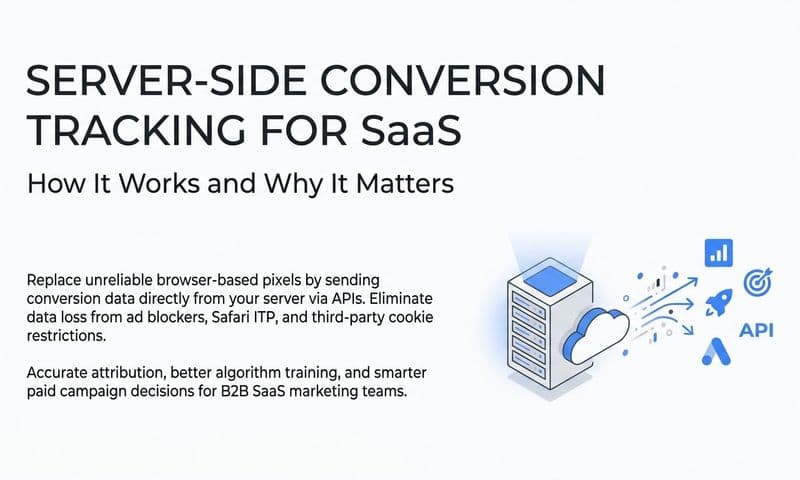
Server-side tracking deserves special attention here. Traditional client-side pixels rely on JavaScript running in the user's browser to fire conversion events. Browser restrictions, ad blockers, and privacy settings can prevent these pixels from loading, creating data loss that compounds over time. Server-side tracking works differently: it sends conversion data directly from your server to the ad platform's API, bypassing the browser entirely. This means conversions that would have been missed by a pixel are still captured and reported accurately.
First-party data is the foundation of this approach. When you collect conversion data through your own server using identifiers you control, such as email addresses, customer IDs, and hashed user data, you're building a dataset that isn't subject to the same privacy restrictions that limit third-party cookies. This is why server-side tracking has become the industry standard for marketers who need reliable data.
The data unification layer is where things get technically interesting. Data coming in from multiple sources needs to be matched to individual users and deduplicated so that the same conversion isn't counted multiple times. Identity resolution uses shared identifiers like email addresses or phone numbers to stitch together touchpoints from different platforms into a single customer journey. If someone clicked a Google ad, then saw a Meta retargeting ad, then converted via an email link, all three touchpoints should be associated with the same person, not treated as three separate journeys.
The reporting layer is where unified data becomes actionable insight. A single dashboard that shows your true conversion volume, cost per acquisition by channel, and multi-touch attribution across all sources gives you a fundamentally different view of performance than any individual platform dashboard can provide. This is where you see the real story of how your marketing is working.
Think of it like assembling a puzzle. Each platform gives you a few pieces, but they're all from different boxes. The unification layer figures out which pieces actually belong together and builds the complete picture.
Choosing the Right Attribution Model for Your Data
Once you have unified conversion data, you need a framework for distributing credit across the touchpoints that contributed to each conversion. This is where attribution models come in, and choosing the right one makes a significant difference in how you interpret channel performance.
First-touch attribution gives all credit to the first interaction a customer had with your brand. This is useful for understanding which channels are best at generating awareness and initiating customer journeys. If you want to know what's driving new prospects into your funnel, first-touch gives you that answer.
Last-touch attribution gives all credit to the final interaction before conversion. This is the default model for most ad platforms and is useful for identifying what's closing deals. The problem is that it ignores everything that happened before the final click, which can make top-of-funnel channels look worthless even when they're doing critical work. Understanding the difference between single source and multi-touch attribution is essential for moving beyond this limitation.
Linear attribution distributes credit equally across all touchpoints in the journey. This is a more balanced approach that acknowledges every interaction contributed something, though it doesn't differentiate between a brief ad impression and a deep product page visit.
Time decay attribution gives more credit to touchpoints that occurred closer to the conversion. This model reflects the intuition that recent interactions are more influential, making it useful for shorter sales cycles.
Position-based attribution (sometimes called the U-shaped model) gives the most credit to the first and last touchpoints, with the remaining credit distributed across the middle. This is popular for teams that want to reward both discovery and closing interactions.
Here's the key insight: no single model is universally correct. The real power of multi source conversion tracking is the ability to compare models side by side. When you look at the same data through different attribution lenses, you start to see which channels are initiating journeys, which are nurturing, and which are closing. That complete picture is what guides smarter budget allocation.
Multi-touch attribution also directly addresses the double-counting problem. Instead of each platform claiming 100% of the credit for a conversion, credit is distributed proportionally across the touchpoints that actually contributed. The result is a conversion count that aligns much more closely with your actual revenue, and a channel performance view that reflects reality rather than each platform's self-interested reporting. For a deeper dive, explore our guide to multi-touch attribution.
Building Your Multi Source Tracking Stack in Practice
Knowing why multi source conversion tracking matters is one thing. Actually implementing it requires a structured approach that covers your ad platforms, your website, your CRM, and the connections between them.
Start by connecting all your ad platforms to your tracking system. This means ensuring that your Google Ads, Meta, TikTok, LinkedIn, and any other active channels are all feeding conversion data into a central location. Each platform should be configured with consistent conversion events so that "purchase," "lead," and "sign-up" mean the same thing across all sources. A solid conversion tracking setup is the foundation of this entire process.
Next, install server-side tracking to close the data gaps that client-side pixels create. This typically involves setting up a server-side tagging container or using a platform that handles this infrastructure for you. Server-side tracking ensures that conversions happening on privacy-restricted browsers or devices are still captured and attributed correctly.
Integrate your CRM so that offline conversions, sales team activities, and post-conversion customer data flow into your tracking system. This is especially important for B2B marketers and businesses with longer sales cycles, where a lead might convert in the CRM weeks after the initial ad click. Without CRM integration, these conversions are invisible to your attribution model. Learn more about how offline conversion tracking bridges this gap.
Map your conversion events consistently across all sources using UTM parameters. This is where many teams stumble. Inconsistent UTM naming conventions, such as using "google" in some campaigns and "google_ads" in others, create fragmented data that's difficult to unify. Establish a clear UTM taxonomy and enforce it across every campaign, every platform, and every team member who creates links.
One of the most impactful but often overlooked steps is feeding your clean, deduplicated conversion data back to the ad platforms themselves. Meta's Conversions API and Google's Enhanced Conversions are designed to receive first-party conversion data directly from your server. When you send accurate, enriched conversion events back to these platforms, their machine learning algorithms have better data to work with. The result is improved targeting, more efficient optimization, and lower cost per acquisition over time. You're not just improving your own reporting; you're improving the quality of the platforms' decisions on your behalf.
Avoid the common mistake of treating this as a one-time setup. Tracking stacks require ongoing maintenance. New campaigns need proper UTM tagging. New conversion events need to be mapped and tested. Platform API updates need to be monitored. Build a regular audit process into your workflow to catch data quality issues before they compound into bad decisions.
Turning Unified Data Into Sharper Budget Decisions
All of this infrastructure exists for one purpose: to help you make better decisions about where to spend your marketing budget. And when your data is unified and accurate, those decisions look very different from what platform dashboards suggest.
The most immediate benefit is a true cost per acquisition across every channel. When you stop trusting each platform's self-reported conversion numbers and instead measure against actual revenue from your CRM, you often find that the channel hierarchy shifts. Channels that appeared to be top performers based on platform reporting may be over-counting due to overlapping attribution windows. Meanwhile, channels that seemed expensive or underperforming may have been initiating journeys that other platforms were claiming credit for at the close. This is why inaccurate conversion tracking is one of the biggest threats to marketing ROI.
Unified conversion data also reveals patterns in the customer journey that are invisible when you look at each platform in isolation. You might discover that TikTok consistently introduces new audiences who later convert through Google search. That insight changes how you value TikTok spend. Or you might find that email is the final touchpoint for a disproportionate share of high-value customers, even though it rarely gets credit in last-touch models. These are the kinds of insights that shift strategy, not just tactics.
This is where AI-powered analysis adds a layer of value that manual reporting can't match. When a system like Cometly ingests unified multi source conversion data, it can surface optimization recommendations across every channel simultaneously, identifying which campaigns are genuinely driving revenue, where budget is being wasted on over-attributed channels, and where scaling opportunities exist that the raw data alone wouldn't reveal. Instead of spending hours cross-referencing platform reports, you get clear, actionable direction backed by your own first-party data.
The marketers who get this right don't just have better reports. They have a genuine competitive advantage: the ability to scale what's working with confidence, cut what isn't without guessing, and move faster than competitors who are still reconciling conflicting platform dashboards.
Your Next Step Toward Marketing Clarity
Multi source conversion tracking is not just a technical upgrade to your analytics stack. It's a strategic shift in how you think about marketing performance. It moves you from trusting what each platform wants you to believe toward understanding what's actually driving your business results.
The key takeaways are straightforward. Unify your data sources so that every touchpoint across every channel feeds into a single system. Choose attribution models that reflect your business and compare them side by side to understand the full picture. Feed clean, deduplicated conversion data back to your ad platforms to improve their algorithms and your results. And let unified insights, not platform dashboards, guide your budget decisions.
If your current tracking setup involves pulling reports from each platform separately and trying to reconcile the numbers manually, that's a signal it's time to reassess. The gap between what platforms report and what's actually happening in your business is costing you in wasted spend, missed opportunities, and decisions made on unreliable data.
Cometly is purpose-built to solve exactly these challenges. It connects your ad platforms, CRM, and website to track the entire customer journey in real time. With server-side tracking to capture what pixels miss, multi-touch attribution to distribute credit accurately, AI-powered recommendations to surface what's working, and conversion sync to feed better data back to Meta, Google, and beyond, Cometly gives you the unified view your marketing strategy needs to grow with confidence.
Ready to elevate your marketing game with precision and confidence? Discover how Cometly's AI-driven recommendations can transform your ad strategy. Get your free demo today and start capturing every touchpoint to maximize your conversions.