You are spending thousands on ads, leads are coming in, and sales are closing. But when you check your ad platform dashboards, the numbers do not add up. Your CRM shows 200 conversions this month, yet Meta reports 120 and Google claims 95. Sound familiar?
Underreporting conversions is one of the most damaging problems in digital advertising today. When your platforms fail to count the conversions they actually drove, you lose visibility into what is working. Worse, you start making budget decisions based on incomplete data, cutting campaigns that are actually profitable and doubling down on channels that look good on paper but underperform in reality.
The problem intensified after Apple's iOS 14.5 App Tracking Transparency rollout, which gave users the ability to opt out of cross-app tracking. Since then, many advertisers have reported significant gaps between what ad platforms show and what their CRM records. The root causes range from browser privacy restrictions and iOS tracking limitations to misconfigured pixels, delayed attribution windows, and cross-device journeys that break the tracking chain entirely.
Here is the good news: underreporting is fixable. This guide walks you through a clear, sequential process to diagnose where your conversion data is leaking, patch the gaps with server-side tracking and proper configuration, validate your numbers against a source of truth, and build a system that keeps your data accurate over time.
By the end, you will have a reliable framework for ensuring that every conversion gets counted and credited to the right source, so you can optimize with confidence. Let's get into it.
Step 1: Audit Your Current Tracking Setup for Data Gaps
Before you can fix anything, you need to know exactly how large the problem is and where it lives. The first step is a structured audit that compares conversion data across every system you use.
Start by pulling conversion counts from each ad platform (Meta, Google Ads, TikTok, LinkedIn, wherever you are running campaigns), your Google Analytics account, and your CRM for the same time period. Create a simple spreadsheet with columns for platform, reported conversions, CRM conversions, and the delta between them. This single document will become your diagnostic map, helping you fix attribution discrepancies in data systematically.
Pay attention to which platforms and campaigns show the largest discrepancies. If Meta is underreporting by a wide margin while Google is relatively close, that tells you where to focus your energy first. If all platforms are significantly below your CRM numbers, you likely have a systemic tracking issue rather than a platform-specific one.
Next, inspect your pixel implementation on key conversion pages. Common issues include:
Duplicate pixel firing: The same pixel fires twice on a single page load, inflating some counts while masking others. Check your tag manager for redundant tags.
Missing pixel placement: The conversion pixel is not present on the actual thank-you page or order confirmation page. This is surprisingly common after site redesigns or CMS updates.
Incorrect event triggers: The purchase or lead event fires on page load instead of on form submission, or it fires on every page rather than only on the confirmation page.
Tag manager misconfigurations: Triggers are set up incorrectly, causing events to fire inconsistently or not at all on certain browsers or devices.
Use browser developer tools to verify event firing in real time. Open the Network tab, trigger a test conversion, and confirm the event request is sent. Tag debugging extensions like Meta Pixel Helper or the Google Tag Assistant can surface issues that are otherwise invisible. For a deeper dive into these problems, check out this guide on tracking pixel firing issues.
Do not skip this step even if you believe your setup is correct. Tracking configurations drift over time as sites get updated, new pages are added, and third-party tools change their behavior. The audit gives you a documented baseline to work from, and it often reveals quick wins you can fix immediately before moving to more complex solutions.
Step 2: Diagnose the Root Causes Behind Missing Conversions
Once you have quantified the gaps, the next step is understanding why they exist. Not all conversion loss has the same cause, and the fix depends entirely on the root problem. Broadly, the causes fall into two categories: browser-side tracking loss and configuration errors.
Browser-side causes include ad blockers that prevent pixel scripts from loading, Safari's Intelligent Tracking Prevention (ITP) which aggressively limits cookie lifespans, Firefox's Enhanced Tracking Protection, and iOS App Tracking Transparency opt-outs that reduce the data Meta and other platforms receive. Understanding pixel tracking problems on iOS is essential, as these are environmental factors you cannot fully control on the client side, which is why server-side tracking (covered in Step 3) is the most effective long-term fix.
Configuration causes are within your control and often account for a meaningful portion of the gap. These include wrong attribution windows, missing or broken UTM parameters on ad links, redirect chains that strip UTM data, and conversion events mapped to the wrong actions.
Cross-device journeys deserve special attention. A user who clicks your ad on their phone during their commute but completes the purchase on their laptop at home will often go uncounted by client-side pixels. The cookie set on the mobile browser does not transfer to the desktop browser, breaking the attribution chain. This is particularly common in B2B and higher-consideration purchases where the decision cycle spans multiple sessions and devices.
Attribution window mismatches are another underappreciated cause. If your typical sales cycle runs 14 to 30 days but your ad platforms are set to a 7-day click window, conversions that happen on day 10 or day 20 simply do not get attributed. Compare your platform attribution window settings to your actual average time from first click to conversion, which you can find in your CRM data.
Delayed conversions are especially common in B2B contexts, where a lead might click an ad, enter a nurture sequence, and convert weeks later. If that conversion falls outside the attribution window, the ad campaign that initiated the journey gets no credit.
Once you have categorized your gaps, prioritize by impact. Focus first on the causes responsible for the largest volume of missing conversions. A structured approach here prevents you from spending time on edge cases while the biggest leaks continue to drain your data.
Step 3: Implement Server-Side Tracking to Close the Biggest Gaps
Here is where things get significantly better. Server-side tracking is the most effective fix for browser-side conversion loss, and it is now an industry standard that Meta, Google, and TikTok all actively promote through their Conversions API offerings.
The core idea is straightforward. Instead of relying on a JavaScript pixel running in the user's browser (where it can be blocked, restricted, or lost), you send conversion data directly from your server to the ad platform's API. The conversion event happens on your backend, completely bypassing ad blockers, ITP, iOS restrictions, and cookie limitations.
The general setup involves connecting your website or app backend to each platform's server-side API:
1. Meta Conversions API (CAPI): Sends web and offline events directly from your server to Meta. You configure the events you want to track (purchases, leads, sign-ups) and send them with matching parameters like email, phone, and event time for better matching accuracy. For a detailed walkthrough, see this Meta Conversions API guide.
2. Google Ads Enhanced Conversions: Sends hashed first-party customer data alongside conversion events to improve match rates in Google's systems, recovering conversions that cookie-based tracking missed.
3. TikTok Events API: Functions similarly to Meta CAPI, allowing server-to-server event transmission that bypasses browser limitations.
Deduplication is critical when running both a client-side pixel and a server-side connection simultaneously. Without it, the same conversion gets counted twice: once by the pixel when the browser fires it, and once by the server-side event. Every platform provides a deduplication mechanism (typically a unique event ID) that you must implement correctly to avoid inflating your numbers in the opposite direction.
This is where a platform like Cometly removes a significant amount of complexity. Cometly's built-in server-side tracking connects your ad platforms, CRM, and website and handles the data transmission without requiring heavy developer work on your end. The deduplication logic is built in, so you get the accuracy benefits of server-side tracking without the engineering overhead of building custom API integrations for each platform.
After implementation, test your server-side events by triggering test conversions in a staging or test environment and confirming they appear in each ad platform's event manager. Meta's Test Events tool and Google's Tag Diagnostics are useful for this verification step. Do not move forward until you have confirmed that events are arriving, deduplication is working, and the event parameters are correctly populated.
Step 4: Align Attribution Models and Windows Across Platforms
Even with server-side tracking in place, you can still have a distorted picture of performance if your attribution models and windows are misaligned. This step is about making sure the rules that govern how conversions get credited actually reflect how your customers buy.
Each ad platform has its own default attribution settings, and they differ in ways that matter. Meta defaults to a 7-day click and 1-day view attribution window. Google's defaults vary by campaign type, with some using data-driven attribution and others defaulting to last click. TikTok uses a 7-day click and 1-day view window similar to Meta. When you compare performance across platforms without accounting for these differences, you are not comparing apples to apples. Understanding the most common ad attribution models helps you navigate these differences.
Start by reviewing the attribution window settings on each platform and asking whether they match your actual customer journey. If your average time from first ad click to conversion is 14 days, a 7-day window will systematically undercount conversions. Extending the window to 28 days or 30 days where the platform allows it will recover many of those delayed attributions.
Beyond window length, consider the attribution model itself. Last-click attribution gives all credit to the final touchpoint before conversion, which tends to favor bottom-of-funnel channels like branded search while ignoring the awareness and consideration campaigns that started the journey. First-click attribution has the opposite bias. Neither tells the full story.
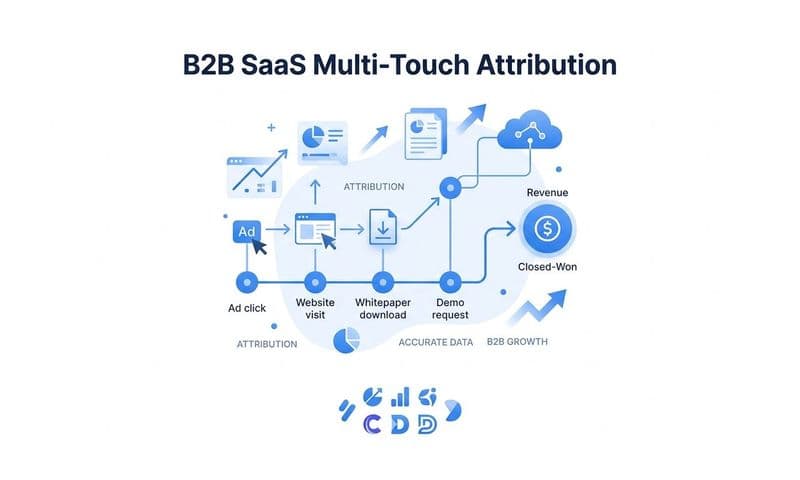
Multi-touch attribution distributes credit across all the touchpoints in a conversion path, giving you a much more accurate picture of which campaigns are genuinely contributing to revenue. This is especially important for longer sales cycles where multiple channels play a role before the final conversion happens.
Using a centralized attribution tool like Cometly allows you to compare attribution models side by side without having to manually pull data from each platform. You can see how performance rankings change when you switch from last-click to linear or time-decay models, and you can make budget decisions based on the model that best reflects your actual funnel rather than the one that happens to make a particular platform look best.
Step 5: Validate Recovered Data Against Your CRM Source of Truth
After implementing server-side tracking and aligning your attribution settings, it is tempting to declare victory and move on. Resist that temptation. The next step is a structured validation period to confirm that your fixes are actually working and that your numbers are now reliable.
Run a validation period of at least two to four weeks after your changes go live. This gives you enough data to identify patterns rather than reacting to day-to-day noise. During this period, build a reconciliation report that compares, for each channel, the attributed conversions in your ad platform, your attribution tool, and your CRM.
The goal is not perfect agreement across all three. Some variance is normal and expected due to timing differences, attribution model differences, and the fact that CRM records sometimes include offline or assisted conversions that ad platforms do not see. What you are looking for is a significant reduction in the gap you documented in Step 1, and a consistent, explainable relationship between your platform data and your CRM data.
If you are still seeing large discrepancies after your fixes, investigate further. Common remaining causes include offline conversions (phone calls, in-person sales) that are not yet being tracked, form submissions that route to a third-party tool without firing a conversion event, or CRM records that include leads from organic and direct traffic that should not be attributed to paid campaigns.
Cometly's analytics dashboard makes this validation process more efficient by mapping all touchpoints to actual CRM revenue in a single view. Instead of manually cross-referencing exports from five different systems, you can see the full customer journey from first ad click to closed revenue and verify that your attribution data matches your CRM records. This single source of truth is what transforms your reconciliation from a painful manual exercise into a quick weekly check.
Set acceptable variance thresholds based on your business context. A small gap is normal. Anything outside your defined threshold should be flagged and investigated before it compounds into a larger data quality problem.
Step 6: Feed Accurate Conversion Data Back to Ad Platform Algorithms
Here is a step that many teams overlook entirely, and it is one of the highest-leverage things you can do once your tracking is accurate. Fixing your data is only half the equation. The other half is using that accurate data to improve how your ad platforms optimize.
Meta, Google, TikTok, and other platforms rely on conversion signals to power their machine learning algorithms. These algorithms determine who sees your ads, how much you bid in each auction, and which audiences are most likely to convert. When your tracking is broken and you are underreporting conversions, you are starving these algorithms of the signals they need. The result is poor targeting, inefficient bidding, and wasted spend, creating a vicious cycle where bad data leads to bad optimization which leads to worse results.
The fix is to send your validated, enriched conversion events back to each platform through conversion sync or offline conversion uploads. This tells the platform's algorithm not just that a conversion happened, but who converted, what they did, and what their journey looked like. Learning how to track offline conversions is a key part of closing this loop. The richer the signal, the better the optimization.
Cometly's Conversion Sync feature automates this process, feeding enriched conversion data back to Meta, Google, TikTok, and other platforms so their AI can identify and target more customers who look like your best buyers. Instead of the platform's algorithm working with incomplete browser-side data, it receives a comprehensive, server-validated signal that reflects your actual customer base.
Monitor your campaign performance in the two to four weeks after enabling conversion sync. Ad platforms typically begin improving targeting and bidding efficiency within one to two weeks of receiving better data, as their models update based on the new signals. You may see improvements in cost per conversion, click-through rates, and overall return on ad spend as the algorithms recalibrate.
This creates a positive feedback loop. Better data leads to better optimization, which drives more conversions, which generates more data for the algorithm to learn from. Getting this flywheel spinning is one of the most durable competitive advantages you can build in paid media.
Step 7: Build an Ongoing Monitoring System to Prevent Future Underreporting
Tracking breaks. Sites get updated, API tokens expire, pixels get removed during redesigns, and platform requirements change. The final step is building a monitoring system that catches these issues before they compound into weeks of bad data and misguided budget decisions.
Set up a weekly or biweekly data reconciliation check as a standing item in your team's workflow. Compare platform-reported conversions to CRM data for the same period. This does not need to be a deep audit every time. A quick comparison against your established variance thresholds is enough to flag anomalies early.
Create alerts for sudden drops in reported conversions. A sharp decline in conversion volume on a specific platform often signals a tracking break rather than a genuine performance drop. Common triggers include a site update that removed the pixel from a key page, an expired API access token that stopped server-side events from sending, or a tag manager publish that accidentally disabled a trigger. If you notice issues specifically with Google Analytics data, this guide on Google Analytics missing conversions can help you troubleshoot.
Schedule a quarterly audit of your full tracking stack, covering pixels, server-side connections, UTM conventions, and attribution window settings. Platform requirements evolve, privacy policies tighten, and browser restrictions expand. What works today may need adjustment in six months.
Stay informed about platform changes that affect tracking. Apple's privacy updates, Google's cookie deprecation timeline, and Meta's API version updates all have downstream effects on your conversion data. Following platform developer blogs and marketing industry publications keeps you ahead of changes rather than reacting to them after your data has already been affected.
Cometly's AI recommendations can also serve as an early warning system. If a campaign that previously performed well suddenly looks underperforming, it may indicate a data issue rather than a genuine drop in results. Using AI-driven insights to flag unusual patterns gives you a proactive layer of monitoring on top of your manual checks.
Your Complete Underreporting Fix Checklist
Fixing underreporting conversions is not a one-time project. It is an ongoing discipline that pays dividends every time you make a budget decision. Here is your complete checklist to carry forward:
1. Audit your current setup and quantify the gap between platform data and CRM data.
2. Diagnose root causes, separating browser-side issues from configuration problems.
3. Implement server-side tracking to bypass the biggest data loss points.
4. Align attribution models and windows to your actual customer journey length.
5. Validate your recovered data against CRM records over a two to four week period.
6. Feed accurate, enriched conversions back to ad platforms to improve their optimization algorithms.
7. Build ongoing monitoring to catch and fix issues before they compound.
When every conversion is tracked and attributed correctly, you stop guessing and start scaling with confidence. You make better budget decisions, your ad platforms optimize more effectively, and you stop leaving revenue on the table because of invisible data gaps.
Cometly brings all of this together in one platform, connecting your ads, website, and CRM so you can see what is really driving revenue and act on it. From server-side tracking and multi-touch attribution to AI-powered recommendations and conversion sync, it gives paid media teams the data accuracy they need to compete at the highest level.
Ready to stop flying blind on your conversion data? Get your free demo today and start capturing every touchpoint to maximize your conversions.