
You're spending real budget across LinkedIn, Google, paid search, and retargeting. Leads are coming in. The sales team is working the pipeline. But when someone asks which campaigns are actually driving closed revenue, the honest answer is: you're not entirely sure.
This is the defining frustration for B2B marketing teams. Unlike e-commerce, where a customer sees an ad and buys within hours, B2B deals unfold over weeks or months, involve multiple stakeholders, and convert through demos, trials, and sales conversations rather than a checkout button. Standard attribution approaches were never designed for this reality.
Ad attribution for B2B is not just a reporting preference. It is the operational foundation that determines whether your budget decisions are based on evidence or instinct. Without it, you are optimizing campaigns against lead volume while remaining blind to which channels actually influence pipeline and revenue. With it, you can scale what works, cut what does not, and feed better data back into your ad platforms to improve performance over time.
This article walks through why B2B attribution is uniquely complex, which models actually apply, how to close the technical gaps that cause conversion data to disappear, and how to build a system that connects ad spend directly to closed-won revenue.
Why B2B Ad Attribution Is Fundamentally Different From B2C
Most attribution logic was built around a simple mental model: someone sees an ad, clicks it, and buys something. That model describes a meaningful portion of B2C commerce. It describes almost nothing about how B2B deals actually happen.
B2B buying cycles routinely span weeks or months. A prospective customer might first encounter your brand through a LinkedIn thought leadership ad, then search for your product category on Google a few weeks later, attend a webinar, get retargeted with a case study ad, and finally click a branded search ad before requesting a demo. That single deal journey might involve a dozen touchpoints spread across multiple channels before it even enters your CRM as a lead.
The multi-stakeholder dimension adds another layer of complexity. In many B2B deals, the person who first clicks an ad is not the person who signs the contract. A marketing manager might engage with your awareness campaigns, a director might evaluate your product through comparison content, and a VP might click a retargeting ad before approving the purchase. Each of these people is interacting with different ads on different devices, and a single deal in your CRM represents the combined influence of all of them.
This is why last-click attribution, which remains the default in most ad platforms, is so structurally misleading for B2B. It assigns 100% of the credit for a conversion to the final touchpoint before a form fill or demo request. In practice, that final touchpoint is often a branded search ad or a retargeting campaign that only existed because earlier awareness campaigns built the interest. Last-click makes retargeting look like a revenue engine while making the top-of-funnel channels that created the opportunity invisible.
There is also the conversion definition problem. In B2B, the ad platform conversion is almost never the actual revenue event. A demo request, a free trial signup, or a contact form submission is the beginning of a sales process, not the end of a purchase. The real outcome, a closed deal with a known contract value, happens weeks or months later inside your CRM. If your attribution system stops at the form fill, you are optimizing campaigns against a proxy metric rather than the outcome that actually matters to your business.
These three dynamics together, long multi-touch journeys, multiple stakeholders, and offline conversion events, make B2B ad attribution a fundamentally different problem than tracking e-commerce purchases. Solving it requires a different approach to both measurement and infrastructure.
Attribution Models That Actually Fit the B2B Funnel
Choosing the right attribution model is not a philosophical exercise. It directly determines which channels get budget and which get cut. Understanding the tradeoffs of each model helps you select the right lens for each decision you need to make.
First-Touch Attribution: This model credits 100% of the conversion value to the first ad or channel a prospect ever interacted with. It is useful for understanding which channels are best at generating initial awareness and bringing new prospects into your funnel. If you are trying to evaluate the performance of top-of-funnel LinkedIn brand campaigns, first-touch gives you a meaningful signal. The limitation is that it ignores everything that happened after that first interaction, including all the nurturing and bottom-funnel activity that moved the deal forward.
Last-Touch Attribution: The default in most ad platforms and many CRMs, last-touch credits the final interaction before a conversion event. It is simple to implement and easy to understand, which explains its widespread use. But for B2B, it systematically over-credits retargeting and branded search while under-crediting the awareness and consideration channels that built the pipeline in the first place. Teams relying exclusively on last-touch attribution often end up cutting the channels that are actually driving demand.
Linear Attribution: This model distributes credit equally across every touchpoint in the customer journey. It acknowledges that multiple interactions contributed to a conversion without making a judgment about which ones mattered more. It is a reasonable starting point for multi-touch measurement, though it can dilute the signal from genuinely high-impact touchpoints by treating all interactions as equally valuable.
Time-Decay Attribution: This model assigns more credit to touchpoints that occurred closer to the conversion event. The logic is that more recent interactions had more direct influence on the decision. For B2B teams with shorter sales cycles, this can produce useful insights. For longer cycles, it risks replicating some of the same biases as last-touch by overweighting bottom-funnel activity.
Position-Based Attribution: Also called U-shaped attribution, this model gives the most credit to the first and last touchpoints, with the remaining credit distributed across the middle interactions. It acknowledges both the importance of initial awareness and the final conversion driver, which aligns reasonably well with how B2B teams think about their funnel.
Data-Driven Attribution: The most sophisticated option, data-driven models use machine learning to assign credit based on which touchpoints are actually most correlated with conversion outcomes in your specific data. Rather than applying a predetermined formula, the model learns from your actual customer journey patterns. For B2B teams with sufficient conversion volume, this approach tends to produce the most accurate picture of channel contribution across the full pipeline.
No single model is perfect for every decision. Many experienced B2B marketing teams use multiple models in parallel, comparing them to get a fuller picture of how different channels are contributing at different stages of the funnel.
The Technical Gap: Where B2B Conversion Data Disappears
Even if you have the right attribution model in mind, there is a significant technical challenge standing between you and accurate data. The tracking infrastructure most teams rely on was built for a simpler era of web analytics, and it is breaking down in ways that specifically hurt B2B measurement.
Browser-based pixel tracking, the foundation of how most ad platforms measure conversions, depends on JavaScript firing in a user's browser when a conversion event occurs. This approach has become increasingly unreliable for several compounding reasons. Ad blockers, which are widely used among the professional and technical audiences that B2B companies frequently target, prevent pixels from firing entirely. iOS privacy changes have restricted cross-site tracking, meaning that a prospect who first engaged with your ad on mobile and later converted on desktop may appear as two completely separate users to your ad platform. And browser-level cookie restrictions are continuing to tighten across major browsers.
The practical result is that ad platforms like Meta and Google are routinely underreporting B2B conversions. When your attribution data shows that a campaign generated fewer leads than your CRM recorded, the discrepancy is often a tracking gap rather than a campaign performance issue. This matters because ad platform algorithms use reported conversion data to optimize bidding and audience targeting. Underreported conversions mean the algorithm is working with incomplete information, which degrades campaign performance over time.
Server-side tracking and Conversion APIs address this problem at the infrastructure level. Instead of relying on a browser pixel to fire, server-side tracking sends conversion events directly from your server to ad platforms like Meta (via the Conversions API, or CAPI) and Google (via Enhanced Conversions). Because this happens server-to-server, it is not affected by ad blockers, browser restrictions, or iOS privacy changes. The result is more complete conversion reporting and better data quality for ad platform optimization algorithms.
For B2B teams, the most powerful application of server-side tracking goes beyond recovering lost lead events. First-party data enrichment allows you to connect CRM data back to the original ad events that generated a lead. When a deal progresses to an opportunity or closes as won, that revenue event can be sent back to your ad platform tied to the original ad click that started the journey. This transforms your attribution from lead-level reporting to revenue-level reporting, giving ad platforms the signal they need to optimize toward actual business outcomes rather than form fills.
Getting this infrastructure right is not optional for B2B teams that want accurate attribution. It is the technical foundation that everything else depends on.
Connecting Ad Spend to Pipeline and Revenue: The Full-Funnel View
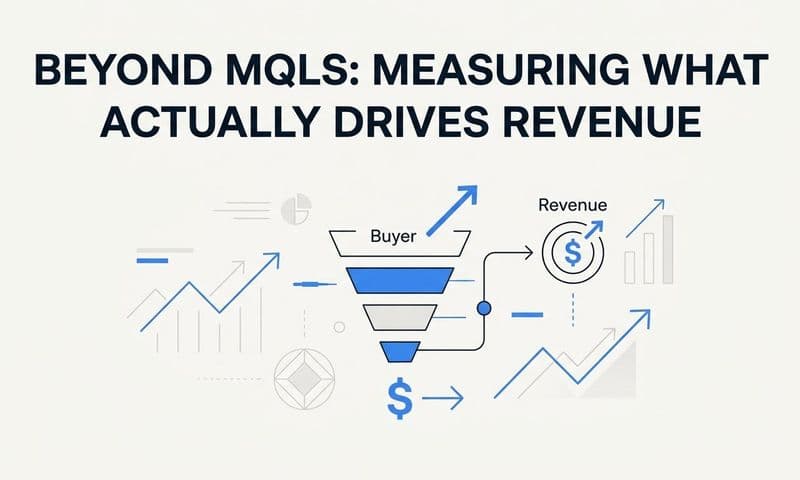
Most B2B marketing teams measure ad performance at the lead stage. Cost per lead is tracked, MQL volume is reported, and campaigns are optimized accordingly. This is a reasonable starting point, but it leaves the most important questions unanswered: which channels are generating leads that actually close, and what is the real return on ad spend when measured against revenue rather than lead volume?
The gap between lead generation and revenue is where significant budget misallocation happens. A channel that generates a high volume of leads at a low cost per lead might look like a strong performer in a lead-based attribution report. But if those leads convert to pipeline at a low rate and rarely close, the channel is consuming budget without generating proportional revenue. Meanwhile, a channel that generates fewer but higher-quality leads might be undervalued because its cost per lead is higher, even though its cost per closed deal is significantly better.
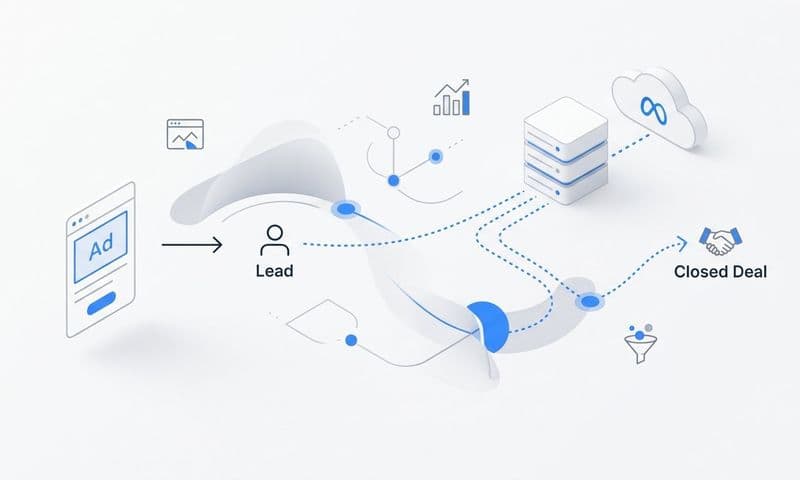
Full-funnel pipeline attribution requires integrating your ad platform data with your CRM so that deal stages and revenue values are mapped back to the original ad sources and campaigns that influenced them. When a lead moves from MQL to SQL, from SQL to opportunity, and from opportunity to closed-won, each of those progression events should be traceable back to the ad touchpoints that were part of that prospect's journey.
The metrics this enables are qualitatively different from lead-based reporting. Cost per closed deal gives you a true picture of customer acquisition cost by channel. Pipeline influenced by channel shows which ad sources are generating deals that are actively moving through your sales process. ROAS calculated on actual closed revenue, rather than estimated lead value, tells you whether your ad spend is generating real business returns.
For B2B SaaS companies specifically, this full-funnel view needs to account for the different conversion paths that exist in the product. A free trial signup has a different attribution logic than a sales-assisted demo request, and both are different from a product-led expansion event. Your attribution system needs to be able to distinguish between these paths and report on them separately to give you an accurate picture of how different channels contribute to different types of revenue. Understanding sales-led versus product-led growth attribution is essential for getting this right.
Pipeline attribution also changes how you have conversations with sales leadership. When marketing can show that specific campaigns influenced a meaningful portion of the closed-won pipeline, the discussion about budget shifts from a cost center conversation to a revenue contribution conversation. That shift in framing is only possible when attribution data connects ad spend all the way to closed revenue.
Building a B2B Ad Attribution Stack That Works
Understanding attribution models and the technical requirements is one thing. Building a stack that actually delivers reliable data across your ad channels, CRM, and reporting layer is where the work happens. Here is what a functional B2B attribution stack requires.
Server-Side Tracking Layer: This is the foundation. Browser pixels alone are not sufficient for accurate B2B attribution. You need server-side event tracking that captures conversion events reliably regardless of browser restrictions, and that can send enriched conversion data back to ad platforms via Conversion APIs. This layer ensures that the conversion signal your ad platforms receive is as complete and accurate as possible.
UTM Parameter Discipline: UTM parameters are the connective tissue that allows source data to flow correctly from ad clicks through form submissions and into CRM records. Every paid campaign, across every channel, needs consistent UTM tagging that captures source, medium, campaign, content, and term. Without this discipline, attribution data degrades quickly as leads move through pipeline stages. A lead that enters your CRM without a UTM source attached is a lead whose ad origin is permanently unknown.
CRM Integration with Deal Stage and Revenue Mapping: Your attribution platform needs a live integration with your CRM that passes deal stage progression and revenue values back to the attribution layer. When a deal closes, the closed-won value should be mapped back to the original ad touchpoints in your attribution data. This is what enables pipeline and revenue attribution rather than just lead attribution.
Unified Reporting Across All Channels: B2B teams typically run ads across multiple platforms simultaneously, including LinkedIn, Google, Meta, and others. Each platform reports performance in its own dashboard with its own attribution logic and conversion windows. A unified reporting layer that aggregates data from all channels into a single view is essential for making accurate budget allocation decisions. Without it, you are comparing numbers that were calculated using different rules.
An Attribution Platform Built for B2B: This is where tool selection matters significantly. Many attribution tools were built for e-commerce or B2C use cases, where the conversion is a direct purchase and the sales cycle is short. Repurposing these tools for B2B creates friction because the attribution logic, the reporting structure, and the CRM integration requirements are fundamentally different. A platform built specifically for B2B SaaS accounts for long sales cycles, multi-touch journeys, pipeline stage reporting, and revenue attribution from the ground up.
Cometly is built for exactly this context. It connects your ad platforms, CRM, and website into a single attribution system, with server-side tracking, Conversion API integration, and multi-touch attribution that maps all the way from first ad click to closed-won revenue.
Turning Attribution Data Into Smarter Ad Decisions
Attribution data is only valuable if it changes how you make decisions. The goal is not a more detailed report. The goal is better budget allocation, more effective campaigns, and compounding improvement in ad ROI over time.
The most direct application of attribution data is budget reallocation. When you can see which channels are generating pipeline that closes and which are generating lead volume that stalls in the funnel, the budget conversation becomes straightforward. Channels that consistently appear in the touchpoint history of closed-won deals deserve more investment. Channels that generate high lead volume but low pipeline conversion deserve scrutiny, and potentially less spend.
This is a different kind of optimization than what most B2B teams are currently doing. Optimizing for cost per lead can actively mislead budget decisions if lead quality varies significantly by channel. Optimizing for cost per closed deal, or for pipeline influenced per dollar spent, aligns your ad investment with actual business outcomes.
AI-driven attribution analysis adds another dimension to this. Modern attribution platforms can surface patterns across multi-touch journey data that manual reporting cannot identify. Which combinations of ad touchpoints are most predictive of a deal closing? Which creative formats appear most frequently in the journeys of high-value customers? Which audiences engage early in the funnel but rarely convert to pipeline? These are questions that require analyzing patterns across many customer journeys simultaneously, which is where machine learning outperforms manual analysis.
There is also a compounding benefit to feeding enriched conversion data back into ad platform algorithms. When Meta and Google receive conversion events that are tied to actual revenue outcomes rather than just lead form fills, their automated bidding systems can optimize toward the audiences and placements most likely to generate real business value. Over time, this creates a self-reinforcing cycle: better conversion data leads to better algorithmic optimization, which leads to better campaign performance, which generates more high-quality conversion data.
This feedback loop is one of the most underappreciated benefits of investing in proper B2B attribution infrastructure. It is not just about understanding past performance. It is about continuously improving future performance by giving your ad platforms the signal they need to work effectively on your behalf.
Putting It All Together
Ad attribution for B2B is not a reporting luxury reserved for large marketing teams with dedicated analytics resources. It is the operational foundation that allows any marketing team to make confident decisions about where to invest budget and what to cut.
The path forward requires moving beyond platform-native reporting, which is built around short purchase journeys and last-click logic, to a system that connects ad clicks to CRM pipeline and closed revenue. That means investing in server-side tracking, maintaining UTM discipline across every campaign, integrating your CRM with your attribution data, and choosing a platform that understands how B2B deals actually happen.
When those pieces are in place, the questions that used to require guesswork become answerable with data. Which channels are driving pipeline? What is the real cost per closed deal by source? Which campaigns are influencing the deals that actually close? And how should next quarter's budget be allocated to maximize revenue return?
Cometly is built specifically to answer these questions for B2B SaaS teams. With multi-touch attribution, server-side conversion tracking, Conversion API integration, CRM pipeline mapping, and AI-powered insights across all your ad channels, it gives you a single source of truth that connects every ad dollar to actual revenue outcomes.
If you are ready to move from guessing to knowing, Get your free demo and see how Cometly can transform the way your team tracks, analyzes, and scales ad performance.