Running paid campaigns across Meta, Google, TikTok, and beyond should give you more data than ever. Instead, it often gives you more confusion. Each platform reports its own numbers, those numbers rarely agree with your CRM, and somewhere in the middle, real budget decisions get made on unreliable information.
Choosing the right ad attribution platform changes that. The best tools reconcile data across every channel, connect ad spend to actual revenue, and give you the clarity to scale what works and cut what doesn't. To build this list, we evaluated platforms across five criteria: tracking accuracy, integration depth, attribution model flexibility, ease of use, and pricing transparency.
If you're also thinking about how attribution fits into your broader analytics strategy, it's worth reading about marketing attribution models and how they affect the way credit gets assigned across your funnel. Understanding the fundamentals makes choosing a platform much easier.
Here are the top ad attribution platforms worth your attention in 2026.
1. Cometly
Best for: Marketers and agencies who need accurate cross-platform attribution with AI-powered optimization across the full customer journey.
Cometly is an AI-powered marketing attribution platform that connects your ad platforms, CRM, and website to track every touchpoint from first click to closed revenue.
 9 Best Ad Attribution Platforms Reviewed for 2026
Where This Tool Shines
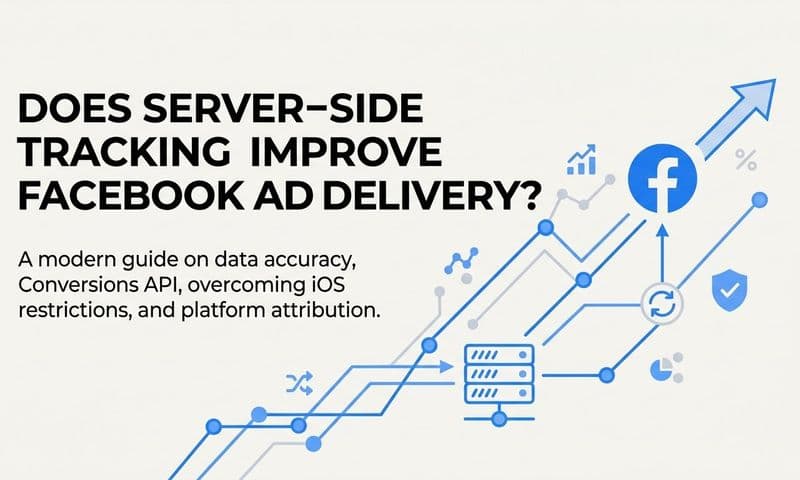
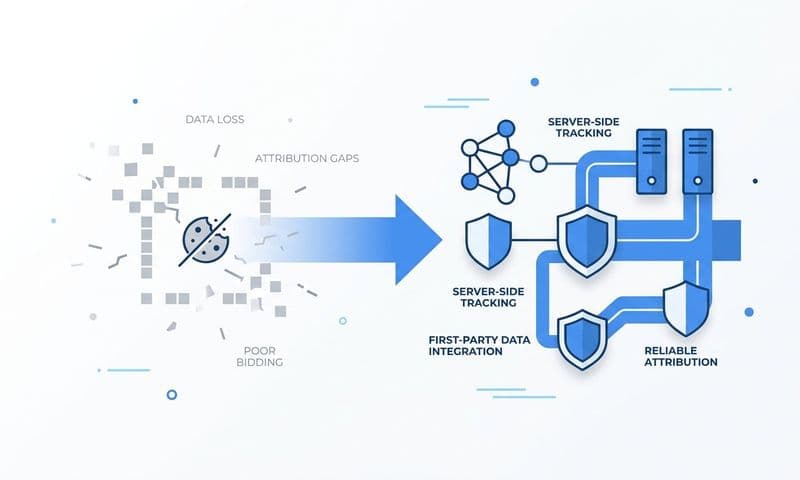
Cometly's biggest strength is its combination of accurate data collection and actionable intelligence. Server-side tracking means browser privacy restrictions, ad blockers, and iOS changes don't silently strip your conversion data. You get a complete picture of what's actually happening across every channel, not just what the ad platforms want you to see.
What separates Cometly from many competitors is the feedback loop it creates. Conversion Sync sends enriched event data back to Meta, Google, and other ad networks, giving their algorithms better signals to optimize against. That means your campaigns don't just report better, they actually perform better over time. The AI Chat feature lets you ask plain-language questions about your data and get instant answers without building reports from scratch.
Key Features
Server-Side Tracking: Collects conversion data at the server level, bypassing browser restrictions and ad blockers that degrade pixel-based tracking accuracy.
Multi-Touch Attribution: Maps the full customer journey across Meta, Google, TikTok, and more, giving credit across every touchpoint rather than just the last click.
AI-Powered Recommendations: Surfaces top-performing ads and scaling opportunities automatically, so you know where to shift budget with confidence.
Conversion Sync: Sends enriched, conversion-ready events back to ad platforms to improve targeting, algorithm optimization, and overall ROAS.
AI Chat: Lets you analyze campaign data using natural language queries, making reporting faster and more accessible for the whole team.
Best For
Cometly is built for digital marketers, growth teams, and agencies managing paid campaigns across multiple channels who need a single source of truth. It's particularly strong for teams that want attribution data to actively improve campaign performance, not just explain it after the fact.
Pricing
Custom pricing based on ad spend volume. A demo is available on request at cometly.com, making it easy to see how it fits your specific setup before committing.
2. Triple Whale
Best for: Ecommerce brands on Shopify that want a unified view of ad spend, revenue, and profitability in one dashboard.
Triple Whale is an ecommerce-focused analytics and attribution platform built around deep Shopify integration and a clean, consolidated reporting experience.
 7 Best Funnel.io Alternatives for Marketing Data Analytics in 2026
Where This Tool Shines
Triple Whale's native Shopify connection is its foundation. It pulls order data, customer behavior, and ad spend into a single dashboard, so you can see true profitability rather than just platform-reported ROAS. For Shopify merchants tired of toggling between Meta Ads Manager, Google Analytics, and their Shopify admin, the consolidation alone is a major time saver.
The creative analytics layer is genuinely useful for teams running a lot of ad variations. You can quickly identify which creatives are driving revenue versus just clicks, and that visibility often changes how teams prioritize their creative production cycles.
Key Features
Native Shopify Integration: Pulls order and revenue data directly from Shopify using first-party pixel tracking for more reliable attribution.
Unified Dashboard: Combines ad spend, revenue, and profitability metrics from all major ad platforms into one view.
Creative Analytics: Identifies top-performing ad creatives by revenue contribution, not just engagement metrics.
Customer Journey Mapping: Visualizes the touchpoint sequences that lead to ecommerce purchases across channels.
Best For
Direct-to-consumer ecommerce brands running primarily on Shopify with active paid campaigns across Meta and Google. Less suited for B2B, lead generation, or businesses not on Shopify.
We compare the leading options in our Shopify ad variation generator roundup.
Pricing
Plans start around $100/month for smaller stores, with pricing scaling based on monthly revenue. Larger brands with higher volume will move into custom tiers.
3. Northbeam
Best for: Data-driven ecommerce teams that want to blend multi-touch attribution with media mix modeling for more statistically grounded decisions.
Northbeam is an attribution and media mix modeling platform designed for ecommerce brands that have outgrown simple last-click reporting and want deeper analytical rigor.
 9 Best Attribution Software for Small Teams in 2026
Where This Tool Shines
Northbeam combines two approaches that are typically sold separately: multi-touch attribution and media mix modeling. Multi-touch attribution tells you what happened at the individual touchpoint level. Media mix modeling uses statistical analysis to understand channel contribution at scale, including channels that are hard to track directly. Together, they give brands a more complete picture of where their marketing dollars are actually working.
The machine learning models improve over time as they accumulate more data, which means the platform tends to get more accurate and useful the longer you use it. For brands running significant ad spend across multiple channels, that compounding accuracy is a real advantage.
Key Features
Blended Attribution Modeling: Combines multi-touch attribution with media mix modeling for both granular and aggregate channel insights.
Machine Learning Optimization: Models that refine their accuracy continuously as more conversion data flows through the platform.
Cross-Channel Spend Recommendations: Suggests budget allocation shifts based on modeled performance across channels.
Customizable Attribution Windows: Lets teams compare different attribution windows and models side by side to understand how assumptions affect results.
Best For
Established ecommerce brands with meaningful ad spend across multiple channels who want statistical modeling alongside standard attribution. Best suited for teams with some analytical sophistication who can act on the insights the platform surfaces.
Pricing
Custom pricing. Northbeam is typically positioned for brands with significant monthly ad spend, so it's less accessible for early-stage businesses.
4. Rockerbox
Best for: Brands with diverse marketing mixes that include offline channels like TV, direct mail, and podcasts alongside digital advertising.
Rockerbox is an omnichannel marketing attribution platform that brings both online and offline channel performance into a single, deduplicated view.
 9 Best Attribution Software for Performance Marketers in 2026
Where This Tool Shines
Most attribution platforms are built around digital channels and treat offline as an afterthought. Rockerbox flips that assumption. It's specifically designed for brands where TV spots, direct mail campaigns, podcast sponsorships, and digital ads all need to be measured together. That breadth makes it valuable for brands that have scaled beyond pure digital and need a consistent measurement framework across everything.
The deduplication engine is a core part of the value proposition. When a customer sees a TV ad, clicks a retargeting ad, and then converts through organic search, Rockerbox works to assign credit accurately rather than letting multiple channels each claim the full conversion.
Key Features
Offline Channel Attribution: Tracks and attributes performance from TV, direct mail, podcasts, and other non-digital channels alongside digital campaigns.
Deduplicated Conversion Tracking: Prevents multiple channels from each claiming full credit for the same conversion event.
Incrementality Testing: Measures the true incremental impact of individual channels by comparing exposed and unexposed audience groups.
Broad Platform Integration: Connects with major ad platforms and marketing tools for a consolidated data view.
Best For
Mid-market to enterprise brands running marketing across both digital and traditional channels who need a unified measurement approach. Not the right fit for businesses running purely digital campaigns.
Pricing
Custom pricing based on business size and the complexity of channels being tracked. Expect enterprise-level investment for full omnichannel coverage.
5. Hyros
Best for: High-ticket businesses, coaching programs, and info product sellers with longer, multi-step sales funnels.
Hyros is an ad tracking and attribution platform built specifically for businesses where the path from ad click to closed sale spans days, weeks, or multiple conversations.
 7 Best Northbeam Alternatives for Small Business in 2026
Where This Tool Shines
Standard attribution platforms are often calibrated for ecommerce purchase cycles measured in hours or days. Hyros is built for funnels where a prospect might click an ad, join an email list, attend a webinar, book a call, and then buy two weeks later. The platform's longer attribution windows and call tracking integration make it possible to connect that eventual sale back to the original ad that started the journey.
The AI optimization layer reads your attribution data and surfaces recommendations for which ads and audiences are actually driving high-ticket conversions, not just leads. For businesses where a single sale might be worth thousands of dollars, that distinction matters enormously.
Key Features
Long-Window Attribution: Tracks customer journeys over extended periods to connect high-ticket conversions back to their originating ad touchpoints.
Call Tracking Integration: Attributes phone-based sales back to the specific ads and campaigns that generated the initial inquiry.
AI Ad Optimization: Identifies which ads are generating actual revenue, not just clicks or leads, and recommends scaling decisions accordingly.
Ad Platform Data Feedback: Sends conversion data back to ad networks to improve algorithm targeting for high-value audiences.
Best For
Coaches, consultants, course creators, and high-ticket service businesses running paid ads to multi-step funnels where standard attribution windows miss most of the actual conversions.
Pricing
Starts around $99/month with higher tiers available for larger ad spends. Pricing scales with volume and feature access.
6. Ruler Analytics
Best for: Lead generation businesses and B2B companies that need to connect marketing touchpoints to actual closed revenue in their CRM.
Ruler Analytics is a marketing attribution platform purpose-built for lead gen, tracking form fills, phone calls, and chat conversations all the way through to revenue.
 8 Best Attribution Tools with Onboarding Support in 2026
Where This Tool Shines
The core problem Ruler Analytics solves is the gap between marketing metrics and sales outcomes. Most attribution tools can tell you which channel drove a lead. Ruler goes further by connecting that lead to what happened in your CRM, including whether it became a customer and how much revenue it generated. That closed-loop reporting is what makes it genuinely useful for B2B and service businesses.
Built-in call tracking is a meaningful differentiator for businesses where a significant portion of conversions happen over the phone. Rather than treating phone calls as a black box, Ruler attributes each call back to the specific campaign, keyword, or channel that drove it.
Key Features
Call Tracking: Tracks inbound phone calls and attributes them to the specific marketing source that generated the inquiry.
CRM Revenue Integration: Connects lead data to CRM deal stages and closed revenue, so you can see true marketing ROI beyond lead volume.
Multi-Touch Attribution Models: Supports multiple attribution approaches suited to longer B2B buying cycles.
Revenue Reporting by Channel: Breaks down revenue attribution by channel, campaign, and keyword for granular budget decisions.
Best For
B2B companies, agencies, and service businesses where leads convert through phone calls, forms, or chat and where the sales cycle spans multiple touchpoints before a deal closes.
Pricing
Starts around $200/month with pricing scaling based on features, call tracking volume, and the number of integrations needed.
7. AppsFlyer
Best for: Mobile app marketers who need install attribution, in-app event tracking, and fraud protection across thousands of ad networks.
AppsFlyer is an industry-leading mobile attribution and analytics platform serving app marketers who need precise measurement across a complex mobile advertising ecosystem.
Where This Tool Shines
Mobile attribution is a different discipline from web-based attribution, and AppsFlyer has spent years building infrastructure specifically for it. The platform connects installs, in-app events, and revenue back to the specific ad network, campaign, and creative that drove them, across thousands of integrated partners. That breadth of network coverage is hard for competitors to match.
As iOS App Tracking Transparency and Android's Privacy Sandbox have reshaped mobile measurement, AppsFlyer has invested heavily in privacy-preserving measurement frameworks including SKAdNetwork support. For app marketers navigating these constraints, having a platform that has adapted to the new reality is essential.
Key Features
Mobile Install Attribution: Tracks app installs across thousands of ad networks with precise source-level attribution.
SKAdNetwork and Privacy Sandbox Support: Measurement frameworks designed to work within iOS and Android privacy constraints.
Deep Linking: Creates seamless user experiences from ad click to specific in-app destinations, improving post-install engagement.
Fraud Protection: Filters invalid installs, click flooding, and other forms of mobile ad fraud before they contaminate your data.
Best For
Mobile app companies of all sizes, from indie developers to large gaming and fintech companies, running user acquisition campaigns across multiple mobile ad networks.
Pricing
A free tier is available for apps with lower conversion volume. Paid plans scale based on the number of conversions tracked, making it accessible at different stages of growth.
8. Wicked Reports
Best for: Subscription-based businesses and recurring revenue models that need attribution to account for long-term customer value, not just the initial purchase.
Wicked Reports is an attribution platform built around the idea that a customer's first purchase is rarely the full story, especially for businesses where revenue compounds over time.
Where This Tool Shines
Standard attribution models evaluate ad performance based on the revenue generated at the moment of conversion. For subscription businesses, that approach systematically undervalues channels that attract high-LTV customers who stick around and pay for months or years. Wicked Reports tracks what happens after the first purchase, connecting ongoing subscription revenue back to the original marketing source.
The CRM and email marketing integrations are central to how the platform works. By pulling data from tools like Klaviyo, ActiveCampaign, and major CRM platforms, Wicked Reports builds a picture of how email nurture sequences and follow-up campaigns contribute to long-term revenue, not just initial sales.
Key Features
LTV-Based Attribution: Tracks revenue beyond the first purchase, connecting recurring payments and upsells back to originating ad campaigns.
Subscription Revenue Tracking: Measures the long-term revenue contribution of each customer acquired through paid channels.
CRM and Email Integration: Pulls data from major CRM and email platforms to include nurture sequences in the attribution picture.
ROI Reporting with LTV: Calculates true ad ROI by factoring in customer lifetime value rather than just first-order revenue.
Best For
SaaS companies, membership businesses, and subscription box brands where customer retention and recurring revenue are the real measures of marketing success.
Pricing
Starts around $250/month with pricing varying by feature tier and data volume. Best suited for businesses where LTV reporting justifies the investment.
9. SegMetrics
Best for: Businesses with sophisticated email marketing and automation stacks who want full-funnel attribution from ad click through nurture sequence to purchase.
SegMetrics is a funnel analytics and attribution platform with unusually deep integrations into email marketing and automation tools, making it ideal for businesses where the email channel plays a central role in conversion.
Where This Tool Shines
Most attribution platforms treat email as a last-touch channel and call it done. SegMetrics goes much deeper, tracking how individual leads move through email sequences, which messages they engage with, and how those interactions contribute to eventual purchases. That lead-level visibility is rare and genuinely useful for businesses running complex nurture funnels.
The integrations with platforms like Keap, ActiveCampaign, and HubSpot are notably tight. Rather than relying on generic API connections, SegMetrics pulls granular contact and automation data that gives you a real picture of how your email marketing is contributing to revenue across different cohorts and acquisition sources.
Key Features
Email and Automation Integration: Deep native connections with Keap, ActiveCampaign, HubSpot, and other major platforms for granular funnel tracking.
Full Funnel Visibility: Tracks the complete journey from ad click through email nurture sequences to final purchase.
Lead-Level Attribution: Follows individual customer journeys rather than relying solely on aggregate channel reporting.
LTV and Cohort Reporting: Analyzes long-term campaign performance by understanding how different acquisition sources produce customers with different lifetime values.
Best For
Online businesses, course creators, and service companies that rely heavily on email marketing and automation to convert leads, and who want to understand exactly how that nurture process contributes to revenue.
Pricing
Starts around $175/month with pricing scaling based on contact volume and the number of integrations connected.
Which Attribution Platform Is Right for You?
The right choice depends almost entirely on your business model and where your biggest measurement gaps are. Here's a quick way to think through the decision.
If you're running paid campaigns across multiple channels and need a single, accurate source of truth that actively improves your ad performance, Cometly is the strongest all-around choice. Its server-side tracking, multi-touch attribution, and Conversion Sync create a feedback loop that doesn't just report on what happened but helps your campaigns perform better going forward. The AI-powered recommendations make it especially useful for teams that want data to drive decisions, not just document them.
For Shopify-based ecommerce brands, Triple Whale offers the most seamless integration with the tools you're already using. If you want to add statistical modeling to your ecommerce measurement, Northbeam is worth evaluating. Brands with significant offline marketing budgets should look closely at Rockerbox, while high-ticket funnel businesses will find Hyros built specifically for their needs.
B2B and lead generation teams should prioritize Ruler Analytics for its CRM revenue connection and call tracking. Mobile-first businesses need AppsFlyer. Subscription and recurring revenue models will get the most from Wicked Reports or SegMetrics, depending on how central email automation is to their conversion process.
Attribution isn't a set-it-and-forget-it decision. As privacy changes continue to reshape tracking, having a platform that adapts, feeds better data back to ad networks, and gives you AI-powered clarity will matter more than ever. If you want to see what that looks like in practice, Get your free demo of Cometly and start connecting every touchpoint to real revenue.