When you run ads across Meta, Google, LinkedIn, TikTok, and other channels simultaneously, knowing which platform actually drove a conversion becomes genuinely difficult. Each ad platform reports its own numbers, attribution windows overlap, and you end up with inflated totals that do not match your CRM or revenue data. The result is budget misallocation and decisions made on unreliable data.
The tools in this list solve that problem by centralizing conversion tracking across multiple ad platforms into a single, trustworthy view. Whether you need server-side tracking, multi-touch attribution, Conversion API integration, or simply a cleaner dashboard, there is a solution here for your team. We evaluated each tool on cross-platform coverage, tracking accuracy, ease of setup, attribution modeling depth, and fit for B2B SaaS marketing teams. Here are nine tools worth considering in 2026.
1. Cometly
Best for: B2B SaaS teams that need full-funnel attribution from ad click to closed-won revenue
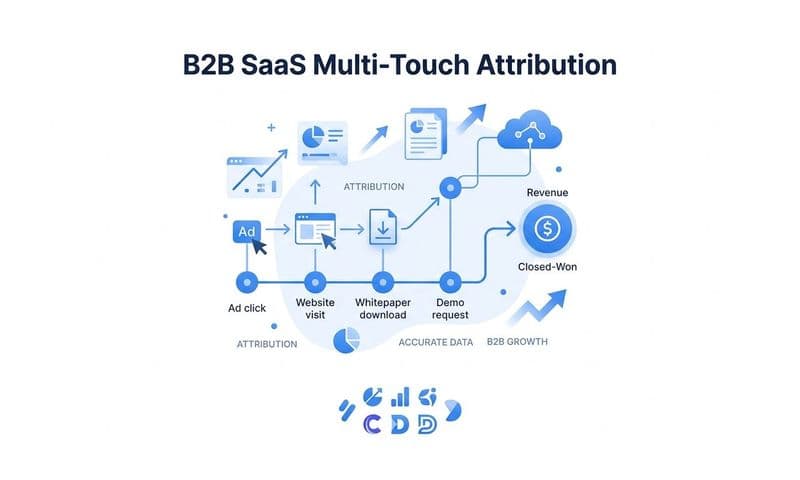
Cometly is a marketing attribution and analytics platform built specifically for B2B SaaS companies, connecting ad platforms, CRM data, and website activity into a single source of truth.
 9 Best Attribution Platforms for Agencies in 2026
Where This Tool Shines
Cometly stands out because it was designed with B2B SaaS buying cycles in mind. Most attribution tools are built around ecommerce, where a conversion happens in minutes. Cometly handles the longer, multi-touch journeys common in SaaS, where a prospect might interact with six different ads across three channels before becoming a paying customer.
The platform's server-side tracking and native Conversion API integrations with Meta and Google mean your conversion data stays accurate even as browser-based cookies become less reliable. The Stripe integration is particularly valuable: it connects actual revenue to the ad campaigns that influenced it, giving you pipeline and revenue attribution rather than just lead counts.
Key Features
Multi-Touch Attribution: Tracks every ad interaction across all major platforms and applies consistent attribution logic to deduplicate conversions.
Server-Side Tracking and Conversion APIs: Supports Meta CAPI and Google Enhanced Conversions, sending reliable event data directly from your server to each ad platform.
Pipeline and Revenue Attribution: Integrates with Stripe and CRM data to connect ad spend directly to closed-won deals and actual revenue.
AI Ads Manager: Surfaces performance recommendations so you can identify which ads and campaigns are driving results and scale them with confidence.
Customer Journey Analytics: Visualizes the full path from first touch to conversion with 70+ native integrations covering ad platforms, CRMs, and analytics tools.
Real-Time Dashboard: Provides a live view of ad performance across all connected channels in one unified interface.
Best For
Cometly is the strongest fit for B2B SaaS marketing teams and growth leaders who need to connect ad spend to pipeline and revenue. It is particularly well-suited for teams running campaigns across multiple paid channels who are frustrated by conflicting attribution data from individual ad platforms.
Pricing
Pricing is available on request. Visit the Cometly website directly to get current pricing details tailored to your team's needs.
2. Triple Whale
Best for: Ecommerce and DTC brands consolidating ad performance across Meta, Google, and TikTok
Triple Whale is an ecommerce-focused attribution and analytics platform that pulls ad data from multiple channels into a single dashboard with a focus on creative performance and blended profitability metrics.
 9 Best Tools for Ad Conversion Tracking Across Multiple Platforms in 2026
Where This Tool Shines
Triple Whale built its reputation in the direct-to-consumer space, and its Blended ROAS metric reflects that focus. Rather than attributing each conversion to a single channel, it gives you a holistic view of how your ad spend is performing across all platforms together. This is useful when you want to understand the combined efficiency of your paid media mix rather than chase attribution credit.
The creative analytics layer is genuinely strong. Ad-level performance data helps teams understand which creatives are driving results, which is especially valuable for brands running a high volume of Meta and TikTok ads.
Key Features
Unified Dashboard: Consolidates data from Meta, Google, TikTok, and Pinterest into a single reporting view.
Blended ROAS: Reports overall return on ad spend across all channels combined, not just platform-reported numbers.
Creative Analytics: Breaks down performance at the individual ad level to identify top-performing creatives.
Post-Purchase Survey Integration: Collects zero-party data from customers to supplement pixel-based attribution.
Server-Side Options: Offers server-side tracking capabilities alongside standard pixel-based attribution.
Best For
Triple Whale is best suited for ecommerce and DTC brands, particularly those with significant spend on Meta and TikTok. It is less focused on B2B use cases, longer sales cycles, or pipeline attribution tied to CRM deal stages.
We compare the leading options in our ecommerce Meta ad tool roundup.
Pricing
Paid plans are available with pricing that scales based on monthly ad spend. Check triplewhale.com for current rates.
3. Northbeam
Best for: High-spend advertisers who want machine learning-driven cross-channel attribution
Northbeam is a machine learning-based attribution platform that uses media mix modeling to assess the cross-channel impact of ad spend, designed for advertisers with substantial budgets spread across multiple platforms.
 9 Best Attribution Software for Multiple Channels in 2026
Where This Tool Shines
Northbeam's ML-based approach is built for teams that have outgrown last-click attribution and want a more sophisticated model. Its media mix modeling considers the influence of every channel on a conversion, including channels that are difficult to track at the user level, such as connected TV or podcast ads.
One important consideration: Northbeam's models require a meaningful period of data collection before they become accurate. Teams with a shorter ad history or lower spend volumes may not see the full benefit immediately. It rewards patience and established spend patterns.
Key Features
ML-Based Media Mix Modeling: Uses machine learning to model cross-channel attribution beyond what pixel tracking alone can capture.
Predictive Budget Allocation: Provides recommendations on where to shift spend based on modeled performance data.
Granular Reporting: Breaks down attribution at the channel, campaign, and ad set level.
Incrementality Testing: Supports testing to measure the true incremental impact of specific campaigns.
Ad Platform and CRM Integrations: Connects to major ad platforms and CRM tools for a unified data view.
Best For
Northbeam is best suited for brands with established, high-volume ad spend across multiple channels who want to move beyond rule-based attribution. It is less ideal for teams with limited ad history or those looking for a quick setup.
Pricing
Custom pricing based on ad spend. Contact Northbeam directly for a quote.
4. Rockerbox
Best for: Mid-market teams that want attribution plus raw data access for custom analysis
Rockerbox is a marketing attribution platform that combines multi-touch attribution and media mix modeling with direct data export capabilities, suited to teams that want both a visual dashboard and the flexibility to run custom analysis.
 9 Best Mixpanel Alternatives for Attribution in 2026
Where This Tool Shines
What separates Rockerbox from many attribution tools is its commitment to data transparency. You can export raw event-level data to Amazon S3 or BigQuery, which means your data team can build custom models, run ad hoc queries, or feed attribution data into your own reporting stack. This is a meaningful differentiator for data-forward marketing teams.
Rockerbox also handles offline conversion tracking, which is useful for teams that run events, direct mail, or other offline channels alongside digital campaigns. Having all of that in one attribution model gives a more complete picture of what is actually influencing customers.
Key Features
Multi-Touch and Media Mix Modeling: Offers both rule-based multi-touch attribution and statistical media mix modeling within a single platform.
Raw Data Export: Sends event-level data to S3 or BigQuery for custom analysis and data warehouse integration.
Unified Channel View: Covers paid, organic, and direct channels in a single attribution model.
Offline Conversion Tracking: Incorporates offline interactions into the attribution model alongside digital touchpoints.
Customizable Attribution Windows: Allows teams to define their own attribution windows and model configurations.
Best For
Rockerbox works well for mid-market brands with a data team that wants to go beyond pre-built dashboards. It is a strong choice for teams running a mix of online and offline channels who value data portability.
Pricing
Custom pricing. Visit rockerbox.com for details.
5. Google Analytics 4 (GA4)
Best for: Teams that need a free baseline conversion tracking layer integrated with Google Ads
Google Analytics 4 is Google's web and app analytics platform with built-in conversion tracking, a data-driven attribution model, and deep native integration with the Google Ads ecosystem.
 11 Best Marketing Analytics Tools to Track and Optimize Campaign Performance in 2026
Where This Tool Shines
GA4 is the default starting point for most marketing teams, and for good reason. It is free, it integrates directly with Google Ads, and its event-based tracking model is flexible enough to define almost any user action as a conversion. The data-driven attribution model, available to accounts with sufficient conversion volume, distributes credit across touchpoints based on observed patterns rather than arbitrary rules.
That said, GA4 has well-documented limitations for B2B use cases. Cross-device tracking gaps, session-based data loss, and the absence of native CRM integration mean it often cannot connect ad performance to pipeline stages or closed revenue. Most B2B teams use GA4 as a baseline alongside a dedicated attribution platform rather than as their primary attribution source.
Key Features
Free Conversion Tracking: Tracks web and app conversions at no cost, with flexible event-based definitions.
Data-Driven Attribution: Applies a machine learning attribution model for accounts with sufficient conversion data.
Native Google Ads Integration: Syncs conversion data directly into Google Ads for campaign optimization.
Event-Based Tracking: Allows custom conversion definitions based on virtually any user interaction.
Audience Building: Creates remarketing audiences from conversion data for use across Google channels.
Best For
GA4 is the right choice as a foundational tracking layer for almost any team, particularly those heavily invested in Google Ads. It is not sufficient as a standalone attribution solution for B2B SaaS companies that need pipeline and revenue attribution.
Pricing
Free for standard use. GA4 360, the enterprise version, is available at custom pricing through Google's sales team.
6. Segment
Best for: Engineering-forward teams building a centralized event data pipeline
Segment is a customer data platform that acts as a central hub for collecting conversion events from your website, app, and server, then routing that data to any connected ad platform, analytics tool, or data warehouse.
 9 Best Conversion Tracking Alternatives to Pixels in 2026
Where This Tool Shines
Segment does not provide attribution analysis itself, but it solves a foundational problem: getting clean, consistent conversion data to every tool that needs it. Instead of implementing separate tracking pixels for Meta, Google, TikTok, and your analytics platform, you instrument your events once in Segment and route them anywhere. This dramatically reduces the risk of tracking inconsistencies across platforms.
If you're evaluating vendors, our WooCommerce Meta ad tool breakdown can help.
The server-side event routing is particularly valuable for conversion accuracy. Sending events from your server rather than a browser bypasses ad blockers and cookie restrictions, which means your ad platforms receive more complete conversion data. This improves the quality of signals feeding into each platform's optimization algorithms.
Key Features
Centralized Event Collection: Collects user events from web, mobile, and server sources in a single, consistent schema.
300+ Destination Integrations: Routes data to ad platforms, analytics tools, CRMs, and data warehouses without redundant implementations.
Server-Side Routing: Sends conversion events from your server for more reliable, privacy-resilient data delivery.
Identity Resolution: Unifies user data across touchpoints and sessions to build a coherent customer profile.
Data Governance: Enforces schema rules and data quality standards across your event pipeline.
Best For
Segment is best suited for teams with engineering resources who want to own their event infrastructure. It is an excellent foundation for companies that use multiple analytics and ad tools and want consistent data flowing to all of them.
Pricing
A free tier is available for low event volumes. Paid plans scale with monthly tracked users. See segment.com for current pricing.
7. HubSpot Marketing Hub
Best for: B2B teams already on HubSpot CRM who want ad attribution tied to contact and deal records
HubSpot Marketing Hub includes built-in ad attribution that connects campaign performance to CRM contacts and deal stages, making it a practical choice for teams that want attribution without adding another standalone platform.
 9 Best Ad Attribution Platforms Compared for B2B SaaS Teams in 2026
Where This Tool Shines
HubSpot's attribution strength is its native connection to the CRM. When a contact converts on an ad, that interaction is logged against their contact record. You can then see which campaigns influenced contacts at various deal stages, and revenue attribution reports can tie closed deals back to the marketing activities that contributed. For teams already living in HubSpot, this removes the need for a separate integration layer.
The limitation is depth. HubSpot's attribution is contact-level and works best for straightforward B2B funnels. Teams with complex multi-channel strategies, high ad volumes, or a need for granular creative-level analysis will likely find it insufficient as a primary attribution tool.
Key Features
CRM-Connected Attribution: Ties ad interactions directly to HubSpot contact and deal records for revenue-level reporting.
Multiple Attribution Models: Supports first touch, last touch, linear, and other multi-touch attribution models.
Ad Platform Integrations: Connects natively to Google Ads, Meta Ads, and LinkedIn Ads.
Revenue Attribution Reporting: Shows which campaigns influenced closed revenue at the deal level.
Unified Marketing and Sales View: Combines marketing campaign data with sales pipeline activity in one platform.
Best For
HubSpot Marketing Hub is the right choice for B2B teams already using HubSpot as their CRM who want a basic attribution layer without introducing additional tools. It is not a replacement for a dedicated attribution platform when advanced cross-channel analysis is needed.
Pricing
A free tier is available with limited features. Paid plans start at varying price points depending on contacts and features. Check hubspot.com for current pricing.
8. Ruler Analytics
Best for: B2B companies with offline or sales-assisted conversions including calls, forms, and live chat
Ruler Analytics is a B2B-focused marketing attribution platform that specializes in tracking conversions that happen outside of a standard web form, including phone calls, live chat, and other offline interactions, back to the original ad source.
Where This Tool Shines
Most attribution tools are built around digital conversion events like form submissions or purchases. Ruler Analytics extends that tracking to phone calls and live chat sessions, assigning each interaction back to the specific ad, campaign, and channel that originally brought the visitor to your site. For B2B companies where a significant portion of leads come through inbound calls or sales-assisted conversations, this fills a real gap.
The CRM integration means that when a lead eventually closes as a deal, that revenue can be attributed back through the entire touchpoint history, including the original ad click. This gives sales-led organizations a more accurate picture of which marketing activities are actually generating pipeline.
Key Features
Call Tracking: Assigns dynamic phone numbers to track which ads and campaigns drive inbound calls.
Form and Chat Tracking: Captures form fill and live chat conversions alongside the full ad touchpoint history.
Multi-Touch Attribution: Applies attribution models across both online and offline conversion interactions.
CRM Integration: Connects conversion data to pipeline and revenue records in connected CRM platforms.
Offline Conversion Import: Sends offline conversion data back to Google Ads and Meta for platform-level optimization.
Best For
Ruler Analytics is a strong fit for B2B companies with sales teams, where conversions often happen via phone or assisted conversations rather than pure digital self-serve flows. It complements other attribution tools rather than replacing them.
Pricing
Paid plans are available with pricing dependent on call tracking volume and feature requirements. Visit ruleranalytics.com for current rates.
9. Hyros
Best for: High-ticket advertisers with complex multi-step funnels who need cookie-free cross-platform tracking
Hyros is an ad tracking platform that uses a proprietary server-side tracking method to follow users across platforms without relying on browser cookies, primarily used by high-ticket advertisers and businesses with longer, multi-step conversion funnels.
Where This Tool Shines
Hyros takes a different approach to the cookie deprecation problem. Rather than relying on browser-based tracking, it uses what it calls "print tracking," a server-side method that identifies users through persistent identifiers rather than cookies. For advertisers running long funnels where a prospect might move across multiple devices and platforms over weeks before converting, this can improve attribution accuracy meaningfully.
The platform also integrates with payment processors to report revenue-level attribution rather than just lead or conversion counts. This is useful for businesses where the value of a conversion varies significantly and you need to tie actual revenue back to specific ad sources.
Key Features
Proprietary Print Tracking: Uses server-side identification that does not depend on browser cookies for cross-platform user tracking.
Cross-Platform Attribution: Tracks user journeys across Meta, Google, YouTube, and email in a single attribution view.
Long Sales Cycle Support: Handles extended attribution windows suited to high-ticket or multi-step conversion funnels.
AI-Based Attribution Modeling: Applies machine learning to attribute conversions across complex, multi-touch journeys.
Payment Processor Integration: Connects to payment platforms to report revenue-level attribution by ad source.
Best For
Hyros is most commonly used by high-ticket advertisers, course creators, and coaching businesses with complex funnels. It is less commonly adopted in traditional B2B SaaS contexts, though teams with long sales cycles and multi-device journeys may find its tracking approach compelling.
Pricing
Custom pricing based on monthly revenue. Contact Hyros directly for a quote.
Which Tool Is Right for Your Team
The right choice depends on your business model, tech stack, and the specific conversion tracking gaps you are trying to close.
If you are a B2B SaaS team that needs to connect ad spend to pipeline and closed revenue, Cometly is the most purpose-built option in this list. Its combination of server-side tracking, Conversion API integration, multi-touch attribution, and Stripe-connected revenue attribution addresses the full funnel in a way that generic analytics tools simply cannot.
For ecommerce and DTC brands, Triple Whale or Northbeam are worth evaluating depending on your spend level and appetite for machine learning-driven modeling. If your team already runs on HubSpot and you want basic ad attribution without adding another platform, HubSpot Marketing Hub is a practical starting point. For companies where phone calls and sales-assisted conversations are a major conversion path, Ruler Analytics fills a gap that most other tools ignore.
GA4 and Segment serve different roles: GA4 as a free baseline layer for Google Ads users, and Segment as event infrastructure for teams building a centralized data pipeline. Neither replaces a dedicated attribution platform for serious cross-channel analysis.
The common thread across all of these tools is that accurate conversion tracking across multiple platforms requires more than installing a pixel. It requires a deliberate approach to how you collect, route, and attribute conversion data, and the right tool depends on how complex your customer journey actually is.
If you are ready to stop guessing which ads are driving revenue and start making decisions from a single, reliable source of truth, Get your free demo of Cometly and see how it maps your full customer journey from first ad click to closed-won deal.