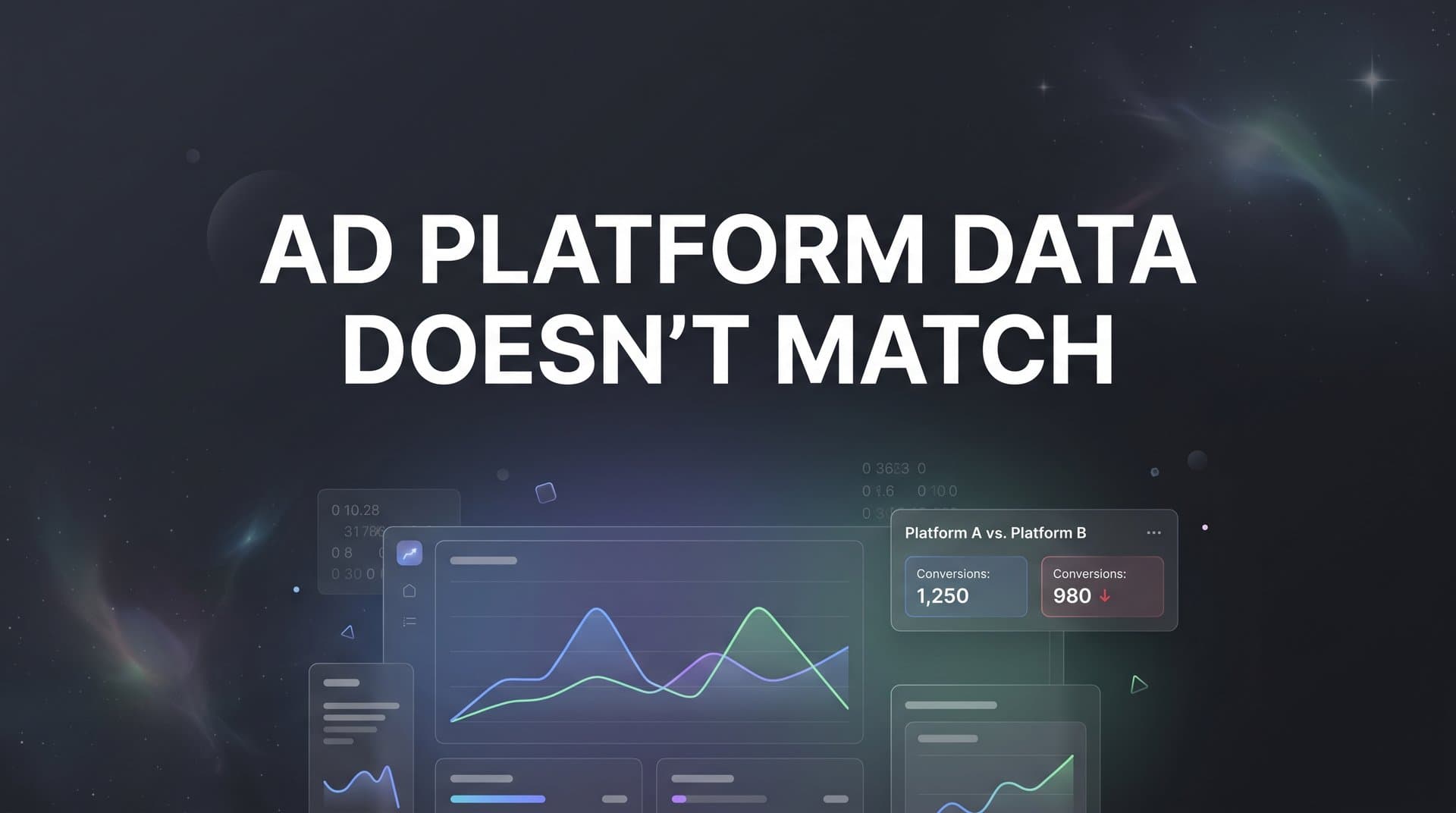
You pull up your Meta Ads dashboard. It shows 50 conversions for the week. You open Google Analytics. It shows 30. You check your CRM. It shows 22. Three sources, three completely different numbers, and a growing sense that something has gone very wrong.
Here's the thing: nothing has gone wrong. This is one of the most universal experiences in digital advertising, and it happens to seasoned marketers managing millions in ad spend just as often as it happens to someone running their first campaign. The frustration is real, but the cause is structural, not a sign that your tracking is broken or your team made a mistake.
Why does this matter beyond the headache of reconciling spreadsheets? Because the numbers you trust determine where you invest your budget. If Meta is overcounting conversions and you don't know it, you're likely overfunding a channel that isn't performing as well as it appears. If your CRM is undercounting because of tracking gaps, you might be pulling budget from channels that are actually working. Every budget decision downstream of mismatched data is compromised.
This article breaks down exactly why ad platform data doesn't match, starting with the foundational reasons rooted in how platforms are built, moving through the privacy changes that complicated tracking further, and covering the technical issues that quietly corrupt your data. More importantly, it shows you what to do about it so you can stop chasing perfect alignment and start making decisions with real confidence.
Every Platform Counts Conversions Differently
The single biggest reason ad platform data doesn't match is the simplest one: every platform uses its own rules for deciding what counts as a conversion and who gets credit for it. These rules are not standardized across the industry, and they were never designed to agree with each other.
Meta Ads defaults to a 7-day click and 1-day view attribution window. That means if someone sees your ad on Facebook on Monday and converts any time before the following Monday, Meta claims that conversion. Google Ads historically defaulted to last-click attribution, though it now defaults to data-driven attribution for most campaigns, which distributes credit across multiple touchpoints using machine learning. TikTok uses its own attribution windows, LinkedIn uses its own, and so on down the list.
Now picture a real customer journey. A user clicks a Meta ad on Monday, clicks a Google Shopping ad on Wednesday, and completes a purchase on Friday. Meta counts it as a conversion because the purchase happened within 7 days of the click. Google counts it as a conversion because the user clicked a Google ad before purchasing. From the perspective of each platform's reporting dashboard, they both drove that sale. But you only made one sale.
This is called attribution overlap, and it's not a glitch. It's a direct consequence of each platform measuring its own contribution using its own methodology. When you add up conversions across platforms, you will almost always get a number higher than your actual sales, because the same customer journey is being counted multiple times across different systems. Understanding how tracking conversions across multiple ad platforms works is essential to navigating this challenge.
There's also a subtler force at work here: self-reporting bias. Ad platforms are businesses, and their revenue depends on advertisers believing their ads are working. This doesn't mean platforms are deliberately deceiving you, but it does mean their measurement methodologies are designed to capture as much credit as their attribution rules allow. A platform that reports fewer conversions is a platform that loses ad spend to competitors. Third-party analytics tools like Google Analytics have no such incentive, which is one reason they consistently report lower conversion numbers than the platforms themselves.
The result is a world where every platform tells a story that flatters its own performance, and no two stories quite match. Understanding this isn't cynicism. It's the foundation for building a smarter measurement approach.
How Privacy Changes Broke the Tracking Chain
Attribution overlap explains a lot of discrepancies, but it doesn't explain all of them. A second major force has reshaped the tracking landscape over the past several years: privacy restrictions that have fundamentally limited what platforms can observe about user behavior.
Apple's App Tracking Transparency framework, introduced in 2021, requires apps to ask users for permission before tracking them across other apps and websites. The majority of users opt out. This means platforms like Meta lost direct visibility into a significant portion of post-click behavior on iOS devices. They can no longer reliably track what a user does after clicking an ad if that user is on an iPhone and has declined tracking. The rise of first-party data tracking has become a critical response to these restrictions.
Browser-level restrictions have compounded this. Safari's Intelligent Tracking Prevention and Firefox's enhanced tracking protection block third-party cookies, which platforms have historically relied on to follow users across the web. Chrome has been evolving its own privacy sandbox initiatives, further limiting traditional tracking methods. Add ad blockers into the mix, and a meaningful portion of user activity simply becomes invisible to browser-based tracking pixels.
Platforms haven't stood still in response. Meta introduced Aggregated Event Measurement and its Conversions API as ways to maintain measurement in a privacy-constrained environment. But these solutions introduce their own form of discrepancy: modeled conversions. When a platform can't directly observe a conversion, it estimates whether one likely occurred based on statistical modeling. These modeled conversions are real data in Meta's dashboard, but they are estimates, not observed events. That's a meaningful distinction when you're making budget decisions.
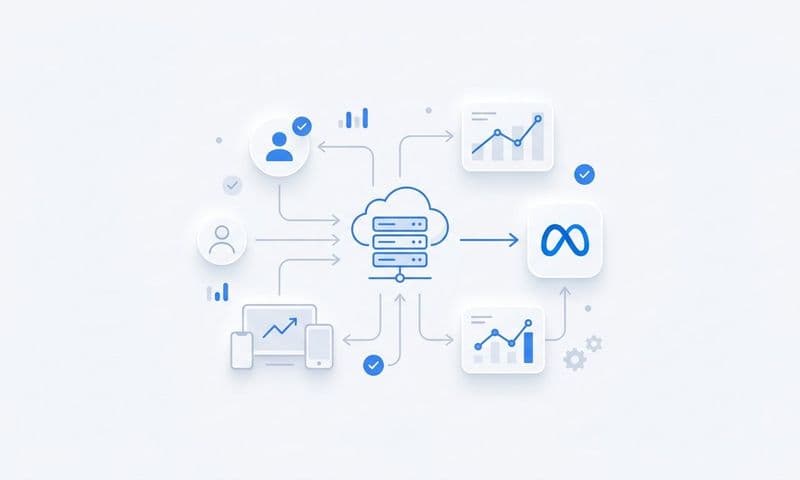
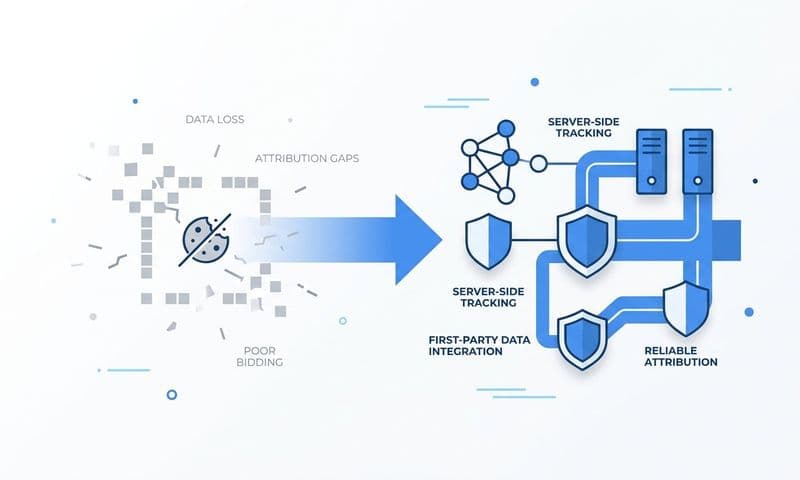
Server-side tracking versus client-side tracking creates another layer of divergence. Traditional pixel-based tracking runs in the user's browser, which means it's subject to all the restrictions described above. Server-side tracking sends conversion data directly from your server to the ad platform's API, bypassing browser limitations entirely. A business using server-side tracking will capture more conversion events than one relying solely on browser pixels, but the platforms themselves may still be working with different data depending on their own ingestion methods.
The practical outcome is that even if you set everything up correctly, different parts of your tracking stack are operating with different levels of visibility. Platforms report what they can see, estimate what they can't, and the result is numbers that diverge from your own analytics in ways that are difficult to explain without understanding the underlying mechanics.
The Hidden Technical Culprits Behind Mismatched Numbers
Beyond attribution models and privacy restrictions, there's a category of discrepancies that are purely technical in nature. These are the silent killers of data accuracy, and they're often the hardest to diagnose because they don't throw errors.
Time zone and reporting lag differences: Ad platforms may report conversions on the day the ad was clicked, while your analytics tool reports them on the day the conversion actually occurred. If a user clicks an ad at 11:45 PM on Tuesday and converts at 12:05 AM on Wednesday, one system attributes the conversion to Tuesday and another to Wednesday. This sounds minor, but across thousands of events, time zone misalignments between platforms and reporting lag can create day-level discrepancies that make weekly comparisons unreliable.
Cross-device and cross-browser tracking gaps: A user clicks your ad on their phone during a lunch break, then completes the purchase on their laptop that evening. Whether these two sessions get connected into a single customer journey depends entirely on whether the platform can match the two devices. Platforms with large logged-in user bases, like Meta and Google, have better cross-device matching than platforms without it. Analytics tools that rely on cookies often fail to connect these sessions at all, treating them as two separate users. Accurately tracking customer journeys across platforms requires tools that go beyond cookie-based methods.
UTM parameter and redirect issues: UTM parameters are the tags you append to URLs to tell your analytics tool where traffic came from. When a redirect strips those parameters, or a landing page fails to preserve them, your analytics tool loses the source attribution entirely. That conversion still happens, but it gets logged as direct traffic or unattributed, creating a gap between what the ad platform reports and what your analytics tool records.
Misconfigured pixels and tags: A pixel that fires on the wrong page, a tag that fires twice, or a conversion event that's configured to trigger before the actual purchase completes can all silently corrupt your data. These issues often go undetected for weeks because there's no error message, just numbers that don't quite add up.
Each of these technical issues is fixable in isolation. The challenge is that they tend to compound each other, making the gap between platform data and ground truth larger than any single issue would produce on its own.
What Mismatched Data Actually Costs Your Business
It's tempting to treat data discrepancies as an analytics problem, something to sort out eventually when there's time. But the business impact of acting on mismatched data is concrete and often significant.
When ad platform data is inflated due to attribution overlap and modeled conversions, marketers tend to over-invest in channels that appear to be performing well but are actually sharing credit for conversions driven by other touchpoints. Budget flows toward the platform with the most aggressive attribution window, not necessarily the one delivering the most value. Meanwhile, channels that play a real role in the customer journey but appear lower in platform-reported conversions get underfunded or cut entirely. Dealing with unreliable marketing analytics data is a challenge that directly impacts your bottom line.
There's also the trust problem. When a marketing team presents campaign results and the numbers don't match across sources, it creates friction with leadership and clients. Finance teams ask why Meta says 50 conversions but revenue only reflects 22 new customers. That conversation is difficult to have without a clear explanation, and it erodes confidence in marketing's ability to measure its own impact. Teams end up spending time each week reconciling reports instead of optimizing campaigns, which is time that compounds into a significant opportunity cost over a quarter.
The third cost is less visible but arguably the most damaging over time: degraded algorithm performance. Ad platforms like Meta and Google use the conversion data you feed back to them to optimize targeting and bidding. Their algorithms are designed to find more people who look like your converters. When the conversion data flowing back to these platforms is incomplete because pixels are missing events due to privacy restrictions or technical gaps, the algorithms are working with a distorted picture of who your real customers are. They optimize toward a flawed signal, which means your campaigns become less efficient over time even as your ad spend stays constant.
The combination of wasted spend, eroded trust, and degraded algorithm performance makes data accuracy not just an analytics concern but a core business issue. The cost of not solving it compounds with every campaign cycle.
How to Build a Single Source of Truth Across All Platforms
The goal isn't to make all your platform numbers match. That's not achievable given the structural reasons covered above. The goal is to build an independent measurement layer that gives you the real picture, so you can make confident decisions regardless of what any individual platform reports.
Start with server-side tracking: Moving your conversion tracking from browser-based pixels to server-side implementation is the most impactful technical step you can take. When your server sends conversion events directly to platform APIs, you bypass browser restrictions, ad blockers, and the data loss that comes with client-side tracking. You capture more events, more accurately, and you're not at the mercy of whether a user's browser allows your pixel to fire. Exploring top server-side tracking platforms is a great starting point for this transition.
Use a dedicated attribution platform: Individual ad platforms will always report their own numbers using their own rules. What you need is a layer that sits above all of them and connects the dots across your entire marketing stack. Cometly connects your ad platforms, CRM, and website to track the full customer journey in real time. Instead of toggling between Meta Ads Manager, Google Ads, and your CRM trying to reconcile numbers manually, you get a unified view of every touchpoint from first ad click to closed deal.
Cometly also lets you compare attribution models side by side. You can see how your channel performance changes when you look at first-touch versus last-touch versus multi-touch marketing attribution, which gives you a much more nuanced understanding of how your channels work together rather than forcing you to pick one platform's version of the truth. The AI-powered analysis layer surfaces which ads and campaigns are actually driving revenue, not just which ones are claiming credit.
Feed enriched conversion data back to ad platforms: This is the step that closes the loop. Once you have accurate, server-side conversion data flowing through a unified attribution platform, you can sync those enriched conversion events back to Meta, Google, and other platforms. This practice, often called conversion syncing, does two things simultaneously. It gives the platforms better data to work with, which improves their algorithm performance and your campaign efficiency. And it reduces the gap between what platforms report and what actually happened, because the data they're receiving is more complete and accurate than what their pixels alone would have captured.
Cometly's Conversion Sync does exactly this, sending enriched, conversion-ready events back to ad platforms so their algorithms can optimize targeting and bidding based on real results. When the platforms have better data, they find better customers, and your return on ad spend improves without increasing your budget. For a deeper look at the broader challenge, explore how to approach solving attribution data discrepancies across your entire stack.
Turning Data Chaos Into Clarity
The core insight to take away from everything above is this: data discrepancies between ad platforms are structural and expected. They are not a bug in your setup. They are a natural consequence of walled garden ecosystems, competing attribution methodologies, privacy-driven tracking limitations, and the technical complexity of tracking user journeys across devices and browsers.
Trying to make your Meta dashboard agree with Google Analytics agree with your CRM is a dead end. The numbers will never perfectly align, and chasing perfect alignment wastes time and energy that should go toward optimization. The smarter path is to stop treating any single platform's reporting as ground truth and instead build an independent measurement layer that gives you a reliable, unified view of what's actually happening.
That means implementing server-side tracking to capture more events accurately. It means using an attribution platform that connects all your data sources and lets you analyze the full customer journey. And it means feeding that enriched data back to ad platforms so their algorithms can do their best work on your behalf.
When you have that infrastructure in place, you don't need to reconcile numbers manually. You have a single source of truth that tells you which channels are driving real revenue, which campaigns deserve more budget, and where you're leaving money on the table. You can present results to leadership with confidence because you're not relying on any platform's self-reported numbers. You're working from your own data.
That's the shift from data chaos to clarity, and it's entirely achievable with the right tools and approach.
Ready to stop guessing and start scaling with confidence? Get your free demo and see how Cometly captures every touchpoint, reveals what's truly driving your revenue, and feeds better data back to your ad platforms for smarter optimization across every channel.