You're spending $50,000 a month on ads. Your Meta dashboard shows strong ROAS. Google Ads claims credit for most of your conversions. TikTok's analytics suggest their platform is your top performer. But when you look at actual revenue in your bank account, the numbers don't add up.
This is the reality for most marketers running multi-platform campaigns. You know what you're spending. You can see individual platform metrics. But you can't confidently answer the most important question: which campaigns are actually driving profitable revenue?
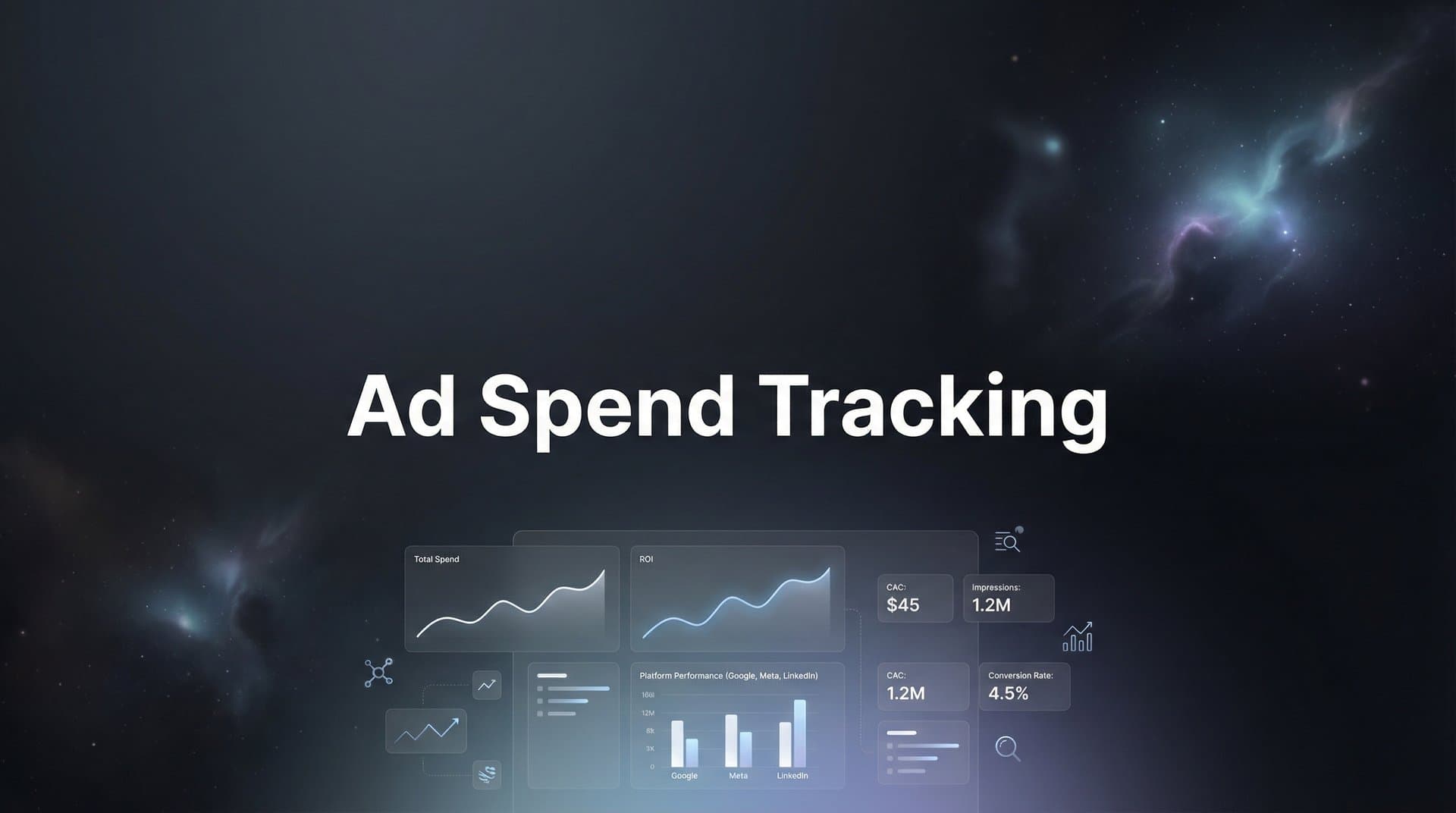
Ad spend tracking solves this problem—but not in the way most marketers think. It's not just about monitoring your monthly ad budget or tracking how much you allocated to each platform. Real ad spend tracking connects every dollar you invest to tangible business outcomes, revealing which campaigns deserve more budget and which are quietly draining your resources. This guide will show you how to build a tracking system that gives you complete visibility into where your marketing dollars go and what they actually accomplish.
Why Your Current Tracking Probably Has Blind Spots
Let's start with an uncomfortable truth: if you're relying solely on native platform reporting, you're making decisions based on incomplete—and often conflicting—data.
Here's what typically happens. You run campaigns across Meta, Google Ads, and LinkedIn. At the end of the month, you pull reports from each platform. Meta claims it generated 200 conversions. Google Ads reports 180 conversions. LinkedIn shows 50 conversions. Add them up, and you've got 430 conversions.
But your CRM only shows 280 new customers. What happened to the other 150?
The gap exists because each platform uses attribution windows and tracking methods that claim credit for the same conversions. A customer might click your Meta ad, search your brand name on Google, then convert. Both platforms claim credit. Neither is technically wrong—but together, they're giving you an inflated picture of performance.
This attribution overlap makes it nearly impossible to calculate true ROAS or determine which channels actually drive incremental revenue. You might be doubling down on a channel that looks like a winner but is really just good at claiming credit for conversions other channels initiated. Understanding attribution tracking for multiple campaigns is essential to solving this problem.
The problem has gotten significantly worse since iOS 14.5 introduced App Tracking Transparency. When users opt out of tracking, pixel-based conversion tracking loses visibility into a substantial portion of your audience. Meta and other platforms have implemented workarounds like Conversion API and aggregated event measurement, but these solutions still leave gaps in your data.
Cookie deprecation is making things even more challenging. As browsers phase out third-party cookies, traditional pixel-based tracking loses its ability to follow users across websites and platforms. Marketers need to explore cookieless tracking methods to maintain visibility. The tracking methods that worked reliably for the past decade are becoming less effective every quarter.
The hidden cost of these blind spots isn't just confusion—it's wasted budget. When you can't accurately see which campaigns drive real results, you end up making optimization decisions based on vanity metrics rather than revenue impact. You might cut a campaign that's actually your most efficient customer acquisition channel because it doesn't get proper attribution credit. Or you might scale a campaign that looks great in platform analytics but consistently attracts low-quality leads who never convert to paying customers.
The Anatomy of Effective Ad Spend Tracking
Effective ad spend tracking rests on three interconnected pillars that work together to give you a complete picture of your advertising performance.
Spend Aggregation: This is your foundation—pulling accurate spend data from every platform you advertise on and centralizing it in one place. This sounds simple, but many marketers discover discrepancies between what their ad platforms report and what their finance team sees on credit card statements. Effective aggregation captures not just the headline spend numbers, but also breaks down costs by campaign, ad set, and individual creative so you can analyze performance at every level.
Attribution: This pillar connects your ad spend to actual conversions and revenue. It's where you answer the critical question: which touchpoints in the customer journey deserve credit for the sale? Attribution tracking captures every interaction a customer has with your marketing—from initial ad click through multiple website visits to final purchase—and applies models that distribute credit appropriately. A comprehensive attribution marketing tracking guide can help you understand these connections. Without accurate attribution, you're just tracking spend in a vacuum with no connection to outcomes.
Analysis: The final pillar transforms raw data into actionable insights. This is where you calculate true ROAS by channel, understand customer acquisition costs that account for the full journey, and identify patterns that reveal optimization opportunities. Analysis turns tracking data into strategic decisions about where to allocate budget.
Here's the crucial distinction many marketers miss: tracking spend is not the same as tracking spend effectiveness. You can know exactly how much you spent on each platform—that's basic accounting. But understanding spend effectiveness means knowing the return on every dollar invested, accounting for attribution overlap, and measuring outcomes that actually matter to your business.
The metrics that indicate healthy ad spend go far beyond surface-level numbers like impressions or click-through rates. Focus on these instead:
Customer Acquisition Cost by Channel: What does it actually cost to acquire a paying customer from each platform, not just a lead or click? This metric accounts for the full funnel and reveals which channels deliver customers efficiently.
ROAS by Campaign: Revenue generated divided by spend, calculated with attribution models that prevent double-counting. A campaign might show 5x ROAS in platform analytics but only 2x when you account for attribution overlap with other channels.
Time-to-Conversion Patterns: How long does it take from first ad interaction to purchase? Understanding this helps you set appropriate attribution windows and reveals which channels play different roles in the customer journey. Some channels might excel at generating quick conversions while others consistently assist longer-term purchases.
Contribution Margin by Source: Not all revenue is equally valuable. A channel might drive high revenue but attract customers who have lower lifetime value or higher support costs. Tracking contribution margin reveals true profitability by source. The right marketing analytics software for revenue tracking makes calculating these metrics straightforward.
When these three pillars work together—accurate spend aggregation, reliable attribution, and meaningful analysis—you move from guessing about ad performance to knowing with confidence which investments drive real business growth.
Building Your Cross-Platform Tracking System
Creating a tracking system that actually works requires connecting data sources that were never designed to talk to each other. Here's how to build infrastructure that gives you a unified view of ad performance.
Start by centralizing data from every ad platform you use. Meta, Google Ads, TikTok, LinkedIn, Twitter—each has its own reporting interface, attribution logic, and data structure. Pulling this data into a single source of truth eliminates the need to jump between platforms and manually reconcile numbers in spreadsheets. A detailed cross-platform tracking setup guide can walk you through this process.
Most modern attribution platforms offer native integrations that automatically pull spend, impression, click, and conversion data from major ad platforms. These integrations typically refresh data multiple times per day, giving you near-real-time visibility into campaign performance. The key is ensuring your integrations capture granular data at the campaign and ad level, not just account-level summaries.
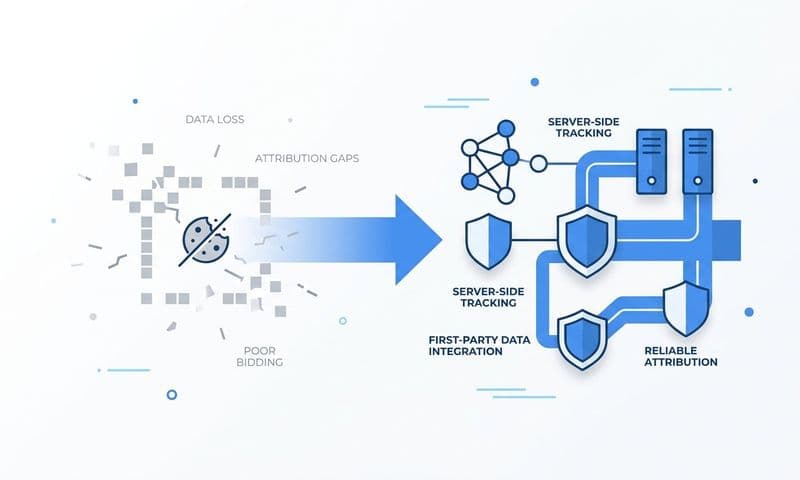
But here's where many tracking systems fail: they rely exclusively on pixel-based tracking to connect ad clicks to conversions. Pixels work by dropping a piece of code in a user's browser that fires when they complete an action like making a purchase. This approach has become increasingly unreliable.
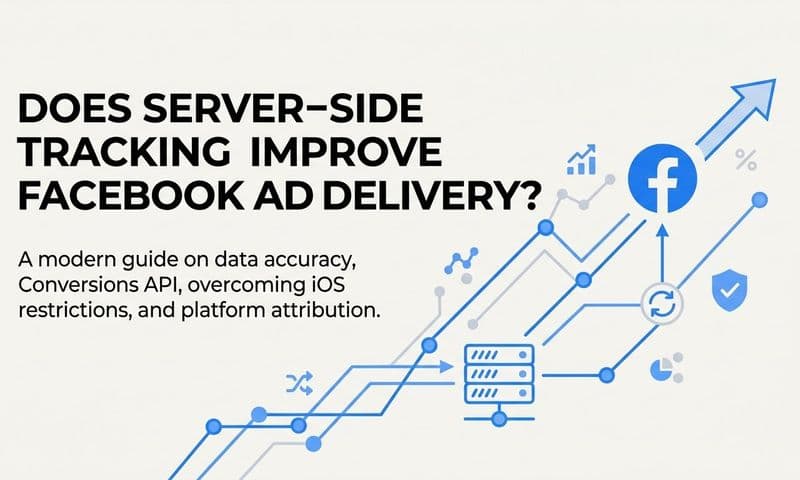
Server-side tracking offers a more accurate alternative. Instead of relying on browser pixels that can be blocked by privacy settings or ad blockers, server-side tracking captures conversion data directly from your server and sends it to ad platforms and attribution systems. When a customer completes a purchase, your server records the transaction and sends that conversion data through secure server-to-server connections.
The difference in data accuracy can be substantial. Server-side tracking typically captures 20-30% more conversions than pixel-based tracking alone because it isn't affected by browser restrictions or users who clear cookies. This means you're making decisions based on a more complete picture of campaign performance. Our server-side tracking implementation guide covers the technical details.
Setting up server-side tracking requires technical implementation, but the payoff in data accuracy makes it essential for serious ad spend tracking. You'll need to configure your server to send conversion events to platforms like Meta's Conversions API and Google's Enhanced Conversions, ensuring you're passing the right data parameters for proper attribution.
The final piece of your tracking system is connecting your CRM to close the loop between ad interactions and actual revenue. This is where tracking moves beyond measuring clicks and leads to understanding real business impact.
When you connect your CRM, you can track the full customer lifecycle: which ad campaign generated the initial lead, how that lead progressed through your sales process, whether they became a paying customer, and what their lifetime value turned out to be. This connection reveals crucial insights that platform analytics miss entirely.
For example, you might discover that leads from LinkedIn cost more upfront but convert to customers at twice the rate of leads from Meta. Or that TikTok drives high volumes of cheap leads who rarely make it past the first sales call. Without CRM integration, you'd optimize for lead volume and cost-per-lead. With it, you optimize for customer acquisition and revenue.
The technical implementation typically involves using webhooks or API connections to send conversion events from your CRM back to your attribution platform. When a lead becomes a customer, that event fires and gets attributed back to the original marketing touchpoints. When a customer churns or upgrades, those events get tracked too, building a complete picture of marketing's impact on business outcomes.
Attribution Models That Reveal True Spend Efficiency
Attribution models determine how credit gets distributed across the touchpoints in a customer journey. Choose the wrong model, and you'll systematically overvalue some channels while undervaluing others. The key is understanding what each model reveals—and what it obscures. Exploring different attribution tracking methods helps you find the right approach for your business.
First-Touch Attribution: This model gives 100% credit to the first interaction a customer had with your marketing. If someone clicked a Meta ad, then later searched your brand on Google and converted, Meta gets all the credit. First-touch is valuable for understanding which channels are best at generating initial awareness and bringing new prospects into your funnel. It helps you identify top-of-funnel performers. But it completely ignores the role that other touchpoints played in moving that prospect toward a purchase decision.
Last-Touch Attribution: The opposite approach—100% credit goes to the final interaction before conversion. In the same scenario above, Google would get all the credit because the customer searched your brand right before purchasing. Last-touch reveals which channels are effective at closing deals and capturing demand. The problem is it ignores all the marketing work that happened earlier to create awareness and interest. You might cut campaigns that are excellent at generating initial interest because they rarely get last-touch credit.
Multi-Touch Attribution: These models distribute credit across multiple touchpoints in the customer journey. Linear multi-touch gives equal credit to every interaction. Time-decay gives more credit to recent interactions. Position-based (also called U-shaped) gives more weight to first and last touch while still crediting middle interactions. Multi-touch models provide a more complete picture of how different channels work together throughout the customer journey.
So which model should you use? The answer is all of them—or at least several. Comparing models side-by-side reveals insights that any single model would miss.
A campaign that looks mediocre in last-touch attribution might be your top performer in first-touch attribution, revealing it's excellent at generating awareness but needs support from other channels to close deals. That's not a weakness—that's valuable intelligence about how to structure your marketing mix.
Similarly, a channel that dominates last-touch attribution might be capturing demand that other channels created. If you scaled that channel aggressively while cutting first-touch performers, you'd eventually run out of demand to capture.
Attribution windows add another layer of complexity. A seven-day attribution window only gives credit to touchpoints that happened within seven days of conversion. A 30-day window includes touchpoints from the past month. The window you choose dramatically affects which campaigns appear successful.
For businesses with longer sales cycles, short attribution windows systematically undervalue top-of-funnel campaigns. A customer might see your ad, research for three weeks, then convert. If you're using a seven-day window, that initial ad impression gets no credit even though it started the journey.
The practical approach is comparing multiple attribution models with different windows side-by-side. Look for campaigns that perform consistently well across models—those are your reliable performers. When a campaign only looks good in one specific model, dig deeper to understand its actual role in the customer journey before making budget decisions.
This comparative approach prevents you from over-optimizing for any single attribution model's biases. You develop a nuanced understanding of how different channels contribute to business outcomes, which leads to smarter budget allocation decisions.
From Tracking to Action: Optimizing Based on Real Data
Accurate tracking data is only valuable if you actually use it to make better decisions. Here's how to turn insights into action that improves ad spend efficiency.
Start by identifying budget reallocation opportunities across channels. Once you have accurate attribution data, you can calculate true ROAS for each platform and campaign. Look for significant gaps in performance. If Meta campaigns are generating 4x ROAS while LinkedIn is at 1.5x, you have a clear opportunity to shift budget toward the higher-performing channel.
But don't just look at headline numbers. Dig into performance by campaign type, audience segment, and creative format. You might find that Meta performs at 4x overall, but specific campaign types within Meta deliver 6x while others barely break even. The optimization opportunity isn't just moving budget between platforms—it's reallocating within platforms to double down on what works. Learning how to reduce wasted ad spend with better data can significantly improve your efficiency.
Here's a strategy many marketers overlook: feeding better conversion data back to ad platforms improves their AI targeting and reduces wasted spend. Platforms like Meta and Google use machine learning algorithms to optimize ad delivery. The algorithm learns which users are most likely to convert based on the conversion signals you send back.
When your conversion tracking is incomplete—missing 30% of conversions due to pixel limitations—the algorithm is learning from flawed data. It thinks certain audience segments don't convert when they actually do. This leads to suboptimal targeting decisions and wasted impressions on audiences that look similar to your incomplete conversion data.
By implementing server-side tracking and sending complete conversion data back to platforms through Conversions API or Enhanced Conversions, you give the algorithm better training data. Over time, this improves targeting efficiency. The platform gets better at finding users who actually convert, not just users who convert in ways the pixel can track. Following best practices for tracking conversions accurately ensures you're capturing the data that matters.
You can also send additional conversion events beyond just purchases. Track lead quality scores, customer lifetime value, and post-purchase engagement. When you send signals indicating which conversions are most valuable to your business, the platform can optimize for high-value customers instead of just conversion volume.
The final piece is setting up dashboards and alerts that surface actionable insights rather than vanity metrics. Most marketers drown in data but starve for insights. Your dashboard should answer specific questions that drive decisions:
Which campaigns are underperforming this week compared to their 30-day average? This catches performance drops early so you can investigate and fix issues before wasting significant budget.
Which new campaigns have enough data to make scaling decisions? A simple indicator showing when a campaign has reached statistical significance prevents premature optimization.
What's the blended CAC across all channels this month? Tracking overall efficiency helps you understand if changes to individual campaigns are improving or hurting total performance.
Which audience segments have the highest conversion rates and lowest CAC? This reveals where to focus creative development and audience expansion efforts.
Set up automated alerts for significant changes in key metrics. If your blended ROAS drops more than 20% week-over-week, you want to know immediately—not when you review reports at the end of the month. If a top-performing campaign suddenly stops delivering conversions, an alert lets you investigate whether it's a tracking issue, creative fatigue, or a genuine performance problem. Real-time data tracking makes this level of responsiveness possible.
The goal is creating a system where insights find you, rather than requiring you to dig through reports hunting for problems or opportunities. When your tracking system actively surfaces what matters, you can spend less time analyzing data and more time acting on it.
Putting Your Tracking System Into Practice
Building a comprehensive tracking system can feel overwhelming, especially if you're currently working with fragmented data across multiple platforms. The key is starting strategically rather than trying to implement everything at once.
Begin with your highest-spend channels. If you're investing $30,000 monthly on Meta and $5,000 on LinkedIn, start by getting Meta tracking right. Quick wins on your largest channels demonstrate the value of better tracking and build momentum for tackling smaller platforms.
This focused approach also makes technical implementation more manageable. You can work through server-side tracking setup, attribution model testing, and dashboard configuration on one platform before expanding to others. The learnings from your first implementation make subsequent platforms faster and smoother.
As you build your tracking system, watch out for these common pitfalls that derail many implementations:
Over-complicating attribution: Some marketers try to build perfect attribution models that account for every possible variable and interaction. This pursuit of perfection leads to analysis paralysis. Start with standard multi-touch models, compare them to first-touch and last-touch, and use those insights to make decisions. You can always refine your approach later as you learn what matters most for your business.
Ignoring offline conversions: If your business involves phone calls, in-person sales, or any conversion that happens outside your website, your tracking system needs to capture those events. Otherwise, you're systematically undervaluing channels that drive offline conversions. Many businesses discover their "lowest-performing" channel is actually their best performer once offline conversions are properly attributed. Understanding marketing attribution for phone calls is critical for businesses with significant call volume.
Not accounting for sales cycles: B2B companies and businesses with longer consideration periods need attribution windows that match their reality. If your average sales cycle is 45 days, a seven-day attribution window will make all your campaigns look terrible because most conversions happen outside the window. Match your tracking configuration to your actual customer journey length.
Here's what makes effective ad spend tracking compound in value over time: better data leads to better decisions, which leads to better platform algorithm performance, which leads to even better results.
When you shift budget away from underperforming campaigns and toward proven winners, your overall ROAS improves. When you send complete conversion data back to ad platforms, their algorithms get smarter about targeting. When you identify which creative formats and audience segments work best, you can produce more of what resonates.
Each optimization builds on previous ones. After three months of data-driven optimization, your campaigns perform better than they did at the start. After six months, you've accumulated enough insights to make strategic decisions about channel mix, budget allocation, and creative strategy that would have been impossible with fragmented data.
The marketers who win in the current environment aren't necessarily the ones with the biggest budgets—they're the ones who know exactly what's working and can confidently scale it while cutting what doesn't deliver results.
Moving Forward With Confidence
Ad spend tracking isn't just about knowing what you spent—it's about confidently scaling what works and cutting what doesn't. The difference between marketers who thrive and those who struggle comes down to visibility. When you can see exactly which campaigns drive profitable revenue, every optimization decision becomes clearer.
The fragmented tracking landscape makes this harder than it should be. Platform-reported metrics conflict with each other. Privacy changes create data gaps. Attribution overlap inflates performance numbers. But these challenges aren't insurmountable—they just require a tracking system built for the current reality rather than relying on methods designed for a different era.
Marketers who connect every touchpoint to revenue outcomes make fundamentally better decisions. They know which channels deserve more budget because they can see true ROAS accounting for attribution overlap. They catch performance issues early because their dashboards surface actionable insights. They feed better data back to ad platform algorithms, improving targeting efficiency over time.
The compounding effect of accurate tracking transforms marketing from a cost center into a predictable revenue driver. Every dollar invested gets connected to outcomes. Every campaign gets evaluated on real business impact. Every optimization builds on solid data rather than platform-reported metrics that claim credit for the same conversions.
Start by evaluating your current tracking gaps. Can you confidently answer which campaigns drive the most profitable customers? Do you know your true CAC by channel accounting for attribution overlap? Can you see the full customer journey from first ad interaction through purchase and beyond? If not, you're making decisions with incomplete information—and leaving significant performance improvements on the table.
Ready to elevate your marketing game with precision and confidence? Discover how Cometly's AI-driven recommendations can transform your ad strategy—Get your free demo today and start capturing every touchpoint to maximize your conversions.