You're running campaigns on Meta, Google, TikTok, and LinkedIn simultaneously. Each platform shows impressive numbers. Conversions look solid. ROAS seems healthy. And yet, when you look at your actual revenue, something doesn't add up.
Sound familiar? This is the reality for most marketing teams managing multiple campaigns across multiple platforms. The problem isn't that your ads aren't working. The problem is that you can't tell which ones are actually working, because every platform is telling you a different story using its own rules, its own attribution window, and its own definition of success.
Meta says it drove 150 conversions this week. Google claims 120. TikTok is reporting 80. But your CRM shows only 200 total new customers. The math doesn't add up because each platform is counting the same conversions multiple times, each claiming full credit for a purchase that may have involved touchpoints across all three channels.
This is where unified ad tracking for multiple campaigns becomes essential. Instead of operating in disconnected silos, a unified tracking approach pulls data from every platform into a single source of truth, so you can see exactly what's happening across your entire campaign ecosystem. This guide walks you through why fragmented tracking costs you money, how cross-campaign tracking actually works, and how to build a system that lets you make confident, data-driven decisions at scale.
Why Running Campaigns in Silos Costs You Money
Every major ad platform is built to make itself look as valuable as possible. That's not a criticism; it's just the reality of how these systems are designed. Meta defaults to a 7-day click and 1-day view attribution window. Google Ads uses its own conversion tracking methodology. TikTok has its own attribution logic. When a customer interacts with your ads on multiple platforms before making a purchase, each platform may claim full credit for that same conversion.
This phenomenon is called attribution overlap, and it's one of the most expensive problems in digital marketing. You're not just seeing inflated numbers on a dashboard. You're making real budget decisions based on those inflated numbers. If Meta appears to be driving 150 conversions but many of those are also being counted by Google and TikTok, you might increase your Meta budget based on performance that doesn't actually reflect Meta's true contribution. Understanding performance marketing attribution is critical to avoiding this trap.
The downstream effect is significant. Channels that genuinely perform well but receive less credit under platform-native attribution get underfunded. Channels that appear to perform well due to overlapping credit claims receive more budget than they deserve. Over time, this misallocation compounds. You're not just wasting money on a single campaign; you're systematically directing your entire budget based on a distorted picture of reality.
There's also the opportunity cost to consider. When you can't accurately measure which campaigns are driving revenue, you lose the ability to confidently scale what's working. Scaling requires trust in your data. If you can't trust your data, you're essentially making budget decisions by instinct rather than evidence. That hesitation costs you growth.
The marketers who scale most effectively aren't necessarily the ones with the biggest budgets. They're the ones with the clearest view of what their budget is actually producing. Unified ad tracking for multiple campaigns is what creates that clarity. Investing in the right marketing campaign tracking software is the first step toward eliminating unnecessary risk from every budget decision.
The Building Blocks of Cross-Campaign Tracking
Before you can unify your data, you need to understand the core mechanisms that make cross-campaign tracking possible. These aren't optional add-ons. They're the foundational infrastructure that determines how accurately your data reflects reality.
UTM Parameters: UTM tags are snippets of text added to your ad URLs that tell your analytics platform where a visitor came from, which campaign they engaged with, and which specific ad or keyword drove the click. When applied consistently across every campaign and platform, UTMs create a standardized data layer that makes cross-platform comparison possible. If you're unfamiliar with how they work, this guide on UTM tracking and how it helps marketing is a great starting point. Without them, traffic from different sources gets lumped together or misattributed.
Tracking Pixels: Browser-based pixels, like the Meta Pixel or Google tag, fire when a user visits your website and record actions like page views, add-to-cart events, and purchases. They've been the backbone of digital ad tracking for years. However, their effectiveness has declined significantly due to privacy changes. Apple's App Tracking Transparency framework, introduced with iOS 14.5, requires users to opt in to cross-app tracking. Many users opt out, which means pixel-based tracking often misses a meaningful portion of conversions on mobile devices.
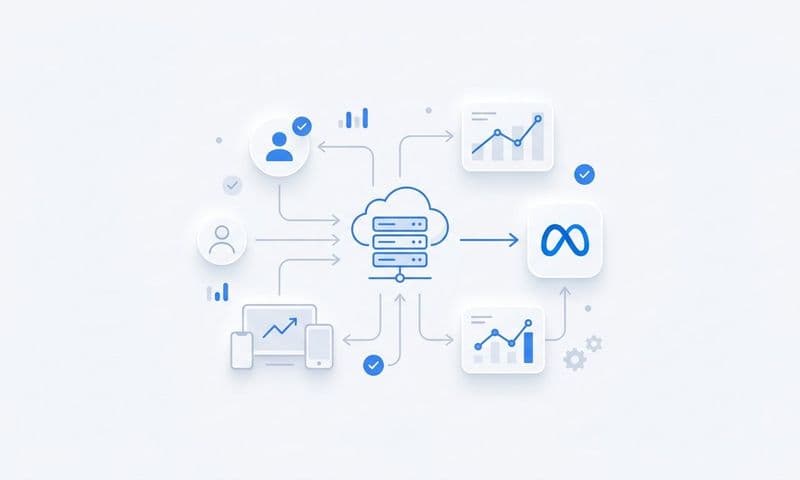
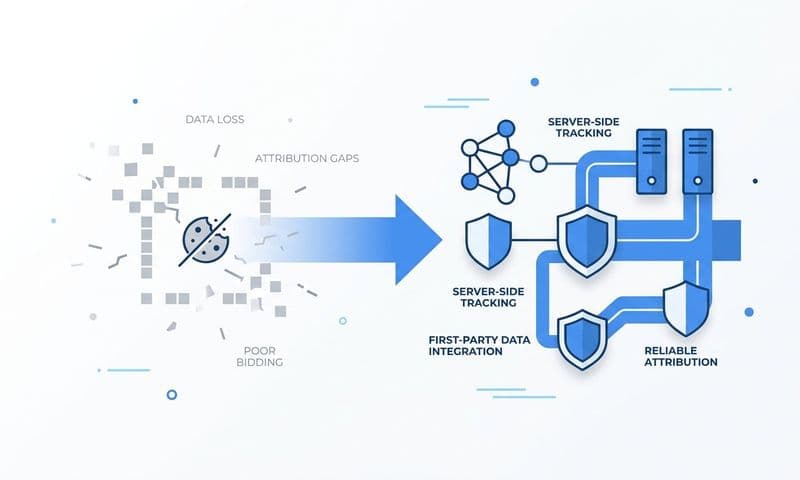
Server-Side Tracking: This is where modern tracking infrastructure has shifted. Instead of relying on a browser-based pixel that can be blocked by ad blockers, privacy settings, or iOS restrictions, server-side tracking sends conversion data directly from your web server to the ad platform. Because it bypasses the browser entirely, it captures more events and provides more reliable, complete data. For a deeper dive into this approach, explore why server-side tracking is more accurate than traditional methods. For any marketer running serious volume across multiple campaigns, server-side tracking has moved from a nice-to-have to a necessity.
First-Party Data Collection: As third-party cookies continue to be phased out across browsers, first-party data has become the most durable asset in your tracking stack. This is data you collect directly from users through your own website, CRM, email list, and other owned channels. When connected to your ad tracking system, first-party data allows you to match real customer behavior to ad interactions with far greater accuracy than relying on third-party identifiers.
These four elements work together to create a connected data layer. UTMs identify the source and campaign. Pixels capture initial touchpoints. Server-side tracking fills the gaps left by browser limitations. First-party data ties everything back to real customer records. When all four are in place and properly configured, you get a tracking foundation that can support meaningful multi-campaign analysis.
Choosing the Right Attribution Model for Multi-Campaign Insights
Attribution models determine how credit for a conversion is assigned across the touchpoints in a customer's journey. When you're running a single campaign, the model you choose matters less. When you're running campaigns across five platforms simultaneously, it matters enormously.
Here's a breakdown of the most common models and when each one is most useful:
First-Touch Attribution: Gives 100% of the credit to the first ad interaction a customer had before converting. This model is useful for understanding which channels are best at generating initial awareness and bringing new prospects into your funnel. It tends to favor top-of-funnel channels like display ads or social prospecting campaigns.
Last-Touch Attribution: Gives 100% of the credit to the final touchpoint before conversion. This is the default model in many ad platforms and analytics tools. It's useful for understanding which channels close deals, but it dramatically undervalues the earlier touchpoints that moved a prospect through the funnel in the first place.
Linear Attribution: Distributes credit equally across all touchpoints in the customer journey. If a customer interacted with four ads before converting, each ad gets 25% of the credit. This model acknowledges the full journey but doesn't differentiate between high-impact and low-impact interactions.
Time-Decay Attribution: Gives more credit to touchpoints that occurred closer to the conversion event. This model reflects the intuition that recent interactions are more influential, and it works well for shorter sales cycles where recency is a meaningful signal.
Data-Driven Attribution: Uses machine learning to assign credit based on the actual patterns in your conversion data, rather than a fixed rule. This is generally the most accurate model for established advertisers with sufficient conversion volume, because it reflects the real influence of each touchpoint rather than an assumption about how influence works. For a comprehensive comparison of these approaches, see this guide on which attribution model is best for optimizing ad campaigns.
The critical insight here is that no single model tells the complete story. A channel that looks weak under last-touch attribution might be your most valuable awareness driver under first-touch. A campaign that appears to be your top performer under platform-native attribution might be receiving inflated credit due to overlap with other channels.
The most effective approach is to compare models side by side. When you can view first-touch, last-touch, and multi-touch attribution data simultaneously, you start to see how different channels contribute at different stages of the funnel. This is what multi-touch attribution enables: a full-funnel view of how your campaigns work together, rather than a siloed view of how each campaign performs in isolation.
For marketers running ad tracking for multiple campaigns across several platforms, multi-touch attribution isn't a luxury. It's the only model that accurately reflects how customers actually behave.
Setting Up a Unified Tracking System Step by Step
Understanding the theory is one thing. Building the system is another. Here's how to approach the practical setup of a unified tracking infrastructure for multiple campaigns.
Step 1: Standardize Your UTM Naming Conventions
This is the unglamorous foundation that everything else depends on. Before you launch another campaign, establish a consistent UTM naming structure that applies across every platform and every team member. Define your source values (meta, google, tiktok, linkedin), your medium values (paid-social, paid-search, display), and your campaign naming format. Document it. Enforce it. Inconsistent UTM naming is one of the most common reasons multi-campaign data becomes impossible to analyze in a centralized tool. Learn more about how marketers use UTMs for campaigns to keep data clean and actionable.
Step 2: Connect All Ad Platforms to a Central Tracking Tool
Your goal is to have a single dashboard where data from Meta, Google, TikTok, LinkedIn, and any other active platform flows in automatically. This central tool becomes your source of truth. Platform-native dashboards remain useful for campaign-level management, but your strategic decisions should be made from the unified view, not from individual platform reports.
Step 3: Integrate Your CRM Data
Ad platform data tells you about clicks and reported conversions. CRM data tells you about actual leads, opportunities, and closed revenue. Connecting these two data sources is what allows you to track the full journey from first ad click to final sale. Without CRM integration, you're optimizing for reported conversions rather than actual business outcomes. These two things are often very different.
Step 4: Implement Conversion Syncing
Once you're capturing accurate, enriched conversion data through server-side tracking and CRM integration, you can send that data back to the ad platforms. This process, sometimes called offline conversion uploads or Conversions API integration, feeds higher-quality signals to Meta, Google, and other platforms. Their machine learning algorithms use this data to optimize targeting and bidding. Better data in means better performance out. It's one of the highest-leverage steps in the entire setup process. Understanding mastering conversion tracking is essential to getting this right.
Common Pitfalls to Avoid
Inconsistent UTM naming is the most frequent problem, but it's not the only one. Missing tracking parameters on certain ad types (particularly video ads or app install campaigns) create gaps in your data. Failing to connect offline or CRM conversions means you're optimizing for the wrong signals. And not testing your tracking setup before scaling a campaign can mean weeks of bad data before anyone notices. Build a pre-launch tracking checklist and use it every time.
How to Analyze and Act on Multi-Campaign Data
A unified tracking system is only valuable if you use it to make better decisions. Here's how to turn your centralized data into actionable insights.
Start by shifting your focus from platform metrics to revenue metrics. Impressions, clicks, and even reported conversions are useful signals, but they're not the ultimate measure of campaign success. The question you want to answer is: which campaigns are driving actual revenue, and at what cost? A centralized analytics dashboard for paid campaigns that connects ad spend to CRM outcomes lets you answer this question with confidence.
When you can see all campaigns in a single view, patterns emerge that are invisible when you're looking at platforms one at a time. You might discover that your TikTok campaigns are excellent at introducing new customers to your brand but rarely close deals on their own. Your Google search campaigns, meanwhile, might be capturing high-intent buyers who were already warmed up by earlier social touchpoints. Neither channel looks as valuable in isolation as it does in context.
This is where AI-powered recommendations become genuinely useful. Rather than manually reviewing every campaign combination and cross-referencing attribution data, AI can surface insights automatically: which campaigns to scale, which to pause, and where to reallocate budget based on actual conversion and revenue patterns. These recommendations become more accurate over time as the system accumulates more data about what's working across your specific campaign mix.
Building a regular review cadence matters as much as the tools you use. A weekly or bi-weekly cross-campaign review keeps you from making reactive decisions based on short-term fluctuations. Set a consistent schedule, define the marketing performance metrics you'll evaluate each session, and document your decisions so you can track whether your budget shifts are producing the expected results. Iterative, data-informed adjustments compound over time into meaningful performance improvements.
Scaling With Confidence Across Every Channel
When you bring all of this together, something fundamental changes about how you approach marketing decisions. Instead of reacting to platform reports and hoping your budget is going to the right places, you're operating from a clear, unified view of what's actually driving revenue across every campaign and every channel.
Unified ad tracking for multiple campaigns transforms decision-making from reactive to proactive. You stop asking "which platform should I trust?" and start asking "how do these channels work together, and how do I optimize the system as a whole?" That's a fundamentally different and more powerful question.
There's also a compounding benefit that builds over time. When you feed accurate, enriched conversion data back to ad platform algorithms through conversion syncing, those platforms get better at targeting the right people. Better targeting leads to better performance. Better performance generates more data. More data leads to even better optimization. The entire system improves in a self-reinforcing cycle, but only if the data going in is accurate and complete.
This is why getting your tracking infrastructure right isn't just a technical exercise. It's a strategic investment that pays dividends across every campaign you run from this point forward.
If you're ready to stop guessing and start scaling based on real data, the next step is evaluating whether your current tracking setup can support the level of visibility you need. Cometly is built specifically for this: centralizing attribution, analytics, and optimization across every channel in one place. From server-side tracking and multi-touch attribution to AI-powered recommendations and conversion syncing, it gives you the complete picture your campaigns deserve.
Ready to elevate your marketing game with precision and confidence? Discover how Cometly's AI-driven recommendations can transform your ad strategy. Get your free demo today and start capturing every touchpoint to maximize your conversions.