You're spending thousands of dollars every month across Google, Meta, TikTok, and LinkedIn. Each platform shows you impressive numbers: clicks are up, impressions are climbing, and the dashboards look healthy. But when you check your CRM or revenue reports, the story doesn't quite add up. Sound familiar?
This disconnect is one of the most frustrating problems in modern marketing. The issue isn't that your ads aren't working. The issue is that you can't clearly see which ones are actually driving revenue versus which ones are simply generating noise. That's exactly where paid media performance tracking comes in.
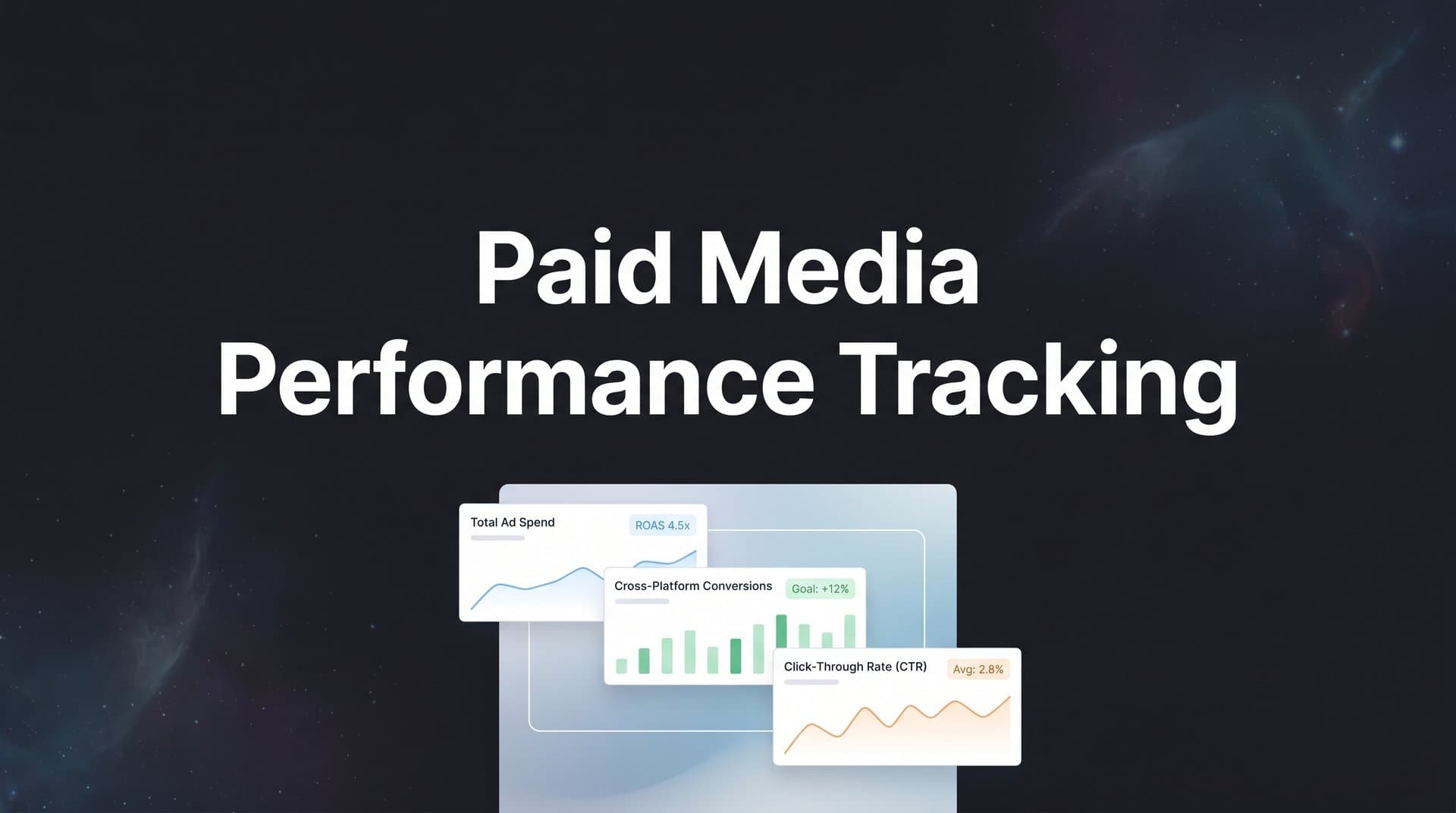
Paid media performance tracking is the discipline of connecting your ad spend to real business outcomes: leads, pipeline, and closed revenue. It goes far beyond clicks and impressions, moving past what each platform tells you in isolation and toward a unified, accurate picture of what's actually working. In this guide, we'll walk through the core components of effective tracking, the metrics that deserve your attention, the common pitfalls that drain budgets, and how modern tools are solving the accuracy problem that privacy changes created.
Beyond Clicks and Impressions: What Paid Media Performance Tracking Really Means
At its core, paid media performance tracking is the end-to-end process of measuring how your paid advertising campaigns, across every channel you run, contribute to conversions, pipeline, and revenue. Not just engagement. Not just traffic. Actual business outcomes.
This distinction matters more than ever right now. The average marketing team manages campaigns across five or more platforms simultaneously. Google Search, Google Display, Meta, TikTok, LinkedIn, programmatic networks: each one has its own reporting dashboard, its own attribution logic, and its own definition of a "conversion." And here's the problem with that setup: every platform is highly motivated to show you that it's working.
When you add up the conversions reported by each platform separately, the total often far exceeds the actual number of customers you acquired. This is the self-attribution problem, and it's baked into the way most ad platforms report results. Meta says it drove 200 conversions. Google says it drove 180 conversions. But your CRM only shows 150 new customers. Where did the other 230 come from? They didn't. The platforms were counting the same customers multiple times.
This is why the distinction between platform-level reporting and true cross-channel performance tracking is so important. Platform-level reporting is siloed and self-attributed. Each platform looks at its own touchpoints and claims credit for the conversion. True cross-channel tracking connects the full customer journey from the very first ad click all the way through to a closed deal, assigning credit based on a holistic view of every touchpoint a customer encountered along the way. Understanding paid media analytics at this level is what separates effective marketers from those flying blind.
Think of it like this: imagine a customer sees your TikTok ad on Monday, clicks a Google Search ad on Wednesday, and then converts after clicking a retargeting ad on Meta on Friday. Platform-level reporting would have all three platforms claiming that conversion. Cross-channel performance tracking would show you the complete journey and help you understand the role each touchpoint played.
Without this unified view, you're making budget decisions based on incomplete and often inflated data. You might scale a channel that looks great in its own dashboard but contributes very little to actual revenue. You might cut a channel that appears weak in isolation but plays a critical role in warming up prospects who later convert elsewhere. Investing in customer attribution tracking gives you the clarity to avoid both of those costly mistakes.
The Metrics That Actually Matter for Paid Campaigns
Not all metrics are created equal. When you're managing paid campaigns, it's easy to get pulled toward the numbers that look impressive in a report but don't actually connect to revenue. Understanding which metrics belong at which stage of the funnel, and which ones should drive your decisions, is a foundational skill.
Think of your metrics as a hierarchy with three tiers.
Top-of-funnel metrics: These include click-through rate (CTR), cost per click (CPC), impressions, and reach. They tell you how well your ads are capturing attention and driving traffic. These are useful diagnostic metrics. If your CTR drops, something is wrong with your creative or targeting. If your CPC spikes, competition or audience fatigue may be the culprit. But these numbers alone should never drive major budget decisions.
Mid-funnel metrics: Cost per lead (CPL), conversion rate, and landing page engagement sit in this tier. They measure how well your ads are generating interest and capturing intent. Mid-funnel metrics are important for evaluating specific campaigns and landing page performance, but they still don't tell the full story. A campaign that generates cheap leads isn't valuable if those leads never become customers.
Bottom-of-funnel metrics: This is where the real decisions get made. Return on ad spend (ROAS), cost per acquisition (CPA), customer acquisition cost (CAC), customer lifetime value (LTV), and pipeline contribution are the metrics that connect your ad spend directly to revenue. These should be the primary lens through which you evaluate performance and allocate budget. For a deeper dive into which numbers deserve your attention, explore this guide on digital marketing performance metrics.
The natural question becomes: why do so many marketers still optimize primarily for top and mid-funnel metrics? Often, it's because bottom-of-funnel data is harder to capture. It requires connecting your ad platforms to your CRM and tracking the full journey from click to closed deal. That's more work upfront, but it's the only way to make truly informed decisions.
Beyond the standard hierarchy, two blended metrics deserve special attention for understanding true paid media impact.
Marketing Efficiency Ratio (MER): MER measures your total revenue divided by your total ad spend across all channels. Unlike ROAS, which is calculated per platform, MER gives you a holistic view of how efficiently your entire paid media investment is generating revenue. It's particularly useful when you're running brand awareness campaigns that don't generate direct conversions but contribute to overall business growth.
Incremental ROAS: This metric attempts to measure the revenue that wouldn't have happened without your ads, rather than all the revenue that happened to occur while your ads were running. It's a more sophisticated measure of true paid media impact, and while it requires more advanced testing and analysis to calculate accurately, it provides a clearer picture of what your campaigns are actually contributing. Learning how to evaluate marketing performance metrics properly is essential for applying these concepts effectively.
The key principle here is simple: let bottom-of-funnel and revenue metrics drive your strategic decisions, and use upper-funnel metrics as diagnostic tools to understand why performance is trending up or down.
Why Platform-Reported Data Falls Short
Understanding why platform-reported data is unreliable is not just an academic exercise. It directly affects every budget decision you make. There are two major forces at work here, and both have intensified in recent years.
The first is the self-attribution problem. Every major ad platform uses its own attribution model to claim credit for conversions. When a customer interacts with ads on multiple platforms before converting, each platform sees its own touchpoints and attributes the conversion to itself. The result is significant overlap and inflation when you look at reported results in aggregate. This isn't a flaw or a bug; it's simply how each platform is built. But it means you cannot trust the sum of platform-reported conversions as an accurate measure of total performance.
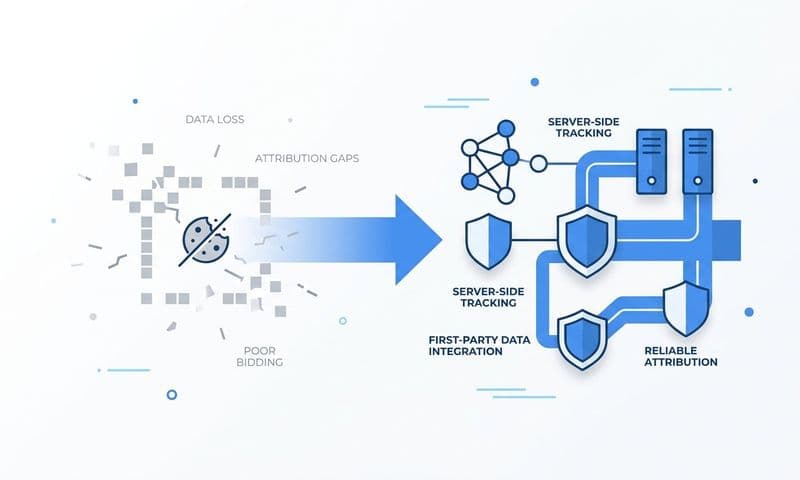
The second force is the tracking gap created by privacy changes. When Apple introduced its App Tracking Transparency (ATT) framework with iOS 14.5, it required apps to ask users for permission before tracking their activity across other apps and websites. A large portion of users opted out, which dramatically reduced the conversion data flowing to platforms like Meta. The result was that Meta's pixel, which relies on browser-based tracking, began missing a significant share of conversions. Understanding what a tracking pixel is and how it works helps explain why these gaps occur in the first place.
Browser-based pixel tracking faces additional challenges from cookie restrictions and ad blockers. When a user's browser blocks third-party cookies or the pixel fails to load, that conversion event is lost. Over time, these gaps compound into a substantially incomplete picture of your actual performance.
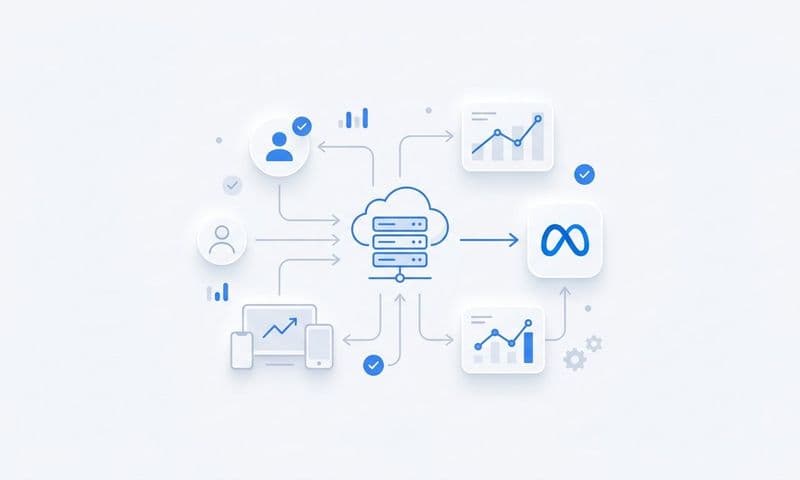
Server-side tracking has emerged as the most effective solution to this problem. Rather than relying on a browser-based pixel to fire when a user completes a conversion, server-side tracking sends conversion events directly from your server to the ad platform's API. Because this happens at the server level, it's not affected by browser restrictions, ad blockers, or iOS privacy settings. The result is more complete and more accurate conversion data.
The benefits extend beyond accuracy. When platforms like Meta and Google receive richer, more complete conversion signals, their machine learning algorithms have better data to work with. This improves their ability to optimize targeting and bidding, which can meaningfully improve campaign performance over time. Server-side tracking isn't just about fixing a reporting problem. It's about feeding the entire paid media ecosystem better information so it can work more effectively for you.
Building a Cross-Channel Tracking Framework
Knowing that you need unified, accurate tracking is one thing. Building the framework that delivers it is another. Here's how to approach it systematically.
Start with UTM parameters and naming conventions. UTM parameters are the tags you add to your ad URLs to identify the source, medium, campaign, and ad group that drove each click. They're foundational to any tracking setup. But they only work if they're applied consistently. Inconsistent UTM naming, where one campaign is labeled "google-cpc" and another is labeled "Google_Paid" and another is just "google," creates fragmented data that's difficult to analyze. If you're unfamiliar with the fundamentals, this guide on UTM tracking and how it helps your marketing is a great starting point.
Integrate your CRM. UTM data tells you where a lead came from. Your CRM tells you what happened to that lead after they entered your funnel. Connecting these two data sources is what allows you to track the full journey from ad click to closed deal. When your CRM records are enriched with UTM data at the point of form submission or lead capture, you can run reports that show exactly which campaigns, ad groups, and even individual ads are generating customers, not just leads.
Connect offline and delayed conversions. Not every conversion happens immediately after a click. In B2B marketing especially, a prospect might click an ad today and not become a customer for weeks or months. Tracking frameworks need to account for this by connecting delayed conversions back to the original ad interaction. This often requires passing lead IDs or conversion events from your CRM back to your ad platforms so they can attribute the revenue to the right campaign.
Choose the right attribution model. Multi-touch attribution models determine how credit for a conversion is distributed across the touchpoints in a customer's journey. First-touch attribution gives all credit to the first interaction. Last-touch gives all credit to the final interaction before conversion. Linear distributes credit equally across all touchpoints. Time-decay gives more credit to touchpoints closer to the conversion. Data-driven attribution uses machine learning to assign credit based on actual conversion patterns. A proper attribution tracking setup ensures you're capturing these touchpoints accurately from the start.
Each model tells a different story. Last-click attribution, which is still the default in many setups, tends to overvalue bottom-of-funnel channels like branded search and undervalue awareness channels like display or social. Choosing a model that reflects how your customers actually make decisions is critical for understanding which channels deserve more investment.
Unify your data in a single source of truth. Once you have UTM data, CRM integration, and a consistent attribution model in place, you need a central place to see it all together. A unified analytics dashboard that pulls data from Google Ads, Meta, TikTok, LinkedIn, and your CRM into one view allows you to compare performance across channels on equal terms, rather than jumping between five different platform dashboards with five different definitions of success.
Turning Tracking Data Into Smarter Budget Decisions
Accurate tracking data is only valuable if it changes how you make decisions. Here's where the real payoff of paid media performance tracking becomes clear.
When you have a unified view of which channels are actually driving revenue, budget reallocation becomes a data-driven exercise rather than a gut-feel one. You can confidently scale spend on the channels and campaigns that are producing real customers, and you can pull back on the ones that generate impressive platform metrics but don't contribute to pipeline or revenue. This kind of confident reallocation is only possible when you trust your data, and that trust comes from having a tracking framework that isn't dependent on self-reported platform numbers. Learn more about how ad tracking tools can help you scale ads using accurate data.
The feedback loop concept takes this a step further. When you send accurate, enriched conversion data back to your ad platforms through a process often called conversion sync, you're giving those platforms' machine learning algorithms better information to optimize with. Meta's algorithm, for example, becomes significantly more effective at finding high-value audiences when it receives complete, accurate conversion signals. The same is true for Google's Smart Bidding. By improving the quality of the data you feed back to these platforms, you improve their ability to optimize targeting and bidding on your behalf. It becomes a self-reinforcing cycle: better data leads to better optimization, which leads to better performance, which generates better data.
AI-powered analysis adds another layer of capability on top of accurate data. Manual reporting can surface obvious trends, but it struggles to identify subtle patterns across large datasets. AI can analyze performance across all your channels simultaneously and surface insights that would be easy to miss: an ad creative that's outperforming across multiple audiences, a time window where conversion rates are consistently higher, or an audience segment that shows strong LTV but is being underinvested in because its CPA looks high in isolation. For a structured approach to leveraging these insights, check out this guide on analytics for paid campaigns.
These kinds of recommendations don't just improve efficiency. They change the way you think about your campaigns. Instead of reacting to performance problems after they've already cost you budget, you're proactively identifying opportunities and making adjustments based on patterns the data is already showing you.
Common Tracking Mistakes That Drain Your Ad Budget
Even marketers who understand the importance of tracking often fall into patterns that undermine its effectiveness. These three mistakes are among the most costly.
Mistake 1: Trusting in-platform metrics without cross-referencing revenue data. If your only measure of campaign performance is what each platform reports in its own dashboard, you're working with a fundamentally flawed dataset. Platform metrics are self-reported and self-serving. Always cross-reference your platform data against your CRM or revenue data. If a channel shows strong ROAS in its dashboard but your CRM shows that its leads rarely close, that's a signal worth investigating. Many marketers over-invest in channels that generate clicks but not customers because they never make this comparison. Choosing the right marketing attribution platform with revenue tracking can help bridge this gap.
Mistake 2: Ignoring attribution windows and model selection. Attribution windows determine how far back a platform looks when crediting a conversion to an ad interaction. A 7-day click window and a 28-day click window will produce very different results for the same campaign. Similarly, switching from last-click to linear attribution can dramatically change which campaigns appear to be your top performers. Most marketers set these parameters once during initial setup and never revisit them. Regularly reviewing your attribution model and windows, and ensuring they're consistent across platforms, is essential for making valid comparisons.
Mistake 3: Optimizing for leads instead of revenue. This is arguably the most expensive mistake in paid media. When your tracking stops at the lead level, you naturally optimize for campaigns that generate the most leads at the lowest cost per lead. But lead volume and lead quality are not the same thing. A campaign generating cheap leads that never convert to customers is far less valuable than a campaign generating fewer, more expensive leads that close at a high rate. Improving your lead tracking process to follow prospects from click to closed deal is the only way to ensure you're rewarding the campaigns that actually grow your business.
The Foundation of Every Smart Paid Media Decision
Paid media performance tracking is not a reporting exercise you do at the end of the month. It's the foundation on which every smart budget decision is built. The shift from siloed, platform-reported metrics to unified, revenue-connected tracking is what separates marketers who scale efficiently from those who spend more and more while wondering why growth isn't following.
The core principles are straightforward: build a consistent UTM and naming framework, integrate your CRM, implement server-side tracking to close the data gaps that privacy changes created, choose an attribution model that reflects your customer journey, and unify everything into a single view that lets you compare channels honestly.
When you do this well, you stop guessing and start knowing. You know which channels are driving revenue. You know which campaigns deserve more budget. You know which leads are worth pursuing and which ones are draining your sales team's time. And you can feed that knowledge back into your ad platforms to make their algorithms work harder for you.
Cometly is built to solve exactly these challenges. It connects your ad platforms, CRM, and website to track the entire customer journey in real time, with server-side tracking for accuracy, multi-touch attribution across all your channels, and AI-powered recommendations that surface the insights your manual reporting misses. Whether you're managing campaigns across two platforms or ten, Cometly gives you the unified view and the confidence to make every budget decision based on what's actually driving revenue.
If you're ready to move beyond platform dashboards and start making decisions grounded in real data, Get your free demo today and see how Cometly can bring clarity and precision to your paid media performance tracking.