

If you've ever stalled on adopting attribution software because you're dreading a weeks-long implementation project, you're not alone. For many marketing leaders, the fear of setup complexity is just as real as the pain of flying blind on ad spend. The thought of pulling in engineers, renegotiating CRM access, and waiting months before seeing a single clean data point is enough to push the decision to next quarter. Again.
Setup time is consistently one of the top concerns teams raise when evaluating attribution tools. And it's a fair concern. A poorly planned implementation can drag on, create internal friction, and delay the data-driven decisions your team needs to make right now. But here's the thing: the complexity you're imagining is often tied to older platforms and outdated implementation models.
Modern attribution software has fundamentally changed what setup looks like. Native integrations, no-code connectors, and server-side tracking built into the onboarding flow have compressed what used to take weeks into something far more manageable. The key is understanding what actually drives setup time in the first place, so you can plan realistically, avoid the common traps, and get to actionable data faster.
This article breaks down the real variables behind attribution software setup time, walks through what each phase of implementation actually involves, surfaces the hidden delays most teams don't anticipate, and gives you a practical playbook for accelerating the process without sacrificing data quality.
Why Setup Time Varies So Much Across Attribution Tools
Ask five different marketing teams how long attribution setup took and you'll get five completely different answers. That's not because some teams are more competent than others. It's because setup time is a function of several intersecting variables, and those variables look very different depending on your stack, your sales cycle, and the type of platform you're implementing.
The first major variable is the number of ad platforms you need to connect. A team running campaigns exclusively on Google Ads is looking at a very different setup scope than a B2B SaaS team running paid across Meta, Google, LinkedIn, and TikTok simultaneously. Each platform has its own conversion tracking mechanism, its own API behavior, and its own quirks. The more channels in your mix, the more connection work is required upfront.
The second variable is CRM integration depth. For B2B SaaS teams specifically, connecting marketing attribution to actual pipeline and revenue data is non-negotiable. You need to see which ad campaigns are generating closed-won deals, not just form fills. That means integrating with your CRM at a level that maps lead sources, opportunity stages, and revenue values back to specific touchpoints. Shallow integrations that only pull contact data won't cut it. Deep integrations that require field mapping and custom object configuration take more time but deliver far more value.
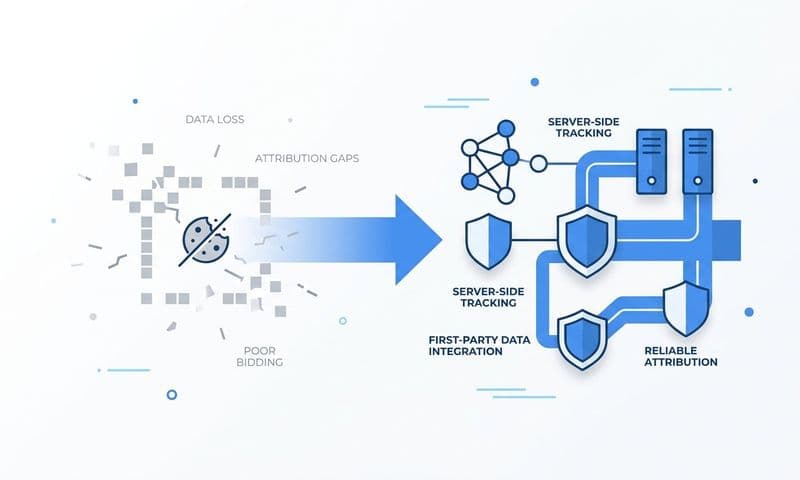
The third variable is tracking architecture. Pixel-based tracking is faster to deploy but increasingly unreliable due to browser privacy restrictions and ad blockers. Server-side tracking and Conversion API (CAPI) integrations require more configuration upfront but produce significantly cleaner, more complete data over time. Teams that invest in proper server-side setup during onboarding avoid painful data gaps later.
Beyond technical variables, the type of platform you choose matters enormously. Legacy attribution tools were often built for enterprise environments with dedicated implementation teams, custom API work, and professional services engagements that stretched across weeks or months. Modern self-serve SaaS attribution platforms have moved toward guided onboarding, native connectors, and no-code setup flows that put control back in the hands of marketing teams. That architectural difference translates directly into days versus weeks of implementation time.
The bottom line is that attribution setup time exists on a spectrum. Understanding where your specific situation falls on that spectrum is the first step toward managing it intelligently.
Breaking Down the Attribution Setup Process Phase by Phase
Most attribution implementations follow a predictable three-phase structure. Understanding what happens in each phase, and where delays tend to cluster, gives you a much clearer picture of what you're actually signing up for.
Phase One: Connecting Ad Platforms This is typically the fastest part of the process. Modern attribution platforms offer native integrations with major ad channels, and in many cases connecting a platform like Meta, Google Ads, LinkedIn, or TikTok is a matter of authenticating your account and selecting the campaigns you want to track. For teams using a platform with robust native integrations across multiple channels, this phase can move quickly, often within a few hours for multiple channels. The main friction here is access: making sure the right team members have admin-level permissions on each ad account before setup begins.
Phase Two: CRM and Pipeline Integration This is where most B2B SaaS teams hit their first significant delay, and it's worth spending time on why. Connecting your CRM isn't just a technical task. It requires decisions. Which fields represent a qualified lead? What stage in your pipeline counts as a conversion event for attribution purposes? How do you want to handle multi-stakeholder deals where multiple contacts from the same company have interacted with your ads?
These questions require input from marketing, sales, and often revenue operations. If those conversations haven't happened before setup begins, they happen mid-implementation, which is a much more disruptive place to have them. Field mapping, custom object configuration, and making sure revenue data reconciles with what's in your ad platforms all add time. This phase is often the longest in a B2B SaaS context, not because the technology is difficult, but because the business logic requires alignment.
Phase Three: Conversion Events, Server-Side Tracking, and Validation The final phase involves configuring the specific events you want to track, setting up server-side connections or Conversion API integrations, and validating that data is flowing correctly before you declare the setup complete. This is where you confirm that a form submission tracked in your attribution tool matches what your CRM recorded, that ad platform event counts align with what your attribution layer is seeing, and that attribution windows are configured to match the actual length of your sales cycle.
Skipping or rushing validation is one of the most common setup mistakes. A system that appears to be working but is silently missing events or double-counting conversions will produce misleading data that erodes trust in the entire attribution project over time. Build validation time into your plan from the start. For a deeper look at how to structure this process, the attribution tracking setup guide covers the full system in detail.
The Hidden Time Costs Most Teams Don't Plan For
Every attribution implementation has a technical timeline and a human timeline. The technical timeline covers integrations, configurations, and testing. The human timeline covers all the decisions, conversations, and cleanup work that have to happen before the technology can do its job. Most teams plan for the first and underestimate the second.
Internal Alignment on Attribution Models: Before your attribution software can be configured correctly, your team needs to agree on how credit should be assigned. Should the first touchpoint that introduced a prospect get full credit? Should the last touchpoint before conversion? Should credit be distributed across every interaction in the journey? First-touch, last-touch, linear, time-decay, and data-driven attribution models all produce different insights and imply different budget decisions. Getting marketing, sales, and leadership to agree on which model to start with, and what the data should be used for, is a conversation that can take days or weeks depending on your organization. This is not a software problem. It's an alignment problem. But it directly affects how long it takes to go from installed to trusted.
UTM Hygiene and Campaign Naming Conventions: Poor UTM parameter consistency is one of the most common reasons attribution setup takes longer than expected. When campaigns lack consistent naming conventions, attribution tools cannot accurately assign credit. Traffic shows up as unattributed or miscategorized, and the data that comes out of your attribution platform looks unreliable even when the platform itself is working correctly. This issue is almost always discovered mid-setup rather than before it begins, which means it creates unexpected cleanup work at exactly the wrong moment. Auditing your UTM structure before you start onboarding is one of the highest-leverage things you can do to accelerate the process.
Testing and Validation Cycles: Most teams budget time for setup but not for the iterative testing that comes after. Verifying that tracked events match actual conversions, confirming that attribution windows align with your sales cycle length, and checking that revenue figures reconcile with your CRM are not one-time tasks. They require multiple rounds of review, especially in the first few weeks after go-live. Teams that treat validation as an afterthought often find themselves redoing configuration work that could have been caught earlier with a more structured testing approach.
The hidden time costs are real, but they're also predictable. Naming them upfront means you can plan around them rather than being surprised by them.
How to Accelerate Your Attribution Software Setup
The fastest attribution setups share a common pattern: the teams that move quickly did significant preparation work before they ever logged into the platform. Speed in implementation is almost always a function of clarity before implementation begins.
Build a Pre-Setup Checklist: Before you touch any attribution tool, complete three foundational tasks. First, audit your UTM structure across every active campaign and document a consistent naming convention going forward. Second, write down every conversion event that matters to your business, from form submissions and demo requests to trial signups and closed-won deals, and confirm that each one is trackable in your current setup. Third, identify exactly which CRM fields map to revenue and make sure the right people have access to configure those fields during integration. This pre-work doesn't take long, but it eliminates the most common sources of mid-setup delay.
Prioritize Native Integrations and No-Code Connectors: Every time your setup requires a custom API build or an engineering sprint, you're adding days or weeks to your timeline. Platforms with native integrations for B2B SaaS teams let your marketing team move from connection to insights without waiting in an engineering queue. When evaluating attribution tools, the quality and depth of native integrations should be a primary selection criterion, not a secondary one.
Start with Your Highest-Spend Channels: Rather than trying to connect every platform simultaneously, start with the two or three channels where you're spending the most. This approach generates early wins, gives you a working model to validate against, and lets you catch configuration issues before they propagate across your entire setup. Once your top channels are connected and validated, expanding coverage to additional platforms is much faster because the foundational logic is already in place.
Assign a Single Owner: Attribution setups that lack a clear owner tend to stall. Someone needs to be accountable for moving each phase forward, coordinating the internal conversations, and making decisions when the team hits a fork in the road. That person doesn't need to be technical, but they do need the authority to move things forward without waiting for committee approval at every step.
Preparation and ownership are the two variables you control most directly. Invest in both before you start, and the technical setup will move much faster than you expect.
What Good Attribution Data Looks Like After Setup
Getting the setup right is only valuable if you know what to look for once data starts flowing. There are specific signals that confirm your attribution is working correctly, and recognizing them quickly helps you move from configuration mode into the optimization work that actually drives business results.
The first signal is consistency across platforms. Your attribution tool should show event counts that align reasonably well with what your ad platforms are reporting. Perfect one-to-one parity is rare due to differences in attribution windows and deduplication logic, but significant discrepancies in conversion counts or revenue figures are a red flag that something in the tracking chain needs attention. When your numbers reconcile across sources, you can trust them.
The second signal is accurate touchpoint sequencing in the customer journey. In a working attribution setup, you should be able to see how a specific prospect moved through your funnel: which ad they first engaged with, which content they consumed, which touchpoints preceded their demo request, and how long the journey took from first click to closed deal. If customer journeys look incomplete, with large gaps or missing touchpoints, it typically indicates that certain channels or events aren't being captured correctly.
The third signal is revenue reconciliation with your CRM. For B2B SaaS teams, the ultimate validation is whether the revenue figures in your attribution platform match what's in your CRM for the same time period. If they do, you have a reliable foundation for making budget decisions based on actual pipeline contribution rather than proxy metrics like clicks or impressions.
Once these signals are in place, the way you use attribution software changes fundamentally. You stop asking "is this working?" and start asking "what should I do differently?" Multi-touch attribution models become a tool for comparing channel contribution side by side, revealing which sources are consistently driving pipeline and which ones are consuming budget without producing downstream revenue. The transition from setup mode to optimization mode is when attribution software delivers its real value, shifting from a configuration project to a daily decision-making tool for ad spend allocation.
Faster Setup, Smarter Decisions From Day One
Attribution software setup time is manageable when you understand the variables driving it. The teams that move fastest are the ones that choose the right platform for their stack, do the pre-work before onboarding begins, and validate in phases rather than trying to get everything perfect at once.
The key levers are within your control: audit your UTM structure early, align on attribution models before setup starts, prioritize native integrations over custom builds, and start with your highest-spend channels to generate quick wins. These aren't complicated steps. They're the difference between a setup that drags on for weeks and one that gets you to actionable data in a fraction of the time.
Cometly is built specifically for B2B SaaS teams that need to connect ad platforms, CRM data, and server-side events in a single workflow. With native integrations across Meta, Google, LinkedIn, TikTok, and major CRM platforms, plus built-in Conversion API support and multi-touch attribution modeling, Cometly is designed to reduce the implementation friction that slows most teams down. You get a complete view of every customer journey, from first ad click to closed-won revenue, without the professional services engagement that legacy platforms require.
Every day without accurate attribution is a day of wasted ad spend and missed optimization opportunities. The data you need to make smarter budget decisions is already out there. The question is whether you have a system in place to capture it, connect it, and act on it.
Ready to elevate your marketing game with precision and confidence? Discover how Cometly's AI-driven recommendations can transform your ad strategy. Get your free demo today and start capturing every touchpoint to maximize your conversions.