Marketing data is everywhere. The problem is that it rarely lives in one place. You've got ad performance in Meta Ads Manager, website behavior in one analytics tool, leads tracked in your CRM, and revenue sitting in a completely separate system. When these pieces don't connect, you end up making decisions based on incomplete pictures, and that's an expensive habit to maintain.
Choosing the right marketing analytics platform changes that. The best tools give you a unified view of performance, accurate attribution across every channel, and the intelligence to act on what you find. To build this list, we evaluated platforms on cross-channel tracking capability, attribution accuracy, ease of use, integration depth, AI features, and pricing transparency.
Whether you're a lean marketing team scaling paid campaigns or an enterprise analytics operation, this list covers the tools worth your attention. If you're also thinking about how attribution fits into your broader measurement strategy, our guide on multi-touch attribution models is a useful companion read alongside this one.
1. Cometly
Best for: Marketing teams and agencies that need accurate cross-channel attribution tied directly to revenue.
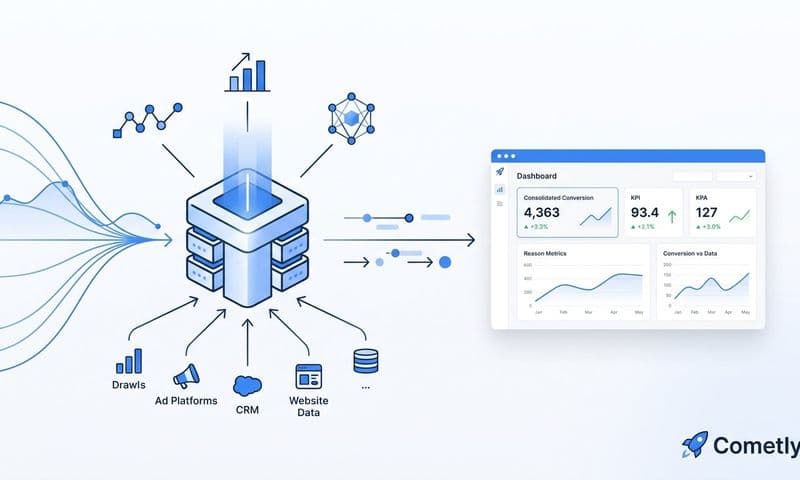
Cometly is an AI-powered marketing attribution platform that connects your ad platforms, CRM, and website into a single source of truth for campaign performance.
 9 Best Marketing Analytics Platforms to Sharpen Your Strategy in 2026
Where This Tool Shines
Cometly's core strength is solving a problem that's become increasingly painful: knowing which ads actually drive revenue when browser privacy restrictions and iOS changes have made standard pixel tracking unreliable. Its server-side tracking captures conversion data that client-side pixels miss, giving you a more complete and accurate picture of what's working.
What separates Cometly from general analytics tools is the closed loop it creates between your data and your ad platforms. Through conversion sync, it sends enriched, first-party event data back to Meta, Google, and other ad networks, feeding their algorithms better signals so your campaigns optimize more effectively. The AI layer on top then surfaces actionable recommendations so you're not just looking at data, you're acting on it.
Key Features
AI-Powered Multi-Touch Attribution: Tracks every touchpoint across all paid channels and assigns credit accurately, so you can see the full customer journey from first click to closed deal.
Server-Side Tracking: Captures conversions even when browser restrictions or ad blockers would otherwise cause data loss, improving the accuracy of your reporting foundation.
Conversion Sync: Sends enriched conversion events back to Meta, Google, and other ad platforms, helping their machine learning algorithms optimize toward higher-quality outcomes.
AI Ads Manager: Provides optimization recommendations across your active campaigns, identifying where to scale spend and where to pull back based on actual performance data.
AI Chat for Data Analysis: Lets you ask natural-language questions about your marketing data and get instant answers without needing to build custom reports manually.
Best For
Cometly is built for digital marketers, growth teams, and agencies running paid campaigns across multiple channels who need attribution they can actually trust. It's especially valuable for teams dealing with data gaps from iOS restrictions or those who want to improve the quality of signals they're sending back to ad platform algorithms.
Pricing
Custom pricing based on ad spend. A free demo is available to explore the platform before committing.
2. Google Analytics 4
Best for: Teams that want free, powerful web and app analytics tightly integrated with the Google ecosystem.
Google Analytics 4 is Google's event-based analytics platform for tracking user behavior across websites and apps, with native connections to Google Ads, BigQuery, and Looker Studio.
 11 Best Marketing Analytics Tools to Track and Optimize Campaign Performance in 2026
Where This Tool Shines
GA4 is the baseline analytics layer for most marketing teams, and for good reason. Its event-based data model is far more flexible than the old session-based approach, allowing you to track virtually any user interaction without being constrained by predefined hit types.
The machine learning layer adds predictive audiences and churn probability scores that help Google Ads campaigns target higher-intent users automatically. For teams already running Google Ads, the native integration makes campaign reporting straightforward without requiring additional connectors.
Key Features
Event-Based Data Model: Tracks any user interaction as a configurable event, replacing the rigid session-based structure of Universal Analytics.
Predictive Audiences: Machine learning models identify users likely to convert or churn, enabling smarter audience segments for ad targeting.
BigQuery Export: Native export to BigQuery enables advanced SQL-based analysis for teams with data engineering resources.
Cross-Platform Measurement: Tracks user behavior across both web and mobile app in a unified property.
Google Ads Integration: Connects campaign data directly to on-site behavior and conversion reporting without additional setup.
Best For
GA4 is the right starting point for almost any team, particularly those running Google Ads or using other Google tools. It's less suited as a standalone attribution solution for multi-channel paid campaigns where you need granular cross-platform revenue attribution.
Pricing
Free for standard use. GA4 360, the enterprise version, starts at approximately $50,000 per year with expanded data limits and SLA guarantees.
3. Adobe Analytics
Best for: Enterprise teams that need deep customer journey analysis and real-time data processing at scale.
Adobe Analytics is an enterprise-grade digital analytics platform offering real-time data collection, advanced segmentation, and powerful exploration through its Analysis Workspace interface.
 9 Best AI Marketing Analytics Tools in 2026
Where This Tool Shines
Adobe Analytics is built for organizations that have outgrown standard analytics tools and need granular control over how data is collected, segmented, and analyzed. Analysis Workspace is genuinely one of the most powerful data exploration environments available, letting analysts build complex, freeform reports without writing code.
Its integration with the broader Adobe Experience Cloud makes it a natural fit for enterprises already using Adobe products for content management, advertising, or personalization. The real-time processing capability means you can act on behavioral data as it happens rather than waiting for batch updates.
Key Features
Real-Time Data Processing: Collects and surfaces data in real time, enabling immediate response to campaign launches or site issues.
Analysis Workspace: A drag-and-drop exploration environment where analysts can build freeform tables, flow diagrams, and cohort analyses without SQL.
Advanced Segmentation: Granular segment builder with sequential, logical, and container-based rules for precise audience definition.
Anomaly Detection: Automatically identifies statistically significant changes in your data and flags them for investigation.
Adobe Experience Cloud Integration: Connects natively with Adobe Target, Campaign, and Audience Manager for a unified enterprise marketing stack.
Best For
Large enterprises with dedicated analytics teams, significant data volume, and existing investment in the Adobe ecosystem. The complexity and cost make it less practical for mid-market teams or those without analytics engineering resources.
Pricing
Custom enterprise pricing with annual contracts. Expect investment appropriate for enterprise software; pricing is not publicly listed and requires direct engagement with Adobe sales.
4. HubSpot Marketing Analytics
Best for: B2B teams that want marketing analytics directly connected to CRM contacts, deals, and pipeline revenue.
HubSpot Marketing Analytics is the reporting and attribution layer built into HubSpot's marketing platform, connecting campaign activity to CRM records and revenue outcomes in one unified view.
 10 Best Marketing Analytics Software Packages in 2026
Where This Tool Shines
HubSpot's analytics stand out because they're natively connected to the CRM. Most analytics tools track clicks and sessions; HubSpot can tell you which marketing touchpoints influenced a specific contact who became a paying customer. For B2B teams managing longer sales cycles, that connection between marketing activity and actual revenue is genuinely valuable.
The custom dashboard builder is accessible enough for non-technical marketers to use without help from an analyst, and the pre-built templates cover most standard reporting needs out of the box.
Key Features
CRM-Connected Reporting: Links marketing touchpoints directly to contact records, deal stages, and closed revenue for true revenue attribution.
Multi-Touch Revenue Attribution: Distributes revenue credit across multiple marketing interactions using configurable attribution models.
Custom Dashboard Builder: Drag-and-drop interface with pre-built templates for common marketing and sales reports.
Campaign Performance Tracking: Ties email, ads, landing pages, and social activity to contact and deal outcomes in one campaign view.
Traffic and Conversion Analytics: Breaks down website traffic and conversion rates by source, medium, and campaign.
Best For
B2B marketing teams already using HubSpot CRM who want analytics without adding a separate tool. Less suited for teams with complex multi-platform paid advertising needs or those not using HubSpot as their CRM.
Pricing
Free tools available. Marketing Hub Professional, which includes advanced attribution and reporting, starts at $890 per month.
5. Mixpanel
Best for: Product and growth teams that need deep behavioral analytics within apps and digital products.
Mixpanel is a product analytics platform built for tracking how users interact with apps and websites, with powerful funnel analysis, cohort tracking, and retention reporting at its core.
 9 Best AI Marketing Analytics Tools in 2026
Where This Tool Shines
Mixpanel excels at answering the questions that standard web analytics tools can't: Where do users drop off in a signup flow? Which features drive users to return week after week? Which acquisition cohorts retain best after 30 days? These are the questions that drive growth decisions, and Mixpanel makes them answerable without requiring a data team.
The interactive exploration interface lets marketers and product managers slice data in real time without SQL, which significantly reduces the time between question and insight. For B2B SaaS teams, the group analytics feature adds account-level analysis on top of individual user behavior.
Key Features
Funnel Analysis: Visualizes conversion rates through any defined sequence of steps, with the ability to break down by user properties.
Cohort-Based Retention: Tracks how different user groups return over time, revealing which acquisition channels or onboarding paths drive long-term engagement.
Interactive Exploration: Query and filter data in real time through a visual interface without writing SQL.
Real-Time Event Tracking: Monitors live user activity and sends alerts when metrics move outside expected ranges.
Group Analytics: Analyzes behavior at the account level for B2B products where multiple users belong to a single organization.
Best For
SaaS companies, mobile app teams, and product-led growth organizations that need behavioral analytics beyond what standard web analytics provides. Less focused on paid advertising attribution or cross-channel marketing measurement.
Pricing
Free tier supports up to 20 million events per month. Growth plan starts at $28 per month with expanded features and data history.
6. Tableau (Salesforce)
Best for: Data-driven teams that need flexible, custom data visualization connecting multiple sources into shareable dashboards.
Tableau is an industry-leading data visualization platform that lets marketing teams blend data from multiple sources into interactive, custom dashboards without writing code.
 9 Best Marketing Analytics Platforms to Sharpen Your Strategy in 2026
Where This Tool Shines
Tableau's strength is flexibility. When your marketing data lives across a dozen different platforms and you need to bring it together into a single, coherent view, Tableau gives you the connectors and the visual tools to make that happen. Its drag-and-drop interface makes complex data relationships accessible to analysts who aren't engineers.
The Salesforce integration adds a revenue layer that pure visualization tools often lack, connecting marketing performance metrics to CRM pipeline and closed-won data. Tableau Pulse, the AI-driven metric summary feature, surfaces changes in your key metrics automatically so you don't have to monitor every dashboard manually.
Key Features
Drag-and-Drop Visualization Builder: Creates complex charts, maps, and dashboards through an intuitive interface without requiring code.
Extensive Data Connectors: Connects natively to hundreds of data sources including databases, cloud platforms, and marketing tools.
Tableau Pulse: AI-powered metric monitoring that proactively surfaces significant changes and trends in your data.
Embedded Analytics: Allows dashboards to be embedded into other applications for broader team access without requiring Tableau licenses for every viewer.
Salesforce CRM Integration: Links marketing performance data to Salesforce pipeline and revenue for end-to-end reporting.
Best For
Analytics teams and data-savvy marketing operations professionals who need to consolidate and visualize data from many sources. Tableau is a visualization layer, not an attribution engine, so it works best alongside data collection tools rather than as a standalone marketing analytics solution.
Pricing
Tableau Viewer starts at $15 per user per month. Creator licenses, which include full authoring capabilities, start at $75 per user per month.
7. Supermetrics
Best for: Marketing teams that want to centralize data from all their ad platforms into spreadsheets, dashboards, or data warehouses.
Supermetrics is a marketing data pipeline tool that pulls performance data from over 150 platforms and delivers it to your reporting environment of choice for centralized analysis.
Where This Tool Shines
Supermetrics solves a specific but extremely common problem: getting all your marketing data into one place without manual exports. If your team lives in Google Sheets or Looker Studio and you're tired of downloading CSVs from Meta, Google Ads, LinkedIn, and TikTok separately, Supermetrics automates all of that with scheduled refreshes.
It's a data mover rather than an analytics platform, which means it pairs well with visualization tools like Tableau or Looker Studio rather than replacing them. The breadth of connectors is one of its biggest advantages, covering virtually every major ad platform and marketing tool.
Key Features
150+ Data Source Connectors: Pulls data from all major ad platforms, social channels, SEO tools, and analytics platforms into a single pipeline.
Flexible Destinations: Sends data to Google Sheets, Excel, Looker Studio, BigQuery, and other BI tools based on your existing workflow.
Automated Refresh Scheduling: Keeps your reports current without manual exports by running data pulls on a defined schedule.
Pre-Built Reporting Templates: Provides ready-made report structures for common marketing use cases to accelerate setup.
Cross-Source Data Blending: Combines metrics from multiple platforms in a single query for unified performance views.
Best For
Marketing teams and agencies that manage data from many platforms and need an efficient pipeline into their existing reporting tools. It's not an analytics tool itself, so teams that also need attribution modeling will need to pair it with a dedicated attribution platform.
Pricing
Starts at approximately $39 per month per connector destination, with pricing scaling based on the number of data sources and destinations you connect.
8. Triple Whale
Best for: Shopify-based e-commerce brands that need first-party attribution and creative performance insights in one place.
Triple Whale is an e-commerce analytics and attribution platform built primarily for Shopify merchants, combining pixel-based first-party tracking with customer lifetime value analysis and real-time profit reporting.
Where This Tool Shines
Triple Whale was built specifically for the challenges that direct-to-consumer brands face: understanding which ads drive profitable customers, not just conversions. Its real-time P&L dashboard connects ad spend directly to gross profit, factoring in COGS and shipping costs so you're optimizing for actual margin rather than just revenue.
The creative analytics layer is particularly useful for brands running lots of ad creative across Meta and TikTok. Instead of jumping between ad managers to compare creative performance, Triple Whale surfaces it in one view, making it easier to identify what's resonating and scale it faster.
Key Features
Shopify-Native First-Party Pixel: Captures attribution data directly through a first-party pixel that avoids the accuracy issues associated with platform-reported data.
Customer Lifetime Value Analysis: Tracks LTV and cohort behavior to help brands understand the long-term value of customers acquired through different channels.
Creative Performance Analytics: Compares ad creative performance across platforms in a unified view to identify top-performing content.
Real-Time P&L Dashboard: Connects ad spend to revenue and profit in real time, accounting for cost of goods and other variables.
AI-Powered Summary Insights: Surfaces automated summaries of performance changes and notable trends across your data.
Best For
Direct-to-consumer e-commerce brands on Shopify running paid social campaigns who need attribution and profitability reporting in one place. It's purpose-built for e-commerce and not designed for B2B, SaaS, or non-Shopify use cases.
Pricing
Starts at approximately $100 per month, with pricing scaling based on your monthly revenue volume.
9. Funnel.io
Best for: Enterprise marketing teams and agencies that need a robust, governed data hub before sending data to BI tools or warehouses.
Funnel.io is an automated marketing data hub that collects, maps, and transforms data from hundreds of marketing platforms before routing it to your data warehouse, BI tool, or reporting environment.
Where This Tool Shines
Where Supermetrics is a connector, Funnel.io is a full data management layer. It doesn't just move data; it lets you standardize, rename, and transform it before it reaches your reporting tool. That data governance capability is critical for larger teams where inconsistent naming conventions and metric definitions create reporting confusion across departments.
The historical data backfill feature is particularly valuable when onboarding. Rather than starting fresh, you can pull in months of historical data from your connected sources, giving your team an immediate baseline for trend analysis from day one.
Key Features
500+ Data Connectors: Covers advertising platforms, CRM systems, analytics tools, and more in a single ingestion layer.
Data Mapping and Transformation: Standardizes metrics and dimensions across sources so your reporting speaks a consistent language.
Automated Exports: Routes cleaned data to data warehouses and BI tools on a defined schedule without manual intervention.
Data Governance Tools: Enforces consistent naming conventions and metric categorization across the organization.
Historical Data Backfill: Imports historical data from connected sources when you first set up, enabling immediate trend analysis.
Best For
Enterprise marketing teams and large agencies with complex data environments who need a governed, reliable data layer feeding their BI infrastructure. Teams looking for a lightweight connector solution may find Funnel.io's feature depth more than they need.
Pricing
Custom pricing based on data volume and use case. A free trial is available to evaluate the platform before purchasing.
Making the Right Choice for Your Marketing Stack
The tools on this list solve different problems, and the right one depends entirely on where your biggest measurement gap is right now.
If you're running paid campaigns across multiple channels and struggling to connect ad spend to actual revenue, attribution accuracy is your priority. That's where a dedicated attribution platform like Cometly makes the most difference. Its server-side tracking, multi-touch attribution, and conversion sync address the specific challenges that browser privacy changes and iOS restrictions have created for performance marketers.
If your team lives in spreadsheets and dashboards and just needs better data pipelines, Supermetrics or Funnel.io will solve that problem efficiently. If you're a Shopify brand trying to understand which ads drive profitable customers, Triple Whale is purpose-built for you. And if you're a B2B team whose marketing and sales data already lives in HubSpot, their native analytics may be all you need to start.
For teams that need a strong foundation and are evaluating where to invest, start by identifying your biggest blind spot: Is it tracking accuracy? Cross-channel attribution? Connecting marketing to revenue? The answer to that question should point you directly to the right tool on this list.
If attribution accuracy and AI-driven optimization are your priorities, Cometly is worth a close look. It's built specifically for the challenges modern performance marketers face, and the combination of server-side tracking, conversion sync, and AI recommendations creates a system that improves your data quality and your campaigns simultaneously. Get your free demo and see how it connects your marketing data to the revenue outcomes that actually matter.