Every dollar you spend on advertising generates data. But if your conversion tracking is broken, incomplete, or misconfigured, that data tells the wrong story. Marketers who rely on inaccurate conversion data end up scaling the wrong campaigns, killing the ones that actually work, and watching budgets drain with no clear return.
The challenge has only grown more complex as privacy regulations tighten, browsers restrict cookies, and customers bounce between devices and channels before converting. Getting conversion tracking right is no longer optional. It is the foundation of every optimization decision your team and your ad platform algorithms make.
When your tracking captures the full picture, you can confidently identify which ads, audiences, and creatives move the needle. When it does not, you are flying blind.
This guide breaks down eight best practices for conversion tracking that help you capture accurate data, connect it to real revenue, and use it to make better decisions across every campaign you run. Whether you are running ads on Meta, Google Ads, TikTok, or multiple platforms at once, these practices will help you build a tracking setup you can trust.
1. Define Conversion Events That Map to Real Business Outcomes
The Challenge It Solves
Many tracking setups treat every user action as equally valuable. Page views, button clicks, scroll depth, and purchases all get lumped together as "conversions." The result is a bloated event list that obscures what actually matters. When your ad platform optimizes toward the wrong events, it attracts the wrong audience, and your cost per real result climbs without explanation.
The Strategy Explained
Build a clear hierarchy of conversion events organized around actual business impact. Macro conversions are your primary goals: purchases, qualified demo requests, signed contracts, or subscription activations. Micro conversions are the meaningful steps that lead there: product page views, add-to-cart actions, pricing page visits, or email signups.
Each event should have a defined purpose. Ask yourself: if this event increases, does revenue follow? If the answer is not clearly yes, it probably should not be your primary optimization target. Use macro conversions to guide your bidding strategies and micro conversions to understand funnel behavior and identify drop-off points. For a deeper dive into the different approaches available, explore our guide on understanding conversion tracking methods.
Implementation Steps
1. List every user action you currently track and categorize each as a macro or micro conversion based on its proximity to revenue.
2. Remove or demote any events that do not have a clear connection to business outcomes, and stop using them as primary optimization signals.
3. Map your macro conversion events to specific campaign goals so that every ad platform is optimizing toward the same outcome your business actually cares about.
Pro Tips
Revisit your conversion event hierarchy whenever your business model changes or you launch a new product line. What counts as a meaningful conversion for one campaign may be irrelevant for another. Keeping this list current ensures your tracking stays aligned with your actual goals rather than drifting into vanity metrics over time.
2. Implement Server-Side Tracking to Close Data Gaps
The Challenge It Solves
Browser-based pixels have always had limitations, but those limitations have become much more significant in recent years. Since Apple introduced App Tracking Transparency with iOS 14.5, client-side pixels can miss a substantial portion of conversions that happen on Apple devices. Add ad blockers, browser privacy settings, and ongoing changes to how Chrome handles third-party cookies, and the gap between what your pixel reports and what actually happened keeps growing.
The Strategy Explained
Server-side tracking moves the data collection process from the user's browser to your own server. Instead of relying on a pixel firing in a browser environment that may block or restrict it, your server captures the conversion event and sends it directly to the ad platform's API. To understand why this approach matters, read about the server-side conversion tracking benefits that make it more reliable and significantly less vulnerable to the privacy-driven restrictions that continue to reshape the tracking landscape through 2025 and 2026.
Platforms like Meta and Google both support server-side event sending through their Conversions API and Google Ads API respectively. Running server-side tracking alongside your browser pixel, a setup often called deduplication, gives you the best of both approaches while avoiding double-counting.
Implementation Steps
1. Set up a server-side event endpoint that receives conversion data from your website or CRM and forwards it to each ad platform's API.
2. Implement deduplication logic using event IDs so that conversions captured by both your browser pixel and your server are not counted twice in your reporting.
3. Compare your server-side reported conversions against your browser pixel data to measure the gap you were previously missing and validate that your setup is working correctly.
Pro Tips
Cometly's server-side tracking is built to handle this complexity without requiring your engineering team to build custom infrastructure from scratch. It captures data at the server level and feeds it back to your ad platforms automatically, closing the gap that browser-only pixels leave behind.
3. Sync Conversion Data Back to Ad Platforms for Better Optimization
The Challenge It Solves
Meta, Google, and TikTok all rely on machine learning algorithms to optimize your ad delivery. These algorithms need conversion signals to understand which users are most likely to take valuable actions. When your pixel data is incomplete or delayed, the algorithm works with a distorted picture. It targets the wrong users, wastes impressions, and drives up your costs without improving your results.
The Strategy Explained
Feeding enriched, accurate conversion events back to ad platforms is one of the highest-leverage moves you can make as a performance marketer. This is not just about fixing broken tracking. It is about actively improving the quality of the signal you send so the algorithm can do its job better.
Enriched events include customer data like hashed email addresses, phone numbers, and purchase values alongside the conversion event itself. The more context you provide, the better the platform can match the conversion to the right user profile and refine its targeting model. This is sometimes called Conversion API tracking, and it is a recognized best practice across the advertising industry.
Implementation Steps
1. Enable the Conversions API for Meta and the Enhanced Conversions feature for Google Ads so both platforms can receive server-side event data.
2. Include customer data parameters with each conversion event, ensuring all personally identifiable information is hashed before transmission according to each platform's requirements.
3. Monitor your event match quality scores inside each ad platform's diagnostics tools and work to improve them by passing more complete customer data with each event.
Pro Tips
Think of this as a feedback loop. The better the data you send back to the platform, the better the algorithm performs, which generates better results, which gives you more data to send back. Cometly's Conversion Sync feature is built specifically to automate this loop, pushing enriched conversion events to Meta, Google, and other platforms so their algorithms can optimize on real signals rather than incomplete ones.
4. Track the Full Customer Journey with Multi-Touch Attribution
The Challenge It Solves
Last-click attribution is simple, but it is also deeply misleading. It gives all the credit to whichever touchpoint happened immediately before the conversion, ignoring every ad, email, organic visit, and social interaction that built awareness and intent along the way. Campaigns that introduce your brand or nurture mid-funnel prospects look worthless in a last-click model, even when they are doing critical work.
The Strategy Explained
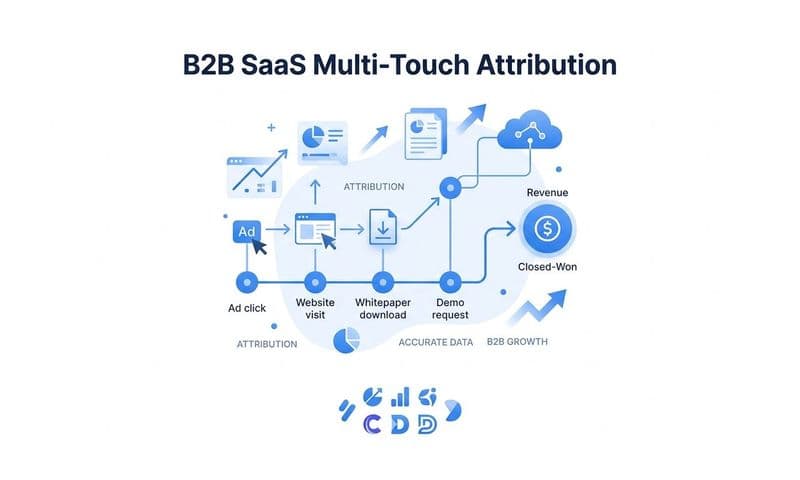
Multi-touch attribution distributes conversion credit across every touchpoint in the customer journey based on the role each one played. Different models, including linear, time decay, position-based, and data-driven, each tell a different story about how your channels contribute. The goal is not to find the one "correct" model but to use multiple models together to understand the full picture.
For example, a customer might discover your brand through a YouTube ad, click a retargeting ad on Instagram a week later, and then convert after clicking a Google Search ad. Last-click gives all the credit to Google Search. A multi-touch model reveals that YouTube and Instagram were essential to getting that customer to the point of searching for your brand in the first place. If you run campaigns across channels, learn more about tracking conversions across multiple ad platforms to see how this works in practice.
Implementation Steps
1. Map out your typical customer journey by reviewing the sequence of touchpoints that appear most frequently before a conversion in your attribution data.
2. Compare your current attribution model against at least two alternatives, such as linear and position-based, to identify which channels are being systematically over- or under-credited.
3. Use those insights to adjust budget allocation toward channels that contribute meaningfully to conversions even when they do not appear as the final click.
Pro Tips
Cometly's multi-touch attribution dashboard lets you compare models side by side without switching between platforms or manually pulling reports. This makes it much easier to have informed conversations with your team about where budget should actually go, rather than defaulting to whatever the last-click report says.
5. Connect Your CRM to Your Tracking Stack
The Challenge It Solves
For businesses with longer sales cycles, tracking only front-end conversions creates a dangerous blind spot. A form fill or a demo request looks like a success in your ad platform, but if that lead never becomes a paying customer, optimizing toward it means you are attracting the wrong people. Your ad platform learns to find more users who fill out forms but do not buy, and your cost per actual revenue grows.
The Strategy Explained
Connecting your CRM to your tracking stack lets you pass downstream conversion events back to your ad platforms. Instead of only telling Google or Meta that someone submitted a form, you can also tell them when that person became a qualified opportunity, closed as a customer, or reached a specific lifetime value threshold. This shifts the optimization signal from "leads" to "revenue," which is the outcome your business actually cares about. Businesses focused on lead quality should also explore strategies for tracking conversions for lead generation to maximize downstream results.
This integration is especially valuable in B2B and high-consideration purchase contexts where the gap between a lead and a closed deal can span weeks or months. By closing that loop, you give your ad platforms the information they need to find more customers who actually convert, not just more people who click.
Implementation Steps
1. Identify the CRM stages that represent meaningful revenue milestones, such as qualified opportunity, proposal sent, or closed won, and decide which ones to pass back as conversion events.
2. Set up a data connection between your CRM and your tracking platform so that when a contact reaches one of those stages, the event is automatically sent to the relevant ad platforms.
3. Compare your ad platform's reported cost per lead against your actual cost per closed deal to quantify the gap and demonstrate the value of optimizing toward downstream outcomes.
Pro Tips
When you first connect CRM data, you may find that certain campaigns or audiences that looked great on cost-per-lead metrics perform poorly on cost-per-revenue metrics, and vice versa. This is exactly the insight you need. Use it to reallocate budget toward the campaigns that actually drive revenue, not just the ones that fill your pipeline with unqualified leads.
6. Audit and Validate Your Tracking Setup Regularly
The Challenge It Solves
Conversion tracking breaks silently. A tag conflict introduced during a website update, a pixel that stops firing after a checkout redesign, or a duplicate event that inflates your reported conversions, none of these announce themselves. You keep seeing numbers in your dashboard, so everything looks fine. But those numbers are wrong, and every decision you make based on them compounds the error.
The Strategy Explained
Regular audits are the discipline that keeps your tracking honest. An audit is not just checking that your pixel fires. It means verifying that each event fires once and only once, that the conversion values are accurate, that the right events are attributed to the right campaigns, and that your reported data aligns with what your backend systems actually recorded. If you have ever wondered why your conversion tracking numbers are wrong, a structured audit is the fastest way to find the answer.
The frequency of your audits should match the pace of change in your business. If your website or campaigns change frequently, monthly audits are a reasonable baseline. If your setup is relatively stable, quarterly reviews combined with real-time monitoring can catch most issues before they cause significant damage.
Implementation Steps
1. Use your ad platform's diagnostic tools, such as Meta's Events Manager and Google's Tag Assistant, to verify that each conversion event is firing correctly and sending the expected data.
2. Cross-reference your ad platform's reported conversions against your backend transaction data or CRM records to identify discrepancies that suggest tracking errors.
3. Document your tracking setup, including every event, its trigger conditions, and its expected behavior, so that any team member can quickly identify what changed when something breaks.
Pro Tips
Set up automated alerts wherever possible so that a sudden drop in reported conversions triggers a notification rather than going unnoticed for days. A sharp decline in conversion volume is often a tracking issue, not a campaign performance issue, and catching it early saves you from making bad optimization decisions based on bad data.
7. Standardize UTM Parameters and Naming Conventions Across Campaigns
The Challenge It Solves
UTM inconsistency is one of the most common and most overlooked data quality problems in marketing. When one team member uses "facebook" as the source and another uses "Facebook" or "fb," those sessions appear as separate channels in your analytics. When campaign names follow no consistent pattern, filtering and comparing performance across campaigns becomes a manual nightmare that few people bother to do correctly.
The Strategy Explained
A standardized UTM naming convention is a simple system that pays dividends every time you open your analytics. It means agreeing on the exact values you will use for each UTM parameter across every platform and campaign, writing them down, and enforcing them with templates or tools that make it easy to follow the standard and hard to deviate from it. For a comprehensive breakdown, see our guide on UTM parameter tracking best practices.
Good naming conventions are descriptive enough to be useful without being so long that they become unwieldy. They typically include the platform, campaign type, audience or targeting segment, and creative format. The goal is that anyone on your team should be able to look at a UTM string and immediately understand what campaign it belongs to, what platform it ran on, and what it was trying to accomplish.
Implementation Steps
1. Define a standard structure for each UTM parameter, including utm_source, utm_medium, utm_campaign, utm_content, and utm_term, and document the approved values for each one.
2. Build a UTM builder spreadsheet or use a dedicated tool that generates correctly formatted UTM strings based on your naming convention, reducing the chance of manual errors.
3. Audit your existing UTM data in Google Analytics 4 to identify inconsistencies, consolidate fragmented data where possible, and establish a clean baseline going forward.
Pro Tips
Make your naming convention part of your campaign launch checklist so that UTM review happens before a campaign goes live, not after you notice broken attribution in your reports. A five-minute check at launch prevents hours of data cleanup later and ensures that every campaign contributes clean, usable data to your attribution analysis from day one.
8. Use AI-Powered Insights to Act on Conversion Data Faster
The Challenge It Solves
Even when your conversion tracking is accurate and complete, the sheer volume of data across multiple platforms, campaigns, ad sets, and creatives makes it difficult to know where to focus. Manual analysis is slow. By the time you have pulled reports, identified a pattern, and made a budget adjustment, the opportunity may have passed or the problem may have already cost you significantly.
The Strategy Explained
AI-powered analytics tools can process your conversion data continuously and surface the insights that matter most, without requiring you to build custom reports or spend hours in spreadsheets. They can identify which ads are driving the most revenue, flag campaigns where performance is declining before it becomes a crisis, and recommend budget shifts based on real-time conversion trends. For a roundup of the best options available, check out our list of the best marketing analytics tools.
This is not about replacing human judgment. It is about giving you better information faster so your judgment is applied to the right decisions at the right time. When AI handles the pattern recognition and anomaly detection, you can focus on strategy, creative, and the decisions that require context only you have.
Implementation Steps
1. Centralize your conversion data from all ad platforms into a single analytics environment so that AI analysis can work across your entire dataset rather than within each platform's silo.
2. Set up automated performance alerts that notify you when conversion rates, costs, or volumes shift significantly from their baseline, so you can investigate and act quickly.
3. Use AI-generated recommendations as a starting point for your weekly optimization reviews, comparing the suggested actions against your own analysis before implementing changes.
Pro Tips
Cometly's AI Ads Manager and AI Chat features are built specifically for this use case. They analyze your conversion data across every channel, surface the campaigns and creatives that are driving real results, and provide actionable recommendations so you can make faster, more confident optimization decisions without manually digging through platform dashboards.
Putting It All Together: Your Conversion Tracking Action Plan
Accurate conversion tracking is not a one-time setup. It is an ongoing discipline that requires the right foundations, consistent maintenance, and the right tools to turn data into decisions. The eight practices covered in this guide build on each other in a logical progression.
Start with the foundations. Define your conversion events so every optimization decision is grounded in real business outcomes. Implement server-side tracking to close the data gaps that browser pixels miss. Connect your CRM so you are optimizing toward revenue, not just leads. These three steps alone will give you a significantly more accurate picture than most marketing teams are working with.
Once the foundations are solid, layer on the advanced strategies. Sync your conversion data back to ad platforms to improve algorithmic optimization. Implement multi-touch attribution to understand how every channel contributes. Standardize your UTM conventions to keep your data clean and comparable. Audit your setup regularly to catch problems before they corrupt your reporting.
Finally, put AI to work on the data you have collected. When your tracking is accurate and your attribution is complete, AI-powered insights can help you act on that data faster than any manual process allows.
The compounding effect of getting all of this right is significant. Better data leads to better optimization, which leads to better results, which generates better data. Every step you take toward tracking accuracy is a step toward spending your budget more confidently and scaling the campaigns that actually drive growth.
If you are ready to bring all of these best practices together in one place, Cometly is built to do exactly that. From server-side tracking and CRM integration to multi-touch attribution and AI-powered recommendations, it gives you the complete, accurate view of your marketing performance that confident optimization requires. Get your free demo today and start capturing every touchpoint to maximize your conversions.