If you are running paid ads in 2026, your browser-based pixel is quietly lying to you. Not out of malice, but because the environment it was built for no longer exists. iOS privacy restrictions, ad blockers, and the steady erosion of third-party cookies have punched holes in client-side tracking that no amount of pixel configuration can fully patch. The result is conversion data you cannot trust, optimization signals that mislead your ad platform algorithms, and budget decisions made on incomplete information.
Here is the core problem: when a JavaScript pixel fires in a user's browser, it has to survive a gauntlet of blockers, privacy settings, and browser restrictions before it successfully reaches the ad platform. Many events never make it. When Apple introduced App Tracking Transparency with iOS 14.5, advertisers relying on Meta's pixel immediately saw conversion volumes drop. That was not a blip. It was a preview of where tracking is heading.
Server-side conversion tracking solves this at the root level. Instead of asking the user's browser to send conversion data, you send it directly from a server you control to the ad platform's API. The browser is no longer in the loop. Ad blockers cannot intercept a server-to-server call. iOS privacy settings cannot block it. The data reaches Meta, Google, TikTok, or whichever platform you use with far greater reliability.
This guide walks you through exactly how to track conversions server side, from defining your events to validating that data flows correctly into every ad platform you use. Whether you are managing your own brand's campaigns or running ads for multiple clients, these steps will help you build a tracking foundation that is resilient, accurate, and built for the privacy-first era of digital advertising.
Let's get into it.
Step 1: Define Your Conversion Events and Data Requirements
Before you write a single line of code or configure a single integration, you need absolute clarity on what you are tracking and why. Server-side tracking is more deliberate than client-side pixels. A pixel can auto-detect page loads and fire on any URL pattern. A server-side setup requires you to explicitly define what constitutes a conversion and exactly what data should accompany it.
Start by listing every action that signals business value. For an e-commerce brand, that might be a completed purchase, an add-to-cart event, or a checkout initiation. For a SaaS company, it could be a free trial signup, a demo booking, or a paid subscription start. For a lead generation business, it might be a form submission, a phone call, or a qualified lead stage reached in the CRM.
Once you have your list, map each event to the data points it needs to carry:
Event name: Use standard naming conventions where possible. Meta expects events like "Purchase" or "Lead." Google expects conversion action names that match what you have configured in your account.
Event value and currency: For purchases, this is the order total and currency code. For leads, you may assign a fixed estimated value based on average deal size.
User identifiers: This is where server-side event tracking gets its power. You want to capture hashed email addresses, hashed phone numbers, and platform-specific click IDs (fbclid for Meta, gclid for Google, ttclid for TikTok). These parameters allow the ad platform to match your conversion event to the right user and the right ad click.
Timestamp and source URL: When did the event happen and on which page? These details help with deduplication and attribution accuracy.
Prioritize your events by business impact. If you can only implement one event first, make it the one that matters most to your ad platform's optimization algorithm, typically a purchase or a qualified lead. Platforms optimize toward the events you feed them, so the signal quality of your highest-value event has an outsized effect on campaign performance.
One practical tip: review the standard event schemas for each platform you use before finalizing your definitions. Meta's Conversions API, Google's Measurement Protocol, and TikTok's Events API each have specific field requirements. Aligning your event definitions to these schemas now will save you significant rework later.
Step 2: Choose Your Server-Side Tracking Method
There is no single right way to implement server-side tracking. The best approach depends on your team's technical resources, the number of ad platforms you use, and how much ongoing maintenance you are willing to manage. Here are the three main paths:
Native API integrations per platform: Each major ad platform offers its own server-side API. Meta has the Conversions API (CAPI), Google offers the Google Ads API and the Measurement Protocol for GA4, TikTok has the Events API, and LinkedIn has its own Conversions API. You can build direct integrations with each one. This approach gives you maximum control and no dependency on third-party tools, but it comes with real costs. Each integration requires developer time to build, and each one requires ongoing maintenance as API versions update and platforms change their payload requirements. If you run campaigns across four platforms, you are maintaining four separate integrations.
Google Tag Manager Server-Side: GTM's server-side container is a middle-ground option. You deploy a server container to a cloud environment (Google Cloud Run is the typical choice), configure it to receive events from your web container, and then use server-side tags to forward those events to ad platforms. It reduces some of the raw API complexity and keeps event configuration in a familiar tag management interface. The trade-off is that it still requires meaningful setup and configuration per platform, and you need someone comfortable with GTM's server-side architecture to manage it effectively.
A dedicated attribution platform like Cometly: This approach consolidates server-side tracking across all your ad platforms into a single integration. Cometly captures every touchpoint from ad click through CRM events, routes conversion data to connected platforms automatically, and syncs enriched events back to Meta, Google, TikTok, and others. Instead of building and maintaining separate API connections for each platform, you connect once and Cometly handles the routing. For marketing teams without a dedicated engineering resource, this significantly reduces the barrier to accurate server-side conversion tracking.
When choosing your method, be honest about your constraints. A startup with a single developer who also manages the product roadmap probably cannot sustain four custom API integrations. An enterprise with a dedicated data engineering team may prefer the control of native integrations. Most marketing teams and agencies land somewhere in between, where a platform like Cometly provides the accuracy of server-side tracking without the engineering overhead.
The most common pitfall here is choosing a method that works well for one platform and then struggling to scale it to others. Think about where you want to be in twelve months, not just where you are today. For a deeper comparison of available options, check out this server-side tracking tools comparison.
Step 3: Set Up Your Server-Side Infrastructure
With your method chosen, it is time to build the infrastructure that will actually receive and forward conversion data. What this looks like depends on which path you selected in Step 2.
For DIY native API integrations: You need a server endpoint that can receive conversion data from your website or CRM and forward it to each ad platform's API. This is typically built as a cloud function (AWS Lambda, Google Cloud Functions, or Azure Functions work well), a webhook receiver, or a dedicated microservice. Your website sends conversion data to this endpoint when a qualifying event occurs, and the endpoint transforms it into the correct payload format for each platform and fires the API calls.
Make sure your endpoint can handle event volume without introducing latency. Conversion events should be processed and forwarded quickly. A slow or overloaded endpoint can cause delayed or dropped events, which defeats the purpose of the entire setup. If you want a detailed walkthrough of common obstacles, read about server-side tracking setup challenges before you begin.
For GTM Server-Side: The setup involves creating a server container in your GTM account, deploying it to a cloud environment, and configuring the transport layer between your web container and the server container. Google provides documentation for deploying to Cloud Run, which is the most common approach. Once the server container is live, you configure server-side tags for each ad platform you want to receive events.
A key detail for both DIY and GTM approaches: use a subdomain on your own domain for your server endpoint, such as track.yourdomain.com. This keeps the tracking request first-party in the browser's eyes before it reaches your server, which can improve data collection reliability and reduce the chance of the initial request being blocked.
For Cometly: The infrastructure setup is significantly simpler. Cometly provides a tracking script that you add to your website and a server-side integration that captures conversion events and routes them to your connected ad platforms automatically. You do not need to provision cloud infrastructure or build custom API connections. The platform handles the server-to-server communication on your behalf, which means your team can focus on campaign strategy rather than infrastructure management.
Regardless of which method you use, document your endpoint URLs, authentication credentials, and event routing logic. For a broader look at what this process involves and what it costs, see this guide on server-side tracking setup cost.
Step 4: Connect Your Ad Platforms and CRM
Your server-side infrastructure is live. Now you need to connect it to the platforms that will actually receive your conversion data. This step involves two categories of connections: ad platforms and your CRM.
For ad platforms, the connection process involves authenticating your server with each platform's API using the appropriate credentials. For Meta CAPI, this means generating an access token in Events Manager and associating it with your pixel ID. For Google, you authenticate via OAuth and configure the conversion actions you want to receive server-side data. TikTok and LinkedIn follow similar patterns with their own authentication flows.
One detail that many teams overlook: click IDs. When a user clicks your ad, the platform appends a click ID to the landing page URL. Meta adds fbclid, Google adds gclid, TikTok adds ttclid. These click IDs are what allow the platform to connect your server-side conversion event back to the specific ad click that drove it. You need to capture these click IDs on the initial page visit and store them, typically in a first-party cookie or your database, so they can be included in the conversion event payload when the conversion happens later. Understanding the difference between UTM tracking vs server-side tracking can help clarify why click IDs are so critical here.
If a user clicks your Meta ad on Monday and converts on Thursday after three more visits, you need to have stored that fbclid from Monday's session and include it in the conversion event you send on Thursday. Without it, Meta cannot attribute the conversion to the correct ad, and your attribution data suffers.
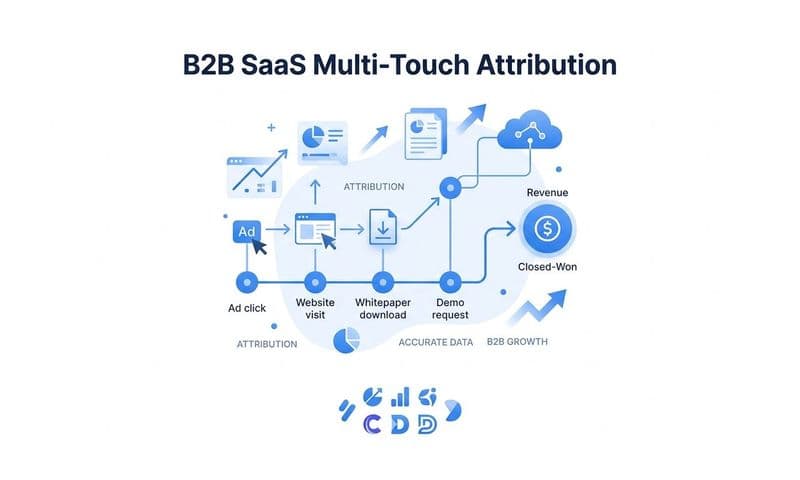
Connecting your CRM is equally important, especially if your sales cycle extends beyond the initial website visit. When a lead closes in Salesforce or moves to a qualified stage in HubSpot, that downstream event should also be tracked and attributed back to the originating ad click. This is where server-side tracking becomes genuinely powerful for B2B advertisers: you can feed closed-won revenue data back to your ad platforms and optimize toward the campaigns that actually generate customers, not just form fills.
With Cometly, the connection process for both ad platforms and CRMs is handled through native integrations. You authenticate your accounts through the platform's interface, and Cometly manages the data routing. This is particularly valuable when you are connecting multiple platforms simultaneously, since each native API has its own authentication quirks and payload requirements.
Do not forget to include hashed user parameters in your conversion payloads. Hashed email addresses and phone numbers allow platforms like Meta to match your conversion event to a known user profile, which improves match rates and attribution accuracy. Sending these parameters is one of the highest-impact optimizations you can make to your server-side setup.
Step 5: Implement Event Firing Logic on Your Backend
This is where the technical implementation gets precise. You need to define exactly when and how your backend fires conversion events to your server-side endpoint. Getting this right prevents both missed conversions and duplicate counts.
The most important rule: fire events on confirmed outcomes, not on intent signals. A purchase event should fire when your payment processor confirms a successful transaction, not when the user lands on the checkout page. A lead event should fire when the form submission is confirmed server-side, not when the user clicks the submit button. Firing on intent rather than confirmation is one of the most common sources of inflated conversion data.
Here is where to hook your event triggers for common conversion types:
E-commerce purchases: Listen for the success webhook from your payment processor (Stripe, PayPal, etc.) and fire the purchase event from there. The webhook fires server-side, so you already have the right context to build your conversion payload. If you run a Shopify store, you may want to explore dedicated server-side tracking for Shopify to simplify this integration.
Lead form submissions: Fire the event in your form handler after the submission has been validated and saved to your database, not in the frontend JavaScript on button click.
CRM stage changes: Use your CRM's workflow automation or webhook triggers to fire events when a deal reaches a qualifying stage. This is how you get closed-won revenue data flowing back to your ad platforms.
Deduplication deserves special attention. Most advertisers run both a client-side pixel and server-side tracking in parallel, at least during the transition period. Running both is actually recommended: the pixel catches events that the server misses, and the server catches events the pixel misses. But if both fire for the same conversion, the ad platform will double-count it unless you implement deduplication. For a deeper look at how these two approaches interact, see this explanation of server-side tracking vs pixel tracking.
Deduplication works through a shared event ID. When your pixel fires a purchase event, it includes an event ID. When your server fires the same purchase event, it includes the identical event ID. The ad platform uses this ID to recognize that both events represent the same conversion and counts it only once. Generate a unique event ID for each conversion and pass it through both channels.
Cometly handles deduplication and event structuring automatically, which removes a significant source of implementation risk. It also logs events with timestamps and response codes, giving you a clear audit trail for debugging.
Speaking of logging: build event logging into your server-side implementation from day one. Every event your server sends should be logged with the event type, timestamp, payload summary, and the API response code you received from the ad platform. When something breaks, this log is the first place you look.
Step 6: Validate, Test, and Monitor Your Tracking
You have defined your events, built your infrastructure, connected your platforms, and implemented your firing logic. Now you need to verify that everything actually works before you trust the data for campaign decisions.
Each major ad platform provides testing tools specifically for server-side events. Use them:
Meta Events Manager Test Events: In your Meta Events Manager, navigate to the Test Events tab. Enter your test event code in your server-side payload and fire a test conversion. Meta will show you whether the event was received, which parameters were included, and how the event was matched to a user profile. This is also where you check your Event Match Quality score, which indicates how well your user parameters are matching to Meta's user database.
Google Tag Assistant and Measurement Protocol Validation: Google provides a validation endpoint for the Measurement Protocol that returns error messages if your payload is malformed. For Google Ads conversions, use the conversion upload interface to verify that test conversions are being attributed correctly.
TikTok Events API Diagnostics: TikTok's Events Manager includes diagnostic tools that show event receipt status and flag missing or incorrectly formatted parameters.
Beyond using these tools, run a full end-to-end test for each conversion type. Click an actual ad (or simulate the click ID parameter), complete the conversion action, and verify that the event appears in the ad platform's interface with the correct event name, value, and user parameters. Do not consider your implementation validated until you have seen the event appear correctly in the platform. Understanding why server-side tracking is more accurate can help you benchmark what good match quality and attribution data should look like.
If your Meta match quality score is lower than you expect, the most common fix is adding more user parameters. Sending hashed email alone may not be enough. Adding hashed phone number, city, state, and country can meaningfully improve match rates.
Ongoing monitoring is just as important as initial validation. Set up alerts for when your conversion event volume drops significantly below its normal baseline. A sudden drop could indicate an expired API token, a broken server endpoint, or a code deployment that accidentally removed your event trigger. Catching these issues quickly prevents extended periods of data loss that can disrupt campaign optimization.
Cometly's analytics dashboard provides real-time visibility into which events are being sent, received, and matched across all connected platforms. Rather than checking each ad platform's diagnostic tools separately, you get a consolidated view of your tracking health. This makes it much faster to spot issues before they compound into meaningful data gaps.
Putting It All Together: Your Server-Side Tracking Checklist
Server-side conversion tracking is not a one-time project. It is an ongoing system that requires maintenance as API versions evolve, platforms add new required fields, and your business introduces new conversion events. Here is a quick reference checklist of everything this guide has covered:
1. Define every conversion event with its required data fields, including event name, value, currency, user identifiers, timestamp, and source URL.
2. Choose your implementation method based on your team's technical resources and the number of ad platforms you use.
3. Set up your server-side infrastructure with a reliable endpoint, proper authentication, and first-party subdomain routing.
4. Connect all ad platforms and your CRM, ensuring click IDs are captured on initial visits and hashed user parameters are included in every conversion payload.
5. Implement event firing logic on confirmed outcomes, not intent signals, and build deduplication into every event using shared event IDs.
6. Validate using platform-specific testing tools, run end-to-end tests for every conversion type, and set up ongoing monitoring alerts.
The core benefit of getting this right is not just cleaner data. Accurate conversion signals feed better information to ad platform algorithms, which improves targeting, reduces wasted spend, and drives more efficient campaign performance over time. Every conversion your pixel misses is a signal the algorithm never receives, and that gap compounds across thousands of impressions and clicks.
If you want to simplify this entire process, Cometly is built for exactly this. Its server-side tracking captures every touchpoint from ad click through CRM events, syncs enriched conversion data back to Meta, Google, TikTok, and more, and provides real-time visibility into your tracking health through a single dashboard. You get the accuracy of server-side tracking without the engineering overhead of building and maintaining separate API integrations for each platform.
Ready to build a tracking foundation that actually holds up in the privacy-first era of digital advertising? Get your free demo and see how Cometly can help you capture every conversion, feed better data to your ad platforms, and scale your campaigns with confidence.