You're spending thousands of dollars every month across Meta, Google, TikTok, and other platforms. The campaigns are running, the budget is flowing, and conversions are trickling in. But when someone asks you which ads are actually driving revenue, you hesitate. You pull reports from three different dashboards, and suddenly you have three completely different answers. Sound familiar?
This is one of the most common and costly problems in digital advertising today. It's not a niche technical issue reserved for enterprise teams with complex stacks. It affects solo marketers, growing agencies, and scaling brands alike. The inability to see which ads convert doesn't just create reporting headaches. It actively costs you money, erodes team confidence, and makes it nearly impossible to grow with any real certainty.
The root causes are a combination of tracking gaps, platform-level bias, and fragmented data systems that were never designed to talk to each other. The good news is that each of these problems has a clear solution. This article breaks down exactly why you can't see which ads convert, what it's actually costing you, and the specific steps you can take to fix it for good.
Why Ad Platforms Give You Conflicting Numbers
Here's something most platform dashboards won't tell you upfront: every ad platform is designed to make itself look good. Meta, Google, and TikTok each use their own attribution models, their own tracking windows, and their own logic for claiming credit on a conversion. The result is that the same customer purchase can be claimed by all three platforms simultaneously, and none of them are technically lying.
Think of it like this. A customer sees your TikTok ad on Monday, clicks a Google search ad on Wednesday, and then converts after seeing a Meta retargeting ad on Friday. TikTok claims the conversion because the user viewed the ad within their attribution window. Google claims it because the user clicked their ad. Meta claims it because the last touchpoint was theirs. Your combined platform dashboards now show three conversions when only one actually happened. This is why it's so difficult to determine which ads are actually working in your account.
This overlap is compounded by the fact that each platform uses different default attribution windows. Meta has historically defaulted to a 7-day click and 1-day view window, while Google uses different defaults depending on the campaign type. These windows don't align, which means the same conversion event gets pulled into multiple reporting periods across platforms.
On top of attribution model conflicts, the underlying tracking technology is increasingly unreliable. Traditional pixel-based tracking depends on browser cookies to identify users and connect ad clicks to conversions. But Apple's App Tracking Transparency framework, introduced with iOS 14.5, gave users the ability to opt out of cross-app tracking, which dramatically reduced the data Meta and other platforms could collect from iOS users. Understanding the impact of tracking paid ads after the iOS update is critical for any advertiser still relying on pixel-only setups. Safari and Firefox already block third-party cookies by default, and Chrome has been evolving its own approach to cookie restrictions.
Ad blockers add another layer of signal loss. A meaningful portion of web traffic never triggers a pixel at all, which means those conversions simply disappear from your platform data.
The end result is that marketers are working with multiple, conflicting versions of the truth. You can't confidently attribute revenue to specific campaigns, and any optimization decision you make is built on shaky ground. This isn't a minor inconvenience. It's a structural problem that compounds over time.
The Real Cost of Not Knowing What's Working
When you can't see which ads convert, you don't stop spending. You just spend less strategically. Budget continues to flow into campaigns based on surface-level metrics like clicks, impressions, and platform-reported ROAS, none of which tell you whether those ads actually drove revenue that showed up in your bank account.
The most immediate cost is wasted budget. Without clear conversion attribution, underperforming campaigns continue to receive spend simply because they look acceptable on a platform dashboard. Meanwhile, the campaigns that are genuinely driving revenue may be underfunded because their contribution isn't visible in the data. You end up wasting money on underperforming ads and starving the right ones.
There's a second, less obvious cost that compounds the first. Ad platform algorithms depend on conversion signals to optimize delivery. When your tracking is incomplete, the signals you're sending back to Meta, Google, and other platforms are incomplete too. The algorithm thinks it knows which users are converting, but it's working with a fraction of the real picture. This leads to progressively worse targeting, higher CPMs, and declining returns, not because your ads are bad, but because the optimization engine is flying blind.
The third cost is organizational. Teams that can't trust their data eventually stop trying to use it. Decision-making reverts to gut instinct, internal politics, or whoever shouts loudest in the budget meeting. This creates a culture of guessing rather than growing, and it's incredibly difficult to reverse once it takes hold.
Agencies face a version of this problem that's particularly damaging. When you can't demonstrate clear attribution to a client, you're always one bad month away from losing the account. Clear conversion data isn't just about optimization when running Facebook ads for clients. It's about proving value and building the kind of trust that turns clients into long-term partners.
The Tracking Setups That Create Blind Spots
Most marketers don't have a tracking problem because they ignored tracking. They have a tracking problem because they set it up years ago and never revisited it as the landscape changed. The standard setup, a pixel on your website connected to each ad platform, was adequate in a world of unrestricted cookies. That world no longer exists.
Pixel-only tracking without server-side backup: Client-side pixels fire from the user's browser, which means they're subject to every privacy restriction, ad blocker, and browser policy in play. If a user has an ad blocker installed, the pixel never fires. If they're on iOS and opted out of tracking, the data is severely limited. Pixel-only tracking routinely misses a significant portion of actual conversions, and the gap has been growing as privacy restrictions tighten. This is a primary reason behind underreporting conversions in ads manager.
Disconnected systems that don't share data: Many marketing teams operate with their CRM, website analytics, and ad platforms functioning as completely separate silos. A lead might click a Meta ad, fill out a form, enter your CRM, and close as a customer three weeks later after a sales call. Without a system that connects those events, the ad that initiated the journey gets zero credit for the revenue it generated. This problem is especially acute for B2B companies and anyone with a sales cycle longer than a few days.
Last-click attribution as the default: Last-click attribution assigns all credit to the final touchpoint before conversion. It's simple, it's the default in many platforms, and it's deeply misleading. It systematically undervalues top-of-funnel and mid-funnel ads, the ones building awareness and nurturing intent, while overvaluing the final retargeting touch that simply closed a deal the earlier ads already set up. If you're making budget decisions based on last-click data, you're likely cutting the campaigns that are actually doing the heavy lifting.
These three setups don't just create gaps in your data. They actively mislead you. You're not just missing information. You're receiving incorrect information and acting on it. Understanding why it remains unclear which ads drive actual revenue starts with recognizing these structural blind spots.
What Accurate Ad Attribution Actually Looks Like
Accurate attribution isn't about finding a perfect model that magically solves everything. It's about building a system that captures the full customer journey and gives you a reliable, unified view of how your ads contribute to revenue. Here's what that actually looks like in practice.
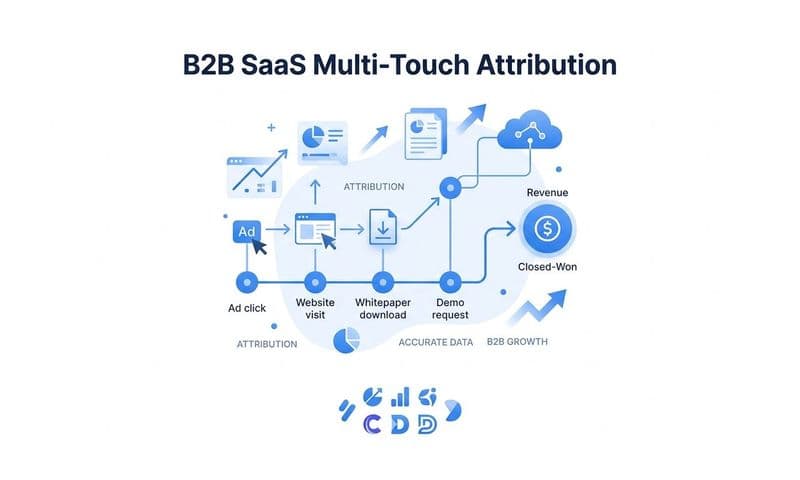
The foundation is a single, connected customer journey. Every touchpoint, from the first ad impression through website visits, email clicks, CRM events, and final conversion, should feed into one system. When these data points are unified, you can see the actual path a customer took before converting, not just the last step. This transforms attribution from a guessing game into a clear narrative that helps you track leads to revenue with confidence.
Multi-touch attribution models: Rather than assigning all credit to one touchpoint, multi-touch attribution distributes credit across every interaction that contributed to a conversion. Linear models give equal credit to each touchpoint. Time-decay models give more credit to touchpoints closer to the conversion. Position-based models weight the first and last touches more heavily. Each model has tradeoffs, but any of them gives you a more honest picture than last-click alone. The key is having the underlying data to run these models in the first place.
Server-side tracking as the backbone: Understanding what server-side tracking for ads entails is essential for modern attribution. Server-side tracking sends conversion data directly from your server to ad platforms, bypassing the browser entirely. This means ad blockers, iOS privacy restrictions, and cookie limitations don't interfere with the signal. Meta's Conversions API and Google's enhanced conversions are the most widely adopted implementations of this approach. Server-side tracking doesn't replace pixel tracking. It complements it, filling in the gaps where client-side tracking falls short and providing a more complete and reliable dataset.
When these elements work together, you get something genuinely powerful: a trustworthy picture of which ads are driving revenue across the entire customer journey. Not just which ad got the last click, but which campaigns created awareness, which ones nurtured consideration, and which ones closed the deal.
How to Fix Your Conversion Visibility Step by Step
Knowing what good attribution looks like is one thing. Getting there is another. Here's a practical sequence for rebuilding your conversion visibility from the ground up.
Step 1: Implement server-side tracking. This is the most impactful single change you can make. Start by setting up server-side event tracking for your most important conversion events, purchases, leads, sign-ups, and demo requests. Connect this to Meta's Conversions API and Google's enhanced conversions. The goal is to capture conversion data at the server level so that browser restrictions and ad blockers can no longer create gaps in your signal. Many marketers are surprised by how many conversions they were missing once they compare server-side data to their previous pixel-only numbers.
Step 2: Connect your ad platforms, website, and CRM into a unified system. This is where most attribution setups break down. Your CRM holds the ground truth about which leads became customers and how much revenue they generated. If that data isn't flowing back into your attribution system, you're missing the most important part of the story. Using dedicated tracking software for paid ads allows you to close the loop, connecting ad spend to actual revenue rather than just form fills or pixel-based conversion events.
Step 3: Feed enriched conversion data back to ad platforms. Once you have better conversion data, use it to improve the signals you're sending to Meta, Google, and other platforms. Enriched conversion events, ones that include customer data like email addresses, phone numbers, and purchase values, help ad platform algorithms identify higher-quality audiences and optimize delivery more effectively. This is sometimes called "closing the loop" with ad platform AI, and it can meaningfully improve targeting performance over time without any changes to your creative or bidding strategy.
Cometly is built to handle all three of these steps in one connected platform. It brings together server-side tracking, cross-platform attribution, and CRM integration so that every touchpoint feeds into a single source of truth. Instead of toggling between dashboards and reconciling conflicting numbers, you get one clear view of what's driving revenue across every channel.
From Attribution Clarity to Scalable Growth
Clear attribution isn't just a reporting upgrade. It changes how you make decisions, and over time, it changes what you're able to build.
The most immediate benefit is budget reallocation. Once you can see which ads actually convert across the full customer journey, you can move budget with confidence. Campaigns that looked strong on platform dashboards but weren't driving real revenue get cut. Campaigns that were undervalued because they operated at the top of the funnel get the investment they deserve. Knowing which marketing channel drives revenue enables data-driven reallocation that often delivers meaningful efficiency gains without increasing total spend.
The second benefit is scaling ads without losing money. One of the most common reasons marketers hesitate to increase ad spend is that they're not sure what they're scaling. If your attribution is murky, doubling your budget might just double your waste. When you have clear, reliable data showing which campaigns drive revenue, scaling becomes a logical next step rather than a gamble.
AI-powered recommendations become dramatically more useful when they're built on accurate data. Cometly's AI analyzes performance across every channel and surfaces opportunities that would stay hidden in a fragmented, platform-by-platform view. Instead of manually combing through reports and trying to reconcile conflicting numbers, you get actionable insights that tell you where to push harder and where to pull back.
Agencies and in-house teams that have moved to unified attribution platforms consistently report the same shift: they stop arguing about which platform deserves credit and start focusing on what to do next. The data becomes a shared foundation for strategy rather than a source of internal conflict.
The Path Forward Starts With Better Data
Not being able to see which ads convert is not a minor reporting inconvenience. It's a fundamental barrier to growth. Every day you operate without clear attribution is a day you're making budget decisions based on incomplete or misleading information, feeding poor signals to ad platform algorithms, and leaving scaling opportunities on the table.
The fix requires three things working together: server-side tracking to capture the conversions that browser-based pixels miss, unified multi-touch attribution to give you an honest picture of every touchpoint's contribution, and enriched conversion data flowing back to ad platforms so their algorithms can optimize on accurate signals.
Cometly is built specifically to solve this problem. It connects your ad platforms, CRM, and website into one clear attribution view, gives your team a single source of truth for performance data, and uses AI to surface the insights that help you scale with confidence. You don't have to keep guessing which ads are working. You can know.
Ready to finally see which ads are driving your revenue? Get your free demo today and start capturing every touchpoint so you can make smarter decisions and maximize your conversions.