The tracking methods that powered digital advertising for over a decade are quietly falling apart. If you've noticed your ad platform dashboards showing numbers that don't quite add up, CPAs that seem higher than they should be, or attribution windows that feel increasingly unreliable, you're not imagining things. The infrastructure underneath your conversion tracking has been shifting, and for many marketers, the cracks are becoming impossible to ignore.
Third-party cookies were the backbone of digital attribution for years. They let advertisers follow a user's journey from ad click to purchase, across websites and platforms, with relative ease. But between browser-level restrictions, sweeping privacy regulations, and Apple's App Tracking Transparency framework reshaping mobile tracking entirely, that backbone has largely crumbled. What's left is a patchwork of partial data, siloed platform dashboards, and ad algorithms that are working with far less signal than they need to optimize effectively.
The good news is that conversion tracking after cookie deprecation is not a dead end. It's a reset. Marketers who understand the new landscape and build the right infrastructure can actually achieve more accurate, more reliable attribution than the old cookie-based approach ever delivered. This article walks you through exactly how that works: what broke, what replaced it, and how to build a tracking stack that's ready for 2026 and beyond.
How Cookie-Based Tracking Lost Its Edge
To understand where we are, it helps to understand how we got here. Third-party cookies were tiny files placed in a user's browser by a domain other than the one they were visiting. An advertiser could drop a cookie when someone clicked an ad, and then read that cookie when the same person converted on a different site days later. It was simple, scalable, and for a long time, it worked remarkably well.
The problems started accumulating gradually. Safari introduced Intelligent Tracking Prevention (ITP) back in 2017, severely limiting how long third-party cookies could persist. Firefox followed with its own enhanced tracking protection. For years, Google Chrome remained the holdout, preserving third-party cookie support while promising a future transition. That transition has now arrived, with Chrome joining the other major browsers in restricting third-party cookie functionality in earnest. Understanding the full third-party cookie deprecation impact is essential for any marketer navigating this shift.
Browser changes were only part of the story. Privacy regulations added another layer of complexity. GDPR in Europe established strict consent requirements that limited how user data could be collected and shared. California's CCPA and CPRA followed, and a growing number of U.S. states have since enacted their own privacy laws. Across the board, the legal environment has made the casual, invisible data collection that third-party cookies enabled increasingly untenable.
Then came Apple's App Tracking Transparency, introduced with iOS 14.5 in 2021. ATT required apps to explicitly ask users for permission before tracking them across other apps and websites. Opt-in rates came in low, and the impact on mobile advertising attribution was immediate and significant. Advertisers running campaigns on Meta platforms felt it acutely: conversion data that had been flowing reliably through the Facebook Pixel suddenly became fragmented and incomplete. Many marketers had to completely rethink their approach to tracking conversions after the iOS update.
The compounding effect of all these changes hit marketers in concrete, painful ways. Ad platforms began showing inflated CPAs because their attribution models were working with incomplete data. Attribution windows shrank or broke entirely. Cross-device journeys, where a user clicks an ad on their phone and converts on their laptop, became nearly invisible. Perhaps most consequentially, the ad platform algorithms that rely on conversion signals to optimize campaigns started receiving weaker data, which degraded their ability to find high-value audiences and improve over time.
The result is a tracking environment where relying on browser-based cookies alone means flying partially blind. The marketers who adapt to this reality are the ones who will maintain a competitive edge.
First-Party Data and Server-Side Tracking: The New Foundation
The most important strategic shift in response to cookie deprecation is the move from third-party to first-party data. First-party data is information collected directly from your own visitors and customers, through your own domain, your own infrastructure, and your own direct relationship with users. Unlike third-party cookies, first-party data doesn't depend on browser permissions or third-party technology to exist.
Think of it this way: when a user fills out a form on your website, makes a purchase, or logs into an account, they're sharing data with you directly. That relationship is yours to own and leverage. The challenge is building the infrastructure to capture that data reliably and connect it to your marketing touchpoints without depending on browser-based cookies as the connective tissue. Exploring cookieless tracking solutions is a critical first step in this process.
This is where server-side tracking becomes essential. In a traditional browser-side setup, conversion events are fired directly from the user's browser to ad platforms and analytics tools. The problem is that browsers can block these requests through ad blockers, cookie restrictions, or ITP-style limitations. The data never arrives, and you're left with gaps.
Server-side tracking flips the model. Instead of the browser sending conversion data directly to ad platforms, your server receives the conversion event first and then forwards it to the relevant platforms. Because this happens at the server level, it bypasses browser restrictions entirely. Ad blockers can't intercept it. Cookie expiration policies don't apply. The data transmission is more complete and more reliable. A detailed look at why server-side tracking is more accurate reveals just how significant this advantage can be.
The practical advantages extend beyond just getting data through. Server-side setups give you significantly more control over what information is shared with each platform. You can enrich events with first-party data, like hashed email addresses or customer IDs, before sending them. This improves match rates, which is how well ad platforms can connect your conversion events to the users in their systems. Better match rates mean more accurate attribution and better algorithm performance.
Server-side tracking also tends to provide longer data retention and better consistency across events. When you control the data pipeline, you can enforce consistent event schemas, catch errors before they propagate, and maintain a cleaner, more reliable data foundation. For marketers who have spent years dealing with pixel misfires and inconsistent conversion counts, this level of control is a genuine upgrade.
The shift to server-side tracking does require more technical setup than dropping a pixel on a page. But the investment pays off in data quality that simply isn't achievable through browser-based methods alone.
Platform APIs: Powerful Pieces, Not the Complete Picture
Recognizing that browser-based tracking was becoming unreliable, the major ad platforms built their own server-side solutions. Meta's Conversions API, commonly called CAPI, allows businesses to send conversion events directly from their servers to Meta, supplementing or replacing what the Facebook Pixel captures. Google's Enhanced Conversions work similarly, allowing advertisers to send hashed first-party data alongside standard conversion tags to improve accuracy. TikTok's Events API provides the same capability for campaigns running on that platform. For a deeper dive, explore what conversion API tracking entails and how it works in practice.
These platform-native solutions are genuinely valuable and have become standard recommendations from the platforms themselves. Implementing CAPI alongside your Meta Pixel, for example, can significantly improve the completeness of conversion data reaching Meta's systems, which in turn helps their algorithm optimize more effectively. The same logic applies to Google Enhanced Conversions and TikTok's Events API.
Here's where it gets complicated, though. Each of these APIs operates within its own silo. Meta sees the conversions it can attribute to Meta. Google sees the conversions it can attribute to Google. TikTok sees its own slice. When a customer clicks a Meta ad, then a Google ad, and then converts, every platform has a legitimate claim on that conversion. Without a neutral, centralized view, you end up with a situation where your total attributed conversions across platforms add up to far more than your actual revenue. Every platform is telling you it deserves credit, and you have no independent way to evaluate those claims. This is a core challenge when tracking conversions across multiple ad platforms.
This is the fundamental limitation of relying on platform-native APIs as your complete attribution solution. They improve data transmission within each platform's ecosystem, but they don't solve the cross-channel attribution problem. You're still left reconciling competing dashboards and making budget decisions based on self-reported numbers from parties with a financial interest in looking good.
The implementation complexity is another real challenge. Managing separate API connections for Meta, Google, TikTok, and any other platforms you run, each with its own data mapping requirements and event schemas, is a significant ongoing technical commitment. Every time a platform updates its API, your integration needs to keep pace. For most marketing teams, this is not a sustainable approach to build entirely in-house.
Multi-Touch Attribution in a Cookieless Landscape
Multi-touch attribution has always been the more honest approach to understanding marketing performance. Rather than giving all credit to the last click before conversion, multi-touch models distribute credit across the various touchpoints that contributed to a customer's journey. The challenge is that those models historically depended heavily on cross-site cookies to stitch together journeys that spanned multiple domains and platforms.
Without third-party cookies, that stitching has to happen differently. Modern attribution approaches rely on first-party identifiers, like hashed email addresses, customer IDs, and logged-in user data, to connect touchpoints across a customer's journey. Probabilistic matching, which uses patterns in user behavior and device characteristics to make educated connections, fills in gaps where deterministic matching isn't possible. The ability to effectively track users without third-party cookies is now a foundational requirement for any serious attribution strategy.
The choice of attribution model matters more than ever when data is limited. Last-click attribution, which is still the default in many ad platforms, gives all credit to the final touchpoint before a conversion. In a world where customers interact with multiple ads and channels before converting, last-click systematically undervalues upper-funnel touchpoints and overvalues the final nudge. This creates a feedback loop where you cut the channels that were doing important awareness work and double down on the ones that happened to be last.
More sophisticated models tell a different story. Linear attribution distributes credit equally across all touchpoints. Time-decay models give more credit to touchpoints closer to the conversion. Data-driven attribution uses actual conversion patterns to assign credit based on which touchpoints demonstrably influenced outcomes. Each model has its uses, and the right choice depends on your sales cycle, your channel mix, and how you're using the data to make decisions.
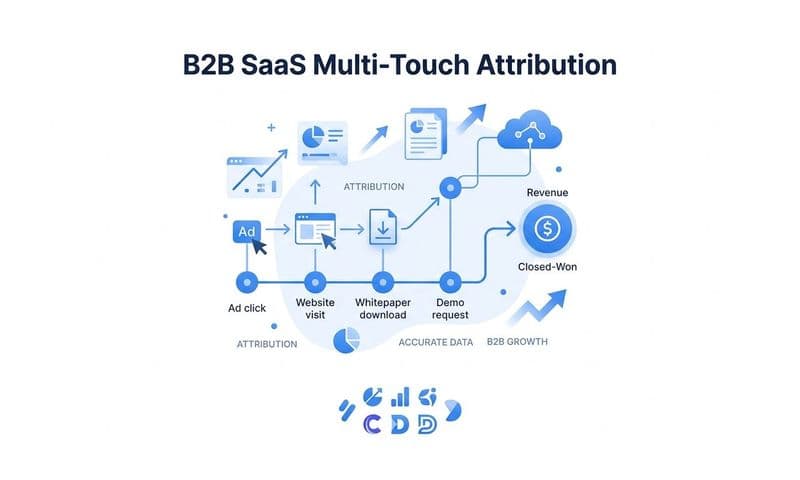
What makes multi-touch attribution genuinely powerful in a cookieless landscape is the ability to connect your ad platform data with CRM events and actual revenue. When you can see that a customer first clicked a Google Search ad, then engaged with a Meta retargeting ad, then converted through an email sequence, and then became a high-value repeat customer, you have a complete picture of what your marketing actually accomplished. Investing in the right revenue attribution tracking tools makes this level of insight possible.
This centralized view becomes your single source of truth. Instead of reconciling competing dashboards, you have one place where the full customer journey is visible, credit is distributed according to a model you've chosen, and budget decisions are grounded in cross-channel reality rather than platform-level reporting.
Building a Future-Proof Tracking Stack
Understanding the components is one thing. Assembling them into a coherent, durable infrastructure is where the real work happens. A future-proof tracking stack doesn't depend on any single browser feature, third-party technology, or platform's goodwill. It's built on layers that reinforce each other.
The foundation is first-party data collection. This means capturing user identifiers, like email addresses, phone numbers, and customer IDs, at every opportunity through your own properties. Forms, account creation, purchases, and CRM records all contribute to this foundation. The richer your first-party data, the more accurately you can connect marketing touchpoints to real customers.
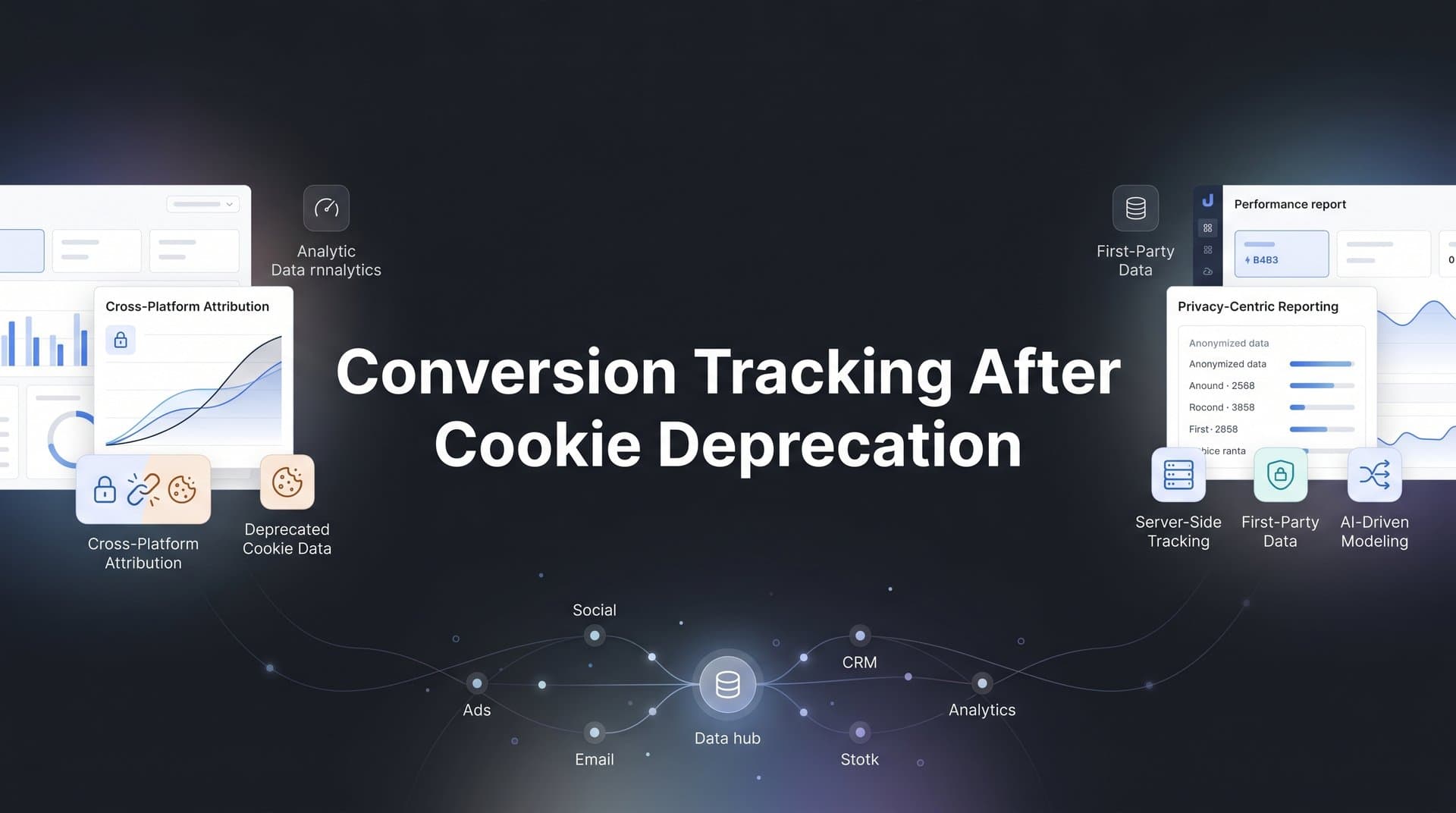
On top of that foundation sits server-side event transmission. Every significant conversion event, from lead form submissions to purchases to subscription starts, should be sent from your server to the relevant ad platforms and analytics tools. This ensures data reaches its destination reliably, regardless of what's happening in the user's browser. Understanding the key server-side conversion tracking benefits will help you build the case for this investment internally.
Centralized attribution sits above that, pulling together the event data from every platform and channel into a unified customer journey view. This is where you apply your attribution model, compare performance across channels on equal footing, and identify which combinations of touchpoints are actually driving revenue.
The final layer is conversion syncing: feeding enriched, accurate conversion data back to the ad platform algorithms. This is a well-established best practice recommended by Meta, Google, and others, and for good reason. When you send better conversion signals back to these platforms, their machine learning systems can optimize more effectively. They find more of the users who look like your best customers, bid more efficiently on high-intent signals, and improve campaign performance over time. In an environment where tracking restrictions are increasing, the quality of the conversion data you feed back to platforms becomes a genuine competitive advantage.
When evaluating tools for your stack, focus on a few key criteria. Accuracy of cross-platform attribution is paramount: you need a solution that can connect touchpoints across channels without relying on third-party cookies. Ease of integration with your existing CRM and ad accounts matters because a tracking stack you can't maintain is a tracking stack that will drift out of accuracy. Real-time data availability lets you make optimization decisions quickly rather than waiting for delayed reporting. Reviewing the top conversion tracking platforms available can help you identify the right fit for your needs.
Your Cookieless Tracking Action Plan
The shift away from third-party cookies is not a crisis to survive. It's an invitation to build something better. The marketers who treat this moment as an opportunity to invest in proper infrastructure will emerge with more accurate data, more reliable attribution, and better-performing campaigns than they had when everything ran on browser cookies.
The key shifts are straightforward to articulate: move from browser-dependent to server-side data transmission, move from platform-siloed reporting to centralized attribution, and move from passive tracking to active data enrichment and conversion syncing. Each of these shifts makes your marketing data more trustworthy and more actionable.
Start by auditing your current setup. How much of your conversion tracking still depends on browser-based pixels alone? Are you using server-side integrations with the major platforms you advertise on? Do you have a centralized view of the customer journey, or are you reconciling competing dashboards? The answers will tell you where the gaps are and where to focus first.
From there, prioritize server-side tracking for your highest-value conversion events, build out your first-party data collection at every customer touchpoint, and invest in a centralized attribution solution that gives you a cross-channel view you can actually trust. Then close the loop by syncing enriched conversion data back to the ad platforms so their algorithms can work with better signal.
Cookie deprecation is not the end of conversion tracking. It's the end of the easy, imprecise version of it. The replacement is more accurate, more durable, and ultimately more useful for making real marketing decisions.
Cometly brings together server-side tracking, multi-touch attribution, and conversion syncing in one platform, designed specifically for marketers who need clear, accurate data across every channel. From capturing every touchpoint to feeding enriched conversion events back to Meta, Google, and beyond, Cometly gives you the infrastructure to track, analyze, and optimize with confidence in a cookieless world. Get your free demo today and start building the tracking foundation your campaigns deserve.