Tracking campaigns across multiple ad platforms has never been more complicated. Privacy changes, cross-device journeys, and overlapping attribution windows mean the data you see in each ad platform rarely tells the full story. Relying on platform-reported metrics alone often leads to over-counting, misallocated budgets, and campaigns that look profitable but aren't.
This comparison covers the top campaign tracking software tools available in 2026, ranging from AI-powered attribution platforms and CRM-integrated marketing hubs to mobile measurement partners and UTM management solutions. Selection criteria include tracking accuracy, cross-platform support, ease of setup, reporting depth, and overall value for money. Let's get into it.
1. Cometly
Best for: Marketers and agencies who need accurate, full-funnel attribution across multiple paid channels.
Cometly is an AI-powered marketing attribution platform that connects your ad platforms, CRM, and website to track the complete customer journey and show exactly which campaigns drive revenue.
 9 Best Campaign Tracking Software Tools Compared for 2026
Where This Tool Shines
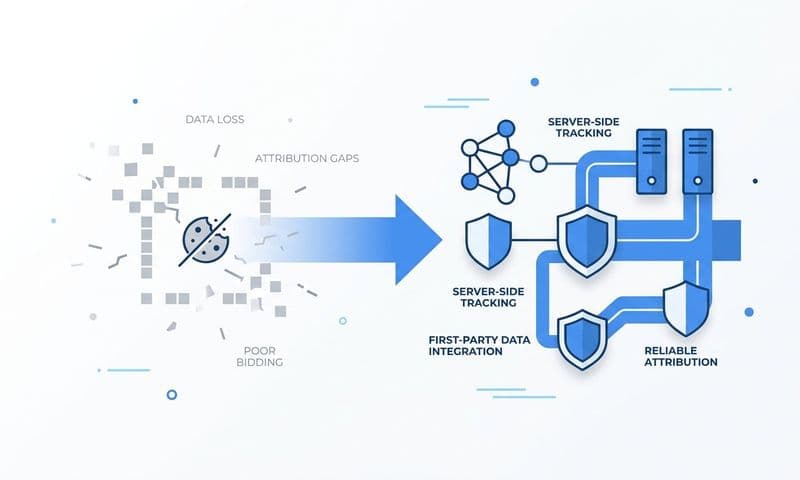
Cometly's biggest strength is solving the data accuracy problem that plagues modern advertisers. Its server-side tracking captures conversion data even when browser-level restrictions or ad blockers would otherwise cause events to go missing. That means you're making budget decisions based on what actually happened, not a filtered approximation.
What sets Cometly apart from basic analytics tools is its closed-loop approach. It doesn't just report on what happened; it feeds enriched conversion data back to ad platform algorithms through Conversion Sync, helping Meta, Google, and other platforms optimize toward your best customers rather than just your most clickable audiences.
Key Features
Server-Side Tracking: Captures accurate conversion data even with browser privacy restrictions and iOS limitations in place.
Multi-Touch Attribution: Tracks every touchpoint across Meta, Google, TikTok, and other ad platforms throughout the customer journey.
Conversion Sync: Sends enriched event data back to ad platform algorithms to improve targeting and campaign optimization.
AI Ads Manager: Provides cross-channel optimization recommendations so you know where to scale and where to pull back.
AI Chat: Lets you query your marketing data in plain language, making reporting faster and more accessible for the whole team.
Best For
Cometly is built for digital marketers, growth teams, and agencies running paid campaigns across multiple platforms who need accurate attribution data and actionable AI-driven recommendations. It's especially valuable for teams frustrated by the gap between platform-reported conversions and actual revenue.
Pricing
Custom pricing based on ad spend. A demo is available on request at the Cometly website, making it easy to evaluate fit before committing.
2. Google Analytics 4
Best for: Teams that need a free, flexible analytics foundation with strong Google Ads integration.
Google Analytics 4 is Google's event-based analytics platform for tracking website and app activity across channels, now powered by machine learning insights and built for a privacy-first environment.
 11 Best Marketing Analytics Tools to Track and Optimize Campaign Performance in 2026
Where This Tool Shines
GA4's event-based data model is a significant upgrade from the old session-based approach. Every interaction can be tracked as a custom event, giving you flexibility to measure exactly what matters to your business. Combined with its predictive capabilities, GA4 can surface audiences likely to purchase or churn before they take action.
For teams already running Google Ads, the native integration is hard to beat. Importing conversions directly into Google Ads and building remarketing audiences from GA4 data is seamless. The free tier is genuinely capable, making it an essential baseline tool even if you layer other attribution platforms on top.
Key Features
Event-Based Data Model: Replaces session-based tracking with flexible, customizable event measurement across every user interaction.
Google Ads Integration: Native conversion import and audience sharing between GA4 and Google Ads campaigns.
Predictive Metrics: Machine learning models surface purchase probability, churn probability, and predictive revenue estimates.
Cross-Device Tracking: Connects user journeys across web and app touchpoints using Google signals and User ID.
Free Tier: Core functionality is available at no cost, with generous data limits for most small to mid-sized businesses.
Best For
GA4 is a strong fit for any business with a web presence, particularly those running Google Ads. It works well as a foundational analytics layer, though teams with complex multi-channel attribution needs will often supplement it with a dedicated attribution platform.
Pricing
Free for standard use. GA4 360, the enterprise tier, starts at approximately $50,000 per year and includes higher data limits, SLAs, and advanced features.
3. HubSpot Marketing Hub
Best for: B2B marketing teams that want campaign tracking tightly integrated with CRM and revenue data.
HubSpot Marketing Hub is an all-in-one marketing platform with campaign tracking, email marketing, and attribution reporting connected directly to HubSpot CRM for closed-loop revenue visibility.
 9 Best Attribution Software for B2B SaaS in 2026
Where This Tool Shines
HubSpot's real advantage is the CRM connection. When your campaign tracking lives in the same platform as your contact database and deal pipeline, you can trace revenue back to the exact campaign, ad, or email that started the conversation. That closed-loop reporting is genuinely powerful for B2B teams with longer sales cycles.
The campaign management features let you group all your marketing assets, emails, landing pages, social posts, and ads into a single campaign object. This makes it easy to see the combined performance of everything driving a particular initiative, rather than piecing it together from separate tools.
Key Features
Multi-Touch Revenue Attribution: Connects campaign touchpoints to closed CRM deals across multiple attribution models.
Campaign Asset Grouping: Unifies emails, ads, landing pages, and social posts under a single campaign for consolidated reporting.
Ad Tracking: Built-in tracking for Google, Meta, and LinkedIn ads with performance data inside the HubSpot dashboard.
Custom Report Builder: Drag-and-drop dashboards with flexible report creation across contacts, deals, and campaign performance.
Contact-Level Journey Mapping: Tracks individual contact touchpoints from first interaction through to closed revenue.
Best For
HubSpot Marketing Hub is ideal for B2B companies already using or considering HubSpot CRM. It's particularly well-suited for inbound-focused marketing teams that want attribution tied directly to pipeline and revenue, rather than just traffic and clicks.
Pricing
Free tools are available for basic use. Professional tier starts at $800 per month. Enterprise starts at $3,600 per month, with pricing scaling based on contact volume and feature requirements.
4. Triple Whale
Best for: Shopify ecommerce brands that need centralized ad performance and creative analytics.
Triple Whale is an ecommerce-focused attribution and analytics platform built specifically for Shopify brands to centralize ad performance, creative analytics, and customer data in one place.
 7 Best Funnel.io Alternatives for Marketing Data Analytics in 2026
Where This Tool Shines
Triple Whale was built with DTC ecommerce in mind, and that focus shows. Its first-party pixel handles server-side attribution on Shopify stores, giving brands a more accurate read on which ads are actually driving purchases when platform-reported data is unreliable. The creative analytics layer is particularly useful for performance marketers who test a high volume of ad variations.
The centralized dashboard pulls Meta, Google, TikTok, and other channel data into one view alongside Shopify revenue data. For ecommerce teams managing multiple ad channels simultaneously, having a single source of truth without manual data stitching saves meaningful time and reduces reporting errors.
Key Features
First-Party Pixel: Server-side attribution for Shopify stores that maintains accuracy despite browser privacy restrictions.
Creative Analytics: Identifies top-performing ad creatives across channels so you can scale what's working and retire what isn't.
Centralized Dashboard: Aggregates performance data from Meta, Google, TikTok, and more alongside Shopify revenue.
Customer Journey Mapping: Tracks ecommerce purchase paths across multiple touchpoints to understand how customers convert.
AI Spend Recommendations: Surfaces budget allocation suggestions based on channel performance and revenue contribution.
Best For
Triple Whale is purpose-built for Shopify brands running paid social and search campaigns. It's most valuable for DTC brands spending meaningfully on ads who need accurate attribution and creative performance data without building a custom analytics stack.
Pricing
Plans start around $100 per month and scale based on revenue volume and feature tier. Higher-tier plans unlock more advanced analytics and AI features.
5. Hyros
Best for: High-ticket businesses and info product marketers with long sales cycles and phone-based conversions.
Hyros is an ad tracking and attribution platform designed for businesses where the path from ad click to closed sale spans weeks or months, including call tracking and AI-driven optimization.
 7 Best Northbeam Alternatives for Small Business in 2026
Where This Tool Shines
Most attribution tools are built around short conversion windows, which leaves high-ticket businesses and info product marketers with blind spots. Hyros addresses this with attribution windows that can extend six months or longer, making it possible to connect an ad impression to a sale that closed much later in the cycle.
The call tracking integration is a standout feature for businesses where phone conversations are a key part of the sales process. Hyros automatically attributes inbound calls to the original ad source, giving you a complete picture of which campaigns are generating not just leads but actual booked calls and closed deals.
Key Features
Long-Window Attribution: Tracks conversions across extended sales cycles of up to six months or more.
Call Tracking: Automatically attributes inbound phone calls to the original ad source and campaign.
AI Optimization: Provides ad optimization recommendations based on actual revenue data, not just click-through metrics.
Ad Platform Conversion Sync: Sends accurate conversion signals back to Meta, Google, and other platforms to improve algorithm targeting.
Funnel-Level Tracking: Maps performance across each stage of multi-step sales funnels, from opt-in to close.
Best For
Hyros is best suited for coaches, consultants, course creators, and high-ticket service businesses where the sales process involves calls, applications, or extended decision timelines. It's less suited for ecommerce brands with short purchase cycles.
Pricing
Plans start around $99 per month, with higher tiers available for businesses with larger ad spend volumes and more complex tracking requirements.
6. Northbeam
Best for: DTC brands spending at scale that need multi-touch attribution combined with media mix modeling.
Northbeam is an attribution platform that combines multi-touch attribution with media mix modeling to give DTC brands a more complete picture of channel incrementality and true campaign impact.
 9 Best Attribution Tools for Multiple Ad Platforms in 2026
Where This Tool Shines
Northbeam's hybrid approach is what differentiates it. Most attribution platforms rely solely on multi-touch attribution, which works well for trackable digital touchpoints but struggles with channels that don't leave clean data trails. By layering in media mix modeling, Northbeam can help brands understand the incremental contribution of channels like TV, podcast, or upper-funnel social even when direct tracking isn't possible.
The creative-level analytics give media buyers granular visibility into which specific ad creatives are contributing to revenue across channels. Combined with customizable attribution windows and models, Northbeam gives sophisticated marketing teams the flexibility to analyze performance through multiple lenses rather than committing to a single attribution view.
Key Features
Hybrid MTA and MMM: Combines multi-touch attribution with media mix modeling for a more complete view of channel incrementality.
First-Party Data Collection: Machine learning models built on your own customer and conversion data for more accurate insights.
Creative Analytics: Granular performance data at the creative level across all connected ad channels.
Customizable Attribution Models: Flexible attribution windows and model selection to match your business's decision-making needs.
Budget Allocation Recommendations: Cross-channel spend suggestions based on modeled performance and incrementality data.
Best For
Northbeam is designed for DTC brands and ecommerce companies spending at least $50,000 per month on advertising. At that scale, the incremental insights from the MMM layer justify the investment and can meaningfully improve budget allocation decisions.
Pricing
Custom pricing. Northbeam is generally positioned for brands with significant ad spend, so expect pricing to reflect that positioning. Contact their team for a quote.
7. Adjust
Best for: Mobile-first companies and app marketers who need accurate install attribution and fraud prevention.
Adjust is a mobile measurement partner providing app install attribution, deep linking, fraud prevention, and campaign analytics for teams building and growing mobile applications.
Where This Tool Shines
Mobile attribution is a specialized discipline, and Adjust is one of the most established players in the space. Its compatibility with SKAdNetwork and Apple's Privacy Sandbox means it's built to work within the constraints of modern iOS and Android privacy frameworks rather than fighting against them. For app marketers, that's a critical distinction.
The fraud prevention suite is another area where Adjust earns its place. Invalid installs and click fraud are persistent problems in mobile advertising, and Adjust's filtering tools help ensure you're measuring and optimizing based on real user behavior rather than inflated numbers from fraudulent sources.
Key Features
SKAdNetwork Compatibility: Full support for Apple's privacy-preserving attribution framework for iOS campaigns.
Deep Linking: Seamless app-to-app and web-to-app experiences that maintain attribution across link types.
Fraud Prevention: Filters invalid installs and click fraud to protect your campaign data and ad spend.
Cohort Reporting: Tracks user behavior and retention over time to measure long-term campaign quality.
Audience Segmentation: Builds retargeting audiences based on in-app behavior and campaign source data.
Best For
Adjust is purpose-built for mobile app marketers, gaming companies, and any business where app installs and in-app events are the primary conversion actions. It's less relevant for businesses focused purely on web-based campaigns without an app component.
Pricing
A free tier is available for startups with lower attribution volumes. Paid plans scale based on attribution volume and feature requirements. Contact Adjust for enterprise pricing details.
8. Ruler Analytics
Best for: B2B and lead generation businesses that need to connect offline conversions to digital campaign sources.
Ruler Analytics is a marketing attribution tool focused on closing the gap between digital campaigns and offline conversions like phone calls and form submissions, with revenue attribution synced back to ad platforms.
Where This Tool Shines
For businesses where the conversion happens off the website, such as a phone call, an in-person meeting, or a sales-assisted deal, standard analytics tools leave a significant blind spot. Ruler Analytics is specifically designed to bridge that gap. Its dynamic number insertion tracks which campaign, keyword, or channel generated each inbound call, giving you attribution data that most analytics setups simply can't provide.
The revenue attribution sync is particularly valuable. Once a deal closes in your CRM, Ruler can push that revenue data back to Google Ads, Meta, and Microsoft Ads, so your ad platform algorithms are optimizing toward actual closed revenue rather than just form fills or call connections.
Key Features
Call Tracking: Dynamic number insertion attributes inbound phone calls to the specific campaign, keyword, or channel that drove them.
Form Tracking: Ties form submissions to the exact campaigns and keywords that generated each lead.
Revenue Attribution Sync: Pushes closed revenue data back to Google Ads, Meta, and Microsoft Ads for smarter algorithm optimization.
Multi-Touch Attribution Models: Supports first click, last click, linear, and other models to analyze the full conversion path.
CRM Integrations: Connects with Salesforce, HubSpot, Pipedrive, and other CRMs to close the loop between marketing and sales.
Best For
Ruler Analytics is ideal for B2B companies, professional services, and lead generation businesses where phone calls and form submissions are the primary conversion events and the sales cycle involves human interaction before revenue is recorded.
Pricing
Plans start around £199 per month and scale based on call tracking volume and visitor numbers. Pricing is in GBP, reflecting the platform's UK origins, though it serves international customers as well.
9. UTM.io
Best for: Marketing teams that need to standardize and govern UTM parameter creation across multiple people and campaigns.
UTM.io is a UTM link management platform that helps marketing teams create, organize, and govern campaign tracking parameters at scale using templates, naming conventions, and team collaboration tools.
Where This Tool Shines
UTM parameter chaos is more common than most teams admit. When every marketer builds tracking links differently, your analytics data becomes inconsistent and unreliable. UTM.io solves this by centralizing link creation with enforced naming conventions, so your campaign data is clean and comparable across the entire team from day one.
The collaboration features make it particularly useful for agencies or larger marketing teams. Approval workflows ensure that links follow the right structure before they go live, and the Chrome extension makes it fast to generate compliant UTM links without leaving your browser. It's not a full attribution platform, but as a foundational layer for clean tracking data, it's genuinely useful.
Key Features
Centralized UTM Builder: Enforces consistent naming conventions across all campaign tracking links created by the team.
Team Collaboration: Approval workflows and shared link libraries keep everyone aligned on tracking standards.
Chrome Extension: Generates compliant UTM links quickly without leaving the current browser tab.
Analytics Integration: Connects with Google Analytics and other platforms to ensure UTM data flows cleanly into your reporting tools.
Bulk Creation: Supports bulk UTM generation and CSV import/export for large campaign launches with many link variations.
Best For
UTM.io is best suited for marketing teams of any size that struggle with inconsistent UTM parameters, as well as agencies managing tracking links across multiple clients. It works best as a complement to a full analytics or attribution platform rather than a standalone solution.
Pricing
A free plan is available for individuals. Team plans start at $25 per month, making it one of the most accessible tools on this list for smaller teams looking to clean up their tracking hygiene.
Which Campaign Tracking Tool Fits Your Team?
The right campaign tracking software depends on what you're actually trying to solve. These tools fall into distinct categories, and the best choice comes down to your business model, ad spend level, and where your biggest attribution gaps are.
If you're running paid campaigns across multiple channels and need accurate, full-funnel attribution with AI-driven optimization, Cometly is the strongest all-around choice. Its server-side tracking, Conversion Sync, and AI Ads Manager address the core problems that most multi-channel advertisers face, from data loss due to privacy restrictions to misallocated budgets based on platform-reported metrics that don't reflect reality.
For ecommerce brands on Shopify, Triple Whale or Northbeam are purpose-built for your world. Triple Whale is better for brands earlier in their scaling journey, while Northbeam's hybrid MTA and MMM approach is better suited for brands with significant monthly ad spend who need incrementality modeling. Mobile app marketers should look at Adjust, which is specifically designed for the iOS and Android attribution environment.
B2B and lead generation businesses will get the most value from HubSpot Marketing Hub if they want CRM-integrated attribution, or Ruler Analytics if offline conversions like phone calls are a critical part of their funnel. High-ticket and long-cycle businesses should evaluate Hyros for its extended attribution windows and call tracking capabilities.
GA4 belongs in almost every stack as a free foundational layer, and UTM.io is worth adding if inconsistent tracking parameters are creating noise in your reporting data.
The common thread across all of these tools is that better data leads to better decisions. Knowing which campaigns actually drive revenue, rather than just which ones report the most conversions, is what separates marketers who scale confidently from those who are guessing. Get your free demo of Cometly today and start capturing every touchpoint to maximize your conversions.