If you are running paid ads across multiple channels, you already know the problem: each platform reports its own numbers, and they rarely agree. Google says one thing, Meta says another, and your CRM tells a completely different story.
The result is a fragmented view of what is actually driving conversions and revenue. Conversion tracking across platforms is the practice of capturing every touchpoint, from the first ad click to the final closed deal, in one unified system. Without it, marketing teams are making budget decisions based on incomplete data.
This list covers the best tools built to solve that problem in 2026. Each tool is evaluated on tracking accuracy, cross-channel coverage, attribution depth, and how well it connects ad spend to real business outcomes. Whether you are a B2B SaaS growth team, a performance marketer, or an agency managing multiple clients, there is a solution here for your specific needs.
1. Cometly
Best for: B2B SaaS teams that need attribution tied directly to pipeline and closed-won revenue.
Cometly is a marketing attribution platform built specifically for B2B SaaS companies that connects ad spend to actual revenue outcomes.
 9 Best Attribution Platforms for Agencies in 2026
Where This Tool Shines
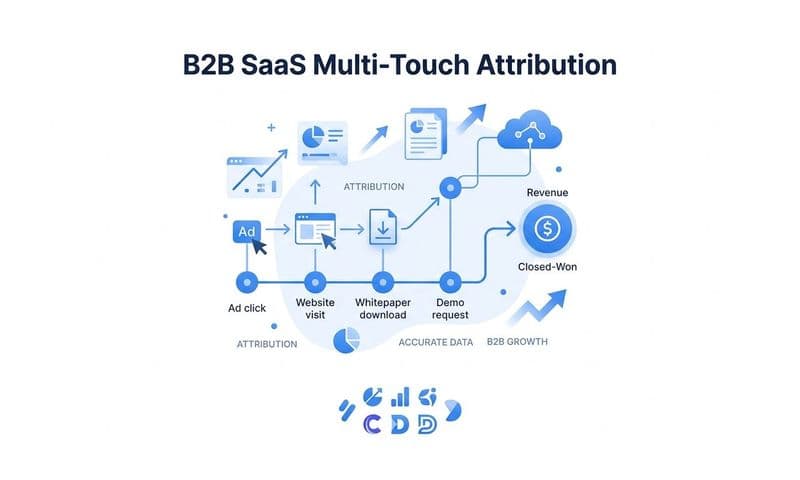
Most attribution tools stop at the lead. Cometly goes further by connecting every ad click to CRM events and Stripe revenue data, so you can see which campaigns are generating pipeline and which ones are actually closing deals. That distinction matters enormously when you are optimizing for revenue, not just volume.
The combination of server-side tracking, Conversion API integration, and multi-touch attribution models gives marketing teams a reliable, complete picture of the customer journey. The AI ads manager adds another layer by surfacing which campaigns are performing and where budget should shift, making it easier to act on the data rather than just report it.
Key Features
Server-Side Conversion Tracking: Sends conversion events directly via Conversion API for Meta and Google, bypassing browser-level signal loss from iOS restrictions and ad blockers.
Multi-Touch Attribution Models: Supports first-touch, last-click, linear, and data-driven models so teams can compare how different frameworks credit channel contribution.
Stripe Revenue Integration: Connects closed-won revenue from Stripe directly to the ad campaigns and touchpoints that influenced the deal, not just the lead.
AI Ads Manager: Identifies high-performing campaigns across channels and provides optimization recommendations based on enriched conversion data.
Customer Journey Analytics: Tracks every touchpoint from the first ad click through to CRM events, giving teams a complete view of how buyers move through the funnel.
70+ Native Integrations: Connects with major ad platforms, CRMs, and analytics tools so teams can consolidate data without custom engineering work.
Best For
Cometly is purpose-built for B2B SaaS marketing teams and growth leaders who need attribution that goes beyond lead volume. It is especially valuable for teams running paid campaigns across multiple channels who want to connect ad spend directly to pipeline stages and closed revenue rather than relying on platform-reported conversions.
Pricing
Starts at $149/month. Visit cometly.com for current pricing and plan details, as options may vary based on data volume and integrations.
2. Google Analytics 4
Best for: Teams running Google-centric campaigns who need free cross-channel web analytics.
Google Analytics 4 is Google's free web analytics platform built on an event-based data model with native integration across the Google Ads ecosystem.
 11 Best Marketing Analytics Tools to Track and Optimize Campaign Performance in 2026
Where This Tool Shines
GA4 is the default starting point for most marketing teams because it is free, widely supported, and deeply integrated with Google Ads. The event-based model is a meaningful improvement over the old session-based approach, making it easier to track specific user actions rather than just page views.
For teams running Google Search, Display, and YouTube, the native integration provides solid campaign-level conversion reporting without additional setup. Cross-channel visibility becomes more limited for non-Google traffic, and GA4 does not natively connect to CRM revenue data, which is a real gap for B2B teams tracking pipeline.
Key Features
Event-Based Tracking Model: Captures user interactions across web and app with flexible event definitions that replace the rigid hit types of Universal Analytics.
Native Google Ads Integration: Imports conversion events directly into Google Ads for campaign optimization and reporting without manual configuration.
Cross-Channel Reporting: Provides visibility across Google Search, Display, YouTube, and organic traffic in a single interface.
Audience Building: Creates remarketing lists based on conversion behavior for use in Google Ads campaigns.
Free Tier with Enterprise Option: The standard GA4 is free for most teams, with GA4 360 available for enterprise-scale data needs.
Best For
GA4 works best for teams primarily running Google-ecosystem campaigns who want a free foundation for web analytics and conversion tracking. It is a strong complement to other attribution tools but is less suited as a standalone solution for multi-channel B2B attribution.
Pricing
Free for standard use. GA4 360, the enterprise version, is custom-priced based on data volume and organizational needs.
3. Meta Pixel + Conversions API
Best for: Advertisers running Meta campaigns who need reliable signal quality despite iOS privacy restrictions.
Meta Pixel + Conversions API is Meta's native tracking stack that combines browser-side pixel events with server-side CAPI signals for maximum event match quality.
 9 Best Tools for Conversion Tracking Across Platforms in 2026
Where This Tool Shines
The browser-only pixel has become increasingly unreliable as iOS privacy changes and browser restrictions reduce the signals Meta receives. The Conversions API addresses this by sending conversion events directly from your server to Meta, independent of what happens in the browser. The result is higher event match rates and better ad delivery optimization.
Running both the pixel and CAPI together, with proper deduplication configured, gives Meta's algorithm the richest possible signal for targeting and bidding. This is now considered standard practice for serious Meta advertisers rather than an advanced setup.
Key Features
Server-Side Event Sending: CAPI sends conversion events directly from your server to Meta, improving match rates beyond what the browser pixel can achieve alone.
Event Deduplication: Prevents double-counting when the same conversion event is received from both the browser pixel and the server API.
Standard and Custom Events: Supports purchases, leads, registrations, and fully custom conversion events tailored to your business model.
Ad Algorithm Signal Enrichment: Feeds first-party conversion data back into Meta's delivery system to improve targeting accuracy and campaign performance.
Flexible Integration Options: Can be implemented via direct API, Meta's partner integrations, or third-party platforms like Cometly that handle the CAPI connection for you.
Best For
Any advertiser running Meta campaigns who wants to maximize signal quality and ad performance. It is not a standalone attribution solution but is an essential component of any multi-channel tracking setup that includes Meta advertising.
Pricing
Free as part of the Meta Ads platform. A Meta Ads account is required. Developer resources or a third-party integration may be needed for CAPI setup.
4. Segment
Best for: Engineering-forward teams building a custom data stack that routes events to multiple destinations.
Segment is a customer data platform that collects events from web, mobile, and server sources and routes them to 400+ connected marketing, analytics, and data warehouse destinations.
 9 Best Conversion Tracking Alternatives to Pixels in 2026
Where This Tool Shines
Segment is not an attribution tool in the traditional sense. Think of it as the plumbing layer of your data infrastructure. Instead of installing separate tracking code for every tool in your stack, you instrument once with Segment and route that data wherever it needs to go, including attribution platforms, ad networks, and data warehouses.
For teams building a sophisticated, custom analytics stack, Segment provides the event collection and identity resolution foundation that makes everything else more reliable. The tradeoff is that it requires meaningful technical investment to implement and maintain properly.
Key Features
Single Tracking Implementation: One tracking code routes event data to 400+ destination integrations, eliminating redundant instrumentation across tools.
Server-Side Sources: Captures backend events like subscription changes, payment completions, and trial activations that never touch the browser.
Identity Resolution: Unifies anonymous visitor profiles with known user records as people move through the funnel.
Data Warehouse Sync: Sends clean event data to Snowflake, BigQuery, or Redshift for teams building custom attribution models in SQL.
Protocols: Enforces event naming standards and data quality rules to prevent the schema drift that makes analytics data unreliable over time.
Best For
Engineering and data teams at growth-stage or enterprise SaaS companies who want a centralized event collection layer. Less suited to marketing teams who need out-of-the-box attribution reporting without developer support.
Pricing
Free tier available for low-volume use. Team plans start at approximately $120/month. Enterprise pricing is custom based on monthly tracked users and destinations.
5. Triple Whale
Best for: DTC and ecommerce brands that need a unified dashboard across Meta, Google, TikTok, and Snapchat.
Triple Whale is a unified analytics platform that aggregates conversion data from major ad channels into a single dashboard with first-party pixel tracking and creative analytics.
 9 Best Tools for Conversion Tracking Across Platforms in 2026
Where This Tool Shines
Triple Whale built its reputation in the DTC ecommerce space by solving a specific problem: platform-reported ROAS numbers that never match each other. The Triple Pixel provides first-party, server-side order attribution that sits independently of Meta and Google's native tracking, giving brands a neutral source of truth for revenue attribution.
The creative analytics layer is a genuine differentiator. Rather than just reporting which channels perform, Triple Whale breaks down performance at the ad creative level across platforms, which is particularly valuable for brands running high-volume creative testing.
Key Features
Triple Pixel: First-party server-side pixel that attributes orders independently of platform pixels, reducing reliance on Meta or Google's self-reported numbers.
Unified Dashboard: Combines spend, revenue, and ROAS across Meta, Google, TikTok, Snapchat, and Pinterest in a single view.
Creative Analytics: Compares ad-level performance across platforms to identify which creative assets are driving the most efficient conversions.
Cohort Analysis: Reports on customer lifetime value and repeat purchase behavior to inform longer-term budget decisions.
Blended Attribution Views: Shows both blended and channel-specific attribution model views so teams can understand total business performance alongside channel efficiency.
Best For
DTC ecommerce brands spending across multiple paid social channels who want unified reporting and creative-level insights. Less suited to B2B SaaS teams where the conversion event is a lead or sales conversation rather than a direct purchase.
Pricing
Starts at approximately $129/month. Pricing scales with revenue volume, so larger brands will pay more based on their transaction activity.
6. Northbeam
Best for: High-spend ecommerce and DTC brands that need media mix modeling alongside multi-touch attribution.
Northbeam is a marketing measurement platform that combines machine learning-based attribution with media mix modeling and spend forecasting for brands running large, diverse channel mixes.
 8 Best Tools to Fix Duplicated Conversion Tracking Across Platforms in 2026
Where This Tool Shines
Northbeam is positioned for brands that have outgrown standard pixel-based attribution and need a more sophisticated measurement approach. The media mix modeling component is particularly useful because it can attribute value to channels that are difficult to track at the individual event level, such as brand awareness campaigns or channels with high attribution gaps.
The spend forecasting feature adds a forward-looking dimension that most attribution tools lack. Rather than just explaining what happened, Northbeam can project how revenue outcomes might change based on budget reallocation decisions across channels.
Key Features
ML-Based Attribution Modeling: Uses machine learning to distribute conversion credit across paid social, search, email, and direct channels based on actual contribution patterns.
Media Mix Modeling: Models channel contribution at an aggregate level, providing measurement coverage for channels where pixel-level tracking is incomplete.
Spend Forecasting: Projects revenue outcomes based on proposed budget changes, helping teams make more confident allocation decisions.
Channel-Level ROAS Analysis: Provides customizable attribution windows for comparing channel efficiency across different measurement timeframes.
Creative Reporting: Ties creative performance to attributed revenue across channels for teams optimizing ad content alongside media spend.
Best For
Ecommerce and DTC brands with significant monthly ad spend across many channels who need measurement that goes beyond pixel-based attribution. The investment is best justified at scale, where marginal improvements in attribution accuracy translate to meaningful budget optimization gains.
Pricing
Custom pricing. Northbeam is typically positioned for brands with substantial ad budgets. Contact the team directly for a quote based on your channel volume and revenue scale.
7. HubSpot Marketing Hub
Best for: B2B teams that want closed-loop attribution within the HubSpot CRM ecosystem.
HubSpot Marketing Hub is a marketing automation platform with built-in conversion tracking tied directly to CRM contact and deal records for closed-loop revenue reporting.
Where This Tool Shines
HubSpot's biggest attribution advantage is its native CRM integration. Because marketing data and sales data live in the same system, connecting a campaign touchpoint to a contact record and then to a closed deal is straightforward without any third-party data stitching. For teams already running HubSpot as their CRM, this is a meaningful efficiency gain.
The limitation is that HubSpot's attribution is largely confined to what it can natively track. Paid channel nuance, especially for sophisticated multi-channel campaigns, can be harder to capture accurately without supplementing with a dedicated attribution platform.
Key Features
Native CRM Integration: Ties conversion events directly to named contacts and deal stages without requiring a separate data integration layer.
Multi-Touch Revenue Attribution: Reports connect campaign touchpoints to closed revenue using multiple attribution models within the HubSpot interface.
Ad Tracking Integration: Connects with Google Ads, Meta, and LinkedIn to pull lead and conversion data into contact-level records.
Contact-Level Source Tracking: Tracks each contact's journey from first website visit through to customer conversion across marketing and sales touchpoints.
Custom Reporting Dashboards: Combines marketing performance data with sales pipeline metrics for unified revenue reporting.
Best For
B2B marketing teams already using HubSpot as their CRM who want attribution reporting without adding another tool to their stack. Teams running complex paid media strategies across many channels may find HubSpot's attribution depth limiting compared to dedicated platforms.
Pricing
Marketing Hub Professional starts at $800/month. Enterprise is custom-priced. Attribution reporting features are available at the Professional tier and above.
8. Rockerbox
Best for: Mid-market brands running diverse channel mixes who need deduplicated, model-agnostic reporting.
Rockerbox is a marketing measurement platform that aggregates conversion data from paid, organic, email, and offline channels into a unified view with side-by-side attribution model comparisons.
Where This Tool Shines
Rockerbox positions itself as a channel-agnostic measurement layer, which means it is designed to work alongside your existing ad platforms rather than replace them. The ability to view multi-touch and last-click attribution models side by side in a single interface is genuinely useful for teams that are transitioning away from last-click but still need to speak that language internally.
The deduplication engine is a core strength. Cross-channel double-counting is one of the most common and least-discussed problems in multi-platform attribution, and Rockerbox addresses it directly rather than leaving teams to reconcile conflicting numbers manually.
Key Features
Channel-Agnostic Aggregation: Pulls conversion data from paid, organic, email, and offline sources into a single unified reporting layer.
Multi-Touch Model Comparisons: Displays multiple attribution models side by side so teams can understand how different frameworks affect channel credit allocation.
Deduplicated Conversion Reporting: Eliminates cross-channel double-counting to produce a cleaner, more accurate picture of total conversions.
TV and Podcast Attribution: Extends measurement coverage to offline media channels for brands running traditional advertising alongside digital campaigns.
Raw Data Export: Provides access to underlying event data for teams that want to build custom attribution models in their own data warehouse environment.
Best For
Mid-market brands running a diverse mix of paid, organic, and offline channels who need a measurement layer that can aggregate and deduplicate across all of them. Particularly useful for teams that want to compare attribution models without committing to a single methodology.
Pricing
Custom pricing. Contact Rockerbox directly for a quote based on your channel volume and measurement requirements.
9. Ruler Analytics
Best for: B2B lead generation businesses where phone calls and form fills are the primary conversion events.
Ruler Analytics is a marketing attribution platform focused on B2B lead generation that tracks individual visitor journeys from first anonymous visit through to CRM-recorded revenue.
Where This Tool Shines
Ruler Analytics addresses a specific gap that most attribution tools overlook: what happens when the conversion is a phone call or a live chat conversation rather than a form fill or a purchase. For B2B businesses where sales conversations are the primary conversion event, this matters a lot. Ruler tracks the marketing source that drove the call and passes that data through to the CRM so revenue can be attributed back to the originating campaign.
The visitor-level journey tracking is granular by design. Rather than aggregating sessions into channel-level data, Ruler follows individual visitors across multiple visits and touchpoints, building a complete picture of how each contact moved from anonymous browser to known lead to closed deal.
Key Features
Visitor-Level Journey Tracking: Follows individual visitors from their first anonymous visit through every subsequent touchpoint until CRM-recorded revenue is attributed.
Call Tracking Integration: Attributes phone call conversions to the specific marketing source and campaign that drove the call, not just the last page visited.
CRM Integration: Passes marketing source and touchpoint data directly into CRM contact and deal records for closed-loop reporting.
Multi-Touch Attribution Models: Supports linear, time decay, first-click, and last-click models so teams can evaluate channel contribution across different frameworks.
Revenue Reporting: Shows which channels and campaigns generate the most closed revenue, not just the most leads or the lowest cost per lead.
Best For
B2B businesses and agencies where the primary conversion events are phone calls, form fills, and live chat conversations rather than direct purchases. Particularly well-suited to professional services, SaaS companies with sales-led motions, and businesses running campaigns where offline follow-up is a core part of the conversion process.
Pricing
Starts at approximately $199/month. Pricing scales with the number of tracked sessions and integrations required.
Which Tool Is Right for Your Team
The right choice depends on where your conversions actually happen and how your team uses attribution data to make decisions.
For B2B SaaS teams that need to connect ad spend to pipeline and closed-won revenue, Cometly is the most purpose-built option on this list. The combination of server-side tracking, multi-touch attribution, Stripe revenue integration, and an AI ads manager gives growth teams everything they need in one platform without stitching together multiple tools.
If your team runs primarily on Google and needs free web analytics as a foundation, GA4 is the obvious starting point. For Meta-heavy advertisers, setting up the Conversions API alongside the browser pixel is no longer optional if you want reliable signal quality. And if your stack is more complex, Segment can serve as the event collection layer that feeds data to your other tools cleanly.
For ecommerce and DTC brands, Triple Whale and Northbeam are both strong choices depending on whether you need creative analytics or media mix modeling as your primary capability. HubSpot Marketing Hub works well for B2B teams already committed to the HubSpot ecosystem. Rockerbox is a solid fit for mid-market brands that need channel-agnostic measurement with deduplication built in. And Ruler Analytics fills a genuine gap for B2B businesses where phone calls and sales conversations are the core conversion events.
If you are a B2B SaaS team ready to move beyond platform-reported metrics and start connecting your ad spend to actual revenue, Cometly is worth a closer look. Get your free demo and see how it maps your entire customer journey from first click to closed deal.