Running ads across Meta, Google, TikTok, LinkedIn, and other platforms should give you more reach. Instead, it often gives you more confusion. Each platform reports its own conversions, attributing credit in ways that flatter its own results, leaving you with inflated numbers, duplicate conversions, and no clear picture of what is actually driving revenue.
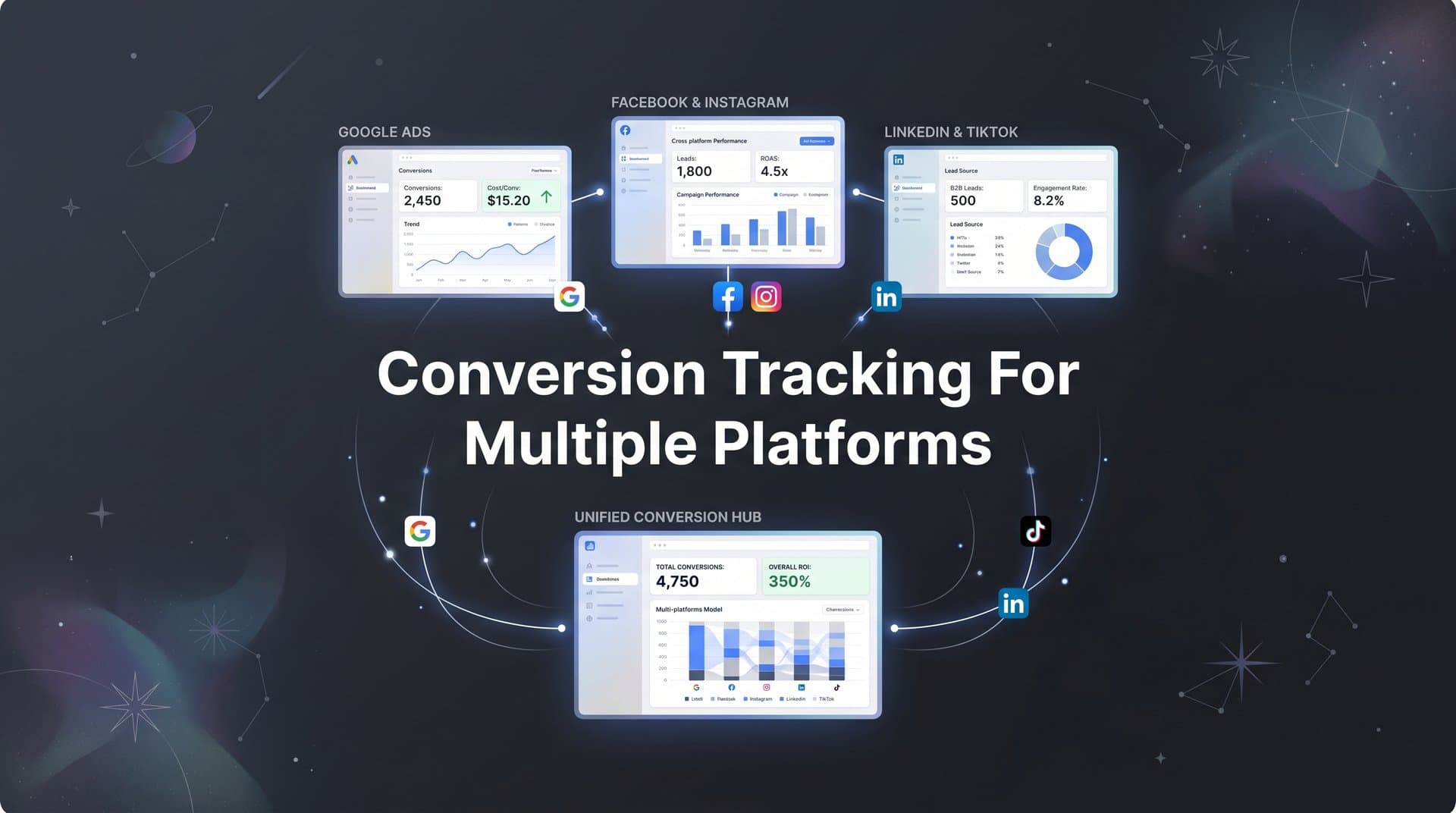
Cross-platform conversion tracking tools solve this by pulling your data into a single, unified view. Instead of trusting each platform's self-reported numbers, you get an independent source of truth that shows the real customer journey from first click to closed deal.
We evaluated dozens of options and narrowed the list down to the tools that genuinely stand out for cross-platform tracking accuracy, server-side capabilities, attribution flexibility, and overall value. Whether you are a solo marketer, an agency juggling multiple client accounts, or an in-house team scaling paid campaigns, there is a tool on this list that fits your workflow.
1. Cometly
Best for: Marketing teams and agencies that need accurate, AI-powered attribution across all major ad platforms.
Cometly is an AI-powered marketing attribution platform that tracks conversions across every ad channel, connects to your CRM, and syncs enriched conversion data back to ad platforms to improve algorithmic optimization.
 9 Best Conversion Tracking Tools for Multiple Platforms in 2026
Where This Tool Shines
Cometly's biggest strength is its ability to close the loop between ad spend and actual revenue. Rather than stopping at click-level data, it connects ad interactions to CRM events so you can see which campaigns are generating real customers, not just clicks or form fills that never convert downstream.
Its Conversion Sync feature feeds enriched event data back to Meta, Google, and other platforms, which helps ad algorithms optimize more effectively. Combined with server-side tracking that bypasses browser limitations and iOS restrictions, Cometly gives you a more complete and accurate picture than native platform pixels alone.
Key Features
Server-Side Tracking: Captures conversion data at the server level, bypassing browser-based limitations caused by ad blockers and privacy updates.
Multi-Touch Attribution: Tracks the full customer journey across Meta, Google, TikTok, LinkedIn, and more, assigning credit across all touchpoints.
Conversion Sync: Sends enriched, conversion-ready events back to ad platforms to improve targeting and algorithmic optimization.
AI-Powered Recommendations: Surfaces insights about top-performing ads and campaigns, helping you identify where to scale spend with confidence.
CRM Integration: Connects ad clicks to downstream revenue events in your CRM, giving you a true picture of which ads drive customers.
Best For
Cometly is well-suited for growth-focused marketing teams, performance agencies, and SaaS or DTC businesses running paid campaigns across multiple channels who want attribution that connects directly to revenue, not just surface-level conversion events.
Pricing
Custom pricing based on ad spend. Contact Cometly or request a demo to get a quote tailored to your account size and needs.
2. Triple Whale
Best for: Shopify-based ecommerce brands that want centralized ad performance and creative analytics.
Triple Whale is an ecommerce analytics and attribution platform built primarily for Shopify brands, offering pixel tracking, creative analytics, and a centralized dashboard for ad performance.
 7 Best Funnel.io Alternatives for Marketing Data Analytics in 2026
Where This Tool Shines
Triple Whale was built with the Shopify ecosystem in mind, and that focus shows. Its first-party pixel integrates tightly with Shopify stores, giving brands server-side tracking that holds up better against iOS privacy changes than native platform pixels. The creative analytics layer is particularly useful for teams running a lot of ad variations across Meta and TikTok.
The post-purchase survey feature adds a self-reported attribution layer, which can be surprisingly valuable for capturing channels that are hard to track digitally, like word-of-mouth or podcast ads.
Key Features
First-Party Pixel: Shopify-native pixel with server-side tracking for more reliable conversion capture.
Creative Analytics: Measures performance by ad creative across platforms to identify what resonates with your audience.
Cohort Analysis: Tracks customer lifetime value and repeat purchase behavior over time.
Post-Purchase Survey Attribution: Collects self-reported channel data directly from customers at checkout.
Best For
Triple Whale is a strong fit for Shopify DTC brands, particularly those spending meaningfully on Meta and TikTok who want creative-level insights alongside attribution data. It is less suited for non-Shopify businesses or B2B lead generation.
Pricing
Starts around $100/month and scales based on store revenue. Higher tiers unlock additional analytics and features.
3. Hyros
Best for: High-ticket offers, info products, and coaching businesses with long or complex sales funnels.
Hyros is an attribution and ad tracking platform designed for businesses with long sales cycles, multi-step funnels, and phone-based sales processes where standard pixel tracking falls short.
 7 Best Northbeam Alternatives for Small Business in 2026
Where This Tool Shines
Hyros excels in scenarios where the gap between an ad click and a conversion can span days or weeks. It tracks touchpoints across extended attribution windows, which is critical for high-ticket offers where a prospect might see an ad, consume content, attend a webinar, and then book a call before converting. Most standard attribution tools miss large portions of this journey.
The call tracking integration is a genuine differentiator for businesses that close sales over the phone. Hyros can tie a phone-based conversion back to the original ad source, giving sales-driven teams attribution data that other platforms simply cannot provide.
Key Features
Long-Funnel Attribution: Tracks touchpoints across weeks or months, suited for extended sales cycles.
Call Tracking Integration: Attributes phone-based sales conversions back to the originating ad source.
AI Optimization Layer: Sends conversion data back to ad platforms to improve algorithmic targeting.
Deep Funnel Tracking: Follows users through multi-step processes including webinars, application forms, and sales calls.
Best For
Hyros is best for coaches, course creators, high-ticket agencies, and info product businesses where conversions happen through complex, multi-step funnels rather than simple ecommerce checkout flows.
Pricing
Starts around $99/month, with higher tiers for larger ad spend. Pricing scales based on tracked events and monthly ad budget.
4. Northbeam
Best for: Data-driven ecommerce and DTC brands that want to combine multi-touch attribution with media mix modeling.
Northbeam is an advanced attribution platform that blends multi-touch attribution with media mix modeling, giving brands a more holistic view of marketing performance and incrementality.
 9 Best Ad Tracking Software Solutions After iOS Privacy Updates in 2026
Where This Tool Shines
What sets Northbeam apart is its willingness to combine methodologies. Rather than forcing you to choose between MTA and MMM, it layers them together so you get granular channel-level attribution alongside broader modeling insights. This is particularly valuable when you are trying to understand the true incremental lift from a channel rather than just its reported conversions.
The machine learning models improve over time as they ingest more of your historical data, which means the platform becomes more accurate the longer you use it. For brands with meaningful ad spend, that compounding accuracy is a real advantage.
Key Features
Blended MTA and MMM: Combines multi-touch attribution and media mix modeling for a more complete performance picture.
Incrementality Testing: Measures the true lift generated by campaigns beyond what would have happened organically.
Machine Learning Models: Attribution accuracy improves over time as the system learns from your data.
Budget Optimization Recommendations: Surfaces cross-channel spend recommendations based on modeled performance.
Best For
Northbeam is designed for established DTC and ecommerce brands spending at least $50,000 per month on advertising. It is overkill for smaller budgets but highly valuable for brands at scale who need sophisticated measurement beyond standard MTA.
Pricing
Custom pricing. Typically positioned for brands with significant monthly ad spend. Contact Northbeam for a tailored quote.
5. Rockerbox
Best for: Mid-market and enterprise brands that need attribution across both digital and offline marketing channels.
Rockerbox is an omnichannel attribution platform that tracks performance across digital, TV, podcast, direct mail, and other offline channels, giving brands a unified view of their full marketing mix.
 9 Best Attribution Software for Performance Marketers in 2026
Where This Tool Shines
Rockerbox fills a gap that most digital-first attribution tools ignore: offline channels. If your marketing mix includes connected TV, linear TV, podcast sponsorships, or direct mail alongside your digital campaigns, Rockerbox can bring all of that data into a single attribution view. That breadth is rare and genuinely useful for brands running integrated campaigns.
Its deduplication engine is another standout feature. By preventing the same conversion from being counted multiple times across channels, it gives you cleaner data and more reliable ROAS calculations across your entire media mix.
Key Features
Omnichannel Tracking: Covers digital, TV, podcast, direct mail, and other offline channels in one unified view.
Deduplication Engine: Prevents double-counting conversions across channels and platforms.
New Customer Acquisition Reporting: Distinguishes between new customer conversions and returning customer purchases.
Flexible Attribution Windows: Supports custom attribution windows and model comparison across channels.
Best For
Rockerbox is best suited for mid-market and enterprise brands running both digital and offline marketing who need a single, deduplicated view of cross-channel performance. It is less suited for businesses focused exclusively on digital channels.
Pricing
Custom pricing. Generally positioned for mid-market and enterprise brands. Contact Rockerbox for a quote based on your marketing mix and data volume.
6. Segment (Twilio)
Best for: Engineering-forward teams that need a flexible data infrastructure layer for collecting and routing event data across tools.
Segment is a customer data platform that collects, cleans, and routes event data to hundreds of downstream tools, serving as foundational tracking infrastructure for cross-platform measurement.
 8 Best Attribution-Focused Platforms vs Segment: Which Approach Fits Your Marketing Stack in 2026
Where This Tool Shines
Segment is not a traditional attribution tool. Think of it as the plumbing that makes everything else work better. By giving you a single API to collect events from your website, app, and servers, and then routing that data to 400+ integrations, it eliminates the need to implement separate tracking snippets for every tool in your stack.
Its identity resolution capabilities are particularly powerful for cross-device tracking. When a user interacts with your brand across multiple devices or sessions, Segment stitches those interactions into a unified profile, which makes downstream attribution and analytics far more accurate.
Key Features
Single API Event Collection: Collects tracking events once and routes them to 400+ downstream integrations automatically.
Real-Time Identity Resolution: Stitches user interactions across devices and sessions into unified profiles.
Data Quality Governance: Protocols feature enforces schema standards to prevent bad data from polluting downstream tools.
Audiences and Computed Traits: Builds dynamic audience segments based on behavioral data for advanced targeting.
Best For
Segment is ideal for product-led growth companies, SaaS businesses, and technically sophisticated marketing teams that want a flexible, scalable data infrastructure layer. It requires engineering resources to implement and maintain effectively.
Pricing
Free tier available for smaller data volumes. Team plan starts at $120/month. Business plan is custom pricing based on usage and integrations.
7. Google Analytics 4
Best for: Marketers who need free, reliable event-based tracking with native Google Ads integration.
Google Analytics 4 is Google's free analytics platform featuring event-based tracking, cross-device measurement, and native integration with Google Ads and other Google marketing products.
 11 Best Marketing Analytics Tools to Track and Optimize Campaign Performance in 2026
Where This Tool Shines
The obvious advantage of GA4 is that it is free and deeply integrated with the Google ecosystem. If a significant portion of your ad spend is on Google Ads, the native connection between GA4 and your ad account gives you conversion data, audience insights, and attribution reporting without any additional cost or complex setup.
GA4's data-driven attribution model is a step up from the old last-click defaults, and its BigQuery export opens up powerful custom analysis options for teams with data resources. For businesses just getting started with cross-platform tracking, GA4 is often the right first layer to build on.
Key Features
Free Event-Based Tracking: Tracks custom conversion events across your website and app with flexible definitions.
Cross-Device Measurement: Follows user journeys across devices using Google's identity graph.
Data-Driven Attribution: Applies machine learning to distribute conversion credit across touchpoints within the Google ecosystem.
BigQuery Export: Exports raw event data to BigQuery for custom analysis and data warehousing.
Best For
GA4 is a strong fit for businesses of all sizes, particularly those heavily invested in Google Ads. It is a solid baseline tool but has limitations for tracking non-Google channels and long, complex multi-platform journeys without additional configuration.
Pricing
Free for standard use. GA4 360 (enterprise version) starts at approximately $50,000 per year and includes higher data limits and SLA guarantees.
8. Wicked Reports
Best for: Subscription businesses and lead generation companies that need attribution tied to long-term customer value.
Wicked Reports is a CRM-connected attribution platform that focuses on tying ad spend to long-term customer revenue, with deep integrations into popular CRM and email marketing platforms.
Where This Tool Shines
Most attribution tools optimize for the initial conversion event. Wicked Reports goes further by connecting ad spend to what those customers actually generate in lifetime revenue. For subscription businesses or lead generation companies where initial conversion value does not reflect long-term customer worth, this perspective changes how you evaluate channel performance entirely.
The depth of its CRM integrations with platforms like HubSpot, Keap, and ActiveCampaign is a genuine strength. It can pull in email engagement, lead status changes, and recurring revenue events to build a more complete attribution picture than pixel-only tools can provide.
Key Features
LTV-Based Attribution: Connects ad spend to long-term customer revenue, not just initial conversion value.
Deep CRM Integrations: Integrates with HubSpot, Keap, ActiveCampaign, and other popular CRM and email platforms.
Email and Organic Attribution: Tracks email and organic channel contributions alongside paid ad performance.
Recurring Revenue Reporting: Cohort-based reporting that surfaces the long-term value of customers acquired through each channel.
Best For
Wicked Reports is best suited for subscription businesses, membership sites, and B2B lead generation companies where customer lifetime value matters more than immediate conversion metrics. It is less suited for simple ecommerce businesses with one-time purchase models.
Pricing
Starts around $250/month and scales based on the number of contacts and integrations. Higher tiers unlock additional CRM connections and reporting features.
9. ClickMagick
Best for: Solo marketers, affiliates, and small teams that need straightforward click and conversion tracking without enterprise overhead.
ClickMagick is a link tracking and conversion attribution tool built for individual marketers and small teams who need reliable tracking across funnels and ad platforms without complex setup or enterprise pricing.
Where This Tool Shines
ClickMagick keeps things simple without sacrificing the features that matter most for performance marketers. Its click-level tracking with cross-device attribution handles the core use case well, and the built-in bot and click fraud filtering is a practical safeguard for anyone running paid traffic who wants to ensure their data reflects real human activity.
For affiliate marketers and solo operators managing multi-step funnels, the funnel tracking feature provides visibility into where prospects drop off between steps, which is often the most actionable data for improving conversion rates. The integration with major ad platforms and landing page builders keeps setup straightforward.
Key Features
Click-Level Tracking: Tracks individual clicks with cross-device attribution to follow users across sessions.
Bot and Fraud Filtering: Automatically filters non-human traffic to keep your conversion data clean and reliable.
Funnel Tracking: Tracks multi-step conversion paths to identify drop-off points across your funnel.
Ad Platform Integration: Connects with major ad platforms and popular landing page builders for straightforward implementation.
Best For
ClickMagick is ideal for affiliate marketers, solo performance marketers, and small teams that want reliable tracking without the complexity or cost of enterprise attribution platforms. It is not designed for large teams or sophisticated multi-channel attribution at scale.
Pricing
Starter plan begins at $49/month. Standard plan is $99/month with higher click volumes and additional features.
Choosing the Right Cross-Platform Tracking Tool
The right tool depends heavily on where you are in your growth journey, what your marketing mix looks like, and how much complexity you are prepared to manage.
If you are running paid campaigns across multiple platforms and need a single, accurate source of truth that connects ad spend to real revenue, Cometly is the strongest all-around choice. Its server-side tracking, multi-touch attribution, and Conversion Sync capabilities address the core challenges that make cross-platform tracking difficult, and the AI-powered recommendations give you a clear path from data to action.
For Shopify DTC brands, Triple Whale offers a purpose-built experience with strong creative analytics. For high-ticket funnels with phone-based sales, Hyros handles the long attribution windows and call tracking that most tools miss. If you need offline channel attribution alongside digital, Rockerbox stands out. And if you are just getting started or primarily running Google Ads, Google Analytics 4 is a free, capable baseline to build from.
Here is a quick decision guide:
Multi-platform attribution with AI recommendations: Cometly
Shopify ecommerce with creative analytics: Triple Whale
High-ticket funnels and phone sales: Hyros
Enterprise-scale with MMM and incrementality: Northbeam
Offline and online channel mix: Rockerbox
Data infrastructure and routing: Segment
Free tracking within the Google ecosystem: GA4
Subscription and LTV-based attribution: Wicked Reports
Solo marketers and affiliates: ClickMagick
The days of trusting each platform's self-reported conversion numbers are behind us. Privacy changes, browser limitations, and cross-device journeys have made independent, server-side tracking a necessity rather than a nice-to-have. The tools on this list represent the best options available in 2026 for getting accurate, actionable conversion data across every channel you run.
Ready to stop guessing and start scaling with confidence? Get your free demo of Cometly and see exactly which ads and channels are driving your revenue across every platform you run.