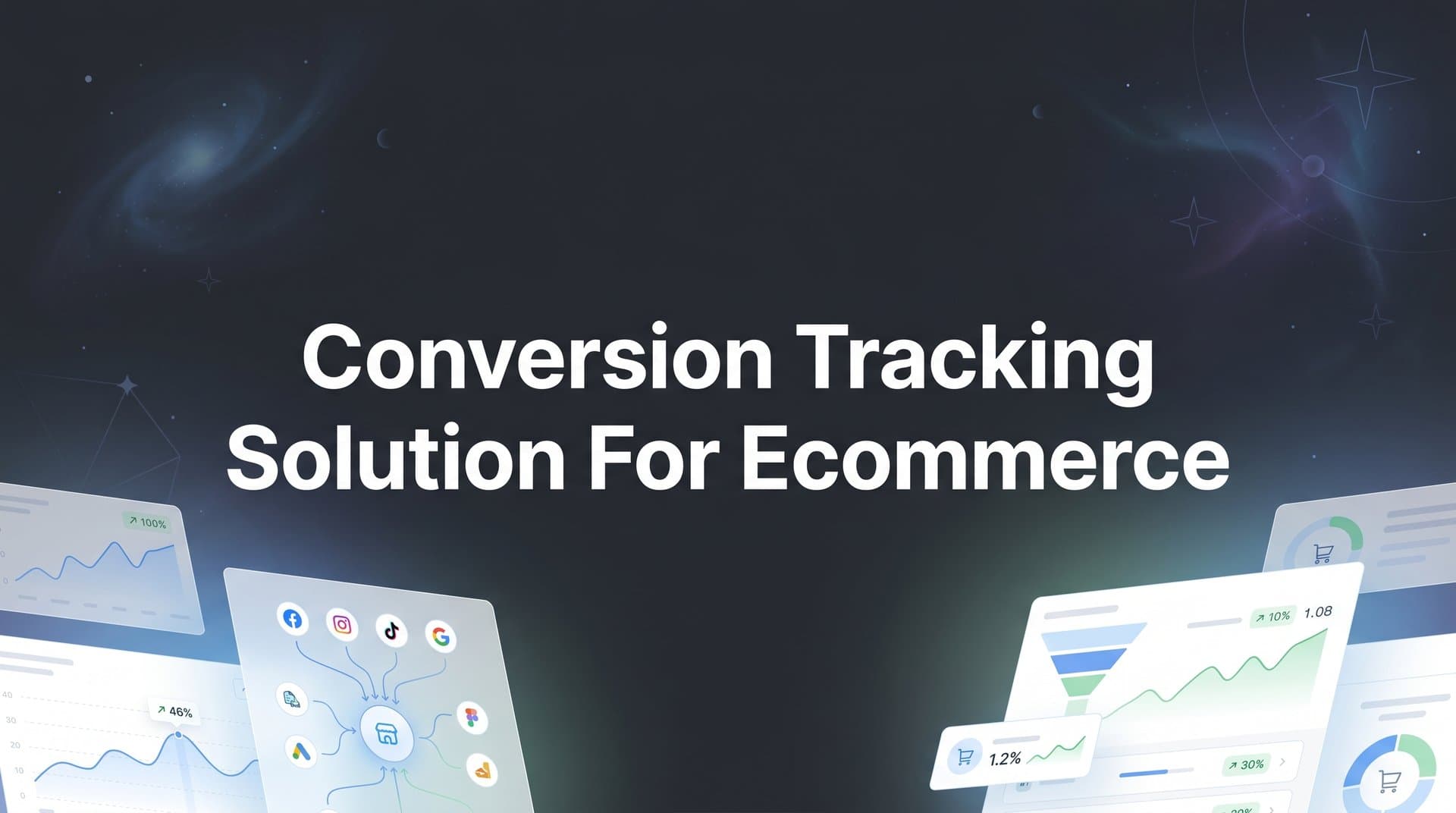
Running paid ads without accurate conversion tracking is like driving at night without headlights. You're moving, but you have no idea what's ahead or whether you're headed in the right direction. For ecommerce brands, this problem has grown more complex in recent years. Cookie deprecation, iOS privacy updates, and multi-device shopping journeys have created significant gaps between what ad platforms report and what's actually happening in your store.
The right conversion tracking solution bridges that gap. It captures the full customer journey from first ad click to completed purchase, syncs accurate data back to your ad platforms, and gives you the clarity to make smarter budget decisions. The best tools in this space combine server-side tracking, multi-touch attribution, platform integrations, and real-time reporting to give you a complete picture of what's actually driving revenue.
Whether you're scaling a Shopify store, managing a complex omnichannel strategy, or trying to understand which campaigns are driving lifetime value, there's a solution built for your needs. Here are the top conversion tracking solutions for ecommerce brands in 2026.
1. Cometly
Best for: Ecommerce brands that want AI-powered attribution and accurate cross-platform conversion tracking
Cometly is an AI-powered marketing attribution platform that connects your ad platforms, CRM, and website to track every conversion with accuracy and clarity.
 9 Best Conversion Tracking Solutions for Ecommerce in 2026
Where This Tool Shines
Cometly's server-side tracking addresses one of the most persistent problems in ecommerce advertising: data loss from browser-based tracking limitations. By capturing conversion events server-side, Cometly ensures that purchases, leads, and key actions are recorded accurately, even when users have ad blockers enabled or are browsing in private mode.
What sets Cometly apart is its Conversion Sync feature, which feeds enriched conversion data back to Meta, Google, TikTok, and other ad platforms. This means the algorithms powering your ad campaigns get better signals, which leads to improved targeting and optimization over time. Layer in AI-powered recommendations and an AI Chat interface for instant data analysis, and Cometly becomes a genuine decision-making tool, not just a reporting dashboard.
Key Features
Server-Side Tracking: Captures conversion data accurately across platforms, bypassing browser-based limitations caused by iOS changes and cookie restrictions.
Conversion Sync: Sends enriched, conversion-ready events back to Meta, Google, TikTok, and more to improve ad platform targeting and optimization.
Multi-Touch Attribution: Flexible attribution models let you see which touchpoints across the customer journey are actually contributing to revenue.
AI-Powered Recommendations: Identifies high-performing ads and campaigns across every channel so you can scale with confidence.
AI Chat for Data Analysis: Ask questions about your campaign data in plain language and get instant, actionable insights without digging through dashboards.
Best For
Cometly is built for digital marketers, in-house marketing teams, and agencies managing paid advertising across multiple platforms. It's particularly valuable for ecommerce brands that are frustrated by inaccurate in-platform reporting and want a single source of truth for attribution and campaign performance.
Pricing
Custom pricing based on ad spend. A free demo is available to explore the platform before committing.
2. Triple Whale
Best for: Shopify-native ecommerce brands that want centralized ad analytics and customer journey tracking
Triple Whale is an ecommerce analytics and attribution platform built primarily for Shopify brands, offering a unified dashboard for tracking ad performance across channels.
 7 Best Funnel.io Alternatives for Marketing Data Analytics in 2026
Where This Tool Shines
Triple Whale has become a go-to tool for direct-to-consumer Shopify brands because of how seamlessly it integrates with the platform. Setup is fast, and the dashboard pulls in data from your ad accounts, Shopify store, and customer journey events in one place. The creative analytics feature is particularly useful for teams that run a high volume of ad variations, as it helps you quickly identify which creatives are actually driving purchases.
The benchmarking feature is a nice addition for brands that want context around their performance metrics. Comparing your ROAS or conversion rate against industry peers can help you set realistic targets and spot areas where you're underperforming relative to similar businesses.
Key Features
Deep Shopify Integration: One-click setup pulls in store data, orders, and customer events without complex configuration.
First-Party Pixel: Server-side tracking improves data accuracy and reduces reliance on third-party cookies.
Creative Analytics: Breaks down ad performance by creative asset so you can double down on what's working.
Customer Journey Mapping: Visualizes the touchpoints customers interact with before converting.
Industry Benchmarking: Compares your performance metrics against peers in your category.
Best For
Shopify-based DTC brands that want fast setup and a clean, centralized view of their ad performance. Especially useful for teams managing multiple ad channels and creative testing simultaneously.
Pricing
Starts around $100/month and scales based on revenue. Plans are tiered to accommodate growing brands.
3. Northbeam
Best for: High-spend ecommerce brands that need machine learning-driven attribution and media mix modeling
Northbeam is a data science-driven attribution platform that uses machine learning to deliver multi-touch attribution and media mix modeling for ecommerce brands with significant advertising budgets.
 9 Best Conversion Tracking Solutions for Ecommerce in 2026
Where This Tool Shines
Northbeam is built for brands that have outgrown simpler attribution tools and need more sophisticated modeling to understand how their marketing budget is working. Its machine learning models analyze conversion paths across channels and apply statistical methods to assign credit more accurately than rule-based attribution models can.
The media mix modeling capability is particularly powerful for brands spending heavily across multiple channels. Rather than just reporting on what happened, it helps you model how shifting budget between channels would likely impact overall revenue, giving your media buying team a data-driven foundation for planning decisions.
Key Features
Machine Learning Attribution: Uses ML models to assign conversion credit across touchpoints more accurately than traditional rule-based methods.
Media Mix Modeling: Helps forecast the revenue impact of budget allocation decisions across channels.
Customizable Attribution Windows: Adjust lookback windows and attribution models to match your actual sales cycle.
Cross-Channel Dashboards: Unified view of performance across all paid and organic channels.
Incrementality Testing: Measures the true lift driven by specific campaigns or channels.
Best For
Ecommerce brands spending $50,000 or more per month on advertising that need advanced attribution modeling and are ready to invest in data science-level insights to guide their media strategy.
Pricing
Custom pricing. Northbeam is generally positioned for enterprise and high-growth ecommerce brands with substantial ad budgets.
4. Rockerbox
Best for: Ecommerce brands with diversified omnichannel marketing strategies that include offline channels
Rockerbox is an omnichannel marketing attribution platform that unifies digital and offline conversion tracking for ecommerce brands running campaigns across a wide range of channels.
 9 Best Conversion Tracking Solutions for Ecommerce in 2026
Where This Tool Shines
Most attribution tools focus exclusively on digital channels, but Rockerbox extends its reach to include TV, direct mail, podcasts, and other offline touchpoints. For ecommerce brands that have diversified beyond paid social and search, this is a meaningful differentiator. Rockerbox creates a unified marketing data warehouse that brings all your channel data together, making it easier to compare performance across very different types of media.
The new customer versus returning customer segmentation is another standout feature. Understanding whether a campaign is acquiring net-new customers or re-engaging existing ones has a significant impact on how you evaluate its true ROI, and Rockerbox makes this distinction easy to see at a glance.
Key Features
Offline Channel Attribution: Tracks conversions from TV, direct mail, podcast sponsorships, and other non-digital channels alongside digital campaigns.
Unified Marketing Data Warehouse: Centralizes data from all marketing channels into a single, queryable source.
Multi-Touch and MMM: Combines multi-touch attribution with marketing mix modeling for a comprehensive view.
New vs. Returning Customer Segmentation: Separates acquisition performance from retention performance at the campaign level.
Broad Platform Integrations: Connects with major ad platforms, CRMs, and ecommerce platforms.
Best For
Mid-market to enterprise ecommerce brands running campaigns across both digital and traditional media channels who need a single platform to unify and compare performance across all of them.
Pricing
Custom pricing based on the number of channels and data volume. Contact Rockerbox directly for a quote.
5. Elevar
Best for: Shopify stores that need to fix tracking accuracy at the data infrastructure level
Elevar is a server-side tracking and data layer platform focused on ensuring clean, complete conversion data flows from Shopify stores to ad platforms and analytics tools.
 9 Best Ad Tracking Platforms for Shopify in 2026
Where This Tool Shines
Elevar approaches the conversion tracking problem differently from most tools on this list. Rather than being primarily an analytics or attribution platform, it functions as the tracking infrastructure layer that makes all your other tools work correctly. If your Meta pixel is missing purchases, your Google Ads conversion data is inconsistent, or your GA4 ecommerce events are incomplete, Elevar is designed to fix those problems at the source.
The real-time monitoring feature is particularly useful for ecommerce teams that have experienced silent tracking failures in the past. Elevar alerts you when tracking events stop firing correctly, so you catch data gaps before they compound into weeks of bad attribution data.
Key Features
Server-Side Tagging: Routes conversion events server-side to Google, Meta, TikTok, and other platforms for more accurate data delivery.
Data Layer Enrichment: Adds customer and order data to events for richer, more useful conversion signals.
Consent Management: Handles privacy consent requirements to keep your tracking compliant with user preferences.
Real-Time Tracking Monitoring: Alerts you when tracking issues are detected so you can fix them quickly.
Pre-Built Ecommerce Integrations: Ready-to-use integrations with Shopify and popular ecommerce tools reduce setup complexity.
Best For
Shopify store owners and ecommerce marketing teams who suspect their tracking data is inaccurate and want to fix the underlying infrastructure before layering on attribution analysis.
Pricing
Starts around $150/month and scales based on store order volume. Plans are designed to grow with your store.
6. Hyros
Best for: High-ticket ecommerce and info-product businesses with longer sales cycles
Hyros is an ad tracking and attribution platform designed for businesses where the path from first click to purchase spans days, weeks, or includes a phone call or consultation.
 7 Best Northbeam Alternatives for Small Business in 2026
Where This Tool Shines
Hyros was built with a specific buyer persona in mind: businesses selling high-ticket products or services where the standard last-click attribution model completely misrepresents how customers actually convert. Its AI-driven attribution is designed to handle long, complex sales cycles where a customer might see an ad, join an email list, attend a webinar, and then call a sales rep before purchasing.
The call tracking integration is what truly differentiates Hyros in this space. For ecommerce brands where phone orders or consultations are part of the conversion process, connecting those offline conversion events back to the original ad click is something most platforms struggle to do well. Hyros makes this a core feature rather than an afterthought.
Key Features
AI-Driven Attribution: Models attribution across long, multi-step sales cycles more accurately than rule-based approaches.
Call Tracking Integration: Connects phone call conversions back to the originating ad for complete attribution visibility.
Print Tracking: Attributes conversions from direct mail campaigns alongside digital channels.
Customizable Attribution Models: Adjust how credit is assigned to match your actual sales process.
Direct Ad Platform Integrations: Sends conversion data directly to major ad platforms to improve campaign optimization.
Best For
High-ticket ecommerce brands, coaching businesses, and info-product companies where purchases involve longer consideration periods and may include phone or consultation-based sales steps.
Pricing
Starts around $199/month. Higher tiers are available for brands with larger ad spends and more complex tracking needs.
7. SegMetrics
Best for: Ecommerce brands focused on connecting marketing spend to customer lifetime value
SegMetrics is an attribution and funnel analytics platform that ties marketing spend to long-term customer value rather than just initial conversion events.
Where This Tool Shines
Most attribution tools optimize for the first purchase. SegMetrics is built for brands that understand the real measure of a campaign's success is the total revenue it generates over the lifetime of the customers it acquires. By connecting ad spend data to CRM and email platform data, SegMetrics lets you see which acquisition channels are bringing in high-LTV customers versus one-time buyers.
The cohort analysis feature adds another layer of depth. You can segment customers by acquisition source, first product purchased, or campaign, and then track how their purchasing behavior evolves over time. This kind of analysis is invaluable for brands that rely on repeat purchases or subscription revenue to drive profitability.
Key Features
Lifetime Value Attribution: Connects marketing channel data to long-term customer revenue, not just first-purchase conversions.
Full-Funnel Analytics: Tracks the customer journey from initial ad click through repeat purchases and retention events.
CRM and Email Integrations: Deep integrations with CRM platforms and email tools to pull in post-purchase customer data.
Cohort Analysis: Groups customers by acquisition source or campaign to compare long-term revenue performance.
Multi-Touch Attribution with LTV Weighting: Assigns attribution credit with an emphasis on which touchpoints drive the most valuable customers.
Best For
Ecommerce brands with strong email marketing programs or subscription components that want to optimize acquisition spending based on customer lifetime value rather than short-term conversion metrics.
Pricing
Starts around $175/month and scales based on the number of contacts in your database.
8. Wicked Reports
Best for: Email-driven ecommerce brands that want first-party data attribution tied to CRM revenue
Wicked Reports is a first-party data attribution platform with deep CRM and email integrations, built for ecommerce brands that want to understand how paid acquisition drives long-term customer revenue.
Where This Tool Shines
Wicked Reports takes a first-party data approach to attribution, which makes it particularly resilient to the tracking challenges created by cookie deprecation and iOS privacy changes. By anchoring attribution to CRM data and email engagement rather than browser cookies, it maintains accurate tracking even as third-party data becomes less reliable.
The cohort-based ROI reporting is a standout feature for brands that run a mix of paid acquisition and email nurture sequences. You can see exactly how much revenue a specific ad campaign generated not just at the point of first purchase, but across the full relationship with the customers it brought in, including revenue from email follow-ups and repeat purchases.
Key Features
First-Party Data Collection: Uses CRM and email data as the foundation for attribution, reducing dependence on browser cookies.
Deep CRM and Email Integrations: Connects with major CRM platforms and email marketing tools to pull in complete customer revenue data.
Multi-Touch Attribution with Revenue Focus: Attributes revenue across the full customer journey with an emphasis on actual dollars generated.
Cohort-Based ROI Reporting: Shows the total revenue generated by customer cohorts acquired through specific campaigns or channels.
Automated Reporting and Alerts: Daily reports and automated alerts keep your team informed without manual dashboard checks.
Best For
Ecommerce brands with established email marketing programs and CRM data that want to connect paid ad spend directly to long-term customer revenue in a cookieless-friendly way.
Pricing
Starts around $250/month. Enterprise pricing is available for larger brands with higher data volumes.
9. Google Analytics 4
Best for: Ecommerce brands that need a free baseline conversion tracking solution with strong Google Ads integration
Google Analytics 4 is Google's free analytics platform with built-in ecommerce event tracking, enhanced measurement capabilities, and deep integration with the Google advertising ecosystem.
Where This Tool Shines
GA4 is the starting point for most ecommerce brands because it's free, widely supported, and deeply integrated with Google Ads. Its ecommerce event tracking covers the full purchase funnel, from product views and add-to-cart events through checkout steps and completed purchases. For brands running Google Ads as a primary channel, the native audience building and conversion export features create a tight feedback loop between analytics data and ad optimization.
The BigQuery integration is where GA4 becomes genuinely powerful for data-savvy teams. Exporting raw event data to BigQuery enables custom analysis that goes well beyond what's possible in the standard GA4 interface, including building custom attribution models and joining analytics data with CRM or order management data.
Key Features
Free Ecommerce Event Tracking: Tracks purchases, add-to-cart events, checkout steps, and product views out of the box.
Enhanced Measurement: Automatically captures key user interactions without requiring custom event code for every action.
BigQuery Integration: Exports raw event data for advanced custom analysis and joining with other data sources.
Audience Building and Google Ads Export: Creates remarketing and lookalike audiences that sync directly to Google Ads campaigns.
Conversion Path and Model Comparison: Shows the paths customers take before converting and lets you compare different attribution models side by side.
Best For
Ecommerce brands at any stage that want a free, reliable baseline for conversion tracking, especially those running Google Ads as a primary acquisition channel. Also suitable as a complementary tool alongside more specialized attribution platforms.
Pricing
Free for standard use. GA4 360 is available for enterprise brands with custom pricing and additional features.
Which Conversion Tracking Solution Is Right for You?
The best conversion tracking solution for your ecommerce business depends on your platform stack, ad spend level, channel mix, and what question you're ultimately trying to answer with your data. Here's a quick guide to help you narrow it down.
Best overall for cross-platform accuracy: Cometly stands out for brands that want AI-powered attribution, server-side tracking, and the ability to feed better conversion data back to their ad platforms. Its combination of multi-touch attribution, Conversion Sync, and AI recommendations makes it a strong choice for growth-focused ecommerce teams running ads across multiple channels.
Best for Shopify-native brands: Triple Whale offers the fastest setup and most intuitive experience for Shopify stores. Elevar is the better choice if your priority is fixing tracking accuracy at the infrastructure level before worrying about attribution modeling.
Best for high-spend advanced modeling: Northbeam is built for brands spending heavily across multiple channels that need machine learning-driven attribution and media mix modeling to guide large budget decisions.
Best for omnichannel strategies: Rockerbox is the clear choice if your marketing mix includes offline channels like TV, direct mail, or podcast sponsorships alongside digital campaigns.
Best for high-ticket and longer sales cycles: Hyros is purpose-built for businesses where the path to purchase involves multiple touchpoints over days or weeks, including phone-based conversions.
Best for lifetime value optimization: SegMetrics and Wicked Reports both excel at connecting ad spend to long-term customer revenue. SegMetrics works well for cohort-based LTV analysis, while Wicked Reports is particularly strong for email-driven funnels with deep CRM integration.
Best free option: Google Analytics 4 remains the essential baseline for any ecommerce brand, especially those running Google Ads. It pairs well with any of the specialized tools on this list.
If you're serious about understanding which ads are truly driving revenue across every platform and want AI-powered insights to help you scale the campaigns that work, Get your free demo of Cometly today. See firsthand how server-side tracking and Conversion Sync can give your ad platforms the data they need to optimize more effectively, and give you the clarity to make smarter budget decisions.