
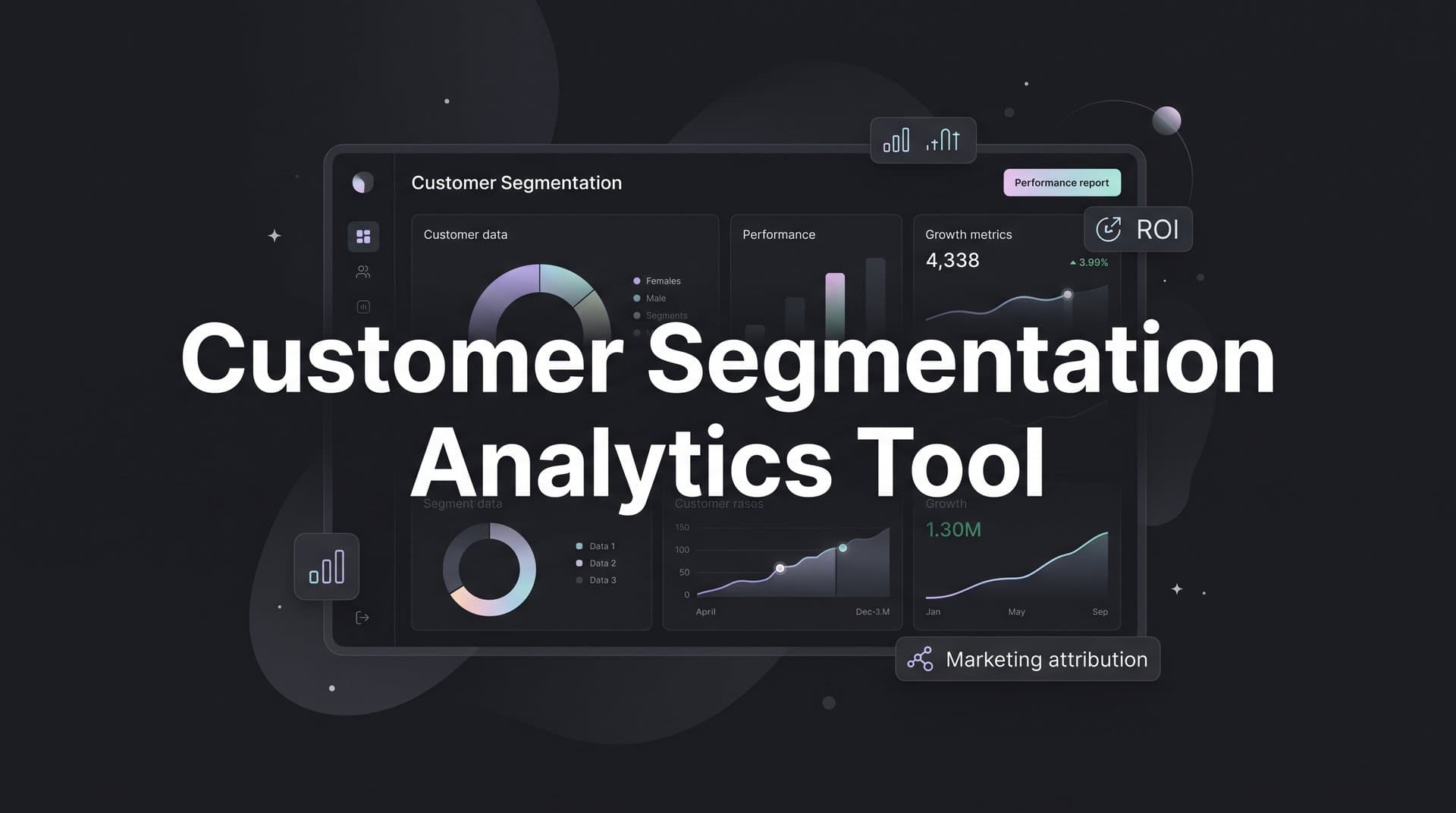
If you are running paid ads or managing a B2B SaaS marketing funnel, knowing who your customers are is only half the battle. The other half is understanding which segments are actually driving revenue. Customer segmentation analytics tools help you break down your audience by behavior, firmographics, campaign source, and lifecycle stage so you can allocate budget where it converts.
Not all tools are built the same. Some are designed for product analytics, others for CRM segmentation, and a few are purpose-built for connecting ad spend to segment-level revenue. This list covers nine tools worth evaluating in 2026, selected based on depth of segmentation data, integration ecosystem, attribution capabilities, and fit for B2B SaaS workflows.
1. Cometly
Best for: B2B SaaS teams connecting paid ad spend to segment-level pipeline and revenue
Cometly is a marketing attribution and analytics platform built specifically for B2B SaaS companies that need to know which audience segments are generating actual revenue, not just clicks.
 9 Best Attribution Platforms for Agencies in 2026
Where This Tool Shines
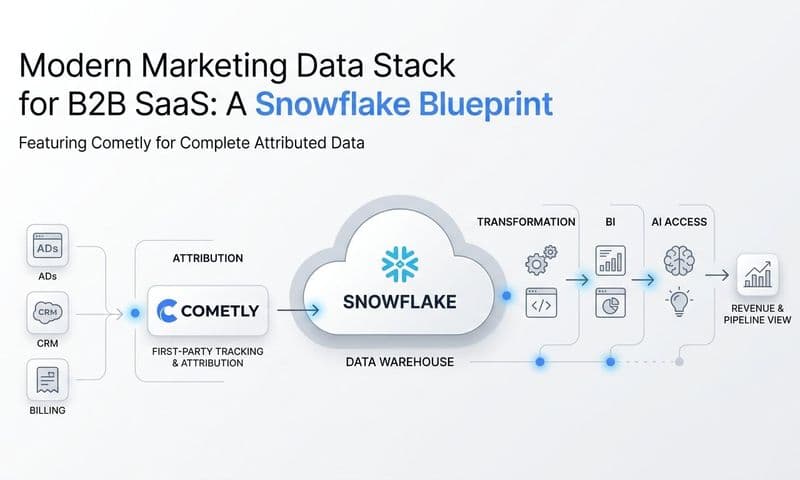
Cometly's core strength is bridging the gap that most analytics tools leave open: connecting your paid acquisition data to CRM events and closed-won revenue. While product analytics tools show what users do inside your product and ad platforms show who clicked, Cometly ties both views together through a full customer journey timeline linked to pipeline and revenue outcomes.
The AI ads manager layer adds another dimension by identifying which audience segments are performing across channels and surfacing scaling recommendations based on actual conversion data. For growth teams managing budget across multiple paid channels, this kind of segment-level attribution is genuinely difficult to replicate with general-purpose tools.
Key Features
Multi-Touch Attribution: Tracks every paid channel touchpoint and maps it to segment-level revenue, giving you a complete picture of which audiences convert across the full funnel.
Server-Side Conversion Tracking: Uses Conversion API integration to capture first-party data accurately, reducing the signal loss that affects browser-based tracking.
AI Ads Manager: Identifies high-performing audience segments across ad channels and recommends scaling decisions based on revenue-linked performance data.
Customer Journey Analytics: Shows every touchpoint from first ad click to closed deal, so you can see how different segments move through your funnel over time.
Revenue Integration: Connects directly with Stripe and CRM data to tie ad spend to pipeline and closed-won revenue by segment, not just lead volume.
70+ Native Integrations: Connects with major CRMs, ad platforms, and billing tools without requiring custom engineering work.
Best For
Cometly is built for B2B SaaS marketing and growth teams running paid campaigns who need attribution-level segmentation. It is particularly valuable for teams that have outgrown ad platform reporting and want a single source of truth connecting ad spend to revenue by audience segment.
Pricing
Paid plans are available. Contact Cometly directly for current pricing details based on your team's volume and integration needs.
2. Segment (by Twilio)
Best for: Engineering-supported teams that need unified customer data infrastructure across many tools
Segment is a leading customer data platform that collects, unifies, and routes customer event data to hundreds of downstream tools.
 9 Best Conversion Tracking Alternatives to Pixels in 2026
Where This Tool Shines
Segment operates as the data infrastructure layer for segmentation. Rather than being a segmentation tool itself, it makes segmentation possible across your entire stack by creating a single, clean source of behavioral and identity data. If your team is sending events to five different tools and getting inconsistent results, Segment solves that problem at the source.
The Profiles feature is particularly strong, unifying cross-device and cross-channel user data into a single record that downstream tools can act on. For teams with the engineering resources to implement it properly, Segment dramatically improves the quality of segmentation across every tool in the stack.
Key Features
Real-Time Event Streaming: Collects behavioral events and routes them to 400+ integrations across analytics, CRM, and advertising tools simultaneously.
Audience Builder: Creates dynamic segments based on behavioral events and user traits that update in real time as data flows through the pipeline.
Unified Profiles: Merges cross-device and cross-channel data into a single customer record accessible across your entire tool stack.
Reverse ETL: Syncs warehouse data back into operational tools so your CRM and ad platforms always reflect your most current segment definitions.
Privacy Controls: Consent management and data governance built into the pipeline, which matters for teams operating across multiple regions.
Best For
Segment is best suited for growth-stage and enterprise B2B SaaS companies with dedicated engineering resources. Teams without technical support will find the implementation overhead significant, but those who invest in it gain a powerful data foundation.
Pricing
Free tier available for up to 1,000 monthly tracked users. Paid plans scale with usage volume and feature requirements.
3. Mixpanel
Best for: Product-led growth teams analyzing in-app behavioral segments and retention cohorts
Mixpanel is a product analytics platform that helps teams understand user behavior through funnel analysis, retention cohorts, and flexible segmentation.
 9 Best Customer Segmentation Analytics Tools in 2026
Where This Tool Shines
Mixpanel's cohort builder is one of the most flexible in the product analytics category. You can define a segment based on any combination of in-app actions and user properties, then immediately see how that cohort behaves across funnels, retention curves, and engagement metrics. For PLG teams, this kind of analysis is essential for identifying which user behaviors predict conversion from free to paid.
The Signal reports feature is worth highlighting because it does something most analytics tools do not: it identifies which specific behaviors correlate most strongly with conversion or churn, rather than leaving you to hypothesize on your own.
Key Features
Cohort Builder: Creates behavioral segments based on any combination of in-app actions and user properties, with immediate cross-report filtering.
Funnel Analysis: Shows exactly where specific segments drop off in your conversion flow, with the ability to compare multiple cohorts side by side.
Retention Charts: Tracks how different segments return to the product over time, broken down by any user or event property.
Signal Reports: Identifies which user behaviors correlate most strongly with conversion or churn within specific segments.
Flexible Filtering: Apply breakdowns across any event or user property without pre-defining your segment structure in advance.
Best For
Mixpanel is ideal for product and growth teams at PLG or hybrid SaaS companies. It is less suited for teams whose primary segmentation need is connecting paid acquisition channels to revenue outcomes.
Pricing
Free plan available for up to 20 million monthly events. Paid plans start at approximately $28/month and scale with data volume and feature needs.
4. Amplitude
Best for: Data-mature enterprise teams needing predictive behavioral segmentation at scale
Amplitude is an enterprise-grade product analytics platform with advanced behavioral segmentation, predictive analytics, and a behavioral graph that identifies patterns across large user populations.
 9 Best Customer Segmentation Analytics Tools in 2026
Where This Tool Shines
Amplitude's behavioral graph is what separates it from most product analytics tools. Rather than just showing you what segments did, it maps relationships between user actions and outcomes across your entire user population, surfacing patterns that would be nearly impossible to find manually. For teams with large datasets and complex product surfaces, this is a meaningful analytical advantage.
The predictive audiences feature adds a forward-looking layer to segmentation. Instead of only analyzing what happened, you can identify users who are likely to convert or churn based on behavioral signals, then act on those predictions across your marketing and product workflows.
Key Features
Behavioral Graph: Maps relationships between user actions and outcomes across segments, revealing non-obvious patterns in large datasets.
Predictive Audiences: Uses machine learning to identify users likely to convert, expand, or churn based on behavioral signals.
Experiment Analysis: Measures how segmentation-driven product or marketing changes affect key metrics across defined cohorts.
Data Governance: Manages event taxonomies at scale, which is essential for enterprise teams with multiple product lines or data sources.
Warehouse-Native Analytics: Runs analysis directly on data in Snowflake, BigQuery, or Databricks without requiring data duplication.
Best For
Amplitude is best suited for enterprise B2B SaaS companies with dedicated data and analytics teams. It is overkill for smaller teams but extremely powerful for organizations with mature data infrastructure and complex segmentation requirements.
Pricing
Starter plan is free. Growth and Enterprise plans are available on request with pricing based on data volume and feature tier.
5. HubSpot
Best for: B2B sales-led teams segmenting contacts and companies within a unified CRM environment
HubSpot is a CRM platform with native marketing segmentation tools that allow teams to build contact and company lists based on CRM properties, deal stage, lifecycle status, and marketing engagement.
 9 Best Customer Segmentation Analytics Tools in 2026
Where This Tool Shines
HubSpot's segmentation is tightly connected to its pipeline data, which is a genuine advantage for sales-led B2B teams. You can build a segment based on lifecycle stage or deal activity, then immediately push that audience to Google, Meta, or LinkedIn for targeted advertising without exporting a CSV or involving engineering. For teams already living in HubSpot, this workflow is remarkably efficient.
Smart lists are the core of HubSpot's segmentation capability. They update dynamically as contact properties change, so your segments always reflect current CRM state rather than a snapshot from last week. This matters when you are running lifecycle-based campaigns tied to deal progression.
Key Features
Smart Lists: Dynamically updated contact and company lists based on any CRM property, deal stage, or marketing engagement data.
Lifecycle Stage Segmentation: Segments contacts based on where they sit in the funnel, from subscriber through customer and evangelist.
Ad Audience Sync: Pushes CRM-based segments directly to Google, Meta, and LinkedIn ad platforms for targeted paid campaigns.
Contact Scoring: Prioritizes high-value segments for sales follow-up based on behavioral and demographic scoring rules.
Reporting Dashboards: Breaks down marketing performance by segment across email, ads, and website engagement in a unified view.
Best For
HubSpot is ideal for mid-market B2B SaaS teams with sales-led or hybrid go-to-market motions that are already using HubSpot as their CRM. Teams needing deep attribution across paid channels will likely need to supplement it with a dedicated attribution tool.
Pricing
Free CRM available. Marketing Hub starts at $20/month, with advanced segmentation features available in Professional and Enterprise tiers.
6. Klaviyo
Best for: SaaS and subscription businesses building lifecycle segments based on predictive behavioral data
Klaviyo is a lifecycle marketing platform with advanced predictive segmentation capabilities built for subscription and SaaS businesses.
 9 Best Customer Segmentation Analytics Tools in 2026
Where This Tool Shines
Klaviyo's predictive analytics layer is what makes it stand out in the lifecycle segmentation category. Rather than just grouping users by what they have done, Klaviyo predicts what they are likely to do next: when they will purchase again, whether they are at risk of churning, and what their projected lifetime value looks like. These predictions update dynamically as behavior changes, keeping your segments accurate without manual maintenance.
The integration with Stripe and other billing platforms means Klaviyo can build segments directly from revenue data, which is valuable for SaaS teams that want to identify and nurture high-LTV customer cohorts or re-engage at-risk accounts before they cancel.
Key Features
Predictive Analytics: Forecasts churn risk, expected next purchase date, and lifetime value by segment using behavioral and engagement data.
Behavioral Segmentation: Builds segments from email engagement, site activity, and purchase or subscription history in a single interface.
Dynamic Segments: Updates segment membership in real time as user behavior changes, without requiring manual list management.
Pre-Built Templates: Includes segment templates for common lifecycle use cases like win-back, VIP, and at-risk cohorts.
Revenue-Linked Segmentation: Integrates with Stripe, Shopify, and major SaaS billing platforms to build segments based on actual revenue data.
Best For
Klaviyo is a strong fit for SaaS companies with subscription billing models that want to build lifecycle segments tied to revenue and churn signals. It is less suited for teams whose primary need is connecting paid acquisition to segment-level pipeline attribution.
Pricing
Free plan for up to 250 contacts. Paid plans scale with contact list size, starting around $20/month for small lists.
7. Heap
Best for: Product teams that need retroactive behavioral segmentation without manual event instrumentation
Heap is a digital insights platform that automatically captures all user interactions without requiring manual event instrumentation.
Where This Tool Shines
Heap's auto-capture model solves a problem that slows down most product analytics implementations: the need to pre-define every event you want to track before you know what questions you will ask. With Heap, every click, form submission, and page view is captured automatically from day one. This means you can retroactively build segments from historical data, even for interactions you never planned to analyze.
For teams that have launched a product without a rigorous tracking plan, Heap provides a way to recover historical insight without re-instrumentation. The session replay integration adds qualitative context to the quantitative segment data, helping teams understand not just what a segment did but how they experienced it.
Key Features
Auto-Capture: Records all clicks, form submissions, and page views automatically without requiring manual event tagging or engineering work.
Retroactive Segmentation: Allows analysis of historical user behavior without going back to re-instrument events after the fact.
Session Replay Integration: Pairs quantitative segment data with qualitative session recordings for deeper behavioral context.
Effort Analysis: Identifies which user actions require the most friction within specific segments, pointing to UX improvement opportunities.
Cross-Tool Integrations: Connects with CDPs, CRMs, and data warehouses for segmentation that spans beyond in-product behavior.
Best For
Heap is well suited for product and growth teams at SaaS companies that want to reduce the implementation burden of behavioral tracking. It is particularly valuable in early-stage or fast-moving product environments where tracking plans evolve quickly.
Pricing
Free plan available. Paid plans are based on session volume. Contact Heap directly for pricing based on your usage requirements.
8. Salesforce Marketing Cloud
Best for: Large enterprise organizations with established Salesforce ecosystems and complex multi-channel segmentation needs
Salesforce Marketing Cloud is an enterprise marketing platform with AI-powered segmentation through its Einstein capabilities, designed for organizations that operate at scale across multiple channels.
Where This Tool Shines
Salesforce Marketing Cloud's primary advantage is its deep integration with the broader Salesforce ecosystem. If your organization already runs Sales Cloud and Service Cloud, Marketing Cloud can draw on CRM data, service interactions, and sales activity to build audience segments that reflect the full customer relationship, not just marketing touchpoints. This cross-cloud data sharing is difficult to replicate with standalone tools.
The Einstein AI layer adds predictive segmentation on top of this rich data foundation. Teams can identify audiences likely to engage, convert, or lapse based on signals that span CRM history, email behavior, and advertising engagement, all within a single platform.
Key Features
Einstein AI Segmentation: Predicts audience behavior and identifies high-value segments using machine learning applied to CRM and engagement data.
Data Extensions and SQL Queries: Enables advanced segment building using structured data queries for teams with technical resources.
Journey Builder: Orchestrates multi-channel marketing experiences tailored to each segment across email, mobile, and advertising.
Advertising Studio: Syncs CRM-based segments directly to paid media platforms for coordinated cross-channel targeting.
Cross-Cloud Data Sharing: Pulls data from Sales Cloud, Service Cloud, and Marketing Cloud into unified segment definitions.
Best For
Salesforce Marketing Cloud is built for large enterprises with existing Salesforce infrastructure, dedicated marketing operations teams, and complex multi-channel programs. It is not a practical choice for early-stage or mid-market SaaS companies without significant Salesforce investment already in place.
Pricing
Enterprise pricing only. Contact Salesforce directly for custom quotes based on your organization's size and product requirements.
9. Woopra
Best for: SaaS teams that want full-lifecycle segmentation combining product, marketing, and support data
Woopra is a customer journey analytics platform that combines product usage data, marketing touchpoints, and support interactions into a unified timeline for each customer segment.
Where This Tool Shines
Woopra's differentiation is its focus on the complete customer lifecycle rather than any single phase of it. Most analytics tools specialize in one layer: product behavior, marketing engagement, or support activity. Woopra brings all three together into a single customer profile and journey view, which gives SaaS teams a more complete picture of how different segments experience the product from acquisition through retention.
The trigger-based action system is a practical feature for teams that want to act on segment behavior in real time. When a segment crosses a defined behavioral threshold, such as a drop in product engagement that signals churn risk, Woopra can automatically fire an action in a connected tool like HubSpot or Salesforce without requiring manual intervention.
Key Features
Unified Customer Profiles: Combines product usage, marketing engagement, and support data into a single real-time profile for each segment.
Journey Reports: Shows how different segments move through the full customer lifecycle from acquisition to retention and expansion.
Retention and Churn Analysis: Breaks down retention and churn signals by behavioral and firmographic segment for targeted intervention.
Trigger-Based Actions: Fires automated actions in connected tools when a segment crosses a defined behavioral threshold.
Cross-Platform Integrations: Connects with Salesforce, HubSpot, Zendesk, and major ad platforms to centralize lifecycle data.
Best For
Woopra is a strong fit for SaaS teams focused on retention and churn reduction who want segmentation that spans product, marketing, and support data. It is a smaller platform than Mixpanel or Amplitude, so teams with very large data volumes should evaluate capacity carefully.
Pricing
Free plan available for up to 500 monthly active users. Paid plans start at $999/month for larger data volumes.
Which Tool Is Right for Your Team
The right customer segmentation analytics tool depends on what question you are actually trying to answer. Most teams do not need all nine of these tools. They need one or two that address their specific gap.
If your primary need is connecting paid ad spend to segment-level revenue, Cometly is the strongest fit. It is the only tool on this list built specifically to bridge the gap between ad platform data, CRM events, and closed-won revenue for B2B SaaS teams. For teams running paid campaigns who want to know which audience segments are generating actual pipeline, not just impressions or clicks, that attribution layer is the missing piece.
If you need product behavior segmentation, Mixpanel is the most accessible starting point, while Amplitude suits larger teams with more complex analytical needs. For CRM-native segmentation within an existing HubSpot or Salesforce environment, stick with those platforms' built-in tools. If you need a data infrastructure layer to unify everything, Segment is the category standard. And if lifecycle segmentation tied to subscription revenue is the goal, Klaviyo delivers strong predictive capability at a practical price point.
The most common mistake B2B SaaS teams make is choosing a segmentation tool based on what it shows inside the product, without considering whether it connects to the revenue outcomes that actually matter. Start with the question you need to answer, then match the tool to that question.
If attribution-linked segmentation is your priority, Get your free demo of Cometly and see how it connects every touchpoint from first ad click to closed deal in a single view.