

GDPR compliance and marketing analytics often feel like opposing forces. Marketers want rich, detailed data to optimize campaigns and attribute revenue accurately. Privacy regulations demand restraint, consent, and transparency. The tension is real, but it does not have to mean sacrificing insight.
For B2B SaaS companies running paid campaigns across Google, Meta, LinkedIn, and other channels, the stakes are high. Inaccurate or incomplete tracking leads to poor attribution, wasted ad spend, and decisions made on flawed data. But collecting data without a compliant foundation creates legal and reputational risk.
The good news is that GDPR compliant analytics is not about collecting less data. It is about collecting the right data, through the right methods, with the right consent architecture in place. Modern approaches like server-side tracking, first-party data strategies, and privacy-preserving attribution models allow marketing teams to maintain strong measurement without relying on third-party cookies or non-compliant tracking methods.
This guide covers seven practical strategies that help B2B SaaS marketing teams stay compliant while keeping their attribution and analytics infrastructure intact. Each strategy is designed to protect user privacy, satisfy GDPR requirements, and still deliver the conversion data, customer journey insights, and ad performance signals your team needs to grow.
1. Build a First-Party Data Foundation
The Challenge It Solves
Most marketing stacks were built on third-party cookies. As browsers restrict cross-site tracking and GDPR tightens the rules around consent, that foundation is crumbling. If your attribution depends on third-party identifiers you do not control, you are one browser update or consent decline away from blind spots in your data.
The Strategy Explained
First-party data is collected directly from users through your own channels: your website, your product, and your CRM. Because the relationship between your organization and the data subject is direct and transparent, first-party data is the most GDPR-compatible data type available. It does not rely on cross-site tracking, it is not affected by third-party cookie deprecation, and it gives you full control over what is collected and why.
For B2B SaaS marketing teams, this means building your analytics infrastructure around events you own. Track form submissions, demo requests, trial sign-ups, and CRM stage progressions using your own identifiers rather than relying on ad platform pixels to stitch the journey together. When your attribution model runs on first-party signals, it stays accurate regardless of what happens to cookies or browser privacy policies.
Implementation Steps
1. Audit your current data sources and identify which rely on third-party cookies or cross-site identifiers. Prioritize replacing these with first-party alternatives.
2. Set up a centralized first-party data layer on your website that captures key events (page views, form interactions, CTA clicks) and passes them to your analytics and CRM systems.
3. Connect your CRM to your analytics platform so that offline conversions like qualified leads, opportunities, and closed-won deals are tied back to the original ad touchpoints using first-party identifiers such as user IDs or hashed emails.
4. Define a consistent naming convention for events across your website, product, and CRM so data flows cleanly into your attribution model without gaps or duplication.
Pro Tips
Use your CRM as the source of truth for revenue attribution. When ad platform data is connected to CRM pipeline stages through first-party identifiers, you get accurate revenue attribution that holds up in cookieless environments. Platforms like Cometly are built specifically to connect ad spend to pipeline and revenue using this first-party data approach.
2. Implement Server-Side Tracking to Replace Browser Pixels
The Challenge It Solves
Client-side pixels fire in the browser, which means they are subject to ad blockers, browser privacy settings, and consent management gaps. If a pixel fires before a user has given consent, you have a compliance problem. If it is blocked by an ad blocker, you have a data quality problem. Both issues compound over time, quietly degrading the accuracy of your attribution.
The Strategy Explained
Server-side tracking moves event processing from the user's browser to your own server. Instead of a pixel loading in the browser and sending data directly to an ad platform, your server receives the event first, applies your consent logic, and then decides what to transmit and where. This gives you precise control over data flows and eliminates the reliability issues that come with browser-based tracking.
From a GDPR perspective, server-side tracking is advantageous because you control what personal data is included in each transmission. You can strip or hash identifiers before sending events to third-party platforms, apply consent state checks before any data leaves your infrastructure, and maintain a clear record of what was sent and why. It is both more compliant and more reliable than client-side alternatives.
Implementation Steps
1. Set up a server-side tag management container (such as Google Tag Manager server-side or a custom endpoint) to receive events from your website before routing them to ad platforms.
2. Configure your key conversion events (demo requests, sign-ups, trial activations) to fire server-side rather than through browser-based pixels.
3. Implement consent state checks within your server-side logic so that events are only transmitted to ad platforms when the user has given appropriate consent for that data use.
4. Test your server-side setup against your client-side baseline to confirm event parity and identify any gaps before fully transitioning.
Pro Tips
Server-side tracking also improves the quality of signals you send back to ad platforms. When events reach Meta or Google without being filtered by browser restrictions, your conversion data is more complete, which feeds the ad platform's optimization algorithms with better information and improves campaign performance over time.
3. Design a Consent Management Strategy That Preserves Measurement
The Challenge It Solves
A consent banner is not just a legal checkbox. It directly affects how much data your analytics tools can collect. A poorly designed consent experience, whether it is confusing, buried, or defaults to rejecting all cookies, can result in a large portion of your visitors opting out of tracking entirely. The result is attribution data with significant gaps that distort your understanding of campaign performance.
The Strategy Explained
The goal is to build a consent management approach that satisfies GDPR requirements while preserving as much measurement signal as possible. This means designing a consent experience that is clear and honest, but also structured in a way that gives users a genuine choice rather than nudging them toward rejection.
Consent tiers matter here. Separate your data collection into categories: strictly necessary (no consent required), analytics (consent required), and advertising (consent required). Map each category to specific tracking tools and events so that when a user accepts analytics but declines advertising cookies, your system knows exactly which events to fire and which to suppress. This way, you retain valuable analytics data even from users who decline ad tracking.
For users who decline all non-essential cookies, you can still collect aggregated, anonymized data at the session level. This data does not identify individuals and therefore does not require consent under GDPR, but it still provides useful signals about traffic patterns and content engagement.
Implementation Steps
1. Select a Consent Management Platform (CMP) that integrates with your tag management system and supports granular consent tiers.
2. Map each of your tracking tags and pixels to a consent category so your tag manager only fires them when the appropriate consent has been given.
3. Design your consent banner to present clear, balanced choices. Avoid dark patterns like pre-ticked boxes or making the reject option harder to find than the accept option.
4. Implement a fallback data layer for non-consenting users that captures anonymized, aggregated session data without personal identifiers.
Pro Tips
Regularly test your consent flow across different browsers and devices to confirm that tags are firing correctly based on consent state. A misconfigured CMP that fires ad pixels before consent is recorded is one of the most common GDPR violations in marketing stacks, and it is entirely preventable with proper QA.
4. Use Privacy-Preserving Attribution Models
The Challenge It Solves
Last-click attribution depends on cookies to connect sessions across multiple touchpoints. In a consent-restricted environment, many of those connections break. A user who clicks a LinkedIn ad, visits your site, and then converts a week later through a direct visit may appear as an organic conversion if the cookie that linked those sessions was blocked or expired. Your paid campaigns look less effective than they are, and budget decisions suffer as a result.
The Strategy Explained
The shift to privacy-preserving attribution means moving away from cookie-based session stitching and toward models that use first-party CRM signals and server-side event data to connect touchpoints. Instead of relying on a browser cookie to recognize a returning visitor, you use identifiers that your system owns: a CRM contact ID, a hashed email address captured at form submission, or a first-party session token set by your own domain.
Multi-touch attribution models that run on these first-party identifiers are more GDPR-compatible because they do not depend on cross-site tracking. They map the customer journey using data points that were collected with consent, from your own channels, and stored in your own systems. The result is attribution that reflects how your buyers actually move through the funnel, even in a cookieless environment.
Implementation Steps
1. Identify the first-party identifiers available in your stack (CRM IDs, hashed emails, first-party session tokens) and confirm they can be used to stitch touchpoints across the customer journey.
2. Configure your attribution platform to use these first-party identifiers as the primary matching keys rather than third-party cookies.
3. Connect your CRM pipeline data to your attribution model so that offline conversions (opportunities, closed-won deals) are mapped back to the ad touchpoints that influenced them.
4. Test multiple attribution models (first-touch, linear, time-decay, data-driven) against your CRM data to identify which model most accurately reflects your buyers' journeys.
Pro Tips
Data-driven attribution models that learn from your actual conversion patterns tend to be more accurate than rule-based models in complex B2B funnels. Cometly supports multi-touch attribution using first-party data and CRM signals, so you can compare attribution models and make budget decisions based on revenue impact rather than proxy metrics.
5. Leverage Conversion APIs for Ad Platform Signal Quality
The Challenge It Solves
Ad platforms like Meta and Google depend on conversion signals to optimize campaign delivery. When browser restrictions and consent declines reduce the volume of pixel-based conversions reaching these platforms, their optimization algorithms receive incomplete data. Campaigns underperform, cost per acquisition rises, and it becomes harder to scale what is working. This is a signal quality problem, and Conversion APIs are designed to solve it.
The Strategy Explained
Meta's Conversion API (CAPI) and Google's Enhanced Conversions both allow you to send conversion events directly from your server to the ad platform, bypassing the browser entirely. Because the signal originates from your server rather than the user's browser, it is not affected by ad blockers, browser privacy settings, or consent-related pixel suppression.
Implementing these tools in a GDPR-compliant way requires two key practices. First, hash any personally identifiable information (such as email addresses or phone numbers) before transmission using a one-way hashing algorithm like SHA-256. This allows the ad platform to match the event to a user in its own system without you transmitting raw personal data. Second, implement deduplication logic so that events sent via the API do not double-count alongside any pixel-based events that may still be firing for consenting users.
Implementation Steps
1. Set up Meta Conversion API and/or Google Enhanced Conversions through your server-side tag manager or a direct API integration.
2. Configure your system to hash all PII fields (email, phone, name) using SHA-256 before including them in API payloads.
3. Implement event deduplication using a consistent event ID that is shared between your browser pixel (for consenting users) and your server-side API call, so ad platforms can deduplicate correctly.
4. Monitor event match quality scores in your Meta Events Manager and Google Ads conversion dashboard to confirm that your API events are being matched and attributed accurately.
Pro Tips
The richer the first-party data you include in your API payloads, the higher your event match quality will be. Including hashed email alongside other identifiers like phone number or external ID significantly improves the platform's ability to match conversions to the right users, which feeds better data into your campaign optimization. Cometly's Conversion API integration handles this process and routes enriched, privacy-safe conversion signals back to Meta, Google, and other platforms automatically.
6. Audit and Minimize Your Data Collection Footprint
The Challenge It Solves
Marketing stacks grow organically over time. A pixel gets added for a campaign, a new analytics tool gets installed, an integration is set up and then forgotten. Over months and years, many teams accumulate tracking scripts and data collection points that they no longer actively use or even know about. Each one represents both a compliance risk and a source of data noise that makes attribution harder to interpret.
The Strategy Explained
Data minimization is a core GDPR principle: you should collect only the personal data that is necessary for the specific purpose you have documented. For marketing teams, this means regularly auditing what your stack is collecting, where it is sending that data, and whether each collection point is still justified by a clear business need.
A data inventory does not have to be complicated. Start with your tag manager and list every tag that is currently firing. For each one, identify what data it collects, where it sends that data, whether it requires consent, and whether it is still actively used. You will likely find tags that were added for campaigns that ended, integrations that were replaced, or pixels that duplicate data already captured by another tool. Removing these simplifies your compliance posture and improves the clarity of your attribution data.
Implementation Steps
1. Export a full list of active tags from your tag management system and document the purpose, data collected, and destination for each one.
2. Cross-reference your tag list with your consent management setup to confirm that every tag requiring consent is properly gated and not firing for non-consenting users.
3. Identify and remove or pause any tags that are no longer serving an active business purpose. Treat unused tracking scripts as technical debt with compliance implications.
4. Document your updated data collection inventory and schedule a recurring audit (quarterly is a reasonable cadence for most teams) to keep it current.
Pro Tips
Simplifying your analytics stack often improves attribution accuracy as well as compliance. Fewer, better-configured tracking points produce cleaner data than a sprawling collection of overlapping scripts. When your data collection footprint is lean and intentional, it is also much easier to explain your data flows to a regulator or a data subject making an access request.
7. Document Your Data Flows and Attribution Logic
The Challenge It Solves
GDPR requires organizations to maintain records of processing activities. For marketing teams, this is rarely a priority until it becomes urgent, such as when a regulator asks for documentation or a user submits a data subject access request. Without clear documentation of how data moves through your marketing stack, responding to these situations is slow, stressful, and error-prone.
The Strategy Explained
Data flow documentation for marketing teams does not need to be a legal department project. It is a practical exercise in mapping how data enters your system (through ad clicks, form submissions, CRM events), how it moves between tools (from your website to your attribution platform to your ad platforms), and how it is used to make attribution decisions. This documentation serves two purposes: it satisfies GDPR's record-keeping requirements, and it gives your team a clear operational understanding of how your analytics infrastructure actually works.
Attribution logic documentation is particularly valuable for B2B SaaS teams. When your attribution model assigns credit across multiple touchpoints and channels, it is important to document the rules or algorithms driving those decisions. This makes it easier to explain attribution outcomes to stakeholders, identify model errors, and respond accurately to data subject requests about what data you hold and how it has been used.
Implementation Steps
1. Create a data flow diagram that maps the journey of a conversion event from the initial ad click through your website, CRM, attribution platform, and back to your ad platforms. Include the identifiers used at each stage and the legal basis for processing.
2. Document the attribution model(s) your team uses, including which touchpoints are included, how credit is assigned, and which data sources feed the model.
3. Maintain a Record of Processing Activities (ROPA) entry for your marketing analytics function that covers the categories of data processed, the purposes, the retention periods, and the third-party platforms involved.
4. Create a process for responding to data subject requests that uses your data flow documentation to quickly identify where an individual's data exists across your marketing stack.
Pro Tips
Keep your documentation living rather than static. Every time you add a new integration, change your attribution model, or update your consent configuration, update your data flow documentation to reflect it. A documentation system that falls out of date quickly becomes useless for both compliance and operational purposes. Assign ownership of this documentation to a specific person on your marketing or marketing operations team so it does not fall through the cracks.
Putting It All Together
GDPR compliant analytics is achievable without gutting your marketing measurement. The seven strategies in this guide move your team away from fragile, cookie-dependent tracking toward a more durable, privacy-respecting data infrastructure. Server-side tracking, first-party data collection, Conversion API integrations, and consent-aware attribution models all work together to protect user privacy while giving your marketing team the signal quality it needs.
For B2B SaaS companies, the cost of poor attribution is high. When you cannot accurately connect ad spend to pipeline and revenue, budget decisions become guesswork. The strategies here are designed to close that gap while keeping your data practices on the right side of GDPR.
Start with your data foundation. Audit what you are collecting, implement server-side tracking for your highest-priority ad channels, and build a consent strategy that preserves your measurement. Then layer in attribution models that reflect how your buyers actually move through the funnel. Each step brings you closer to a compliant, reliable, and scalable analytics setup.
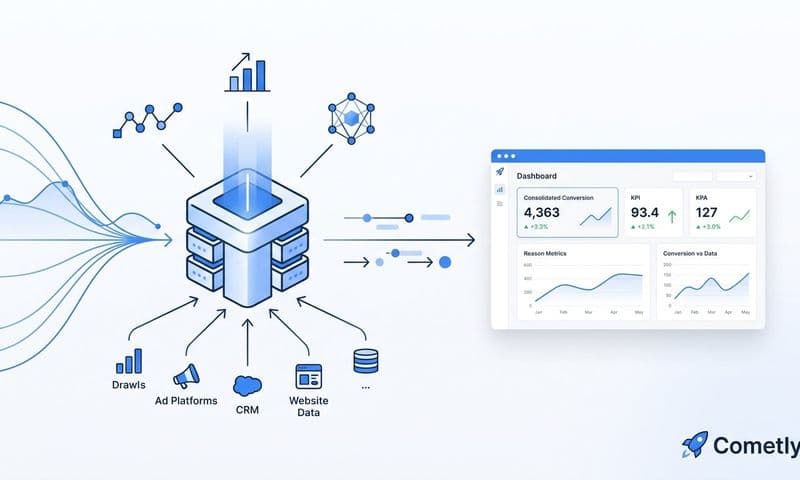
Cometly is built to support exactly this kind of privacy-forward attribution. It tracks the full customer journey from first ad click to closed-won revenue using first-party data and server-side event transmission, so your attribution stays accurate even as third-party cookies disappear. It connects your ad platforms, CRM, and website into a single source of truth, and its Conversion API integration routes enriched, privacy-safe signals back to Meta, Google, and more.
Ready to elevate your marketing game with precision and confidence? Discover how Cometly's AI-driven recommendations can transform your ad strategy. Get your free demo today and start capturing every touchpoint to maximize your conversions.