Starting a marketing analytics free trial is one of the smartest moves a marketing team can make before committing budget to a new platform. But here is the challenge: most free trials last just 7 to 14 days, and many marketers barely scratch the surface before time runs out.
They sign up with good intentions, click around the dashboard, and then the trial expires without any real insight into whether the tool can actually solve their problems. The trial becomes a passive browse rather than a strategic evaluation.
The difference between a wasted trial and a game-changing evaluation comes down to preparation and execution. When you approach a marketing analytics free trial with a clear plan, you can stress-test the platform against your real campaigns, validate data accuracy, and walk away knowing exactly whether the investment is worth it.
Whether you are evaluating attribution platforms, ad tracking tools, or full-funnel analytics solutions, these seven strategies will help you extract maximum value from every day of your trial period and make a confident, data-backed decision.
1. Define Your Evaluation Criteria Before You Sign Up
The Challenge It Solves
Without a structured framework going in, most marketers default to exploring features that look impressive rather than testing capabilities that actually matter to their business. You end up evaluating the wrong things and making decisions based on surface-level impressions rather than real-world fit.
The Strategy Explained
Before you even create your trial account, build a simple scorecard. List the five to ten capabilities that are non-negotiable for your team, assign each a weight based on priority, and define what "passing" looks like for each one.
Think about the problems you are trying to solve. Is it cross-channel attribution? iOS tracking gaps? Long sales cycle visibility? Budget optimization? When you know what you need the platform to do before you log in, every hour of your trial becomes purposeful rather than exploratory. Having a clear marketing analytics strategy before starting your evaluation ensures you test what truly matters.
This scorecard also becomes your communication tool. If you need to justify the purchase to a manager or finance team, you can show a structured, objective evaluation rather than a gut feeling.
Implementation Steps
1. List your top tracking and attribution pain points in priority order.
2. Identify the specific features that would address each pain point.
3. Create a simple scoring rubric: does the platform handle this well, partially, or not at all?
4. Set a minimum passing score so you have a clear decision threshold at the end of the trial.
Pro Tips
Involve your entire marketing team in building the scorecard, not just the person running the trial. Different team members will have different requirements, and catching those gaps before the trial starts saves you from realizing mid-trial that you forgot to test something critical.
2. Connect Your Real Ad Platforms and Data Sources on Day One
The Challenge It Solves
Many marketers spend the first few days of a trial exploring sample data or demo dashboards. The problem is that sample data tells you nothing about how the platform will perform with your actual campaigns, your actual audience, and your actual attribution complexity. You are essentially evaluating a showroom model, not the car you will actually drive.
The Strategy Explained
The moment your trial account is live, prioritize integrations. Connect your live ad accounts from Google Ads, Meta, LinkedIn, or wherever your budget is running. Connect your CRM if the platform supports it. Install the tracking pixel or server-side tracking scripts on your website.
Real data reveals real behavior. You will immediately see whether the platform handles your campaign structure correctly, whether it picks up the conversion events that matter to your business, and whether the attribution logic aligns with how your customers actually move through your funnel. Understanding data analytics in marketing starts with connecting your actual data sources rather than relying on hypothetical scenarios.
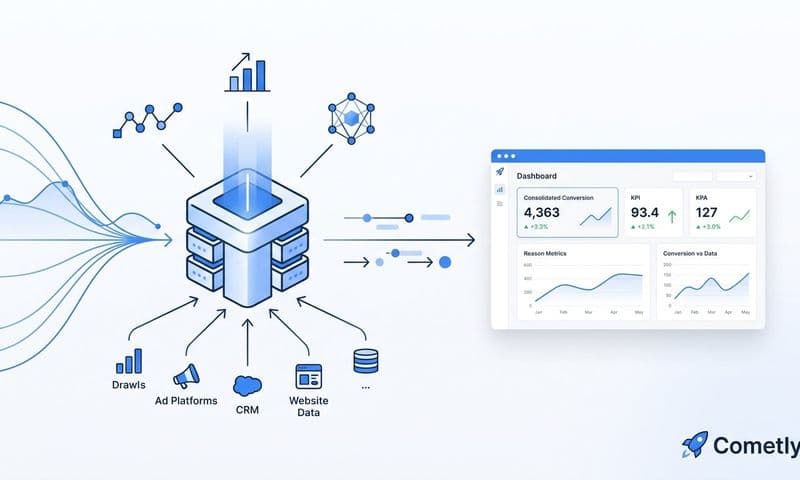
Platforms like Cometly are built for fast integrations, connecting your ad platforms, CRM, and website so you can start analyzing real customer journeys from the first day of your trial rather than waiting for data to accumulate.
Implementation Steps
1. Prepare your ad platform credentials and API access before signing up.
2. Connect all active ad accounts within the first two hours of your trial.
3. Install tracking scripts or enable server-side tracking on your website immediately.
4. Verify that conversion events are firing correctly before moving to any other evaluation task.
Pro Tips
If your platform offers server-side tracking, enable it on day one. Server-side tracking captures conversion data that browser-based pixels miss due to ad blockers and iOS privacy restrictions, giving you a more complete picture of your actual performance from the very start.
3. Run a Data Accuracy Audit Against Your Existing Reports
The Challenge It Solves
A platform can have a beautiful interface and impressive feature set, but if the underlying data is inaccurate, every decision you make based on it will be wrong. Many marketers skip this step entirely and only discover data discrepancies months after purchasing. The trial period is your opportunity to catch this before it costs you.
The Strategy Explained
Pull your existing reports from Google Analytics 4, your ad platforms, and your CRM. Then compare those numbers side-by-side with what the trial platform is showing you for the same time period.
You will likely see some differences, and that is expected. Attribution models differ, and some platforms capture data that others miss. The goal is not to find perfect agreement but to understand where the discrepancies come from and whether they represent a more accurate view of reality. Tracking the right marketing analytics metrics is essential for making this comparison meaningful.
Pay particular attention to conversion counts, revenue attribution, and channel credit. If the trial platform is showing significantly different numbers, dig into why. It may be capturing conversions that your current tools are missing due to iOS tracking gaps or cross-device journeys, which would be a sign of better accuracy rather than a problem.
Implementation Steps
1. Export a 30-day report from your current analytics tools covering conversions by channel.
2. Pull the equivalent report from the trial platform for the same period.
3. Document any significant discrepancies and investigate the cause of each one.
4. Determine whether differences represent improved tracking coverage or potential data quality issues.
Pro Tips
Focus your accuracy audit on your highest-spend channels first. If the platform is correctly attributing conversions from your largest budget allocation, that is a strong signal of reliability. Discrepancies in smaller channels are worth noting but should not be your primary concern during a limited trial window.
4. Test Multiple Attribution Models to See the Full Picture
The Challenge It Solves
Relying on a single attribution model, especially last-click, gives you a distorted view of which channels are actually driving growth. Channels that introduce customers to your brand or nurture them through a long consideration phase rarely get credit under simple models. This leads to underinvestment in channels that matter and overinvestment in channels that just happen to be last in line.
The Strategy Explained
During your trial, actively toggle between attribution models. Compare first-touch, last-touch, linear, time-decay, and multi-touch models across your campaigns. Watch how credit shifts as you change models and pay attention to which channels gain or lose attribution when you move away from last-click.
This exercise often reveals campaigns and channels that are quietly doing heavy lifting in the customer journey but getting zero credit in your current reporting. Understanding common attribution challenges in marketing analytics will help you interpret these differences more effectively. It also helps you identify which attribution model best reflects how your customers actually buy.
Cometly's multi-touch attribution capabilities let you compare these models in real time across all your ad channels, so you can see exactly how each model affects your understanding of campaign performance. This kind of visibility is exactly what a trial period should surface.
Implementation Steps
1. Identify your three to five highest-spend campaigns to use as your test set.
2. Run each attribution model and record the conversion credit each campaign receives.
3. Look for channels that consistently underperform under last-click but gain credit under multi-touch models.
4. Document which model most closely aligns with your understanding of your customer journey.
Pro Tips
Pay special attention to top-of-funnel channels like paid social and display. These are the channels most likely to be undervalued under last-click attribution. If switching to a multi-touch model reveals that these channels are contributing significantly to conversions, that insight alone could reshape your entire budget strategy.
5. Stress-Test the Platform With Your Hardest Tracking Challenges
The Challenge It Solves
Every marketing team has tracking scenarios that are notoriously difficult to handle: users who switch devices before converting, leads that take weeks or months to close, conversions that happen offline, and the growing blind spot created by iOS privacy restrictions. If a platform cannot handle your hardest scenarios, it will fail you at the moments that matter most.
The Strategy Explained
Do not just test the easy stuff during your trial. Deliberately push the platform's limits by running your most complex tracking scenarios through it.
If you run paid social campaigns and iOS attribution has been a persistent headache, check whether the platform offers server-side tracking or Conversions API integration to recover that lost signal. If your sales cycle is long, verify that the platform can attribute a conversion back to an ad click that happened weeks earlier. Reviewing the best marketing attribution analytics options can help you benchmark what to expect from a modern platform. If you have cross-device traffic, test whether the platform can stitch those journeys together into a coherent view.
Cometly's server-side tracking is specifically designed to address the iOS privacy gaps and browser-based tracking limitations that have made accurate attribution increasingly difficult. Testing this during your trial gives you a direct, real-world answer to whether the platform can solve one of your most pressing measurement challenges.
Implementation Steps
1. List your top three tracking challenges that your current tools fail to handle well.
2. Design a specific test scenario for each challenge using real campaign data.
3. Run each scenario and document how the platform handles it compared to your current tools.
4. Score the platform on each challenge using the scorecard you built before the trial.
Pro Tips
If the platform has a support team or onboarding specialist available during your trial, use them for this step. Describe your hardest tracking scenario and ask them to walk you through how the platform handles it. Their response will tell you a lot about both the platform's capabilities and the quality of support you can expect as a paying customer.
6. Evaluate AI-Powered Insights and Optimization Recommendations
The Challenge It Solves
Reporting tells you what happened. But what you actually need during a trial evaluation is evidence that the platform can tell you what to do next. Many analytics tools stop at data visualization, leaving your team to manually interpret the numbers and figure out the implications. That creates analysis bottlenecks and slows down decision-making.
The Strategy Explained
During your trial, look beyond the dashboards and ask whether the platform actively surfaces actionable recommendations. Can it identify which ads are underperforming and suggest reallocation? Can it flag budget inefficiencies across channels? Does it highlight opportunities you might have missed on your own? Exploring the capabilities of AI marketing analytics during your trial will reveal whether the platform can genuinely accelerate your decision-making.
Cometly's AI Ads Manager and AI Chat capabilities are built to go beyond reporting. The AI analyzes your campaign data and surfaces specific recommendations for budget allocation and optimization, while the AI Chat feature lets you ask direct questions about your data and get immediate, plain-language answers. Testing these features during your trial gives you a realistic sense of how much time and analytical effort the platform can save your team on an ongoing basis.
Ask the AI a question you genuinely do not know the answer to about your current campaigns. If the response is accurate, specific, and actionable, that is a strong signal of real value. If it is generic, that tells you something important too.
Implementation Steps
1. Identify three campaign optimization questions you want answered during the trial.
2. Use the platform's AI features to answer each question and evaluate the quality of the response.
3. Cross-reference AI recommendations against your own analysis to validate their accuracy.
4. Estimate how much time the AI features could save your team each week if you became a paying customer.
Pro Tips
Test the AI with a question that has a known answer first. This lets you calibrate how accurate the platform's analysis is before you start relying on it for decisions you cannot verify independently. If the AI gets the easy question right, you can trust its recommendations on harder questions with more confidence.
7. Build a Business Case With Trial Data Before the Clock Runs Out
The Challenge It Solves
Even if your trial experience is overwhelmingly positive, the decision to purchase a marketing analytics platform rarely rests with one person. You may need to justify the cost to a manager, a CFO, or a leadership team that was not part of the evaluation. Without documented evidence from your trial, you are making a case based on enthusiasm rather than data, and that is a much harder sell.
The Strategy Explained
Reserve the final two to three days of your trial specifically for documentation and business case building. Export the most compelling reports and insights you uncovered during the trial. Quantify the gaps your current tools are missing. Identify specific campaigns where better attribution data would have led to different budget decisions.
Connect those insights to revenue impact. If the platform revealed that a channel you were underfunding is actually one of your top converters, calculate what reallocating budget toward that channel could mean for your results. Understanding how to boost sales with marketing analytics will help you frame the ROI argument persuasively. If the platform's Conversion Sync feature improves the data quality being fed back to Meta or Google's algorithms, frame that in terms of the ad spend efficiency gains your team could capture.
A well-documented business case transforms a subjective platform preference into an objective investment recommendation, which is far more persuasive to decision-makers who were not part of the trial.
Implementation Steps
1. Export your three most impactful reports or insights from the trial period.
2. Document at least two specific examples where the platform surfaced data your current tools missed.
3. Estimate the revenue or efficiency impact of acting on those insights going forward.
4. Prepare a one-page summary comparing your current analytics setup against the trial platform across your scorecard criteria.
Pro Tips
Frame your business case around the cost of inaccurate attribution rather than just the cost of the platform. If your team is currently making budget decisions based on incomplete or misleading data, the real cost is the wasted ad spend that results from those decisions. A platform that fixes your attribution accuracy pays for itself through smarter allocation, not just through better reporting.
Putting It All Together
A marketing analytics free trial is only as valuable as the strategy you bring to it. The marketers who get the most out of their evaluation periods are the ones who prepare before they sign up, connect real data immediately, validate accuracy rigorously, push the platform's limits, and document everything before time runs out.
The sequence matters. Start with your scorecard so every test has a purpose. Connect live data on day one so you are evaluating reality, not demos. Audit accuracy so you can trust what you are seeing. Explore attribution models so you understand the full customer journey. Stress-test the hard scenarios so you know the platform will not fail you when it counts. Evaluate AI capabilities so you understand the ongoing value beyond basic reporting. And build your business case so you can make a confident, justified decision.
Platforms like Cometly are built to deliver real attribution value quickly, with fast integrations, server-side tracking, multi-touch attribution, and AI-powered insights that surface recommendations your team can act on immediately. That combination makes the trial period genuinely productive rather than just exploratory.
The goal of a structured trial is not just to decide whether to buy a platform. It is to walk away with a clear, evidence-based answer to the question every marketing team needs to answer: do we know what is actually driving our results, and can we use that knowledge to grow faster?
If you are ready to find out, Get your free demo and start your evaluation with a plan in hand.