
Influencer marketing has moved well beyond consumer brands and lifestyle products. B2B SaaS companies are increasingly partnering with industry thought leaders, niche creators, and domain experts to drive awareness, generate leads, and accelerate pipeline. The challenge is that most teams have no reliable way to connect influencer activity to actual revenue outcomes.
They track vanity metrics like impressions and follower counts, then struggle to justify budget in the next planning cycle. Sound familiar? You know the campaign generated buzz, but when the CFO asks what it contributed to pipeline, you find yourself piecing together a story from disconnected data points.
This guide solves that problem. You will learn how to measure influencer marketing impact with a framework that ties campaigns directly to conversions, pipeline, and closed revenue. Each step builds on the previous one, so by the end you will have a repeatable system for proving and improving influencer marketing ROI.
Whether you are running your first influencer campaign or trying to bring structure to an existing program, this guide gives you the tools to make data-driven decisions with confidence. Let's get into it.
Step 1: Define What Success Looks Like Before the Campaign Starts
The most common measurement mistake in influencer marketing happens before a single piece of content goes live. Teams launch campaigns without defining what success actually means, then scramble to find metrics that make the results look good after the fact. That approach makes it nearly impossible to improve over time.
Start by anchoring your campaign objectives to business outcomes, not activity metrics. "Generate 50 demo requests from mid-market SaaS companies" is a useful objective. "Increase brand awareness" is not, because it is too vague to measure or act on.
Once you have a clear objective, choose two to three primary KPIs based on where this campaign sits in the funnel. Here is a simple framework:
Awareness-stage campaigns: Focus on reach, share of voice, branded search volume lift, and new visitor traffic from relevant audience segments.
Consideration-stage campaigns: Track website traffic from influencer sources, content engagement, email sign-ups, and demo or trial requests.
Conversion-stage campaigns: Measure trial starts, qualified pipeline generated, and closed revenue attributed to influencer-sourced leads.
Resist the temptation to measure everything. When you track fifteen metrics, none of them get the attention they deserve. Pick two to three primary KPIs per campaign and treat the rest as secondary context.
One factor B2B SaaS teams often overlook is sales cycle length. If your average deal takes three months to close, evaluating influencer ROI at the four-week mark will make every campaign look like it underperformed. Align your measurement timeline to your actual sales cycle so you are reading results at the right moment.
Before the campaign launches, document a baseline for each KPI. What is your current demo request rate? What is the average number of new visitors from referral sources in a typical week? Without a baseline, you have nothing to compare your results against, and your data tells you very little.
Write your KPIs, baselines, and measurement timeline into a campaign brief before anything goes live. This single habit will dramatically improve the quality of your post-campaign analysis.
Step 2: Build Trackable Infrastructure for Every Influencer Partnership
Defining KPIs tells you what to measure. Building tracking infrastructure tells you how. This step is where most influencer programs fall apart, because without proper infrastructure, influencer-driven traffic typically gets misattributed to direct or organic search, making it invisible in your analytics.
The foundation of influencer tracking is UTM parameters. Create a unique UTM string for each influencer, each content piece, and each platform they publish on. A well-structured UTM might look like this: source set to the influencer's name, medium set to influencer, campaign set to your campaign name, and content set to the specific post or video. This level of granularity lets you see exactly which influencer, on which platform, with which content piece drove traffic and conversions.
Dedicated landing pages take this a step further. Instead of sending all influencer traffic to your homepage or a generic product page, build a landing page specific to each influencer partnership. This isolates their traffic completely, makes conversion tracking cleaner, and allows you to tailor the message to match what the influencer said about your product. Personalized URLs, sometimes called PURLs, serve the same purpose when a dedicated page is not practical.
For campaigns where direct conversion is the primary goal, unique promo codes or referral links add another layer of trackability. They work particularly well for trial sign-ups and are easy for influencers to share naturally in their content.
Here is where many SaaS teams hit a wall: browser-based pixels. Ad blockers, iOS privacy changes, and browser restrictions mean that a meaningful portion of conversions from influencer traffic never get recorded by client-side pixels. Server-side tracking addresses this by capturing conversion events at the server level, independent of what happens in the browser. For SaaS sign-up flows in particular, implementing server-side tracking is no longer optional if you want accurate data.
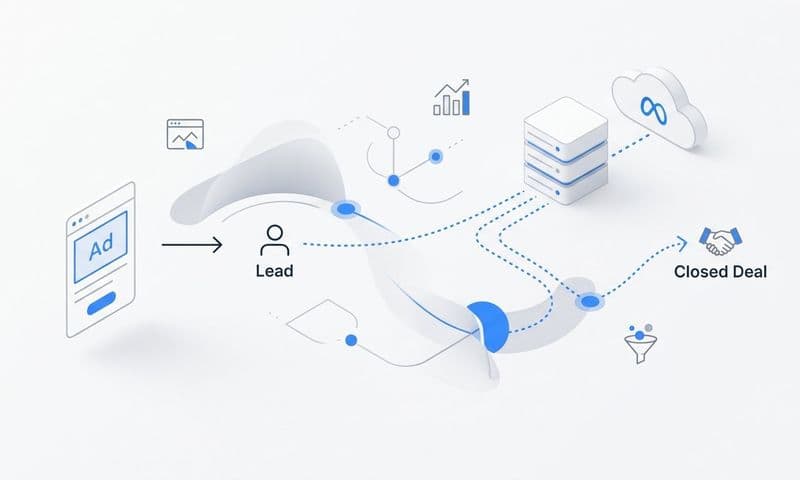
The final piece of infrastructure is connecting everything to a single attribution platform. Your ad platform data, CRM data, and influencer tracking data should all flow into one place. When influencer-driven leads enter your CRM, they need to carry their source attribution with them so you can follow them through the pipeline. If your influencer data lives in a spreadsheet while your paid channel data lives in your attribution platform, you will never get a true comparison between channels. A marketing campaign tracking spreadsheet can serve as a temporary bridge, but it is not a scalable long-term solution.
Before any influencer publishes content, test every tracking link and confirm every conversion event is firing correctly. A broken UTM or a misconfigured conversion event cannot be fixed retroactively.
Step 3: Map Influencer Touchpoints Across the Full Customer Journey
Here is something worth understanding about B2B influencer marketing: the content rarely converts on first touch. A decision-maker might watch a thought leader's LinkedIn video about your product category, then do nothing for two weeks. Then they see a retargeting ad, visit your pricing page, and request a demo. Which touchpoint gets credit?
If you are using last-click attribution, the demo request gets attributed to whatever they clicked right before converting, and the influencer content gets zero credit. That is a distorted picture of what actually drove the outcome.
Multi-touch attribution solves this by distributing credit across all the touchpoints in a customer's journey. Instead of asking "what was the last thing they clicked," it asks "what did they interact with along the way, and how much did each interaction contribute?" Understanding how to measure marketing attribution accurately is essential before you can evaluate any channel fairly.
Different attribution models answer that question differently. A linear model gives equal credit to every touchpoint. A time-decay model gives more credit to touchpoints closer to conversion. A data-driven model uses historical patterns to assign credit based on which touchpoints actually correlate with conversion. Running multiple models side by side is often the most revealing approach because it shows you how the story changes depending on how you measure it.
For influencer content specifically, you want to understand which role it is playing. Is it acting as a first-touch awareness driver, introducing your brand to people who had never heard of you? Is it a mid-funnel consideration accelerator, helping warm leads understand why your product is worth evaluating? Or is it a last-touch conversion trigger, the final push that gets someone to sign up?
Customer journey analytics help you visualize this. When you can see the sequence of touchpoints from influencer click to closed deal, you understand the true function of influencer content in your pipeline. This changes how you brief creators. If your data shows that influencer content consistently drives first-touch awareness but rarely closes deals on its own, you brief creators on generating curiosity and interest rather than asking them to drive immediate sign-ups.
It also changes how you compensate creators. A creator who consistently opens doors to high-value accounts deserves recognition for that contribution, even if their content never appears as the last touchpoint before conversion.
Step 4: Track Pipeline and Revenue Attribution Back to Influencer Activity
This is the step that separates teams who can justify influencer budget from teams who cannot. Impressions and clicks are interesting. Pipeline and revenue are what get budget approved.
The starting point is connecting your CRM to your attribution platform. When a lead comes in through an influencer campaign, that source attribution needs to travel with the lead record through every stage of your pipeline. If attribution data gets lost when a lead is created in the CRM, you lose the ability to trace closed deals back to their original source.
Once that connection is in place, you can assign pipeline value to influencer-sourced leads using the same methodology you use for paid channels. If a lead from a Google Ads campaign is worth a certain expected pipeline value based on your historical conversion rates, apply the same logic to influencer-sourced leads. This creates a consistent basis for comparison.
Go deeper by tracking conversion rates at each pipeline stage for influencer-sourced leads versus leads from other channels. Lead-to-opportunity rate and opportunity-to-close rate are particularly telling. A channel that generates a high volume of leads but a low opportunity-to-close rate may be attracting the wrong audience. A channel that generates fewer leads but converts them at a higher rate is often more valuable than it appears on the surface.
Calculate the core efficiency metrics for each influencer partnership:
Cost per lead: Total influencer investment divided by the number of leads generated.
Cost per opportunity: Total investment divided by the number of qualified opportunities created.
Cost per acquisition: Total investment divided by the number of closed deals attributed to the campaign.
These numbers let you compare influencer partnerships against each other and against your paid social, paid search, and content channels on a like-for-like basis. When the data is in the same platform and measured the same way, you can make genuinely informed decisions about where to allocate budget. Learning how to measure marketing ROI consistently across channels is what makes these comparisons meaningful.
The critical pitfall to avoid: keeping influencer data in a separate spreadsheet. When influencer metrics live outside your attribution platform, every comparison requires manual work, introduces errors, and makes it easy for people to question the methodology. Bring everything into one system.
Step 5: Analyze Performance Data and Score Each Influencer Partnership
Data collection is only useful if you actually analyze it. This step is about building a consistent review cadence and a scoring system that helps you make clear decisions about your influencer roster.
For in-flight campaigns, pull performance data weekly. You are not looking for final conclusions at this stage, but you want to catch tracking issues, notice early signals of over- or under-performance, and make any necessary adjustments before the campaign ends. At 30 days post-campaign, run a full analysis against your primary KPIs and baselines. At 90 days, revisit the data to capture pipeline and revenue outcomes that take longer to materialize given B2B sales cycles.
Scoring each influencer partnership on a consistent framework makes your decisions defensible and repeatable. Combine quantitative metrics with qualitative signals:
Quantitative metrics to score: Conversion rate from influencer traffic, pipeline generated, cost per acquisition, and lead-to-opportunity rate compared to your channel average.
Qualitative signals to assess: Audience relevance to your ICP, content quality and authenticity, brand alignment, and engagement quality (are the comments from real potential buyers or general followers?).
Segment your influencer roster into performance tiers based on this scoring. The top tier gets reinvestment and deeper partnership development. The middle tier gets further testing with different content formats or campaign objectives. The bottom tier gets cut, or at minimum, does not receive additional budget until you understand why performance was weak.
Look for patterns across your data. Which content formats drive the most qualified traffic: long-form videos, short clips, written posts, or newsletters? Which platforms produce the highest conversion rates for your specific audience? Which influencer attributes correlate with strong pipeline outcomes: audience size, niche specificity, engagement rate, or something else? Dedicated influencer marketing analytics tools can help you surface these patterns far more efficiently than manual reporting.
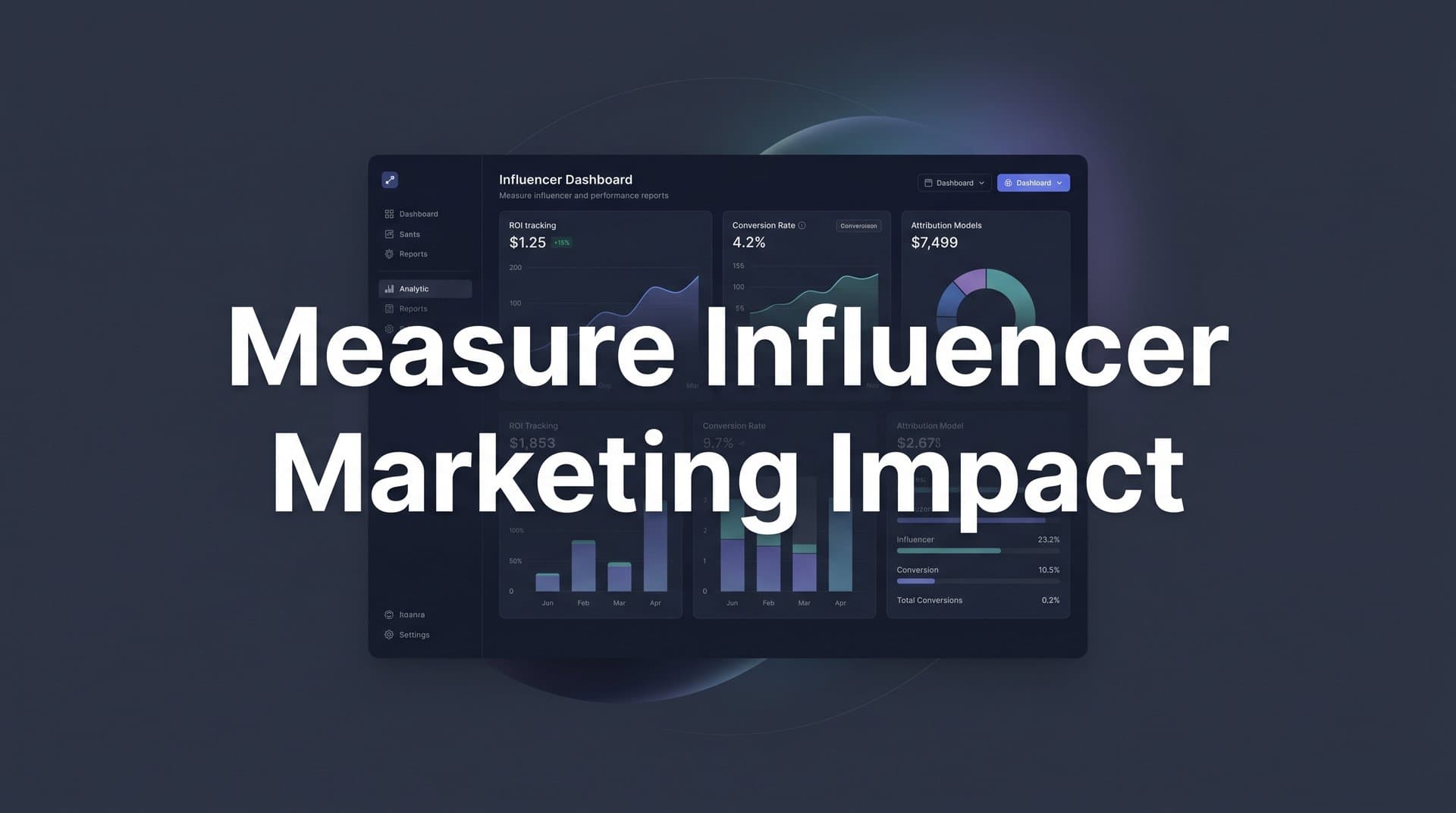
AI-driven analytics can surface these patterns faster than manual analysis, especially as your influencer program scales. When you can identify which combination of influencer attributes and content formats consistently produces revenue outcomes, you have a repeatable playbook for future partnerships. Document your findings in a shared dashboard so your entire team is working from the same data.
Step 6: Feed Influencer Insights Back Into Your Broader Marketing Strategy
Most teams treat influencer marketing as a standalone channel. The teams that get the most out of it treat it as a source of intelligence that improves everything else they do.
Start with creative intelligence. When an influencer's content consistently drives high-quality traffic and conversions, pay close attention to the messaging, framing, and angles they used. That content is essentially a real-world test of what resonates with your target audience. The messaging that performs organically with an influencer's audience often outperforms internally produced ad creative because it feels authentic and is grounded in how real buyers talk about the problem your product solves.
Share influencer audience data with your paid media team. If a particular influencer's audience on LinkedIn or YouTube consistently converts at a higher rate, that audience profile is a signal for your paid targeting. Refine your Meta, LinkedIn, and Google audience segments based on what you learn from influencer-driven conversions. This is one of the most effective ways to measure cross-channel marketing attribution and understand how influencer activity amplifies your paid media performance.
Take this a step further by sending enriched conversion events from influencer-driven campaigns back to ad platforms via server-side integration. When you feed high-quality, first-party conversion data back to Meta or Google, their algorithms use it to find more people who look like your best converters. Influencer campaigns become a source of training data for your paid media optimization.
Use influencer performance data to inform your content calendar and SEO strategy. Topics that generate strong engagement and conversion through influencer content are often topics worth developing into long-form content, comparison pages, or video series. Your influencer program is essentially a continuous audience research engine if you treat it that way.
Finally, build a feedback loop into your influencer briefing process. Brief creators based on what your data shows actually converts, not just what gets the most views or engagement. Share your findings with your influencer partners so they understand what is working and can create more of it. This transforms influencer marketing from a one-off experiment into a data-driven growth channel that compounds over time.
Putting It All Together: Your Influencer Measurement Checklist
Accurate measurement of influencer marketing impact does not start with reporting. It starts with infrastructure, and infrastructure starts before the campaign launches. Here is a quick recap of the six-step framework:
Step 1: Define success before launch. Set two to three primary KPIs tied to business outcomes, document baselines, and align your measurement timeline to your sales cycle.
Step 2: Build trackable infrastructure. Create unique UTMs, dedicated landing pages, and promo codes for each partnership. Implement server-side tracking and connect all data to a single attribution platform.
Step 3: Map influencer touchpoints across the journey. Use multi-touch attribution to understand whether influencer content is driving awareness, consideration, or conversion, and brief creators accordingly.
Step 4: Track pipeline and revenue attribution. Connect your CRM to your attribution platform, calculate cost per lead and cost per acquisition, and compare influencer ROI against other channels using consistent methodology.
Step 5: Score each influencer partnership. Analyze performance at 30 and 90 days, score on quantitative and qualitative criteria, and segment your roster into performance tiers.
Step 6: Feed insights back into your strategy. Use top-performing influencer content as creative intelligence, refine paid targeting, and brief future campaigns based on what your data shows converts.
If you are starting from scratch, prioritize Steps 1 and 2 before your next campaign launches. Everything else depends on having clean, trackable data from the beginning.
Cometly is the attribution layer that makes this framework work at scale. It connects influencer traffic to pipeline and revenue in a single dashboard, gives you multi-touch attribution across every channel, and surfaces AI-driven insights that show which influencer attributes and content formats drive the best outcomes. You get a single source of truth for your entire marketing program, with influencer data sitting alongside your paid, organic, and CRM data for true apples-to-apples comparison.
Measurement is the foundation of a scalable influencer program. Without it, you are guessing. With it, you are building a repeatable growth channel with data behind every decision. Ready to connect your influencer campaigns to real revenue outcomes? Get your free demo and see how Cometly's multi-touch attribution and real-time customer journey analytics give you the clarity to scale with confidence.