
You're reviewing your campaign performance dashboard, and something doesn't add up. Meta Ads Manager shows 50 conversions from your latest campaign. You feel good about it—until you check your CRM. Only 30 actual sales came through. Where did the other 20 conversions go? Did they vanish into thin air? Are your ad platforms lying to you?
This isn't a glitch. It's the new reality of digital advertising in 2026. Privacy changes, cross-device customer journeys, and platform limitations have created a perfect storm of missing conversion data. And it's not just frustrating—it's expensive. When you can't see which ads actually drive revenue, you make decisions based on incomplete information. You scale campaigns that aren't performing. You cut budgets on channels that are secretly your best performers.
The gap between what your ad platforms report and what actually happens in your business creates strategic blind spots that cost real money. But here's the good news: missing conversion data is a solvable problem. In this guide, we'll break down exactly why this happens, how it impacts your marketing ROI, and what you can do to capture the complete picture of your advertising performance.
The Hidden Cost of Conversion Data Gaps
Missing conversion data doesn't just create reporting headaches. It actively sabotages your marketing strategy in ways that compound over time.
Think about how you make budget decisions. If Meta shows Campaign A generated 40 conversions and Campaign B generated 20, you'd naturally shift more budget to Campaign A. But what if your CRM data reveals Campaign A only drove 15 actual sales while Campaign B drove 25? You just doubled down on the wrong campaign based on incomplete data.
This misallocation happens constantly when conversion tracking has gaps. You're flying blind, making million-dollar decisions based on partial information. The campaigns you think are winners might be underperformers. The channels you're about to cut could be your most profitable sources. Understanding why paid ads underreport conversions is the first step toward fixing this problem.
But the damage goes deeper than misallocated budgets. Ad platform algorithms depend on conversion data to optimize your campaigns. When Facebook or Google doesn't know which users actually converted, their AI can't identify patterns. It can't find similar audiences. It can't optimize bidding strategies effectively.
This creates a feedback loop of poor performance. Incomplete data leads to poor optimization, which leads to worse results, which makes you question the platform entirely. Meanwhile, your competitors with better tracking are feeding their ad platforms complete conversion data—and their algorithms are learning and improving while yours stagnates.
The strategic blind spots extend to your entire marketing team. Your CMO asks which channels drive the most revenue. Your sales team wants to know which campaigns bring in qualified leads. Your CFO needs to justify the marketing budget. Without accurate conversion data connecting ad interactions to actual business outcomes, you're guessing. And expensive guesses add up quickly.
Why Your Ad Platforms Are Missing Conversions
So why is this happening? The answer lies in a fundamental shift in how the internet handles privacy and tracking.
Apple's iOS App Tracking Transparency changed everything. When users update their iPhone, they see a prompt asking if they want to let apps track their activity. Most people tap "Ask App Not to Track." Just like that, the tracking pixel on your website can't follow that user's journey from your Facebook ad to your purchase page. The impact of lost conversion data from iOS privacy changes continues to grow each year.
The impact is massive. Many marketers report 30-40% of their iOS traffic is now invisible to ad platforms. That's not a small data gap—it's a chasm. And iOS users tend to have higher purchasing power, so the revenue impact is disproportionately large.
Browser privacy features pile on additional challenges. Safari's Intelligent Tracking Prevention limits cookie lifespans to just seven days. If someone clicks your ad, considers your product for a week, then converts on day eight, Safari has already deleted the tracking cookie. Your ad platform never sees that conversion.
Firefox blocks third-party tracking by default. Brave browser goes even further with built-in ad and tracker blocking. Even Chrome, despite delaying its cookie deprecation timeline, has implemented privacy features that limit tracking capabilities. The browser landscape has become hostile to traditional pixel-based tracking.
Cross-device journeys create another layer of complexity. Your ideal customer might see your ad on their phone during their commute, research your product on their work laptop, and finally purchase on their home computer. Traditional cookie-based tracking can't connect these dots. Each device looks like a different person to your ad platform.
Ad blockers are more popular than ever. Millions of users browse the web with extensions that prevent tracking pixels from firing. Your conversion happens, your business gets paid, but your ad platform never receives the signal that the campaign worked. If you're wondering why your ads show no conversions, ad blockers could be a significant factor.
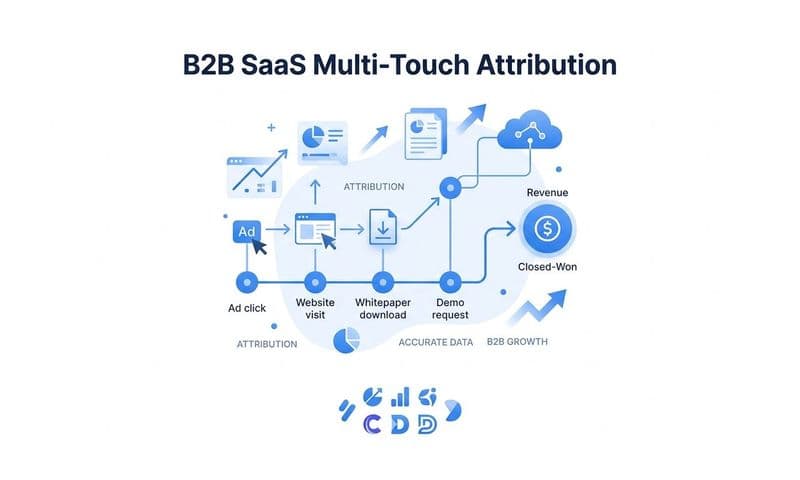
For B2B companies and high-ticket purchases, the problem intensifies. Sales cycles stretch across weeks or months. Someone clicks your LinkedIn ad in January, downloads a whitepaper in February, attends a webinar in March, and finally books a demo in April. By the time they convert, cookies have expired, attribution windows have closed, and the original ad interaction is lost to history.
Client-Side vs. Server-Side Tracking: Understanding the Difference
To fix missing conversion data, you need to understand how tracking actually works—and why the old approach is failing.
Traditional tracking relies on client-side pixels. When someone visits your website, a small piece of JavaScript code loads in their browser. This pixel watches for conversion events—form submissions, purchases, downloads. When a conversion happens, the pixel sends a signal back to the ad platform saying "this person converted."
This approach worked beautifully for years. But it has a fatal flaw: it depends entirely on the user's browser cooperating. If iOS blocks the tracking, if Safari deletes the cookie, if an ad blocker prevents the pixel from loading—the conversion signal never gets sent. The sale happens, but the ad platform stays in the dark.
Client-side tracking is like sending important mail through an unreliable postal service. Sometimes it arrives, sometimes it doesn't, and you have no control over what happens in between.
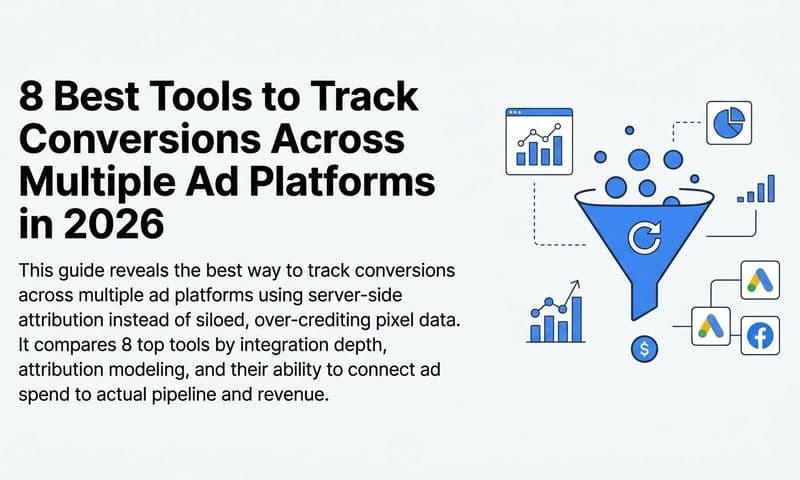
Server-side tracking takes a fundamentally different approach. Instead of relying on browser pixels, your server sends conversion data directly to the ad platform's API. When someone converts, your website or CRM notifies your server, which then communicates directly with Meta, Google, or other platforms. Learning how to sync conversion data to Facebook Ads through server-side methods can dramatically improve your tracking accuracy.
This bypasses all the browser-based limitations. iOS privacy settings don't matter. Cookie blockers are irrelevant. Ad blockers can't interfere. The data travels from your server to the ad platform's server through a direct, reliable connection.
Think of it like switching from unreliable postal mail to a private courier service. You control both ends of the transaction, so you can guarantee delivery.
The accuracy advantage is substantial. Companies implementing server-side tracking often discover they've been missing 20-40% of their conversions. Those "missing" conversions were happening all along—the ad platforms just couldn't see them through client-side pixels.
Server-side tracking also enables more sophisticated data enrichment. You can send additional information about each conversion—the actual revenue amount, the customer's lifetime value, whether they're a qualified lead or just a tire-kicker. This enriched data helps ad platforms optimize more effectively because they understand not just who converted, but who converted with high value. Google's Enhanced Conversions feature is one example of how platforms are adapting to support this approach.
Connecting Your CRM to Your Ad Platforms
Capturing conversions is only half the battle. For many businesses, the real value happens after the initial conversion—in your CRM, where leads become customers and customers generate revenue.
This is especially critical for B2B companies and businesses with complex sales processes. Someone might fill out a lead form (the "conversion" your ad platform sees), but that lead could be unqualified, could go cold, or could turn into a six-figure deal. Without CRM integration, your ad platform treats all these outcomes the same.
Connecting your CRM to your ad platforms creates a feedback loop of actual business results. When a lead closes as a customer, that information flows back to Meta or Google. When a customer churns or turns out to be low-quality, the ad platform learns that too. This closed-loop attribution transforms your advertising from "driving leads" to "driving revenue." The concept of conversion data activation is central to making this work effectively.
The impact on optimization is profound. Ad platform algorithms get dramatically better when they know which conversions actually generated revenue. Facebook's algorithm can identify patterns in users who become high-value customers versus users who just filled out a form and disappeared. Google can optimize for revenue, not just lead volume.
Consider a SaaS company running lead generation campaigns. Their ad platform shows 100 demo requests. Without CRM integration, the optimization stops there. But with CRM data flowing back, they discover that 30 of those demos came from enterprise companies and converted to annual contracts, while 70 were small businesses that never upgraded from the free trial.
Now the ad platform can optimize for enterprise demo requests specifically. It learns which audiences, creatives, and targeting parameters attract high-value prospects. The campaigns get smarter over time because they're learning from actual business outcomes, not just form submissions.
For long sales cycles, CRM integration is essential. That LinkedIn ad from three months ago that eventually drove a major deal? Without CRM integration, the ad platform never connects those dots. With integration, the platform learns that this targeting strategy drives high-value customers, even if conversions take time. Implementing conversion sync for Facebook Ads ensures your CRM data flows back to improve campaign optimization.
The key is tracking the full customer journey from first click to closed deal. When your CRM and ad platforms communicate, you stop optimizing for vanity metrics and start optimizing for what actually matters: revenue and customer lifetime value.
Building a Complete Attribution Picture
Here's where most marketers get attribution wrong: they give all the credit to the last touchpoint. Someone clicks a Facebook ad and converts, so Facebook gets 100% credit. But what if that person had previously seen your Google ad, read your blog post from organic search, and engaged with your LinkedIn content?
Last-click attribution is like giving the final salesperson all the credit while ignoring everyone who warmed up the lead. It's inaccurate and it leads to bad decisions.
Multi-touch attribution solves this by acknowledging that customer journeys are complex. Most people interact with multiple marketing touchpoints before converting. They might discover you through organic search, engage with your content, see retargeting ads, click a paid search ad, and finally convert. Each of these touchpoints played a role. Understanding Facebook Ads attribution vs Google Ads attribution helps you see how each platform measures success differently.
Understanding the full journey helps you make smarter budget decisions. That Google Search campaign might not get last-click credit often, but if it consistently appears early in high-value customer journeys, it's actually a crucial channel. Without multi-touch attribution, you might cut it based on last-click data and unknowingly eliminate a critical discovery channel.
Different attribution models distribute credit differently. Linear attribution gives equal credit to all touchpoints. Time-decay gives more credit to recent interactions. Position-based (U-shaped) emphasizes the first and last touchpoints. Each model reveals different insights about your marketing mix.
The real power comes from comparing attribution models. If a channel looks weak in last-click attribution but strong in first-touch attribution, it's a discovery channel. If it's strong in last-click but weak in first-touch, it's a conversion channel. You need both types, and you need to fund them appropriately.
Multi-touch attribution is especially valuable for understanding how paid and organic channels work together. Your content marketing might not drive direct conversions, but it could be essential for warming up audiences who later convert from paid ads. Without seeing the full picture, you might undervalue content and overvalue direct-response ads. Leveraging marketing data analytics helps you uncover these hidden relationships between channels.
Complete attribution data also helps you identify channel synergies. Maybe customers who see both Facebook and Google ads convert at higher rates than those who see only one. Or perhaps email marketing dramatically increases the conversion rate of paid traffic. These insights only emerge when you track the entire customer journey across all touchpoints.
When you combine multi-touch attribution with CRM data, you get the ultimate view: which combination of touchpoints drives not just conversions, but high-value customers. This is how you build a marketing strategy that actually scales profitably.
Your Conversion Data Recovery Plan
Now let's turn insights into action. Fixing missing conversion data requires a systematic approach that addresses tracking, integration, and optimization.
Start with a tracking audit. Check your conversion tracking setup across all platforms. Are your pixels firing correctly? Run test conversions and verify they appear in your ad platforms. Use browser developer tools to see if tracking requests are being blocked. Many marketers discover their tracking has been partially broken for months. If you're running Google campaigns, review common Google Ads conversion tracking problems to identify potential issues.
Implement server-side tracking as your foundation. This is the single most impactful upgrade you can make. Server-side tracking captures conversions that client-side pixels miss, giving you a more complete dataset. Most major ad platforms now support server-side conversion APIs—Meta's Conversions API, Google's Enhanced Conversions, TikTok's Events API.
Connect your CRM to your ad platforms. This closes the loop between leads and revenue. Use native integrations if available, or work with an attribution platform that handles the technical complexity. The goal is to send revenue data and customer lifecycle events back to your ad platforms so they can optimize for actual business outcomes.
Set up multi-touch attribution to understand your full customer journey. Track every touchpoint from first interaction to final conversion. This might require an attribution platform that sits above your individual ad platforms and provides a unified view across all channels. Our guide on how ad tracking tools can help you scale ads covers the key features to look for.
Use your enriched conversion data to improve ad platform optimization. Once you're capturing more conversions and feeding revenue data back to platforms, their algorithms can work more effectively. Create value-based campaigns that optimize for revenue, not just conversion volume. Build lookalike audiences based on your highest-value customers.
Regularly reconcile your ad platform data with your CRM and revenue data. Check for discrepancies and investigate significant gaps. This ongoing monitoring helps you catch tracking issues quickly and ensures your data stays accurate as platforms update their systems and privacy rules evolve.
Turning Data Into Your Competitive Advantage
Missing conversion data isn't an inevitable cost of digital advertising—it's a solvable technical problem. The marketers who solve it gain a massive competitive advantage. They see their full customer journey. They make budget decisions based on complete data. Their ad platforms optimize using accurate conversion signals.
The solution requires connecting all the pieces: ad platforms, website tracking, CRM, and attribution. When these systems communicate, you stop guessing and start knowing what drives revenue. You scale the right campaigns. You optimize for actual business outcomes. You feed your ad platforms the data they need to find more high-value customers.
The gap between what your ads report and what actually happens in your business represents both a problem and an opportunity. Every conversion you're currently missing is a signal you could be using to improve optimization. Every attribution insight you're not seeing is a strategic decision you're making blind.
Ready to elevate your marketing game with precision and confidence? Discover how Cometly's AI-driven recommendations can transform your ad strategy—Get your free demo today and start capturing every touchpoint to maximize your conversions.