Most buyers don't convert the first time they see your ad. They click, browse, leave, see a retargeting ad, open an email, search your brand name, and finally convert days or weeks later. If your tracking only captures the last click, you're making budget decisions based on an incomplete picture.
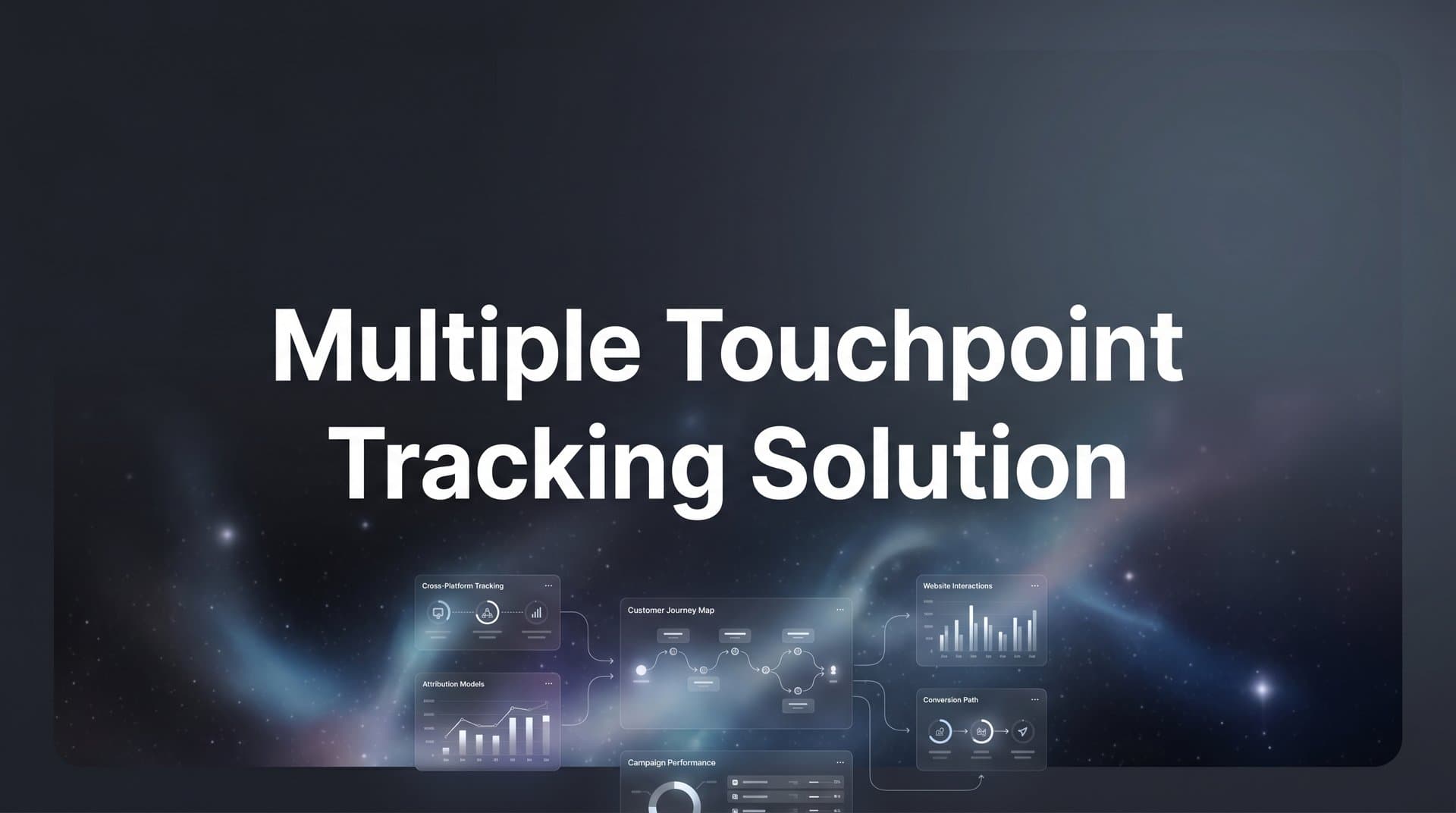
That's the core challenge multiple touchpoint tracking solutions are designed to solve. The best tools in this space give you cross-channel visibility, flexible attribution models, real-time data, and deep CRM integration so you can connect every interaction to actual revenue.
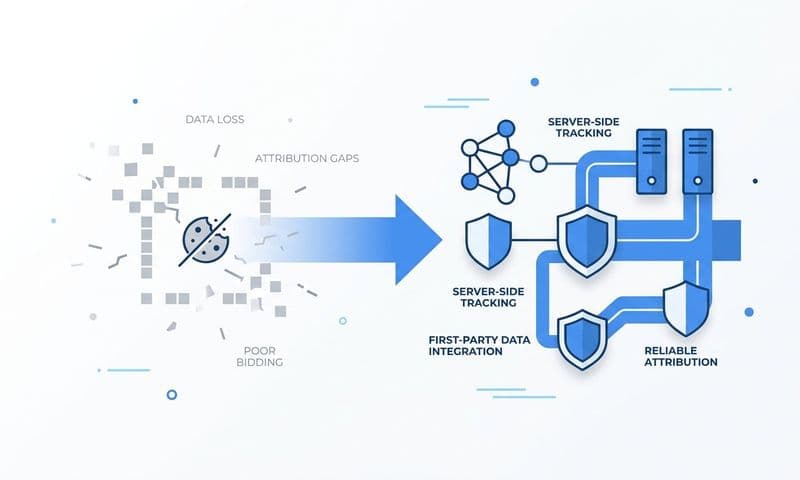
Privacy changes like iOS App Tracking Transparency and the ongoing deprecation of third-party cookies have made this harder than ever. Many legacy pixel-based setups are now unreliable, pushing marketers toward server-side tracking and first-party data strategies. The tools below are built for exactly that reality. Here are the top multiple touchpoint tracking solutions worth considering in 2026.
1. Cometly
Best for: Marketers who need accurate cross-channel attribution with AI-powered optimization recommendations
Cometly is an AI-powered marketing attribution platform that tracks every touchpoint from ad click to CRM event, with server-side tracking and conversion sync built in.
 9 Best Multiple Touchpoint Tracking Solutions in 2026
Where This Tool Shines
Cometly stands out because it doesn't just report on attribution. It closes the loop. By syncing enriched conversion events back to Meta, Google, and other ad platforms, it feeds better data to the algorithms that power your campaigns, which can meaningfully improve targeting and optimization over time.
The AI layer on top of attribution data is what separates Cometly from traditional reporting tools. Instead of leaving you to interpret dashboards on your own, it surfaces recommendations about which ads and campaigns are actually driving revenue, so you can act on insights rather than just observe them.
Key Features
Multi-Touch Attribution: Flexible attribution models that show how every touchpoint contributes to a conversion, not just the last click.
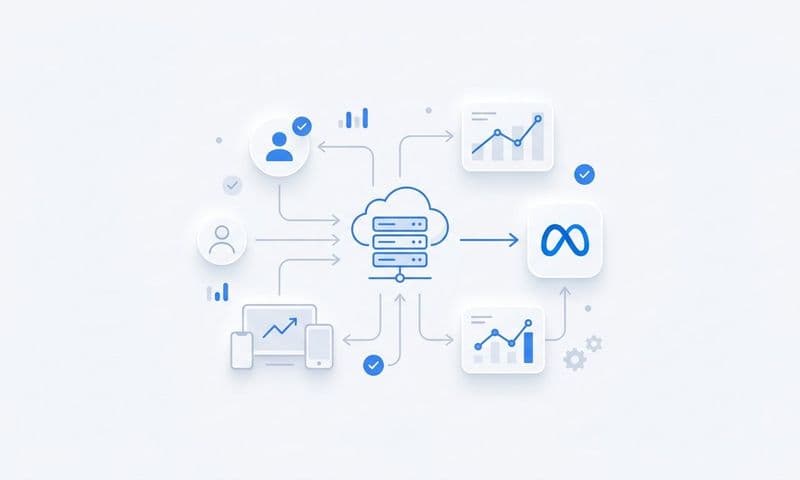
Server-Side Tracking: Collects accurate event data even as browser privacy restrictions limit traditional pixel-based tracking.
Conversion Sync: Sends enriched, conversion-ready events back to Meta, Google, and other platforms to improve ad algorithm performance.
AI Ads Manager: Identifies high-performing ads and campaigns across channels, then surfaces actionable recommendations for scaling.
AI Chat: Lets you query your marketing data in natural language, making it easier to get answers without digging through reports manually.
Best For
Cometly is built for digital marketers, growth teams, and agencies running paid campaigns across multiple platforms who need accurate attribution data and want AI-powered guidance to optimize spend. It's particularly valuable for teams frustrated by the gap between ad platform reported results and actual revenue.
Pricing
Custom pricing based on ad spend. A free demo is available to explore the platform before committing.
2. HubSpot Marketing Hub
Best for: Teams that want multi-touch attribution natively integrated with their CRM and sales data
HubSpot Marketing Hub is an all-in-one marketing platform with built-in multi-touch attribution reporting tied directly to CRM deal data.
 9 Best Attribution Software for B2B SaaS in 2026
Where This Tool Shines
HubSpot's biggest advantage is that attribution lives inside the same system as your contacts, deals, and revenue data. You don't need to stitch together a separate attribution tool with your CRM. When a deal closes, you can trace it back through every marketing touchpoint that influenced it, from the first ad click to the email that prompted a demo request.
For teams already using HubSpot as their CRM, turning on attribution reporting is a natural extension rather than an entirely new integration project. The data is already there; it's a matter of surfacing it correctly.
Key Features
Multi-Touch Attribution Reports: Built-in reports that tie email, ads, organic, social, and sales touchpoints to closed revenue.
Multiple Attribution Models: Supports linear, time-decay, U-shaped, and other models so you can view performance through different lenses.
CRM-Connected Data: Attribution is tied to actual deal and contact records, not just session-level analytics.
Custom Report Builder: Build revenue attribution reports tailored to your specific funnel and business model.
Cross-Channel Tracking: Tracks interactions across email, paid ads, organic search, social media, and direct sales activity in one place.
Best For
Marketing and sales teams already running on HubSpot CRM who want attribution without adding another tool to their stack. Particularly strong for B2B companies with longer sales cycles where multiple stakeholders touch a deal.
Pricing
Marketing Hub Professional starts at $890/month. Multi-touch attribution reporting requires the Professional tier or above.
3. Ruler Analytics
Best for: Lead-generation businesses that need to connect offline conversions to marketing source
Ruler Analytics is a marketing attribution platform focused on bridging the gap between online marketing activity and offline conversions like phone calls and form submissions.
 8 Best Attribution Tools with Onboarding Support in 2026
Where This Tool Shines
Most attribution tools do a reasonable job tracking clicks and form fills, but they fall short when a prospect picks up the phone. Ruler Analytics solves this with dynamic number insertion, which assigns unique phone numbers to visitors based on their marketing source, so you can attribute a call to the specific campaign or keyword that drove it.
What makes this especially useful is that Ruler pushes that revenue data back to Google Ads, Google Analytics, and Facebook, closing the loop between offline revenue and the digital campaigns that generated the lead in the first place.
Key Features
Call Tracking with Dynamic Number Insertion: Assigns unique numbers to visitors by source so phone calls are attributed to the right campaign.
Form Submission Attribution: Ties form completions to specific campaigns, keywords, and traffic sources.
Revenue Data Push: Sends closed revenue back to Google Ads, Google Analytics, and Facebook for smarter optimization.
Multi-Touch Attribution Models: Supports multiple models tailored to lead-generation funnels where the journey from inquiry to close can be long.
Best For
B2B and service businesses where a significant portion of conversions happen over the phone or through form submissions rather than direct online purchases. Agencies managing lead-gen campaigns will find the revenue push-back feature particularly valuable.
Pricing
Plans start at approximately £199/month, with pricing varying based on the number of tracked calls and integrations needed.
4. Triple Whale
Best for: Shopify brands running multi-channel paid campaigns who need first-party attribution data
Triple Whale is an ecommerce-focused attribution platform built around a first-party data pixel designed specifically for Shopify stores.
 7 Best Funnel.io Alternatives for Marketing Data Analytics in 2026
Where This Tool Shines
Triple Whale was purpose-built for direct-to-consumer brands navigating the post-iOS tracking landscape. Its first-party pixel collects data server-side, giving Shopify merchants a much more accurate picture of which channels and creatives are actually driving purchases when ad platform reporting has become unreliable.
The creative analytics layer is a standout feature for paid social teams. Rather than just seeing which campaigns perform, you can drill into individual ad creatives to understand which images, videos, and copy variations are generating the most revenue.
Key Features
First-Party Pixel: Server-side tracking on Shopify stores that captures accurate conversion data independent of browser restrictions.
Creative Performance Analytics: Breaks down performance by individual ad creative so you know exactly which assets are driving conversions.
Cross-Channel Dashboard: Unifies Meta, Google, TikTok, and other ad platform data into a single view.
Customer Journey Mapping: Shows the path from first touch to purchase, including all intermediate interactions.
Shopify Native Integration: Deep integration with Shopify order and customer data for accurate revenue attribution.
Best For
DTC ecommerce brands on Shopify, particularly those spending significantly on Meta and TikTok ads who need reliable attribution data after platform-level reporting became less trustworthy.
Pricing
Plans start at approximately $100/month, with pricing scaling based on store revenue. Higher-volume brands will be on custom pricing.
5. Northbeam
Best for: Brands that want both granular multi-touch attribution and macro-level media mix modeling in one platform
Northbeam is an attribution platform that blends multi-touch attribution with media mix modeling, giving marketers both detailed and high-level views of cross-channel performance.
 8 Best Tools to Fix Duplicated Conversion Tracking Across Platforms in 2026
Where This Tool Shines
Most attribution tools make you choose between granular click-level data and statistical modeling. Northbeam combines both. You can look at individual campaign and creative performance through multi-touch attribution while also using media mix modeling to understand broader channel efficiency at a strategic level.
The machine learning component is particularly useful for budget allocation decisions. Rather than relying on gut instinct or last-click data to decide how to distribute spend across channels, Northbeam's models surface where incremental revenue is most likely to come from.
Key Features
Combined MTA and MMM: Runs both multi-touch attribution and media mix modeling so you can analyze performance at different levels of granularity.
Machine Learning Budget Allocation: Uses ML models to recommend cross-channel budget distribution based on predicted incremental impact.
Creative Analytics: Performance breakdowns by individual ad asset across channels.
Customizable Attribution Windows: Adjust lookback windows and attribution models to match your actual sales cycle.
Best For
Established brands with meaningful ad spend across multiple channels who want sophisticated modeling to inform strategic budget decisions, not just campaign-level reporting.
Pricing
Custom pricing. Northbeam is typically suited for brands with significant ad spend, so it's less accessible for early-stage businesses.
6. Dreamdata
Best for: B2B companies that need account-level attribution across long, multi-stakeholder buying journeys
Dreamdata is a B2B revenue attribution platform that maps account-level buying journeys by stitching together anonymous and known touchpoints across the full funnel.
 9 Best B2B SaaS Attribution Platforms Reviewed for 2026
Where This Tool Shines
B2B attribution is fundamentally different from ecommerce attribution. Multiple people from the same company are often involved in a buying decision, and the journey from first awareness to closed deal can span months. Dreamdata handles this by grouping touchpoints at the account level rather than treating every individual session as a separate user.
The automatic journey stitching is particularly impressive. Dreamdata connects anonymous pre-conversion sessions to known contacts after identification, so you don't lose the early-stage research activity that often has the most influence on a buying decision.
Key Features
Account-Based Attribution: Groups touchpoints by company rather than individual so you see the full account journey, not fragmented individual paths.
Journey Stitching: Automatically connects anonymous sessions to known contacts after identification events like form fills or logins.
CRM Integration: Deep integration with Salesforce and HubSpot to pull pipeline and closed revenue data into attribution reports.
Content Attribution: Shows which pages, blog posts, and content assets influence deals at different stages of the funnel.
Best For
B2B SaaS companies and enterprise teams with complex sales cycles involving multiple stakeholders. Particularly useful for teams wanting to understand which content and campaigns influence pipeline, not just lead volume.
Pricing
A free tier is available with limited features. Paid plans start at approximately $999/month, making it an investment suited for teams with meaningful revenue attribution needs.
7. Segment (Twilio)
Best for: Engineering and data teams who want a flexible data infrastructure layer for custom attribution setups
Segment is a customer data platform that collects, cleans, and routes event-level touchpoint data to any analytics, attribution, or ad platform in your stack.
 8 Best Attribution-Focused Platforms vs Segment: Which Approach Fits Your Marketing Stack in 2026
Where This Tool Shines
Segment isn't an attribution tool in the traditional sense. It's the data infrastructure that makes attribution possible. By creating a single, clean stream of event data from your website, app, and server-side sources, Segment ensures that every downstream tool in your stack is working from the same accurate, consistent data.
For teams building custom attribution models or routing data to multiple tools simultaneously, Segment removes the need to implement separate tracking code for each platform. You instrument once and route everywhere, which dramatically reduces implementation complexity and data inconsistency.
Key Features
Unified Event Tracking: Captures events across web, mobile, and server-side sources through a single implementation.
300+ Pre-Built Integrations: Routes data to analytics tools, attribution platforms, ad networks, and data warehouses without custom engineering for each connection.
Identity Resolution: Stitches user profiles across devices and sessions so you can track the same person across multiple touchpoints.
Data Governance: Enforces clean, consistent event taxonomy so your data doesn't become messy as your team and tool stack grows.
Best For
Growth and data engineering teams that want centralized control over their event data pipeline. Also valuable for companies using multiple analytics and attribution tools that all need access to the same clean data.
Pricing
Free tier available up to 1,000 visitors per month. The Team plan starts at $120/month, with enterprise pricing for higher volume needs.
8. Hyros
Best for: High-ticket and info product businesses with long customer journeys spanning ads, emails, and calls
Hyros is an ad tracking platform built specifically for businesses where the customer journey involves multiple touchpoints over extended time windows before a high-value conversion occurs.
Where This Tool Shines
Standard attribution tools work well for short conversion windows, but they struggle when a customer first sees an ad in January and doesn't buy until March. Hyros uses what it calls "print tracking" technology to maintain attribution across unusually long windows, making it better suited for high-ticket offers where the consideration phase is extended.
The call tracking integration is another differentiator. For businesses where a significant portion of sales happen over the phone after an initial online interaction, Hyros connects those phone conversions back to the original ad or email that started the journey.
Key Features
Long-Window Attribution: Print tracking technology maintains attribution across extended conversion windows that standard tools miss.
Call Tracking Integration: Attributes phone-based sales back to the digital touchpoints that initiated the customer journey.
AI-Based Ad Optimization: Surfaces recommendations for which ads to scale or cut based on tracked revenue, not just platform-reported metrics.
Broad Platform Integration: Connects with major ad platforms, email marketing tools, and CRMs to consolidate touchpoint data.
Best For
Coaches, course creators, agencies, and high-ticket service businesses where purchases are expensive, sales cycles are long, and phone-based selling is part of the process. Less suited for straightforward ecommerce with short purchase cycles.
Pricing
Custom pricing that generally starts around $100/month, though setup fees and higher tiers are common depending on traffic volume and features needed.
9. Google Analytics 4
Best for: Teams that want a free, capable starting point for touchpoint tracking with native Google Ads integration
Google Analytics 4 is a free event-based analytics platform with built-in data-driven attribution, cross-device tracking, and deep integration with the Google ecosystem.
Where This Tool Shines
GA4's shift to an event-based data model means it captures user interactions at a much more granular level than its predecessor. Every scroll, click, video play, and form interaction can be tracked as an event, giving you a richer dataset to work with for attribution analysis.
The data-driven attribution model, powered by Google's machine learning, distributes credit across touchpoints based on actual conversion path data rather than arbitrary rules. For teams spending on Google Ads, the native integration means you can see how paid search and display campaigns interact with organic and direct traffic in a unified view.
Key Features
Event-Based Data Model: Captures granular user interactions across the entire session rather than just page views.
Data-Driven Attribution: Machine learning model that allocates conversion credit based on observed path patterns, not fixed rules.
Cross-Device Tracking: Identifies users across devices using Google signals and user IDs for a more complete journey view.
BigQuery Export: Free export to BigQuery for teams that want to run custom attribution models on raw event data.
Free with No Traffic Limits: Available to any business at no cost, with GA4 360 available for enterprise needs.
Best For
Businesses at any stage that want a solid attribution foundation without adding to their software budget. Particularly powerful for teams already running Google Ads who want tight integration between ad performance and site behavior data.
Pricing
Free for standard use with no traffic volume limits. GA4 360, the enterprise version, has custom pricing based on data volume and support needs.
Choosing the Right Touchpoint Tracking Solution for Your Stack
The right tool depends on your business model, your tech stack, and how sophisticated your attribution needs actually are. There's no single winner here, but there are clear patterns that point toward the right fit.
If you're running paid campaigns across multiple channels and want accurate attribution with AI-powered recommendations that help you act on the data, Cometly is the strongest all-around choice. Its server-side tracking, conversion sync back to ad platforms, and AI layer make it particularly well-suited for growth-focused marketing teams who want more than just reporting.
For ecommerce brands on Shopify, Triple Whale's first-party pixel and creative analytics are purpose-built for your use case. If you're in B2B with long sales cycles and multiple stakeholders, Dreamdata's account-level attribution is hard to beat. Teams already on HubSpot CRM will find that Marketing Hub's built-in attribution saves them from adding another tool entirely.
If budget is a constraint, Google Analytics 4 gives you a capable, free starting point with data-driven attribution and strong Google Ads integration. You can always layer in a dedicated attribution platform later as your needs grow.
For teams that need the data infrastructure to power custom attribution setups or feed multiple tools from a single clean data source, Segment belongs in the conversation as a foundational layer rather than a standalone solution.
The common thread across all of these tools is the shift toward first-party data and server-side tracking. Whatever solution you choose, make sure it's built to handle the privacy-first reality of 2026, not the open-cookie environment that no longer exists.
Ready to see exactly which ads and channels are driving your revenue? Get your free demo of Cometly and start capturing every touchpoint with the accuracy and AI-powered insight your campaigns deserve.