Running paid ads across Meta, Google, TikTok, and half a dozen other platforms is complicated enough. Knowing which ones are actually driving revenue? That's where things get genuinely hard. Cookie deprecation, iOS tracking limitations, and the natural fragmentation of cross-platform campaigns have made native ad platform reporting less reliable than ever. The numbers inside Meta or Google look great, but they rarely tell the full story.
That's why independent paid advertising tracking platforms have become essential tools for serious marketers. They cut through the noise and show you what's really working.
To build this list, we evaluated platforms based on cross-platform tracking capabilities, attribution accuracy, integration depth, ease of setup, and overall value. Whether you're running ecommerce, lead generation, or B2B campaigns, there's a platform here built for your specific needs. Here are the top paid advertising tracking platforms worth your attention in 2026.
1. Cometly
Best for: Marketers and agencies who need accurate cross-platform attribution with AI-powered insights
Cometly is an AI-powered marketing attribution platform that connects your ad platforms, CRM, and website to track the entire customer journey and show exactly which ads and channels drive revenue.
 9 Best Paid Advertising Tracking Platforms in 2026
Where This Tool Shines
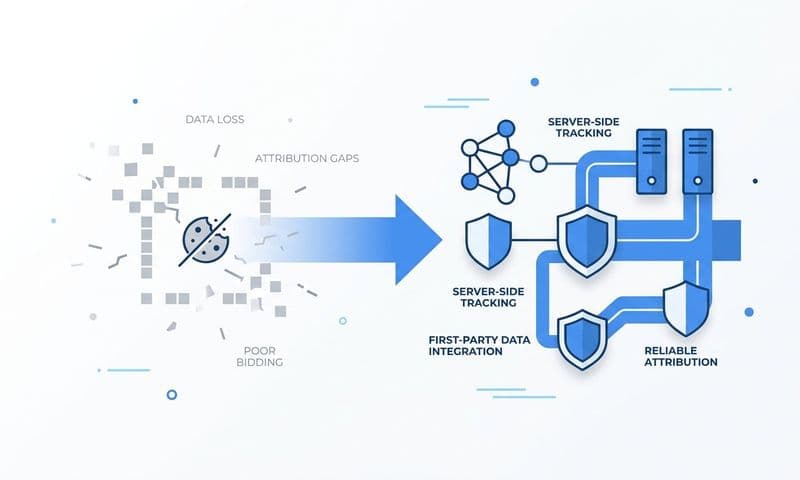
Cometly's biggest strength is its ability to capture what other tools miss. By combining server-side tracking with multi-touch attribution, it builds a complete picture of the customer journey even when cookies and device-level signals are unreliable. This is particularly valuable in a post-iOS 14 landscape where in-platform reporting from Meta or Google frequently over- or under-counts conversions.
What separates Cometly from many competitors is its Conversion Sync feature, which feeds enriched conversion data back to ad platforms like Meta, Google, and TikTok. This doesn't just help you understand your results; it actively improves your campaigns by giving ad platform algorithms better data to optimize against.
Key Features
Server-Side Tracking: Collects accurate conversion data despite cookie deprecation and iOS tracking restrictions, so your attribution doesn't degrade over time.
Multi-Touch Attribution: Tracks every paid channel touchpoint with flexible attribution models, giving you a realistic view of how channels work together.
AI-Powered Recommendations: Identifies top-performing ads and campaigns across every channel, then surfaces actionable recommendations to help you scale with confidence.
Conversion Sync: Sends enriched, conversion-ready events back to Meta, Google, TikTok, and other platforms to improve targeting and ad algorithm performance.
AI Chat: Lets you query your marketing data in plain language, making reporting faster and more accessible without needing a data analyst.
Best For
Cometly is built for digital marketers, growth teams, and agencies managing paid campaigns across multiple platforms who need a single source of truth. It works well across business models, from DTC ecommerce to lead generation to SaaS, making it a strong choice for teams that don't want to be locked into a niche-specific tool.
Pricing
Custom pricing based on ad spend. A demo is available on request, which is worth booking if you're managing campaigns at meaningful scale.
2. Hyros
Best for: High-ticket businesses and long-funnel offers with call-based sales processes
Hyros is an ad tracking and attribution platform built specifically for businesses with complex, extended sales cycles where standard pixel-based tracking falls short.
 7 Best Northbeam Alternatives for Small Business in 2026
Where This Tool Shines
Hyros is particularly strong for info product businesses, coaching programs, and high-ticket offers where the journey from ad click to purchase can span weeks or even months. Its print tracking technology is designed to maintain attribution across these longer windows, something most platforms struggle to do reliably.
The built-in call tracking integration is a genuine differentiator. For businesses where sales calls are a core part of the funnel, being able to attribute closed deals back to specific ad campaigns is enormously valuable and often impossible with standard tools.
Key Features
Print Tracking: Maintains attribution across long customer journeys that span weeks or months, ideal for high-ticket and complex offers.
Call Tracking Integration: Connects phone sales back to originating ad campaigns, closing the loop for call-heavy funnels.
AI Ad Optimization: Surfaces recommendations to help improve campaign performance based on actual revenue data.
Platform and CRM Integrations: Connects with major ad platforms and CRM systems to centralize attribution data.
Best For
Hyros is best suited for high-ticket coaches, course creators, agencies, and info product businesses where the sales cycle is long and calls are part of the conversion process. It's less suited to standard ecommerce or short-cycle lead generation.
Pricing
Starts around $199/month, with pricing that scales based on ad spend volume.
3. Triple Whale
Best for: Shopify-based ecommerce brands that want unified analytics and creative performance data
Triple Whale is an ecommerce-focused analytics and attribution platform with deep Shopify integration and a strong emphasis on creative performance tracking.
 7 Best Funnel.io Alternatives for Marketing Data Analytics in 2026
Where This Tool Shines
Triple Whale was built with DTC ecommerce in mind, and it shows. The platform's Shopify integration is among the deepest in the market, pulling in order data, customer lifetime value, and product-level performance alongside ad spend. This gives ecommerce teams a genuinely unified view of their business.
The creative analytics capabilities are a standout feature. Understanding which ad creatives are driving performance, not just which campaigns, is increasingly important as creative testing becomes a core growth lever for DTC brands. Triple Whale makes this analysis much easier than piecing it together manually.
Key Features
First-Party Pixel: Server-side tracking for Shopify stores that maintains accuracy despite browser and device-level restrictions.
Creative Analytics: Measures ad creative performance to help teams identify winning concepts and iterate faster.
Unified Dashboard: Aggregates data from Meta, Google, TikTok, and other platforms into a single view.
Post-Purchase Survey Attribution: Collects self-reported attribution data from customers to supplement algorithmic measurement.
Best For
Triple Whale is ideal for DTC ecommerce brands running on Shopify, particularly those with active creative testing programs and multi-channel ad strategies. It's less suited for B2B, lead generation, or non-Shopify businesses.
Pricing
A free tier is available; paid plans start around $100/month and scale with monthly revenue.
4. Northbeam
Best for: Established ecommerce brands that need advanced ML-based attribution and media mix modeling
Northbeam is a machine learning-powered attribution platform for ecommerce brands that combines multi-touch attribution with media mix modeling to deliver a more complete picture of marketing performance.
 9 Best Attribution Tools for Paid Advertising in 2026
Where This Tool Shines
Northbeam sits at the more sophisticated end of the ecommerce attribution market. Its ML-based approach to attribution means it doesn't rely purely on deterministic tracking, which makes it more resilient to the data gaps created by privacy changes. The combination of multi-touch attribution and media mix modeling gives brands two complementary lenses to evaluate their marketing spend.
Cross-device and cross-platform identity resolution is another area where Northbeam invests heavily. For brands with customers who regularly switch between devices before purchasing, this capability meaningfully improves attribution accuracy.
Key Features
ML-Based Multi-Touch Attribution: Uses machine learning with customizable lookback windows to assign credit across the customer journey.
Media Mix Modeling: Provides channel-level budget allocation insights to guide strategic spend decisions.
Creative Analytics: Benchmarks ad creative performance to identify what's resonating and what's not.
Cross-Device Identity Resolution: Connects touchpoints across devices and platforms for more accurate attribution.
Best For
Northbeam is best suited for ecommerce brands with significant monthly ad spend who need advanced measurement capabilities beyond standard multi-touch attribution. It's a more complex and expensive tool, so it's typically a better fit for scaling brands than early-stage businesses.
Pricing
Custom pricing; typically positioned for brands with substantial monthly ad spend.
5. Rockerbox
Best for: Brands running both digital and offline marketing who need unified measurement
Rockerbox is a marketing measurement platform that unifies multi-touch attribution, media mix modeling, and incrementality testing across digital and offline channels in a single platform.
 9 Best Paid Advertising Tracking Platforms in 2026
Where This Tool Shines
Rockerbox's key differentiator is its ability to bring offline channels into the same measurement framework as digital ones. If your marketing mix includes TV, podcasts, direct mail, or OOH alongside your digital campaigns, Rockerbox is one of the few platforms that can give you a genuinely unified view. This matters a lot for brands that have grown beyond pure digital acquisition.
The combination of multi-touch attribution, MMM, and incrementality testing in one platform is also notable. Most tools offer one or two of these methodologies; having all three available lets teams triangulate their results and build more confidence in their measurement conclusions.
Key Features
Unified Channel View: Brings digital and offline marketing channels into a single, deduplicated measurement framework.
Multi-Method Measurement: Combines multi-touch attribution, media mix modeling, and incrementality testing for comprehensive analysis.
Deduplicated Conversion Tracking: Prevents the double-counting that occurs when multiple platforms claim credit for the same conversion.
Offline Channel Support: Tracks TV, podcast, direct mail, and other offline channels alongside digital campaigns.
Best For
Rockerbox is a strong fit for mid-market and enterprise brands with diverse marketing mixes that include offline channels. It's also well-suited for teams that want to move beyond single-methodology measurement.
Pricing
Custom pricing based on channels tracked and business size.
6. Wicked Reports
Best for: Businesses with recurring revenue models that need long-term LTV attribution
Wicked Reports is an attribution platform focused on first-party data tracking with deep CRM integrations and long-term customer lifetime value reporting.
 7 Best Northbeam Alternatives for Small Business in 2026
Where This Tool Shines
Wicked Reports takes a different approach than most attribution tools by centering its analysis on long-term customer value rather than just initial conversions. This makes it particularly valuable for subscription businesses, membership sites, and any model where the real ROI of an ad campaign plays out over months or years rather than days.
The depth of its CRM integrations is another genuine strength. For businesses running complex automations through HubSpot, Salesforce, Keap, or similar platforms, Wicked Reports can connect ad-level data to CRM events in ways that most lighter-touch attribution tools simply can't.
Key Features
First-Party Data Tracking: Collects data through privacy-resilient methods that don't depend on third-party cookies.
LTV Attribution: Shows long-term ad ROI by cohort, helping businesses understand which campaigns acquired their most valuable customers.
Deep CRM Integrations: Connects with HubSpot, Salesforce, Keap, and other CRMs to link ad data to the full customer record.
Recurring Revenue Tracking: Built to handle subscription and membership business models where revenue compounds over time.
Best For
Wicked Reports is best for subscription businesses, membership sites, and any company where customer lifetime value is the primary metric for evaluating ad performance. It pairs particularly well with teams already using HubSpot or Keap heavily.
Pricing
Starts around $250/month, scaling with features and integrations.
7. SegMetrics
Best for: Marketing automation-heavy businesses that need granular funnel and LTV tracking
SegMetrics is a funnel analytics and attribution platform designed for businesses using marketing automation, offering granular journey tracking and lifetime value reporting.
 9 Best Paid Advertising Tracking Platforms in 2026
Where This Tool Shines
SegMetrics is built for the kind of businesses that live inside their marketing automation platforms. If your funnel involves complex email sequences, lead scoring, and multi-step nurture campaigns, SegMetrics connects those automation events back to the original ad source in ways that standard analytics tools simply can't.
The tag-based tracking approach is particularly useful for segmenting audiences and understanding how different audience segments respond to specific campaigns. This level of granularity helps teams make smarter decisions about both ad targeting and automation strategy.
Key Features
Marketing Automation Integrations: Deep connections with email and automation platforms to track engagement events alongside ad data.
Full Funnel Visualization: Maps the journey from ad click through purchase and post-purchase behavior.
LTV Attribution: Attributes lifetime value across multiple touchpoints to identify which ad sources produce the most valuable customers.
Tag-Based Tracking: Enables granular audience segmentation for more precise analysis.
Best For
SegMetrics is ideal for info product businesses, online education companies, and service businesses that rely heavily on marketing automation and email nurture sequences. It's a natural fit for teams using platforms like ActiveCampaign, Infusionsoft, or similar tools.
Pricing
Starts at $175/month, with higher tiers available for larger contact lists and more advanced features.
8. Dreamdata
Best for: B2B companies that need account-based attribution tied to pipeline and revenue
Dreamdata is a B2B revenue attribution platform that connects marketing touchpoints to pipeline and closed revenue at the account level.
Where This Tool Shines
B2B buying journeys are fundamentally different from B2C ones. Multiple stakeholders, long sales cycles, and account-level decision-making mean that standard attribution models built for individual consumers often produce misleading results in B2B contexts. Dreamdata is built from the ground up to handle this complexity.
By connecting marketing touchpoints to CRM pipeline data at the account level, Dreamdata can answer questions that most attribution tools can't: which campaigns influenced deals that closed six months later, which content assets touched the most pipeline, and how marketing activity maps to revenue by segment or persona.
Key Features
Account-Based Attribution: Tracks and attributes marketing touchpoints at the account level, not just the individual level.
Pipeline and Revenue Attribution: Connects marketing activity directly to CRM pipeline stages and closed revenue.
Content and Channel Analytics: Shows which content assets and channels are most influential in B2B buying journeys.
CRM and Ad Platform Integrations: Connects with Salesforce, HubSpot, LinkedIn Ads, and Google Ads for comprehensive data ingestion.
Best For
Dreamdata is purpose-built for B2B SaaS companies, agencies, and enterprise businesses with complex, multi-stakeholder sales cycles. It's the right choice when you need to connect marketing spend to pipeline and revenue in a CRM-centric way.
Pricing
A free tier is available; paid plans start around $999/month.
9. Ruler Analytics
Best for: Lead generation businesses that need closed-loop attribution from click to CRM revenue
Ruler Analytics is a closed-loop marketing attribution platform that connects ad clicks to revenue in the CRM, with built-in call tracking designed for lead generation businesses.
Where This Tool Shines
For lead generation businesses, the gap between a marketing conversion and an actual revenue outcome is often significant. A form fill or a call isn't revenue; it's a lead that may or may not close. Ruler Analytics is built specifically to bridge that gap, connecting marketing touchpoints all the way through to closed deals in the CRM.
The built-in call tracking is a practical differentiator for businesses where phone inquiries are a major lead source. Rather than treating calls as an attribution black hole, Ruler connects inbound calls to the original ad campaign that drove them, giving you a more complete picture of what your paid spend is actually generating.
Key Features
Closed-Loop Attribution: Tracks the full journey from first ad click through to closed deal recorded in the CRM.
Call and Form Tracking: Captures both phone and form-based conversions and attributes them back to originating campaigns.
Revenue Data Push: Sends revenue data back to Google Ads, Meta, and analytics tools to improve optimization signals.
Multi-Touch Attribution Models: Supports multiple attribution models for lead generation funnels to give teams flexibility in how they evaluate performance.
Best For
Ruler Analytics is an excellent fit for professional services firms, home services businesses, legal practices, and any lead generation operation where phone calls and form submissions are the primary conversion actions. It works particularly well alongside Google Ads and Meta campaigns where revenue feedback loops improve bidding performance.
Pricing
Starts around $200/month, scaling with call volume and feature requirements.
Finding the Right Platform for Your Campaigns
The right paid advertising tracking platform depends heavily on your business model, your marketing mix, and what questions you most need answered. There's no single winner for every situation, but a few patterns emerge from this list.
If you're managing paid campaigns across multiple channels and need a single source of truth that works for any business model, Cometly is the most versatile option. Its combination of server-side tracking, multi-touch attribution, AI-powered recommendations, and Conversion Sync creates a feedback loop that not only improves your reporting but actively improves your ad platform performance over time.
For Shopify-based ecommerce brands, Triple Whale and Northbeam are the natural starting points, with Triple Whale being more accessible for growing brands and Northbeam offering more sophisticated modeling for larger spenders. B2B teams with complex sales cycles will find Dreamdata purpose-built for their needs. Lead generation businesses with call-heavy funnels should look closely at Ruler Analytics or Hyros depending on whether the sales cycle is short or extended.
A few practical considerations before you commit to any platform: check how each tool handles your specific ad platforms and CRM, evaluate whether the pricing model aligns with how your spend scales, and prioritize tools that can send data back to your ad platforms. That last capability, often called conversion sync or event matching, is increasingly important as ad platform algorithms rely more heavily on the quality of conversion signals you feed them.
The measurement landscape in 2026 rewards marketers who invest in accurate, independent tracking. Native platform reporting will always have an inherent conflict of interest. An independent attribution layer gives you the clarity to make decisions based on what's actually driving revenue, not what each platform wants you to believe.
Ready to see exactly which ads are driving your revenue? Get your free demo of Cometly and start capturing every touchpoint across your campaigns.