You just spent $10,000 on Google Ads last month. Your dashboard shows 500 clicks and 50 form fills. Success, right? But here's what your data isn't telling you: 30 high-intent prospects called your business directly after seeing your ads. They never filled out a form. They picked up the phone because they were ready to buy now. Without phone call conversion tracking, those 30 conversations—and the revenue they generated—are invisible to your reporting. You're optimizing campaigns based on incomplete data, potentially cutting budget from your best-performing ads.
For businesses where phone calls drive revenue—whether you're in SaaS, professional services, or high-ticket sales—knowing which ads generate those calls is essential. A form fill might indicate interest, but a phone call signals intent. Someone willing to have a live conversation is typically further down the funnel and more likely to convert.
Without proper phone call conversion tracking, you're flying blind. You might be pouring budget into campaigns that generate clicks but never ring your phone, while underfunding the channels that drive actual conversations with qualified prospects.
This guide walks you through setting up comprehensive phone call conversion tracking from scratch. You'll learn how to connect your call data to your ad platforms, attribute calls to specific campaigns, and finally see the complete picture of which marketing efforts drive real conversations with prospects.
By the end, you'll have a system that captures every call-driving touchpoint and feeds that data back to optimize your campaigns. You'll know which keywords, ads, and audiences generate not just traffic, but actual phone conversations that turn into revenue.
Step 1: Choose Your Call Tracking Method and Tools
Before you can track phone calls, you need to understand the two fundamental approaches to call attribution. Each serves different use cases, and most businesses end up using both.
Dynamic Number Insertion (DNI) is the sophisticated approach for tracking calls from your website. It works by showing unique phone numbers to different visitors based on their traffic source. When someone clicks your Google Ad and lands on your site, they see one number. A visitor from Facebook sees a different number. This allows you to attribute each call back to its originating campaign, keyword, or ad.
Static tracking numbers are simpler. You assign a unique phone number to each offline channel—one for your billboard, another for your direct mail piece, a third for your print ad. When someone calls that number, you know exactly where they found it. No technology required beyond the tracking number itself.
Most marketers need DNI for their digital properties and static numbers for offline campaigns. The real power comes from using a call tracking provider that can handle both and centralize all your call data in one place. For a deeper dive into this topic, explore our guide on marketing attribution for phone calls.
When selecting a call tracking provider, prioritize platforms that integrate directly with your ad platforms and CRM. You need the ability to pass conversion data automatically to Google Ads, Meta, and any other platforms you use. Manual data exports and spreadsheet gymnastics defeat the purpose of real-time optimization.
Look for these essential features: call recording for quality assurance and training, whisper messages that tell your team which campaign generated each call, and robust attribution capabilities that can handle multi-touch journeys. If a prospect visits your site three times from different sources before calling, your system should capture that complete journey.
Map out every phone number that needs tracking. Your main website number, landing page numbers, Google Business Profile listing, any print materials still in circulation. Create a comprehensive list because gaps in your tracking create blind spots in your attribution.
Verify your provider can pass conversion data to all your ad platforms. This isn't just about reporting—it's about optimization. When Google Ads knows which clicks led to phone calls, its algorithm can find more people likely to call. When Meta's Conversions API receives call events, it can optimize for call conversions, not just clicks or page views.
The setup investment pays for itself quickly when you stop wasting budget on campaigns that don't drive calls and scale the ones that do.
Step 2: Implement Dynamic Number Insertion on Your Website
Dynamic Number Insertion sounds complex, but the implementation is straightforward. You're essentially installing a JavaScript snippet that swaps phone numbers based on how visitors arrived at your site.
Your call tracking provider will give you a script to install in your website's header section. This script needs to load on every page where you display phone numbers. If you're using a platform like WordPress, Webflow, or Shopify, you'll typically add this to your site-wide header settings so it appears across all pages automatically.
The script placement matters. It needs to load before your page content renders so numbers can be swapped before visitors see them. Most providers recommend placing it high in your header, after any critical CSS but before your body content.
Number pool configuration is where many marketers stumble. Your provider assigns you a pool of phone numbers—typically local numbers that match your business area code. When a visitor lands on your site, the system assigns them a unique number from this pool and remembers that assignment for their session.
The critical question: how large should your number pool be? If your pool is too small, you'll run out of numbers during traffic spikes. When that happens, multiple visitors from different sources see the same number, and your attribution breaks down.
A general guideline: your pool should be large enough to cover your peak concurrent sessions. If you typically have 50 people on your site simultaneously during busy periods, a pool of 50-75 numbers provides a safety buffer. High-traffic sites might need hundreds of numbers in their pool.
Next, set up swap targets—the phone numbers on your site that should be dynamically replaced. You'll identify these by CSS class, ID, or specific text strings. For example, you might tell the system to replace any instance of "(555) 123-4567" with a tracking number from your pool.
Most platforms let you set multiple swap targets. Your header number, footer number, contact page number, and any numbers embedded in buttons or call-to-action elements. Make sure you catch every instance where your phone number appears.
Testing is non-negotiable. Open your website in an incognito window and check that numbers are swapping. Then test from different traffic sources—click a Google Ad, visit from a Facebook post, type your URL directly. Each source should show a different tracking number. Check on mobile devices and different browsers to ensure the script works universally.
Watch for edge cases: numbers in images won't swap because they're not text. Numbers in JavaScript-heavy elements might not swap if the script loads in the wrong order. Test thoroughly and fix any gaps before you start making optimization decisions based on this data.
Step 3: Configure Call Conversions in Your Ad Platforms
Your call tracking system is capturing data, but that data isn't valuable until it flows to your ad platforms. This step connects the dots between calls and campaigns so your platforms can optimize for call conversions.
Google Ads setup offers two primary paths. The simplest approach: import conversions directly from your call tracking provider. Most established providers have built-in Google Ads integrations that automatically create conversion actions and pass call data. You'll authenticate your Google Ads account within your call tracking dashboard, select which call events should count as conversions, and the integration handles the rest. For detailed instructions, see our complete guide on Google Ads conversion tracking.
Alternatively, Google Ads offers native call tracking through forwarding numbers and call extensions. When you use Google forwarding numbers in your ads, Google tracks calls directly without third-party tools. This works well for call-only campaigns but doesn't capture calls from visitors who click your ad, browse your site, and call later.
The critical decision: what qualifies as a conversion? Not every call represents a qualified lead. Wrong numbers, quick hang-ups, and spam calls pollute your data if you count everything. Industry practice suggests call duration thresholds of 60-90 seconds as a baseline for qualified calls.
Think about your typical sales conversation. How long does it take to qualify a lead and move them toward a next step? If your average sales call runs 10 minutes, a 60-second threshold makes sense—it filters out wrong numbers while capturing legitimate interest. If you're in a business where quick calls convert, you might lower this to 30-45 seconds.
Set your conversion window thoughtfully. This determines how long after an ad click Google will credit that click with a call conversion. For businesses with short sales cycles, 30 days works well. If prospects research for weeks before calling, extend this to 60 or 90 days to capture the full attribution window.
Meta Conversions API configuration follows a similar pattern but requires server-side event passing. Your call tracking provider needs to send call events to Meta's Conversions API with proper attribution parameters—specifically the fbclid (Facebook Click ID) that connects the call back to the originating ad click. Understanding accurate Facebook conversion tracking is essential for getting this right.
Within Meta Events Manager, create a custom conversion for phone calls. Define the event name (typically "Call" or "PhoneCall"), set your duration threshold, and configure the conversion value if you assign dollar amounts to calls. Meta's algorithm uses this data to find more people likely to call, not just people likely to click.
For other platforms—LinkedIn, Microsoft Ads, TikTok—check whether your call tracking provider offers direct integrations. If not, you may need to use conversion import features or set up custom tracking through APIs. The investment is worth it for platforms where you spend significant budget.
Step 4: Connect Call Data to Your CRM and Attribution Platform
Call tracking without CRM integration is like having half a conversation. You know someone called, but you don't know what happened next. Did they book a meeting? Become a customer? Ghost your sales team? Connecting calls to your CRM closes this loop.
Most modern call tracking platforms integrate with major CRMs—Salesforce, HubSpot, Pipedrive, Zoho. The integration typically works by creating or updating contact records when calls occur. When someone calls your tracked number, the system logs that call as an activity on their contact record, including the traffic source, campaign, and any other attribution data.
This matters for two reasons. First, your sales team sees the full context when following up. They know this lead came from a Google Ad about a specific product, visited the pricing page twice, then called. That context shapes the conversation. Second, you can track calls through to closed revenue, enabling true ROI calculation rather than just call volume metrics.
UTM parameters and click IDs are the technical backbone of accurate attribution. When someone clicks your ad, that click carries parameters—utm_source, utm_campaign, gclid (Google Click ID), fbclid (Facebook Click ID). These parameters identify the exact ad, campaign, and keyword that drove the click.
Your call tracking system needs to capture these parameters and associate them with the visitor's session. When that visitor eventually calls, the system passes those parameters along with the call event. This is how you know that the call originated from your "Brand Keywords" campaign on Google Ads, not just "Google" generally. For a comprehensive overview, review our attribution marketing tracking complete guide.
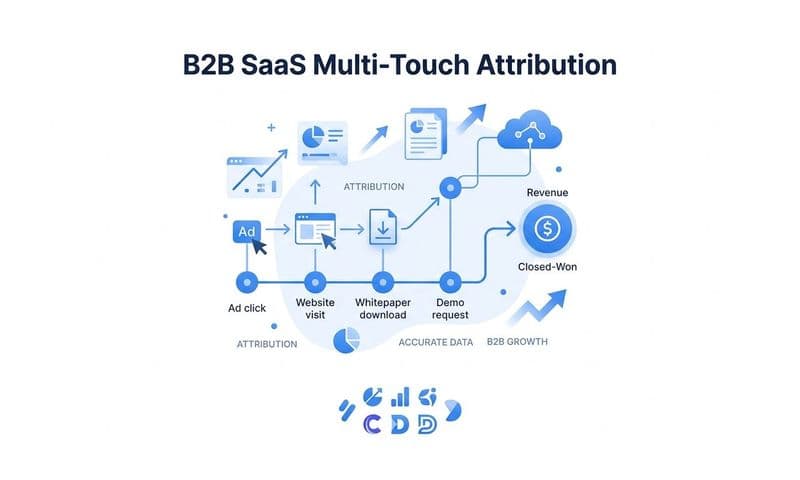
Configure your attribution platform to ingest call conversions alongside online conversions. If you're using a dedicated attribution tool, it should treat calls as first-class conversion events, not second-class citizens. Calls should appear in your customer journey maps, attribution reports, and channel performance analyses with the same weight as form fills or purchases.
Set up call outcome tracking to distinguish between call types. Not all calls are created equal. A 90-second call that books a demo is more valuable than a 90-second call asking about your hours. Configure your system to capture call outcomes—qualified lead, appointment booked, sale closed, wrong number, spam.
This often requires sales team input. After each call, your rep marks the outcome in the CRM or call tracking platform. Some advanced systems use AI to analyze call recordings and automatically categorize calls, but human verification typically improves accuracy.
These outcomes become powerful optimization signals. Instead of optimizing for call volume, you can optimize for qualified call volume. You might discover that one campaign drives 100 calls but only 10 are qualified, while another drives 30 calls with 25 qualified. The second campaign is clearly superior despite lower volume.
Step 5: Enable Conversion Sync to Feed Better Data Back to Ad Platforms
Your ad platforms are powerful optimization machines, but they're only as good as the data you feed them. Basic call tracking tells platforms "a call happened." Advanced conversion sync tells them "a call happened, it lasted 8 minutes, the lead was qualified, and it generated $5,000 in revenue."
That enriched data transforms how platforms optimize your campaigns. Instead of finding more people who might call, they find more people who call and convert to revenue.
Server-side event passing is the modern standard for reliable conversion tracking. Browser-based tracking faces limitations from iOS privacy features, cookie restrictions, and ad blockers. Server-side tracking bypasses these issues by sending conversion data directly from your server to the ad platform's API. Learn more about implementing first-party data tracking to future-proof your measurement.
Configure your call tracking provider to send enriched call conversion data through server-side connections to Google Ads, Meta Conversions API, and other platforms. This ensures conversion data flows reliably even when browser tracking fails.
Include conversion value data whenever possible. If you can estimate the average value of a qualified call based on your close rate and average deal size, pass that value with each call conversion. If a call converts to a sale immediately, pass the actual revenue.
This allows platforms to optimize for value, not just volume. Google's Smart Bidding strategies like Target ROAS (Return on Ad Spend) need conversion value data to work effectively. Without it, the algorithm treats a $100 call and a $10,000 call identically.
Offline conversion imports handle the lag between call and closed sale. In many businesses, a call is just the first step. The prospect books a meeting, goes through a demo, negotiates terms, and closes weeks or months later. Your ad platform needs to know about that eventual outcome to optimize effectively. Our guide on offline conversion tracking covers this process in detail.
Set up offline conversion imports to send closed deal data back to your ad platforms. When a deal closes in your CRM, the system should identify the originating campaign (using the click ID or other identifiers captured during the call) and send that conversion back to the platform.
Google Ads supports offline conversion imports through gclid matching. Meta uses fbclid. Most platforms offer some mechanism for attributing offline conversions back to online campaigns. The setup requires technical coordination between your CRM, call tracking system, and ad platforms, but the optimization gains justify the effort.
Verify data is flowing correctly using platform diagnostics and event testing tools. Google Ads Conversion Tracking status shows whether conversions are being recorded. Meta Events Manager shows event match quality and identifies attribution issues. Check these dashboards regularly, especially after making changes to your tracking setup.
Run test conversions to confirm the pipeline works end-to-end. Make a test call from a tracked source, verify it appears in your call tracking dashboard, confirm it flows to your CRM, and check that it registers as a conversion in your ad platform. This validation catches issues before they corrupt your optimization data.
Step 6: Validate Your Setup and Troubleshoot Common Issues
A tracking system is only valuable if it's accurate. Before you start making budget decisions based on call conversion data, validate that everything works correctly.
Run test calls from different traffic sources. Click a Google Ad, land on your site, note the tracking number displayed, and call it. Verify that call appears in your tracking dashboard with the correct source attribution—it should show as originating from that specific Google Ad campaign and keyword.
Repeat this test for other sources: Facebook ads, organic search, direct traffic, email campaigns. Each should attribute correctly to its source. If you see calls attributed to "direct" or "unknown" when you know they came from specific campaigns, your tracking has gaps. Understanding how to identify and resolve these issues is crucial for fixing conversion tracking gaps.
Common problems and solutions:
Number pool exhaustion: If your pool runs out of numbers during traffic spikes, multiple visitors from different sources see the same number. This corrupts attribution. Monitor your pool usage in your tracking dashboard and expand the pool if you're regularly hitting capacity.
Script conflicts: Your call tracking script might conflict with other JavaScript on your site, preventing numbers from swapping correctly. Check your browser console for JavaScript errors when the page loads. If you see errors related to your tracking script, work with your provider's support team to resolve conflicts.
Incorrect conversion counting: Some setups accidentally count the same call multiple times or miss calls entirely. Verify your conversion counts match between your call tracking dashboard and your ad platforms. Small discrepancies are normal due to attribution window differences, but large gaps indicate a problem. Review best practices for tracking conversions accurately to avoid these pitfalls.
Call duration and outcome data not passing: If your ad platforms show calls but not duration or outcome data, check your integration settings. Ensure you've configured which data fields should pass through to each platform. Some platforms require custom parameters to receive extended call data.
Set up alerts for tracking failures or significant drops in call volume attribution. Most call tracking platforms offer alerting features—configure them to notify you if call volume drops by more than 20% day-over-day, or if the percentage of unattributed calls spikes. These early warning signals help you catch and fix issues before they impact your optimization.
Monitor your tracking health weekly at minimum. Check that conversion volumes look reasonable, attribution percentages are stable, and no new "unknown source" categories have appeared. Tracking degrades over time as websites change, campaigns launch, and integrations update. Regular monitoring catches issues early.
Putting It All Together
With phone call conversion tracking properly configured, you now have visibility into one of the most valuable conversion actions for many businesses. Your quick-reference checklist: call tracking provider selected and integrated, dynamic number insertion live on your website, ad platform conversions configured with appropriate duration thresholds, CRM connected for complete lead tracking, conversion sync enabled to feed data back to ad algorithms, and validation tests completed.
The real power comes from acting on this data. Use your attribution insights to identify which campaigns drive not just calls, but qualified calls that convert to revenue. Then scale what works and cut what doesn't.
You might discover that your branded search campaigns drive high call volumes but low qualification rates—people calling to ask basic questions they could have found on your website. Meanwhile, your high-intent long-tail keywords drive fewer calls but higher qualification rates. That insight reshapes your bidding strategy entirely.
Or you might find that calls from Facebook ads have longer sales cycles than calls from Google Ads. Understanding this pattern helps you set appropriate attribution windows and avoid cutting campaigns that appear to underperform in short-term reporting but drive revenue over longer timeframes. Tracking cross-device conversion tracking methods becomes essential when prospects research on mobile but call from desktop.
The businesses winning at paid advertising in 2026 aren't just tracking clicks and form fills. They're capturing every conversion signal—including phone calls—and using that complete picture to make confident optimization decisions. They know which campaigns drive conversations, not just traffic.
Ready to see how your phone calls connect to the complete customer journey across all your marketing touchpoints? Cometly's multi-touch attribution captures every interaction—from first ad click to final phone call—so you can make confident decisions about where to invest your budget. Our platform integrates with your call tracking system to show the full path to conversion, not just the last touchpoint. Get your free demo today and start capturing every touchpoint to maximize your conversions.