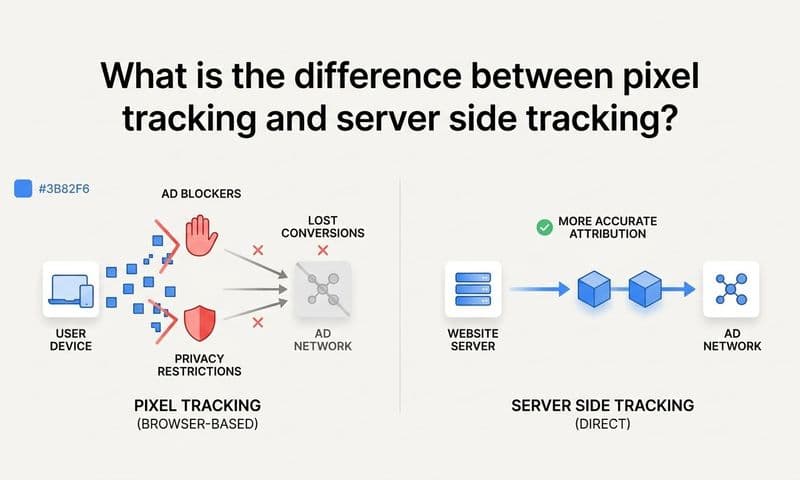
Browser privacy updates, iOS restrictions, and the slow death of third-party cookies have made traditional pixel tracking a shaky foundation for any serious marketing operation. Pixels miss conversions, fire inconsistently across browsers, and get blocked entirely by ad blockers. The result is that ad platforms optimize toward incomplete signals, attribution reports show gaps, and marketing teams make budget decisions based on data they cannot fully trust.
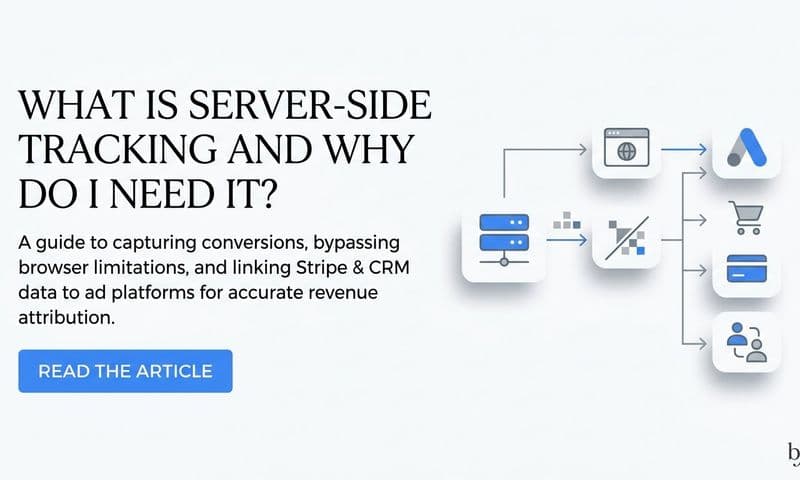
Server-side tracking, conversion APIs, and first-party data infrastructure have emerged as the practical replacements. Instead of relying on a browser to fire a JavaScript tag, these solutions send conversion events directly from your server to ad platform APIs like Meta Conversions API, Google Enhanced Conversions, and TikTok Events API. The data is more complete, more accurate, and far more resilient to browser-level interference.
The tools below cover the full spectrum of pixel tracking replacement solutions available in 2026, from comprehensive attribution platforms to infrastructure-layer hosting tools. Each has been evaluated on tracking accuracy, ease of implementation, attribution capabilities, and ad platform integration quality.
1. Cometly
Best for: Full-funnel marketing attribution with server-side tracking and AI-powered ad optimization across all major paid channels.
Cometly is a marketing attribution and analytics platform that connects your ad platforms, CRM, and website to give you a complete, accurate view of every customer journey in real time.
 9 Best Marketing Attribution Platforms to Compare in 2026
Where This Tool Shines
Cometly's core strength is combining server-side tracking with multi-touch attribution and AI-driven optimization in one platform. Rather than just solving the "pixels miss conversions" problem, it closes the loop by sending enriched first-party conversion data back to Meta, Google, TikTok, and other ad platforms through its Conversion Sync feature. This means the ad platform algorithms receive better signals, which improves targeting and campaign performance over time.
The AI layer adds a layer of intelligence that most tracking tools lack. The AI Ads Manager surfaces optimization recommendations by campaign and channel, while AI Chat lets you query your marketing data in plain language without building custom reports. For teams managing spend across multiple channels, this combination of accurate data and actionable recommendations is a meaningful differentiator.
Key Features
Server-Side Tracking: Bypasses browser limitations, ad blockers, and cookie restrictions by sending conversion events directly from the server.
Conversion Sync: Sends enriched first-party conversion data back to Meta, Google, TikTok, and other ad platforms to improve algorithm optimization.
Multi-Touch Attribution: Tracks every touchpoint across the full customer journey so you can see which channels and ads actually drive revenue.
AI Ads Manager: Delivers optimization recommendations by campaign and channel, helping teams scale what is working and cut what is not.
AI Chat: Allows you to query your marketing data in plain language, making analysis accessible without relying on data analysts or custom dashboards.
Real-Time Analytics Dashboard: Connects ad platform data, CRM events, and website behavior in a single unified view.
Best For
Cometly is built for digital marketers, in-house marketing teams, and agencies running paid campaigns across multiple channels who need accurate attribution data without cobbling together multiple tools. It is especially valuable for teams where pixel data has become unreliable and ad platform reporting is no longer trustworthy on its own.
Pricing
Subscription tiers are available. Visit cometly.com/pricing for current plan details and to find the right tier for your team size and data volume.
2. Segment
Best for: Engineering-led teams that need a flexible data infrastructure layer to collect, unify, and route first-party event data across their entire tool stack.
Segment is a Customer Data Platform (CDP) by Twilio that collects first-party events server-side and routes them to over 400 downstream marketing, analytics, and ad platform destinations.
 8 Best Attribution-Focused Platforms vs Segment: Which Approach Fits Your Marketing Stack in 2026
Where This Tool Shines
Segment is the infrastructure backbone that many modern data stacks are built on. Instead of letting each tool collect its own fragmented version of user data, Segment captures events once and distributes them everywhere. This makes it a powerful foundation for replacing pixel-based tracking because you control the data collection layer and can route clean, consistent events to any destination.
It is worth noting that Segment is not a native attribution tool. It does not tell you which ad drove a conversion or recommend budget shifts. It is a data plumbing solution, and it requires engineering resources to implement and maintain well. For teams with that capacity, it is one of the most flexible options available.
Key Features
Server-Side Event Collection: Captures user events from your server and sends them to 400+ downstream integrations reliably.
Unified Customer Profiles: Builds a single user profile from cross-channel event data, reducing identity fragmentation.
Reverse ETL: Syncs data from your data warehouse back into your marketing and sales tools for activation.
Protocols: Enforces data governance and schema consistency across all event streams.
Functions: Allows custom event transformations and logic without building separate middleware.
Best For
Segment is best suited for companies with engineering teams who want maximum flexibility and control over their data infrastructure. It is a strong fit for SaaS companies, large ecommerce operations, and organizations that already have a data warehouse and want to activate that data across tools.
Pricing
A free tier is available for smaller data volumes. Paid plans scale with monthly tracked users and can grow significantly for high-traffic properties. See segment.com/pricing for current tiers.
3. Triple Whale
Best for: Shopify DTC brands that want blended attribution combining first-party pixel data with post-purchase survey insights.
Triple Whale is an ecommerce attribution and analytics platform built specifically for Shopify brands, combining a first-party pixel with post-purchase surveys and AI-driven insights.
 9 Best Pixel Tracking Replacement Solutions in 2026
Where This Tool Shines
Triple Whale's approach to replacing pixel tracking is smart for the DTC context. It layers a first-party pixel with zero-party data from post-purchase surveys, creating a blended attribution model that accounts for channels that are notoriously hard to track, like podcasts, influencers, and organic social. This is particularly valuable because many DTC brands run significant spend on channels where traditional pixels were already unreliable.
The Moby AI layer adds analysis on top of that data, helping teams identify creative performance patterns and channel trends without manual reporting. The deep Shopify integration means order-level data flows directly into the platform, giving you revenue attribution tied to actual transactions rather than estimated conversions.
Key Features
First-Party Pixel: Cookieless conversion tracking that is not dependent on third-party cookies or browser permissions.
Post-Purchase Survey: Collects zero-party attribution data directly from customers at the point of purchase.
Moby AI: Analyzes campaign and creative performance data and surfaces actionable insights.
Summary Dashboard: Provides blended ROAS and channel contribution metrics in a single view.
Shopify Integration: Connects directly to Shopify order data for revenue-level attribution accuracy.
Best For
Triple Whale is purpose-built for Shopify DTC brands, particularly those spending across multiple paid and organic channels. It is not designed for SaaS businesses or non-Shopify stores. If your stack is built on Shopify and you are running DTC campaigns, it is one of the most purpose-fit options on this list.
Pricing
Plans start around $129/month for Shopify stores. Pricing scales with store size and features. Verify current pricing at triplewhale.com.
4. Northbeam
Best for: Scaling ecommerce advertisers with significant cross-channel ad spend who need ML-powered attribution and media mix modeling.
Northbeam is a machine learning attribution and media mix modeling platform designed for ecommerce brands running substantial paid advertising across multiple channels.
 9 Best Attribution Modeling Tools for Enterprises in 2026
Where This Tool Shines
Northbeam's distinguishing feature is that its attribution models are trained on your own data rather than using generic rule-based logic. This makes the models more accurate as data volume grows, and it allows the platform to account for the nuances of your specific customer journey rather than applying a one-size-fits-all approach.
The media mix modeling layer adds a strategic dimension that most attribution tools lack. MMM helps teams forecast the impact of budget shifts across channels, which is particularly useful for brands that are trying to scale spend beyond the channels where pixel-based tracking was historically strongest. Keep in mind that Northbeam requires meaningful data volume to produce reliable model outputs.
Key Features
ML Attribution Models: Machine learning models trained on your own conversion and channel data for more accurate attribution.
Media Mix Modeling: Budget forecasting and scenario planning across channels, including upper-funnel spend.
Cross-Channel Reporting: Unified view across paid, organic, and direct traffic sources.
Custom Attribution Windows: Configurable lookback windows to match your actual sales cycle.
Incrementality Testing: Built-in capabilities to validate whether a channel is actually driving incremental conversions.
Best For
Northbeam is best for ecommerce brands with significant ad spend across multiple channels who have outgrown simpler attribution tools. It requires a meaningful data volume to produce reliable ML models, so it is better suited for established brands than early-stage businesses.
Pricing
Pricing is available on request. See northbeam.io for details and to speak with their team.
5. Rockerbox
Best for: Mid-market performance marketing teams that need a single source of truth combining multi-touch attribution, media mix modeling, and incrementality testing.
Rockerbox is a marketing measurement platform that centralizes all channel data into one view, combining MTA, MMM, and incrementality testing in a single platform.
 9 Best Pixel Tracking Replacement Solutions in 2026
Where This Tool Shines
Rockerbox takes a measurement-first approach rather than a tracking-first one. The platform is designed to give performance marketing teams a defensible, unified view of channel contribution by combining multiple measurement methodologies. This is valuable because no single attribution model tells the complete story, and having MTA, MMM, and incrementality testing in one place allows teams to triangulate toward better decisions.
The channel data ingestion layer is comprehensive, pulling in paid, organic, and even offline channel data. This makes Rockerbox particularly useful for teams running a mix of digital and non-digital channels who have struggled to get a unified view of performance.
Key Features
Unified Channel Ingestion: Centralizes data from paid, organic, and offline channels into a single reporting layer.
Multi-Touch Attribution: Customizable attribution models that can be adjusted to reflect your business logic.
Media Mix Modeling: Captures the impact of upper-funnel and brand channels that are difficult to track at the event level.
Incrementality Testing: Validates whether individual channels are driving real incremental conversions or just taking credit.
Ad Platform Integrations: Direct connections to major ad platforms and CRMs for data ingestion and reporting.
Best For
Rockerbox fits mid-market companies with dedicated performance marketing teams who want a sophisticated measurement framework without building it from scratch. It is a strong fit for teams that run a mix of digital and offline channels and need to justify spend across all of them.
Pricing
Pricing is available on request. Visit rockerbox.com to connect with their team and discuss pricing based on your data volume and needs.
6. Elevar
Best for: Shopify merchants and ecommerce agencies that need a managed server-side tracking setup with Meta CAPI and Google Enhanced Conversions out of the box.
Elevar is a server-side tracking platform purpose-built for Shopify, handling Meta Conversions API, Google Enhanced Conversions, and other ad platform API connections through a managed GTM server container.
 9 Best Conversion Tracking Tools for Ecommerce in 2026
Where This Tool Shines
Elevar solves a specific and very real problem for Shopify stores: implementing server-side tracking correctly is technically complex, and most ecommerce teams do not have the engineering resources to set it up from scratch. Elevar handles the server-side GTM container setup, manages the connections to Meta CAPI and Google Enhanced Conversions, and maintains those integrations as platforms update their APIs.
The user identity resolution feature is particularly valuable. By improving event match quality, Elevar helps ad platforms better connect server-side events to the right user profiles, which directly improves the quality of the conversion signals being sent back to Meta and Google. Better match quality means better optimization from the ad platform algorithms.
Key Features
Managed sGTM Container: Handles server-side Google Tag Manager setup and maintenance for Shopify stores.
Meta CAPI and Google Enhanced Conversions: Pre-built connections to the most important ad platform conversion APIs.
User Identity Resolution: Improves event match quality to strengthen the connection between server events and user profiles in ad platforms.
Pre-Built Ecommerce Templates: Ready-to-use tracking templates for common Shopify events like add to cart, checkout, and purchase.
Data Layer Monitoring: Alerts you to tracking errors and data layer issues before they impact your conversion data.
Best For
Elevar is ideal for Shopify stores and ecommerce agencies that want reliable server-side tracking without a heavy engineering lift. It is especially well-suited for agencies managing multiple Shopify clients who need a repeatable, scalable tracking setup.
Pricing
Plans are tiered based on monthly order volume. See getelevar.com/pricing for current tiers and to find the right plan for your store size.
7. Stape
Best for: Developers and agencies that want affordable server-side GTM container hosting without managing their own cloud infrastructure.
Stape is a server-side Google Tag Manager container hosting service that provides a low-cost infrastructure layer for running sGTM without the overhead of managing your own servers.
Where This Tool Shines
Stape lowers the barrier to entry for server-side tracking significantly. Running your own sGTM container on Google Cloud Platform requires server configuration, maintenance, and ongoing cost management. Stape handles all of that and adds a library of pre-built server-side tags and templates through the Stape Store, making it faster to implement connections to Meta CAPI, GA4, and other platforms.
The cookie keeper tool is a practical addition that extends first-party cookie lifespans, addressing one of the specific ways that Safari's Intelligent Tracking Prevention (ITP) degrades tracking quality. For agencies and developers who want to offer server-side tracking as a service to clients, Stape's pricing model makes it commercially viable at almost any scale.
Key Features
Managed sGTM Hosting: Hosts your server-side GTM container with custom domain support and no server management required.
Pre-Built Tag Templates: Ready-to-use server-side tags for Meta CAPI, GA4, and other major platforms via the Stape Store.
Cookie Keeper: Extends first-party cookie lifespans to reduce data loss from browser-level tracking prevention.
Affordable Pricing: Low-cost hosting tiers that make sGTM accessible for smaller teams and agencies.
Custom Domain Support: Allows you to run the sGTM container on your own domain for better first-party data collection.
Best For
Stape is best for developers, technical marketers, and agencies who are comfortable working in Google Tag Manager and want a cost-effective hosting solution for server-side containers. It is an infrastructure tool, not an attribution platform, so it works best as part of a broader tracking stack.
Pricing
Hosting plans start at a few dollars per month, making it one of the most accessible entry points for server-side tracking infrastructure. See stape.io/pricing for current tiers.
8. RedTrack
Best for: Media buyers and affiliate marketers who need granular click-level tracking using cookieless S2S postbacks and direct ad network API integrations.
RedTrack is a performance and affiliate tracking platform that uses cookieless server-to-server postbacks and direct API integrations instead of browser-based pixels.
Where This Tool Shines
RedTrack is built for a specific type of marketer: the media buyer or affiliate manager who needs to track performance at the click level across multiple offers, traffic sources, and networks. Its S2S postback architecture means conversions are tracked without relying on cookies or browser-fired pixels at all, which makes it inherently more resilient to the privacy changes that have degraded traditional pixel tracking.
The rule-based traffic distribution and offer rotation features set it apart from general attribution tools. These capabilities are essential for performance marketers who are actively testing multiple creatives, landing pages, or offers and need to route traffic intelligently based on conversion data.
Key Features
Cookieless S2S Tracking: Server-to-server postbacks eliminate browser dependency for conversion tracking entirely.
Direct Ad Network API Integrations: Connects directly to major ad networks for accurate cost and conversion data.
Click-Level Reporting: Granular conversion path data at the individual click level for deep performance analysis.
Affiliate and Partner Tracking: Custom commission rules and partner-level reporting for affiliate program management.
Rule-Based Traffic Distribution: Routes traffic across offers and landing pages based on configurable rules and performance data.
Best For
RedTrack is purpose-built for media buyers, affiliate marketers, and performance marketing teams running campaigns across multiple ad networks and offers. It is less suited for brand advertisers or teams focused on upper-funnel measurement.
Pricing
Plans start around $149/month. Verify current pricing and plan details at redtrack.io.
9. Hyros
Best for: High-ticket businesses, coaches, and course creators with longer sales cycles who need email-based cross-device tracking and revenue-tied attribution.
Hyros is an AI-powered ad tracking platform that uses email-based identity resolution to follow users across sessions and devices, designed for businesses where the sales cycle extends well beyond a single session.
Where This Tool Shines
Hyros takes a fundamentally different approach to the tracking problem. Rather than relying on cookies, device fingerprinting, or server-side events alone, it anchors identity resolution to email addresses. When a user opts in anywhere in your funnel, that email becomes the persistent identifier that connects ad clicks, page visits, and eventual purchases across sessions and devices. This makes it particularly effective for businesses with long consideration periods where a user might interact with an ad weeks before converting.
The phone call and offline conversion tracking capabilities address a gap that most digital tracking tools ignore entirely. For businesses where a meaningful portion of revenue comes through phone sales or consultations, having those conversions attributed back to the originating ad source is genuinely valuable data that pixel-based tracking was never equipped to capture.
Key Features
Email-Based Identity Resolution: Uses email addresses as persistent identifiers to track users across sessions, devices, and time.
AI Attribution Modeling: Attribution logic designed for longer sales cycles where standard last-click or 7-day windows miss the full picture.
Offline and Phone Call Tracking: Connects phone call conversions and offline sales back to originating ad sources.
Ad Platform Integration: Sends optimized conversion signals back to ad platforms for improved algorithm performance.
Revenue-Focused Reporting: Attribution reporting tied to actual sales revenue rather than proxy conversion events.
Best For
Hyros is well-suited for info-product businesses, coaches, consultants, and high-ticket service providers with multi-session sales cycles. It is less relevant for ecommerce brands with short purchase windows or SaaS teams with product-led growth models.
Pricing
Pricing is available on request. Visit hyros.com to connect with their team and get a quote based on your traffic volume and use case.
Which Tool Is Right for Your Team
The right pixel tracking replacement depends heavily on your business model, technical resources, and what you are actually trying to measure.
For teams running paid campaigns across Meta, Google, TikTok, and other channels who want a single platform that handles server-side tracking, multi-touch attribution, and AI-powered optimization, Cometly is the most comprehensive starting point. It closes the full loop from accurate data collection to conversion sync back to ad platforms, without requiring you to stitch together multiple tools.
If you are a Shopify DTC brand, Triple Whale and Elevar are both purpose-built for your stack. Triple Whale gives you blended attribution with post-purchase survey data. Elevar gives you the server-side tracking infrastructure to improve your Meta CAPI and Google Enhanced Conversions match quality. Many Shopify brands use both in combination.
For agencies and developers who want low-cost server-side GTM infrastructure, Stape is the most accessible entry point. It is an infrastructure layer, not an attribution tool, so pair it with an analytics platform for full measurement coverage.
Performance marketers and affiliate managers running multi-network campaigns will find RedTrack's S2S postback architecture and click-level reporting more relevant than most attribution platforms. Hyros is the standout choice for high-ticket businesses with longer sales cycles where email-based identity resolution fills the gaps that other tools leave open.
For larger ecommerce operations with significant ad spend and the need for media mix modeling alongside multi-touch attribution, Northbeam and Rockerbox both offer sophisticated measurement frameworks worth evaluating.
If you are ready to move beyond unreliable pixels and start making budget decisions on accurate, complete attribution data, start with a Cometly demo. Get your free demo and see how server-side tracking, multi-touch attribution, and AI-powered recommendations work together to give you a clear picture of what is actually driving your revenue.