Most SaaS marketing teams are running campaigns. The problem is that very few of them can tell you, with confidence, which campaigns are actually driving revenue.
You're spending across Google, LinkedIn, and paid social. Leads are coming in. The pipeline looks active. But when a deal closes, no one can trace it back to the specific campaign, creative, or channel that started the conversation. That disconnect is not a reporting problem. It's a structural one, and it costs teams real money every month in misallocated budget.
A SaaS marketing campaign is fundamentally different from a generic digital campaign. You're not selling a product someone adds to a cart and buys in one session. You're guiding a buyer through a journey that often spans weeks or months, involves multiple stakeholders, and includes research, comparison, trial, and negotiation before a deal ever closes. That complexity demands a different approach to campaign design, tracking, and optimization.
This guide is built for SaaS marketers who want to move beyond surface-level metrics and build campaigns that are measurable from first click to closed-won revenue. Whether you're running a product-led growth motion, a sales-led model, or a hybrid of both, the principles here will help you build campaigns that actually connect to business outcomes.
Why SaaS Campaigns Are a Different Beast
Think about how a SaaS buyer actually behaves. They don't see your ad on a Tuesday and sign a contract on Wednesday. They read a blog post, watch a comparison video, ask colleagues for recommendations, sign up for a free trial, get a demo, loop in their manager, and then decide. That journey can take anywhere from two weeks to six months depending on deal size and company complexity.
This is what makes SaaS campaign measurement so difficult. By the time a deal closes, a buyer may have interacted with your brand across a dozen different touchpoints. If you're only measuring last-click conversions, you're crediting the final step and ignoring everything that built the relationship.
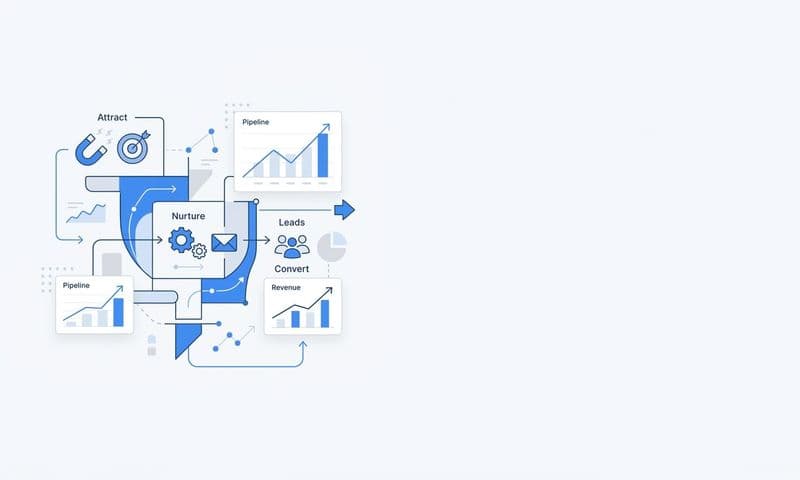
The SaaS funnel also has distinct stages that require completely different campaign objectives and success metrics. At the top of the funnel, you're building awareness and educating buyers who may not even know they have the problem you solve. In the middle, you're capturing demand from buyers who are actively researching. At the bottom, you're converting intent into action, whether that's a demo request, a free trial signup, or a direct conversation with sales.
Each stage requires its own message, its own creative, and its own definition of success. Running a single campaign with a single goal and hoping it works across all stages is one of the most common mistakes SaaS teams make.
The motion your company uses also shapes your campaign structure significantly. Product-led growth companies optimize for free trial signups and in-product activation. The campaign goal isn't just to get a click, it's to get someone into the product and experiencing value as quickly as possible. Sales-led companies, on the other hand, focus on pipeline generation: demo requests, MQL creation, and opportunities handed to the sales team.
Many B2B SaaS companies operate a hybrid of both, which adds another layer of complexity. You might be running PLG campaigns to drive self-serve signups while simultaneously running sales-led campaigns targeting enterprise buyers who need a consultative process. These two motions require different landing pages, different conversion events, and different attribution logic.
The takeaway here is straightforward. If you're applying generic digital marketing thinking to a SaaS campaign, you're building on a foundation that doesn't fit the problem. SaaS campaigns need to be designed around buyer behavior, not just channel mechanics.
The Core Components of a SaaS Marketing Campaign
Before you write a single ad or set a single budget, three foundational decisions need to be made: what funnel stage you're targeting, who you're targeting, and where you're going to reach them. Getting these right before launch is what separates campaigns that perform from campaigns that generate activity without outcomes.
Campaign Goal Alignment: Every campaign must map to a specific funnel stage, and that stage determines everything downstream. A top-of-funnel awareness campaign should be measured by reach, engagement, and brand recall signals. A mid-funnel demand capture campaign should be measured by content downloads, webinar registrations, and return visits. A bottom-of-funnel conversion campaign should be measured by demo requests, trial signups, and cost per qualified lead. Defining these metrics before launch prevents the common mistake of judging an awareness campaign by conversion rates, or a conversion campaign by impressions.
Audience Segmentation: Effective SaaS campaigns are built around a clearly defined ideal customer profile. This means going beyond basic demographic targeting and layering in firmographic criteria like company size, industry vertical, and technology stack, alongside behavioral signals like intent data, competitor research activity, and product category search terms. Job title and seniority matter too, especially in B2B where the person who uses your product is often different from the person who approves the budget. Retargeting segments based on website behavior, content consumption, and trial activity tend to be among the highest-performing audiences in SaaS campaigns because they reflect genuine interest and familiarity.
Channel Selection: The right channel is the one where your ICP actually spends time and is in the right mindset to engage with your message. LinkedIn is the dominant channel for B2B SaaS teams targeting enterprise buyers because of its professional targeting capabilities around company size, job title, and industry. Google Search captures buyers who are actively researching solutions, making it ideal for high-intent demand capture campaigns. Paid social platforms like Meta are effective for retargeting and awareness, particularly for reaching buyers earlier in their journey. Content marketing and SEO support organic demand generation over time and compound in value in ways that paid channels don't.
The best SaaS campaigns don't rely on a single channel. They use a coordinated mix where each channel plays a specific role in the buyer journey, and the measurement system ties them all together into a coherent picture of what's working.
Building a Campaign That Tracks the Full Buyer Journey
Here's where most SaaS campaigns fall apart. The campaign itself might be well-designed, but the tracking infrastructure underneath it is too fragile to tell you what's actually happening. You end up with data that looks complete but is actually missing significant portions of the buyer journey.
Multi-touch attribution is not optional for SaaS. Because a single conversion typically involves multiple touchpoints across weeks or months, last-click attribution will systematically misrepresent which channels are driving pipeline. It will over-credit the final touchpoint, usually a branded search or a direct visit, and under-credit the earlier channels that generated awareness and intent. This leads to budget decisions that cut the channels doing the most important work.
Linear, time-decay, and data-driven attribution models each offer a more complete view of the buyer journey. Data-driven models, in particular, use actual conversion path data to assign credit based on which touchpoints statistically correlate with closed deals. For teams with enough conversion volume, this approach produces the most accurate picture of channel contribution.
Tracking infrastructure has also become more complex as browser-based tracking has degraded. Cookie deprecation and ad blockers mean that a meaningful portion of conversion events are simply not being captured by pixel-based tracking alone. This creates gaps in your attribution data that make it harder to optimize campaigns accurately.
Server-side tracking and Conversion API integrations address this directly. By sending conversion data from your server rather than the browser, you maintain data accuracy regardless of what's happening on the client side. Connecting your Conversion API to platforms like Meta and Google ensures that those platforms receive complete, accurate conversion signals, which directly improves their machine learning optimization and your campaign performance.
Closing the loop between marketing activity and revenue outcomes requires connecting your CRM data to your ad platforms. This is the step most teams skip, and it's the most valuable one. When you can see not just which campaigns generated leads but which campaigns generated qualified pipeline and closed-won deals, your optimization decisions become fundamentally different. You stop chasing the campaigns with the lowest cost per lead and start investing in the campaigns that produce buyers who actually convert and retain.
This kind of end-to-end visibility, from first ad click to closed-won revenue, is what transforms a SaaS marketing campaign from a traffic-generation exercise into a genuine revenue driver.
The Metrics That Actually Matter for SaaS Campaigns
Impressions tell you how many people saw your ad. Click-through rate tells you how many people were curious enough to click. Neither of those metrics tells you whether your campaign is generating revenue. For SaaS teams serious about scaling, the metrics that matter are the ones connected to pipeline and revenue outcomes.
Cost per Qualified Lead: Not all leads are equal. A lead who matches your ICP and has buying intent is worth dramatically more than a lead who downloaded a checklist out of curiosity. Measuring cost per qualified lead, rather than cost per lead, forces your campaigns to optimize for quality rather than volume.
Cost per Pipeline Opportunity: This metric connects campaign spend directly to sales activity. When you know how much it costs to generate a single pipeline opportunity by channel, you can make informed decisions about where to increase investment and where to pull back. It also creates a shared language between marketing and sales around what a campaign is actually worth.
Customer Acquisition Cost (CAC) and Payback Period: CAC is the total cost to acquire a paying customer, and payback period is how long it takes to recover that cost through subscription revenue. These are the financial guardrails that determine whether a campaign is worth scaling. A campaign that produces a short payback period is one worth investing in aggressively. A campaign with a long payback period needs to be restructured or paused, regardless of how good the engagement metrics look.
Revenue Influenced by Channel: This metric captures the contribution of each channel to closed revenue, even when that channel wasn't the final touchpoint. It's particularly important for top-of-funnel channels like content and social, which often play a significant role in buyer journeys without ever being the last click before conversion.
Cohort analysis and pipeline velocity round out the picture by revealing how fast leads are moving through the funnel and which campaigns produce buyers who close faster and retain longer. A campaign that generates slower-moving, lower-quality pipeline is not performing as well as its lead volume might suggest.
How to Optimize and Scale Campaigns Using Attribution Data
Most SaaS teams discover, once they have proper attribution in place, that their budget allocation doesn't match their actual performance data. Channels that were assumed to be low performers turn out to be significant contributors to pipeline. Campaigns that generated high lead volume turn out to produce buyers with poor retention. Attribution data surfaces these misalignments, and that's where the real optimization opportunity lives.
The first step is identifying which channels and creatives are driving real revenue, not just surface-level engagement. This means tracing campaign activity all the way through to closed-won deals and calculating revenue influenced per channel. When you do this analysis, the ranking of your channels by performance often looks very different from the ranking by click volume or lead count.
AI-driven analysis accelerates this process significantly. Rather than manually reviewing campaign data across multiple platforms and trying to identify patterns, AI can surface high-performing ads and underperforming segments faster and with greater accuracy. This enables teams to reallocate budget with confidence rather than relying on intuition or anecdotal feedback from sales.
Feeding enriched, first-party conversion data back to ad platforms is one of the highest-leverage optimization moves available to SaaS teams today. When Meta and Google receive complete, accurate conversion signals that include downstream revenue outcomes, not just form fills, their machine learning algorithms can optimize toward the audiences and behaviors that actually produce revenue. Over time, this creates a compounding improvement in targeting quality and cost per acquisition.
Scaling a SaaS marketing campaign is not about spending more money across the board. It's about identifying the campaigns and channels that produce the best pipeline quality and shortest payback period, and then concentrating investment there while restructuring or pausing what isn't working. Attribution data makes this decision-making process systematic rather than subjective.
The teams that scale campaigns successfully are the ones who treat optimization as a continuous process driven by revenue data, not a periodic exercise driven by gut feel.
From Campaign Launch to Revenue Impact
A SaaS marketing campaign that drives real results doesn't start with creative. It starts with infrastructure. Before you spend a single dollar on ads, you need a clearly defined ICP, a mapped funnel with stage-specific goals, and tracking in place that can follow a buyer from their first ad interaction all the way through to a closed deal.
This means your CRM, ad platforms, and analytics tools need to be connected. It means your conversion events need to be firing accurately, including through server-side tracking to account for the gaps that browser-based methods leave behind. And it means your team needs to agree on the metrics that define success at each funnel stage before the campaign goes live.
The teams that consistently scale campaigns are the ones who treat attribution as an ongoing operational practice, not a one-time setup. They review pipeline data by channel regularly. They connect campaign performance to revenue outcomes in every reporting cycle. And they use that data to make budget decisions that compound over time.
Cometly is built specifically for this kind of work. It connects your ad spend, customer journey data, and revenue in one place, giving B2B SaaS marketers a single source of truth that spans from first ad click to closed-won deal. With multi-touch attribution, server-side tracking, Conversion API integration, and AI-driven recommendations, Cometly gives you the clarity to know exactly which campaigns are driving pipeline and which ones are burning budget without results.
Whether you're managing a PLG motion, a sales-led funnel, or a hybrid of both, the ability to see your full customer journey and connect it to revenue is what separates campaigns that plateau from campaigns that scale.
The Bottom Line
The difference between a SaaS marketing campaign that plateaus and one that scales is not creative quality or channel selection. It's measurement clarity. When you can see which campaigns are driving qualified pipeline, which channels are influencing closed deals, and which budget allocations are producing the best payback periods, every decision you make gets sharper.
The pillars are consistent across every high-performing SaaS team: ICP-aligned targeting that focuses on quality over volume, full-funnel tracking that captures the entire buyer journey, revenue-connected metrics that tie campaign activity to business outcomes, and AI-assisted optimization that accelerates the process of finding what works and scaling it.
Getting there requires the right infrastructure. It requires connecting your ad platforms, CRM, and analytics into a system that gives you a complete, accurate view of performance, not just the portion of the journey that happens to be easy to track.
If you're ready to connect your campaigns to real revenue outcomes and make budget decisions with confidence, Get your free demo and see how Cometly gives B2B SaaS marketers the attribution clarity they need to build, track, and scale what actually works.