You've been running Facebook and Google campaigns for months. The ad platforms show strong click-through rates, your landing page converts well in tests, and your sales team is closing deals. But when you check your analytics, something doesn't add up. A huge chunk of your conversions show up as "direct" or "organic"—even though you know they came from paid ads. Your attribution reports look like Swiss cheese, full of mysterious gaps where Safari users should be.
Welcome to the world of Intelligent Tracking Prevention (ITP), Apple's privacy technology that's fundamentally changing how marketers track campaign performance. Since 2017, Safari has been quietly dismantling the tracking infrastructure that digital marketing relied on for decades. And with each update, the restrictions get tighter.
Here's what makes this particularly challenging: Safari isn't some niche browser you can ignore. It dominates mobile browsing, especially among high-value demographics in North America and Europe. When your tracking breaks for Safari users, you're losing visibility into a significant portion of your customer journey—and your ad platforms are losing the conversion signals they need to optimize effectively.
This article breaks down exactly what Safari ITP does, why it creates attribution blind spots, and how modern marketers are adapting their tracking strategies to maintain accurate data despite these privacy restrictions. Because understanding the problem is the first step to solving it.
How Safari's Privacy Shield Actually Works
Intelligent Tracking Prevention isn't just a simple cookie blocker. It's a sophisticated machine learning system that actively identifies and restricts tracking resources across the web. Think of it as a privacy bodyguard that's constantly analyzing how websites try to follow you around the internet.
At its core, ITP uses on-device machine learning to classify domains based on their tracking behavior. When Safari determines that a domain has cross-site tracking capabilities—meaning it tries to track users across multiple websites—it applies strict limitations to how that domain can store and access data.
The restrictions come in two main flavors, and both create serious problems for marketing attribution. First-party cookies set via client-side JavaScript get capped at just 7 days of storage. This means if someone clicks your ad on Monday but doesn't convert until the following Tuesday, Safari has already wiped the cookie that would connect that conversion back to your campaign.
But it gets worse. If the referring domain is classified as having tracking capabilities—which includes many ad platforms and analytics services—that 7-day window shrinks to just 24 hours. Picture this: a potential customer clicks your LinkedIn ad on their iPhone during their morning commute, browses your site, then comes back two days later ready to buy. Safari has already deleted the tracking cookie. Your analytics show that sale as "direct traffic," and LinkedIn never receives the conversion signal.
Third-party cookies face an even harsher fate: they're blocked entirely. This means traditional tracking pixels that rely on third-party cookies simply don't work in Safari anymore. No exceptions, no workarounds through client-side code. Marketers dealing with Facebook ads tracking pixel issues often discover that Safari's restrictions are the root cause of their data gaps.
Apple hasn't been shy about tightening these restrictions over time. Each ITP version introduces new limitations. What started as a relatively modest privacy feature in 2017 has evolved into a comprehensive tracking prevention system that affects virtually every aspect of browser-based attribution. And Safari isn't alone anymore—other browsers are implementing similar privacy features, following Apple's lead.
The technical reality is stark: if your tracking strategy relies on client-side cookies and browser-based pixels, Safari ITP is systematically breaking your attribution infrastructure. The machine learning system gets smarter with each update, identifying new tracking patterns and closing loopholes that marketers try to exploit.
The Real Impact on Your Marketing Attribution
Let's walk through what actually happens when Safari ITP breaks your attribution chain. A user sees your Facebook ad, clicks through to your website, and browses a few product pages. They're interested but not ready to buy yet. Seven days later, they remember your brand, type your URL directly into Safari, and complete a purchase.
If you're evaluating vendors, our ecommerce Facebook ad generator breakdown can help.
In a world without ITP, your analytics would show the complete journey: Facebook ad click → website visit → conversion. Your Facebook pixel would fire, sending the conversion data back to Meta's algorithm, which would use that signal to find more customers like this one. Everything works as designed.
For a deeper dive into this space, see our WooCommerce UGC ad generator guide.
But Safari ITP has already deleted the first-party cookie that connected this user to their original ad click. Your analytics now show this as a direct conversion. Facebook never receives the conversion signal. Your Facebook attribution tracking completely misses the ad's role in driving this sale.
Multiply this scenario across thousands of Safari users, and you start to see the real problem. A significant portion of your mobile traffic—particularly from iPhone users who tend to be higher-value customers—becomes invisible in your attribution reports. These conversions don't disappear from your business, but they vanish from your marketing data.
This creates a domino effect that extends far beyond just reporting gaps. When ad platforms don't receive accurate conversion data, their optimization algorithms make decisions based on incomplete information. Facebook's algorithm thinks your campaign is underperforming because it's only seeing conversions from non-Safari users. Google's smart bidding adjusts based on a fraction of your actual results. The platforms optimize toward the wrong signals, potentially reducing spend on campaigns that are actually working well with Safari users.
The misattribution also skews your channel analysis. When Safari conversions show up as "direct" or "organic," you might conclude that your brand awareness is stronger than it actually is. You might reduce paid spend thinking you can rely on organic traffic, not realizing those "organic" conversions were actually driven by paid campaigns that ITP obscured. Understanding channel attribution in digital marketing becomes nearly impossible when a significant portion of your data is misclassified.
For B2B marketers and anyone with longer sales cycles, the impact intensifies. Enterprise software purchases, high-ticket services, and considered purchases rarely happen within 7 days of the first ad click. These business models are particularly vulnerable to ITP-induced attribution gaps because their natural customer journey extends well beyond Safari's cookie lifetime limits.
The frustrating part? You're still spending the same ad budget, and those campaigns are still driving results. You just can't see it in your data anymore. You're flying blind, making budget allocation decisions based on incomplete information, and your ad platform algorithms are optimizing with one hand tied behind their back.
Why Traditional Tracking Methods Fall Short
Most marketers built their tracking infrastructure around client-side JavaScript. It made sense at the time: drop a tracking pixel on your website, fire events when users take actions, and let the browser handle the data collection. Simple, straightforward, and completely vulnerable to Safari ITP.
Client-side tracking relies on the browser to execute JavaScript code, set cookies, and send data to analytics platforms. But Safari ITP operates at the browser level, intercepting and restricting these exact processes. No matter how sophisticated your tracking code is, if it runs in the browser, Safari can identify and limit it.
Some marketers try to work around this by relying heavily on UTM parameters—those tracking tags you add to your URLs. The thinking goes: if cookies get deleted, at least the UTM parameters will show where the traffic originated. This works for the initial visit, but it falls apart as soon as the user leaves and returns later.
When that Safari user comes back to your site seven days later to convert, they're not clicking the original UTM-tagged link anymore. They're typing your domain directly or clicking a bookmark. The UTM parameters are gone, and without a persistent cookie to connect this session to the original visit, you've lost the attribution thread. This is why many marketers find their paid ad tracking not working as expected.
Some well-meaning advice suggests asking users to switch browsers or disable tracking prevention. Let's be realistic: this isn't a viable business solution. Users chose Safari and enabled privacy features intentionally. Asking them to compromise their privacy preferences to make your marketing attribution easier is both unrealistic and tone-deaf to legitimate privacy concerns.
The fundamental problem is that traditional tracking methods were designed for a different era—one where browsers cooperated with tracking efforts rather than actively preventing them. Those methods aren't just slightly less effective in the Safari ITP era; they're fundamentally broken for a significant portion of your traffic.
Server-Side Tracking: The ITP-Resistant Approach
Server-side tracking represents a fundamental shift in how you collect and process marketing data. Instead of relying on browser-based JavaScript to capture events and set cookies, you move that data collection to your own servers. This architectural change makes all the difference when facing Safari ITP restrictions.
Here's how it works in practice: when a user visits your website, your server sets a first-party cookie directly—not through client-side JavaScript. This cookie lives in your domain's first-party context, which Safari treats more favorably than cookies set via JavaScript. When conversion events happen, your server processes them and sends the data to ad platforms through server-to-server connections rather than browser-based pixels.
The beauty of this approach is that it operates outside Safari's restriction zone. ITP targets client-side tracking mechanisms, but server-side data collection happens in your own infrastructure, using your own first-party context. You're not trying to track users across multiple sites—you're collecting data about user behavior on your own property and choosing what to share with your marketing platforms. A comprehensive server-side tracking implementation guide can help you understand the technical requirements involved.
This distinction matters tremendously for data quality. When you send conversion data server-to-server to Facebook, Google, or other ad platforms, you're providing them with enriched, accurate information that isn't limited by browser restrictions. The platforms receive complete conversion signals, which means their optimization algorithms can make better decisions about who to target and how much to bid.
Think about the ripple effects: better conversion data leads to better algorithmic optimization, which improves campaign performance, which generates more conversions, which feeds even better data back to the algorithms. You've created a positive feedback loop instead of the negative spiral that incomplete data creates.
Server-side tracking also gives you more control over data accuracy and privacy compliance. You can validate and enrich conversion data before sending it to ad platforms, filter out bot traffic more effectively, and implement privacy controls at the server level. You're not at the mercy of what browsers allow or block—you're managing your own data infrastructure.
The implementation requires more technical setup than dropping a JavaScript pixel on your site, but the payoff is substantial. You gain attribution visibility that survives Safari's restrictions, maintain accurate conversion tracking across the full customer journey, and provide ad platforms with the high-quality signals they need to optimize effectively. For ecommerce businesses, exploring server-side tracking for WooCommerce or similar platform-specific solutions can accelerate the transition.
We compare the leading options in our AI UGC for ecommerce roundup.
For marketers dealing with longer sales cycles, server-side tracking solves the cookie lifetime problem entirely. Your server can maintain user identity and attribution data for as long as your business needs require, connecting conversions back to their original sources regardless of how much time has passed.
Building an Attribution Strategy That Survives Privacy Changes
The real solution isn't just implementing server-side tracking—it's building a comprehensive attribution strategy that doesn't depend on any single data collection method. Safari ITP taught us that relying exclusively on browser-based tracking creates a single point of failure. The smartest marketers are diversifying their attribution infrastructure.
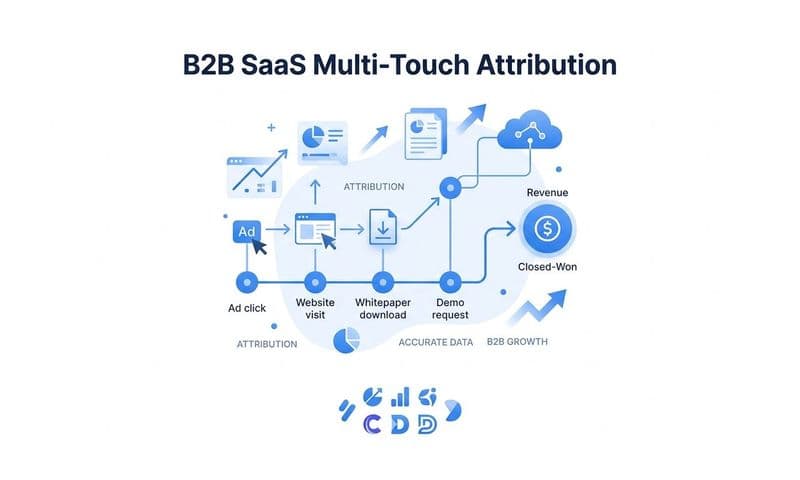
Start by capturing every touchpoint through multiple channels. When someone interacts with your ad, don't just rely on a cookie to remember that interaction. Capture the data server-side, sync it with your CRM, and create a persistent record that survives cookie deletions. When they fill out a form, connect that lead record back to their marketing journey. When they convert, tie that sale to every touchpoint that influenced the decision. Effective touchpoint tracking analytics requires this multi-layered approach.
This is where connecting CRM events to ad interactions becomes crucial. Your CRM holds the source of truth about customer relationships and revenue. When you bridge the gap between CRM data and marketing attribution, you create visibility into the complete customer journey—from first ad impression through closed deal and beyond. Understanding customer attribution tracking at this level transforms how you measure marketing effectiveness.
Modern attribution platforms excel at this type of data unification. They collect events from your website, your ad platforms, your CRM, and other marketing tools, then stitch them together into coherent customer journeys. This multi-source approach means that even if Safari ITP breaks one data collection method, you have redundant signals that maintain attribution accuracy.
Multi-touch attribution models become essential in this context. Last-click attribution was always an oversimplification, but it's particularly problematic when Safari ITP breaks the connection between early touchpoints and final conversions. When you can't rely on cookies to connect all the dots, you need attribution models that credit multiple interactions and use probabilistic modeling to fill gaps where deterministic tracking fails. Exploring different attribution tracking methods helps you find the right approach for your business.
Consider how different attribution models reveal different insights. First-touch attribution shows which channels are best at generating awareness. Linear attribution distributes credit across all touchpoints. Time-decay models give more weight to recent interactions. Position-based models emphasize both the first and last touches. Each model tells a different story about your marketing effectiveness, and together they create a more complete picture than any single model could provide.
The goal isn't to achieve perfect attribution—that's impossible in the privacy-conscious era we've entered. The goal is to maintain sufficient attribution accuracy to make confident marketing decisions. You need to know which channels drive results, which campaigns perform best, and where to allocate budget for maximum return.
This requires accepting some level of uncertainty while building systems that minimize it. Server-side tracking reduces browser-related gaps. CRM integration captures the full customer lifecycle. Multi-touch models account for complex journeys. Conversion sync feeds better data to ad platforms. Together, these approaches create an attribution strategy resilient enough to survive not just Safari ITP, but whatever privacy restrictions come next. The best software for tracking marketing attribution in 2026 incorporates all of these capabilities.
Moving Forward with Privacy-First Attribution
Safari ITP isn't going away. If anything, privacy restrictions will only intensify as more browsers follow Apple's lead and regulations like GDPR and CCPA set stricter standards for data collection. The marketers who thrive in this environment won't be the ones fighting against privacy features—they'll be the ones who adapted their attribution strategies to work within privacy boundaries.
The shift to server-side tracking and comprehensive attribution platforms represents more than just a technical workaround for Safari's restrictions. It's a fundamental evolution in how we think about marketing measurement. Instead of trying to track individual users across the entire internet, we're focusing on capturing complete customer journeys within our own first-party context and using that data to make smarter marketing decisions. Building a solid first-party data tracking setup is now essential for every serious marketer.
This approach actually aligns well with where privacy regulations are headed. First-party data collection, transparent user relationships, and server-side processing all fit within the privacy-conscious framework that browsers and regulators are building. When you invest in attribution infrastructure that respects privacy while maintaining measurement accuracy, you're future-proofing your marketing operations.
The competitive advantage goes to marketers who can maintain attribution visibility while others struggle with gaps and blind spots. When your competitors are making budget decisions based on incomplete data because Safari ITP broke their tracking, you'll have the complete picture. When their ad platforms optimize on partial conversion signals, yours will have access to enriched, accurate data that drives better performance.
Think about what this means for your current setup. Are you still relying primarily on client-side JavaScript tracking? Do your attribution reports show mysterious gaps where Safari users should be? Are your ad platforms receiving complete conversion data, or are you feeding them incomplete signals that limit their optimization potential? Following best practices for tracking conversions accurately can help you identify and fix these issues.
The time to address these questions is now, before Safari's next ITP update tightens restrictions further and before other browsers implement similar features. Building a privacy-resilient attribution strategy takes time—time to implement server-side tracking, integrate your CRM, set up multi-touch attribution models, and establish conversion sync with your ad platforms.
Ready to elevate your marketing game with precision and confidence? Discover how Cometly's AI-driven recommendations can transform your ad strategy—Get your free demo today and start capturing every touchpoint to maximize your conversions. See exactly which ads and channels drive real revenue, even when Safari ITP tries to hide the connection. Because in the privacy-first era, the marketers who win are the ones with the best data—and the best tools to make sense of it all.