
Marketing budgets in B2B SaaS are under more scrutiny than ever. Growth leaders are expected to do more with less, justify every dollar to the CFO, and scale what works without wasting spend on channels that underperform.
The problem is that most teams allocate budgets based on gut instinct, historical patterns, or platform-reported metrics that do not tell the full story. Sound familiar? You pull a report from Meta, another from Google, and the numbers look great on paper. But when you check your CRM, the pipeline tells a completely different story.
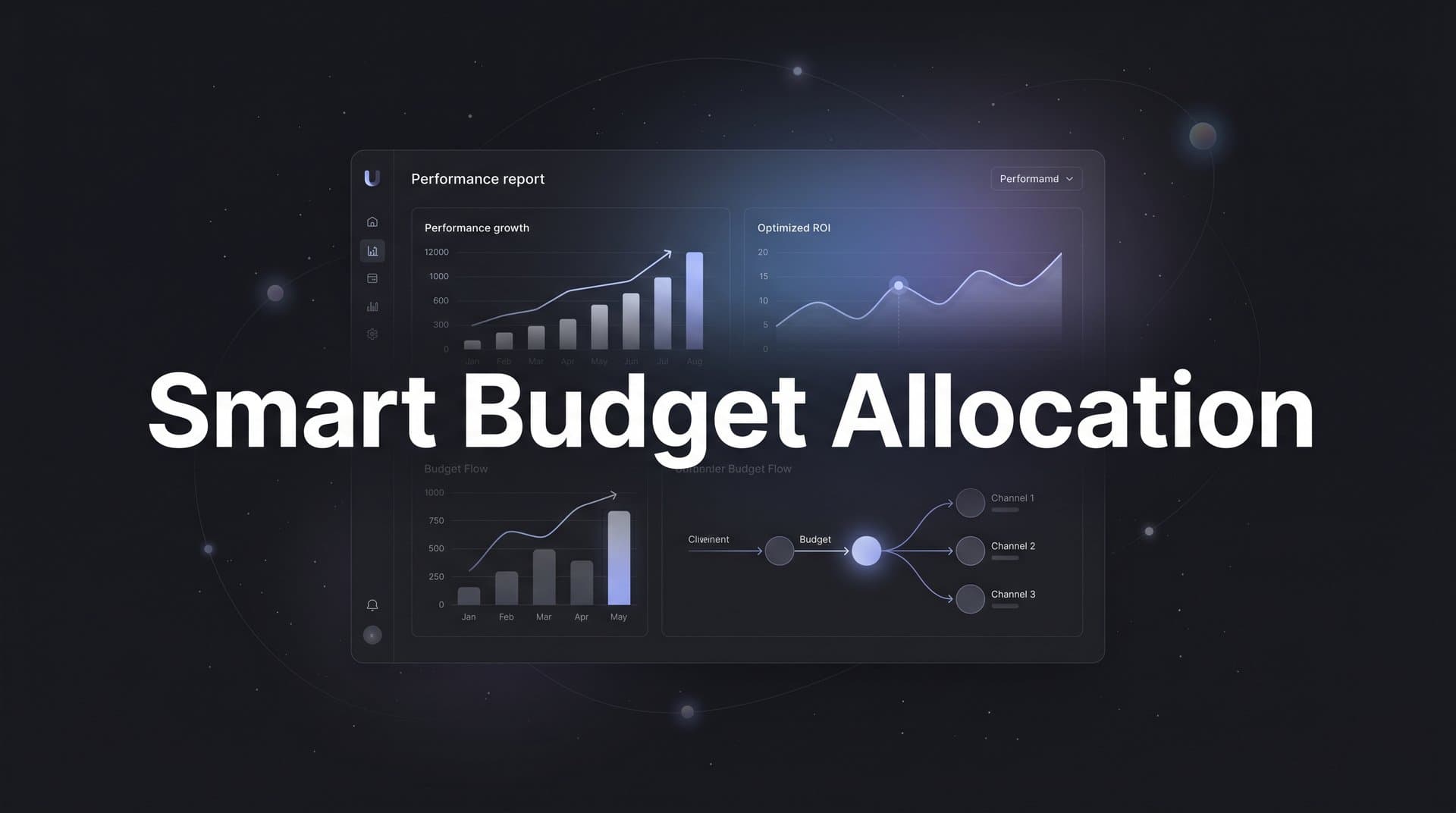
Smart budget allocation is not just about spending less. It is about spending in the right places, at the right time, on the campaigns and channels that actually drive pipeline and revenue. This requires accurate attribution data, a clear view of the customer journey, and a framework for making allocation decisions that scales with your growth goals.
In this guide, we break down seven proven strategies that B2B SaaS marketing teams use to allocate budgets more intelligently, reduce wasted spend, and maximize return on every dollar invested.
1. Build Your Allocation Framework on Attribution Data, Not Platform Metrics
The Challenge It Solves
Every major ad platform reports performance using its own attribution logic. Meta claims credit for conversions. Google claims credit for the same conversions. LinkedIn does the same. When you add up what each platform reports, the total often exceeds your actual closed deals by a wide margin. This is the attribution overlap problem, and it is one of the most common reasons B2B SaaS teams misallocate budget.
Relying on platform-reported metrics to make budget decisions is like asking each department head to grade their own performance review. The incentives are misaligned from the start.
The Strategy Explained
Multi-touch attribution models distribute credit across all the touchpoints that contributed to a conversion, rather than letting each platform claim full credit independently. This gives you a much more accurate picture of which channels are genuinely contributing to pipeline and revenue versus which ones are just claiming credit for conversions that would have happened anyway.
Building your budget allocation framework on a neutral, third-party attribution source rather than platform-native dashboards removes the bias from the equation. You stop making decisions based on what each platform wants you to believe and start making decisions based on what your actual customer journey data shows.
Implementation Steps
1. Audit your current attribution setup and identify where platform-reported conversions diverge from CRM-recorded outcomes.
2. Implement a multi-touch attribution model using a platform that pulls data from all channels into a single view, rather than relying on each platform's self-reported numbers.
3. Run a side-by-side comparison of platform-reported performance versus attribution-adjusted performance for each channel before making any reallocation decisions.
Pro Tips
Start by comparing your total platform-reported conversions against your actual CRM conversion count for the same period. If the platform total is significantly higher than your CRM total, you have an attribution overlap problem that needs to be resolved before any budget reallocation will be reliable. Tools like Cometly connect your ad platforms directly to your CRM so you can see the true picture in one place.
2. Map Budget to the Full Customer Journey, Not Just Last Click
The Challenge It Solves
Last-click attribution is still the default setting for many marketing teams, and it systematically starves the top of your funnel. When budget decisions are based purely on which channel got the final click before conversion, the channels that introduce your brand, educate prospects, and build intent get zero credit. Over time, those channels lose funding, the top of your funnel shrinks, and pipeline eventually dries up.
B2B buyers typically engage with multiple pieces of content and multiple channels across weeks or months before they ever request a demo. Ignoring that journey when allocating budget is a structural mistake.
The Strategy Explained
Mapping your budget to the full customer journey means assigning investment to each stage of the funnel based on its actual contribution to revenue, not just its proximity to the conversion event. This requires understanding which channels introduce prospects to your brand, which channels nurture them through the consideration phase, and which channels close the deal.
When you have this visibility, you can allocate budget proportionally across all stages rather than over-investing in bottom-of-funnel channels that benefit from the work done upstream.
Implementation Steps
1. Map out the typical touchpoint sequence for your closed-won customers, from first interaction to conversion, using your attribution data.
2. Identify which channels most frequently appear at the top of the journey as initiating touchpoints versus those that appear later as closing touchpoints.
3. Adjust budget allocations to ensure top-of-funnel channels that consistently initiate high-quality journeys receive adequate investment, not just channels that show up last.
Pro Tips
Pay particular attention to channels that appear frequently in the first-touch position for your highest-value customers. These channels are often underfunded because last-click models give them no credit, but cutting them would directly reduce the volume of high-quality prospects entering your customer acquisition funnel.
3. Use Pipeline and Revenue Attribution to Justify Channel Spend
The Challenge It Solves
Cost-per-lead is one of the most commonly used metrics for evaluating channel performance, and one of the least useful for making budget decisions. A channel that generates leads at a low cost per lead may be producing prospects who never convert to customers. Meanwhile, a channel with a higher cost per lead might be generating your best-fit buyers. If you are optimizing for cost-per-lead, you may be systematically defunding your most valuable channels.
The Strategy Explained
Revenue attribution connects every ad dollar to actual business outcomes: pipeline created, opportunities influenced, and closed-won revenue. When you can report on cost-per-pipeline-dollar and cost-per-closed-won-revenue by channel, budget conversations with leadership shift entirely. You are no longer defending spend based on vanity metrics. You are presenting a clear return on investment that any CFO can evaluate.
This is the core value proposition of end-to-end attribution: the ability to trace a specific ad click all the way through to a signed contract. With that data, you can make budget decisions that are grounded in actual revenue impact rather than activity metrics.
Implementation Steps
1. Connect your ad platform data to your CRM so that lead source information flows through the entire sales pipeline, not just the initial conversion.
2. Build a reporting view that shows pipeline created and revenue closed by channel, alongside ad spend, so you can calculate true cost-per-revenue metrics.
3. Replace cost-per-lead as your primary budget justification metric with cost-per-pipeline and cost-per-closed-won-revenue in your next budget review cycle.
Pro Tips
If your CRM does not currently capture lead source at the opportunity and deal level, fixing that data gap is the highest-priority step before any other budget optimization work. Without clean source data flowing through the full funnel, revenue attribution is impossible. Cometly's pipeline and revenue attribution connects ad spend to closed-won revenue automatically, so you always have this data ready when budget conversations happen.
4. Apply a Test-and-Scale Model to New Channel Investment
The Challenge It Solves
New channel investments often fail not because the channel is wrong but because the budget commitment is wrong. Teams either over-invest in an untested channel before they have proof it works, or they under-invest to the point where the test is inconclusive. Both outcomes waste money and leave you without a reliable answer about whether the channel deserves more budget.
The Strategy Explained
A structured test-and-scale model allocates a defined, capped budget to new channel experiments with clear success criteria established before the test begins. Think of it like a portfolio approach to budget management. You maintain a core allocation to proven channels that drive consistent pipeline, and you reserve a smaller, defined percentage for testing new channels or audiences.
The key discipline is setting performance thresholds in advance: if a new channel hits a defined cost-per-pipeline target within the test period, it earns a larger budget allocation. If it does not, the test budget is reallocated rather than extended indefinitely. Attribution data is what validates whether a test has passed or failed.
Implementation Steps
1. Define a fixed test budget percentage from your overall marketing budget to allocate to new channel experiments each quarter.
2. Set clear, pre-agreed success metrics for each test before spending begins, specifically cost-per-pipeline or cost-per-revenue targets rather than click or lead volume targets.
3. Use your attribution platform to track test channel performance against those thresholds in real time, and make scale or cut decisions based on the data at the end of each test period.
Pro Tips
Resist the temptation to extend a failing test just because a channel feels promising. Attribution data should make the decision, not intuition. If the numbers do not support scaling after a full test cycle, reallocate the budget to what is already proven and revisit the channel in a future quarter with a refined approach.
5. Reallocate Budget Based on Conversion Rate Data Across Channels
The Challenge It Solves
High lead volume is one of the most misleading signals in B2B SaaS marketing. A channel that drives significant lead volume can look like a strong performer in a top-line report, but if those leads convert to customers at a fraction of the rate of leads from other channels, the high-volume channel is actually consuming budget that would generate more revenue elsewhere.
Without channel-level conversion rate data from lead all the way to closed-won customer, this problem is nearly invisible.
The Strategy Explained
The strategy here is to analyze conversion rates at every stage of the funnel by channel: from click to lead, from lead to qualified opportunity, from opportunity to closed-won. This multi-stage conversion analysis often reveals that the channels generating the most leads are not the channels generating the most revenue.
When you have this data, you can make reallocation decisions that are based on revenue efficiency rather than lead volume. Channels with strong full-funnel conversion rates deserve more budget even if their lead volume is lower. Channels with high lead volume but poor downstream conversion rates should be reduced or restructured.
Implementation Steps
1. Build a funnel conversion report by channel that tracks progression from first touch through each pipeline stage to closed-won revenue.
2. Identify channels where conversion rates drop significantly at a specific funnel stage, as this often signals a lead quality issue rather than a volume issue.
3. Reallocate budget from high-volume, low-conversion channels toward channels with strong full-funnel conversion rates, and monitor the impact on pipeline quality over the following 60 to 90 days.
Pro Tips
Look specifically at the lead-to-opportunity conversion rate by channel, as this is often where lead quality differences become most visible. A channel with a significantly lower lead-to-opportunity rate than your average is likely generating unqualified leads, and no amount of budget increase will fix a targeting or messaging problem at the source.
6. Leverage First-Party Data to Reduce Wasted Ad Spend
The Challenge It Solves
Privacy changes, including iOS restrictions, cookie deprecation, and browser-level tracking limitations, have meaningfully degraded the accuracy of pixel-based conversion tracking. When ad platforms receive incomplete or delayed conversion signals, their optimization algorithms make poor decisions about who to target and how to bid. The result is wasted impressions, inflated costs, and ad spend that does not reach the right audiences.
This is not a theoretical future problem. It is affecting campaign performance across Meta, Google, and other major platforms right now.
The Strategy Explained
Server-side tracking and Conversion API integrations bypass the browser entirely by sending conversion data directly from your server to the ad platform. This approach restores the signal quality that browser-based pixels have lost, giving ad platforms the accurate, complete conversion data they need to optimize campaigns effectively.
When your ad platform receives better data, it targets better audiences, bids more efficiently, and generates more pipeline from the same budget. Improving signal quality after cookie deprecation is one of the highest-leverage budget efficiency moves available to B2B SaaS marketing teams today.
Implementation Steps
1. Audit your current conversion tracking setup to identify where browser-based pixel tracking is the only signal being sent to your ad platforms.
2. Implement server-side tracking and Conversion API connections for your primary ad platforms, specifically Meta CAPI and Google Enhanced Conversions, to supplement or replace browser-based signals.
3. Monitor match rates and event match quality scores in your ad platforms after implementation to confirm that signal quality has improved, and track the downstream impact on campaign performance.
Pro Tips
Server-side tracking is not just a technical fix. It is a budget efficiency strategy. When ad platforms optimize on complete, accurate data, they spend your budget more effectively. Cometly's server-side tracking and Conversion API integration handles this automatically, ensuring your ad platforms always receive enriched, conversion-ready signals without requiring custom engineering work on your end.
7. Create a Continuous Budget Review Cadence Tied to Performance Metrics
The Challenge It Solves
Annual budget planning cycles were designed for a slower-moving world. In digital marketing, channel performance can shift meaningfully in a matter of weeks. A channel that was your top pipeline driver in Q1 may be underperforming by Q3. If your next formal budget review is months away, you are locked into an allocation that no longer reflects reality, and you are losing pipeline in the meantime.
The Strategy Explained
A continuous budget review cadence replaces the annual-or-nothing approach with a structured monthly or quarterly review process anchored to live attribution data. Rather than defending last year's allocations, each review cycle asks a simple question: based on what the data is showing right now, where should the next dollar go?
This approach requires two things: reliable real-time attribution data and a team culture that is willing to follow the numbers rather than defend past decisions. The cadence itself does not need to be complex. A monthly review of channel-level pipeline and revenue metrics, with a defined reallocation process for underperforming channels, is enough to keep budget aligned with actual performance.
Implementation Steps
1. Establish a monthly budget review meeting with a standard agenda: review pipeline and revenue attribution by channel, identify channels that are over or underperforming against targets, and make reallocation decisions based on the data.
2. Set clear performance thresholds for each channel that trigger a budget review conversation, such as a sustained drop in cost-per-pipeline efficiency over two consecutive months.
3. Document reallocation decisions and the data that drove them so you can build an institutional knowledge base that improves future budget planning cycles.
Pro Tips
The most common reason continuous budget reviews fail is that the underlying attribution data is not reliable enough to make confident decisions. If your team spends most of each review debating whether the data is accurate rather than acting on it, fixing your attribution foundation is the prerequisite. Once you have a trustworthy single source of truth, the review cadence becomes a powerful competitive advantage rather than a frustrating exercise.
Putting It All Together: Your Budget Allocation Roadmap
Smart budget allocation is not a one-time exercise. It is an ongoing discipline that requires accurate data, clear attribution models, and a team culture that is willing to follow the numbers rather than defend past decisions.
The seven strategies outlined here give B2B SaaS marketing teams a practical framework to move from intuition-based budgeting to data-driven allocation. Here is how to sequence your implementation:
Start with your attribution foundation. Audit your current attribution setup to ensure you have reliable data before making any reallocation decisions. Every strategy in this guide depends on having accurate, complete attribution data at the base.
Fix your signal quality. Implement server-side tracking and Conversion API connections to restore the data accuracy that browser-based tracking has lost. This improves both your attribution data and your ad platform optimization simultaneously.
Build your revenue attribution view. Connect ad spend to pipeline and closed-won revenue by channel so you can make budget decisions based on actual business outcomes rather than activity metrics.
Establish your review cadence. Once your data foundation is solid, create a monthly review process that keeps your budget continuously aligned with what is actually driving pipeline and revenue.
Tools like Cometly make this process significantly more efficient by connecting your ad platforms, CRM, and website into a single source of truth, so every budget decision is backed by real revenue data. When you can see exactly which channels, campaigns, and touchpoints are driving pipeline and closed-won revenue, smart budget allocation becomes a competitive advantage rather than a guessing game.
Ready to elevate your marketing game with precision and confidence? Discover how Cometly's AI-driven recommendations can transform your ad strategy. Get your free demo today and start capturing every touchpoint to maximize your conversions.