
Video ads consistently rank among the highest-engagement formats in paid media. Prospects watch them, remember them, and often make their first real connection with a brand through a well-placed video on YouTube, LinkedIn, or Meta. Yet when it comes time to report on what's actually driving pipeline, video almost always gets shortchanged.
The reason is structural. Most attribution setups are built around clicks. A prospect clicks an ad, lands on a page, fills out a form, and the click gets the credit. Clean, simple, and deeply misleading when video is involved. Video ads generate awareness and consideration long before anyone clicks anything, and in B2B SaaS, that gap between first exposure and eventual conversion can span weeks or months.
The result is a systematic undervaluation of video spend. Growth teams see weak return-on-ad-spend numbers for video campaigns, reallocate budget toward channels that "look" better in last-click reports, and quietly deprioritize the format that was actually warming up their pipeline all along. This isn't a small measurement error. It's a budget allocation problem that compounds over time.
This guide is designed to fix that. We'll walk through why traditional attribution breaks for video, what a reliable video ad attribution tracking framework actually looks like, how to configure tracking across the major platforms, and how to connect every video touchpoint back to real pipeline and revenue. By the end, you'll have a clear picture of what it takes to make video a measurable, scalable part of your growth strategy.
Why Video Ads Break Traditional Attribution Models
Standard attribution models were designed for a world where every meaningful interaction leaves a click trail. Video ads don't work that way. A prospect might watch a 30-second LinkedIn video, feel a genuine pull toward your product, and then close the tab without clicking anything. Three weeks later, they search your brand name on Google, click a search ad, and request a demo. Last-click attribution gives 100% of the credit to the branded search campaign. The video that started the whole journey gets nothing.
This is the view-through problem, and it's not a minor edge case. In B2B SaaS, where buyers research extensively before engaging, video-assisted conversions are often the norm rather than the exception. A prospect who watched your product explainer video is far more likely to convert eventually than someone who encountered you for the first time through a retargeting ad. But if your attribution model can't see the video touchpoint, you'll never know that.
The multi-session nature of B2B buying makes this worse. Enterprise and mid-market buyers rarely convert on their first visit. They watch a video, return via organic search, read a blog post, see a retargeting ad, attend a webinar, and then finally convert. Each of those touchpoints plays a role. A click-only model compresses that entire journey into a single event and ignores everything that came before the final click.
Cross-platform comparison adds another layer of complexity. YouTube, LinkedIn, and Meta each apply their own default attribution windows and counting methods. YouTube might apply a 30-day view-through window by default, while Meta defaults to one day. LinkedIn uses its own Insight Tag methodology. When you pull performance reports from each platform separately, you're comparing apples to entirely different fruit. Without a unified measurement layer sitting above all three platforms, any cross-channel comparison is essentially meaningless.
The practical consequence is that video campaigns are routinely judged by metrics they were never designed to optimize for. Cost-per-click is a poor proxy for a format that generates awareness. Conversion rate looks terrible when the conversion happens through a different channel three weeks later. And because the numbers look bad, video gets cut from budgets that would actually benefit from it. Solving video ad attribution tracking isn't just a measurement exercise. It's a prerequisite for making rational budget decisions.
The Core Components of a Reliable Tracking Framework
Getting video attribution right requires understanding a few foundational concepts, starting with the distinction between view-through attribution and click-through attribution.
Click-Through Attribution (CTA) credits a conversion to an ad when the user clicked that ad before converting. This is the default for most digital advertising and works well for direct-response formats where clicking is the primary action.
View-Through Attribution (VTA) credits a conversion to an ad when the user saw it but didn't click, then converted through a different path within a defined window. For video campaigns targeting B2B buyers, VTA is essential. Without it, you're measuring only the fraction of video-influenced conversions that happen to include a click.
The configuration of your VTA window matters enormously in B2B SaaS. A 1-day view-through window, which is Meta's default, captures almost nothing in a market where sales cycles run 30 to 90 days. For most B2B SaaS companies, extending view-through windows to 14, 28, or even 30 days is necessary to capture the true influence of a video impression. The right window depends on your average time-to-conversion, which you can measure from your CRM data. Understanding how attribution window performance works is essential before making these configuration decisions.
Beyond the basic click versus view distinction, engagement signals from video ads carry real attribution value when connected properly. Quartile view data (how many users watched 25%, 50%, 75%, or 100% of your video) and completion rates tell you which creatives are generating genuine attention versus passive exposure. When these signals are passed downstream to your attribution platform and linked to eventual lead and pipeline events, you can start to see which video engagement depths actually correlate with revenue outcomes.
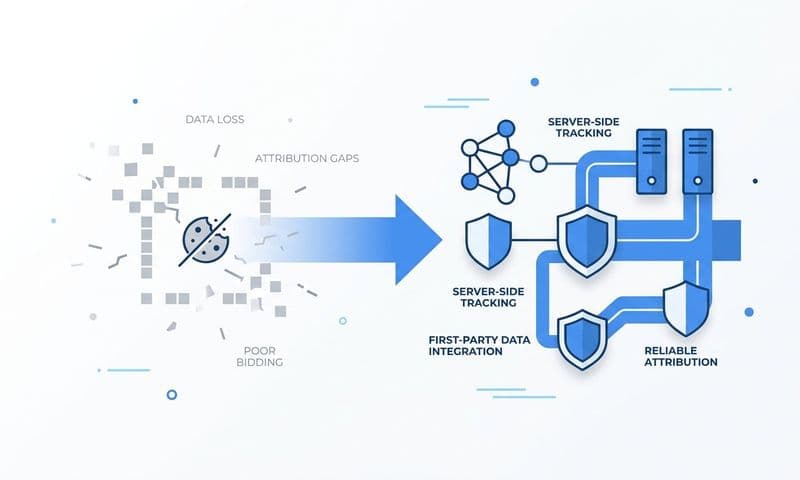
The infrastructure question is where many teams fall short. Browser-based pixel tracking continues to degrade as privacy changes, browser restrictions, and ad blockers reduce signal quality. If your video attribution relies entirely on a pixel firing when someone visits a thank-you page, you're already losing a meaningful percentage of conversions to signal loss.
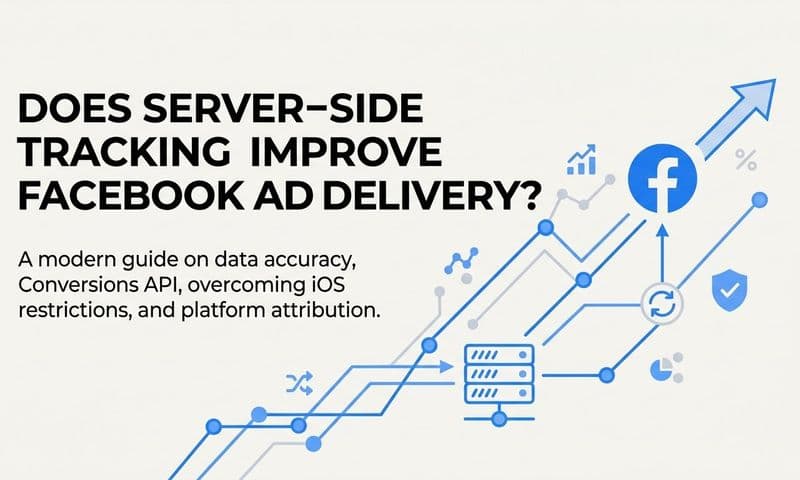
Server-side tracking via Conversion APIs is the modern answer. Meta's Conversion API, Google's Enhanced Conversions, LinkedIn's CAPI integration, and TikTok's Events API all allow you to send conversion signals directly from your server to the ad platform, bypassing browser-level limitations. For video campaigns specifically, this means that when a prospect who watched your video eventually converts through any channel, that conversion signal reaches the ad platform accurately, enabling proper attribution and better algorithmic optimization. Learn more about why server-side tracking is more accurate than browser-based alternatives.
Attribution Models That Actually Work for Video Campaigns
Choosing the right attribution model for video is less about finding the "correct" answer and more about matching the model to the reality of how your buyers actually behave.
Single-touch models, specifically first-touch and last-click, are poorly suited for video-assisted journeys. First-touch gives all credit to the first interaction, which might be fair if video is always your top-of-funnel entry point, but it ignores everything that nurtures the prospect afterward. Last-click, as discussed, systematically ignores video almost entirely because video rarely drives the final conversion click.
Linear Attribution distributes credit equally across every touchpoint in the conversion path. If a prospect watched a video ad, visited your site via organic search, clicked a retargeting ad, and then converted, each touchpoint receives 25% of the credit. This is a significant improvement over single-touch models for video because it acknowledges that the video played a real role, even if it wasn't the last interaction before conversion.
Time-Decay Attribution assigns more credit to touchpoints that occurred closer to the conversion event. This can make sense for shorter sales cycles where the final few interactions carry more weight, but it tends to undervalue early video touchpoints in long B2B journeys. Use it carefully if video is primarily an awareness play for you.
Data-Driven Attribution uses algorithmic weighting to assign credit based on actual patterns in your conversion data. Rather than applying a fixed rule, it analyzes which touchpoint combinations are statistically associated with higher conversion rates and weights credit accordingly. For B2B SaaS teams with sufficient conversion volume, data-driven attribution is the most accurate approach because it reflects what's actually happening in your funnel rather than what a theoretical model assumes should happen.
The right model for your team depends on three factors. First, your sales cycle length: longer cycles favor linear or data-driven models that spread credit across a longer journey. Second, your funnel complexity: if prospects move through many touchpoints before converting, a multi-touch model is essential. Third, the role video plays in your specific strategy. If video is purely an awareness driver at the top of the funnel, you want a model that gives meaningful credit to early-stage touchpoints. If you're also using video for retargeting and consideration, a model that captures mid-funnel influence becomes equally important.
The practical recommendation for most B2B SaaS teams is to run a multi-touch attribution model (linear or data-driven) as your primary attribution view, while keeping last-click available as a secondary lens for understanding final conversion drivers. This gives you both the full picture and the tactical detail needed to optimize individual campaigns.
Setting Up Video Ad Tracking Across Major Platforms
Platform-level configuration is where video ad attribution tracking either works or breaks down. Each major platform has its own mechanics, and getting them right requires attention to the specific details of each integration.
YouTube and Google Ads
Google Ads offers native view-through conversion tracking for YouTube campaigns. The first step is configuring your view-through conversion window to match your actual sales cycle. The default is often shorter than what B2B SaaS teams need, so extending it to 28 or 30 days is typically appropriate.
Enhanced Conversions is Google's server-side solution for improving match rates on downstream conversion events. When a prospect who watched your YouTube ad eventually converts on your site, Enhanced Conversions uses hashed first-party data (email addresses from form fills, for example) to match that conversion back to the original ad exposure with higher accuracy than cookie-based tracking alone. Linking your Google Ads account to your attribution platform and enabling Enhanced Conversions significantly improves the quality of the data flowing back into your reporting.
Meta (Facebook and Instagram)
Meta's pixel alone is no longer sufficient for accurate video attribution, particularly for audiences affected by iOS privacy changes. The Meta Conversion API (CAPI) is now the baseline requirement for any serious video campaign measurement on Meta.
CAPI sends conversion events from your server directly to Meta, capturing signals that the browser pixel misses. For video-initiated journeys specifically, this means that when someone watches a Meta video ad and later converts through a different path, the conversion signal reaches Meta's system accurately. This improves both your attribution reporting and Meta's ability to optimize your video campaigns toward actual conversion outcomes rather than just video views. Understanding how Facebook ads attribution works is critical before configuring these integrations.
Configure your CAPI integration to pass downstream events including lead form submissions, demo requests, and trial signups, not just page views. The richer the event data, the more accurately Meta can attribute video's contribution to your pipeline.
LinkedIn and TikTok
LinkedIn deserves special attention for B2B video campaigns because the platform's audience targeting is uniquely valuable for reaching decision-makers, but its attribution mechanics require careful configuration. LinkedIn's Insight Tag combined with its own CAPI integration gives you both browser-level and server-side signal coverage. Given that B2B LinkedIn journeys can extend well beyond 30 days, pushing for the longest available view-through windows is important.
LinkedIn also provides account-level engagement signals, which matter in B2B contexts where multiple stakeholders from the same company may interact with your video before a single person converts. These account-level signals can be valuable inputs for your CRM and ABM workflows.
TikTok operates on faster engagement cycles than LinkedIn or YouTube, which affects how you configure attribution windows. TikTok's Events API (server-side) improves signal quality for video-heavy campaigns on the platform, and shorter view-through windows (7 to 14 days) are often more appropriate given how quickly TikTok audiences move through discovery and consideration phases.
Connecting Video Touchpoints to Pipeline and Revenue
Platform-level tracking tells you what happened on the ad platform. Revenue attribution tells you what actually mattered for your business. Bridging those two layers is where most B2B SaaS teams have the biggest gap, and it's where the real value of video ad attribution tracking becomes clear.
The foundation is UTM parameter discipline. Every video ad campaign needs consistent, structured UTM tagging: campaign name, source, medium, content identifier, and any additional parameters your team uses to segment creative or audience. Without clean UTM data passing through every click, you cannot connect a video ad interaction to downstream CRM events like demo requests, trial signups, or closed-won opportunities. This sounds basic, and it is, but it's also one of the most commonly broken pieces of the attribution stack in B2B marketing operations. A solid understanding of what UTM tracking is and how it helps is the starting point for any reliable video attribution setup.
View-through conversions require a different approach since there's no click carrying UTM parameters. This is where your attribution platform's ability to match impression-level data to downstream CRM events becomes critical. A platform like Cometly connects your ad platform data, your CRM pipeline stages, and your revenue events in a single view, so you can see not just which campaigns drove clicks, but which video impressions and engagements contributed to opportunities and closed-won deals across the full customer journey.
The reporting shift that matters most is moving from cost-per-view and cost-per-click as primary success metrics to pipeline influenced and revenue attributed. Cost-per-view tells you how efficiently you're buying attention. Revenue attribution tells you whether that attention is turning into business. For a B2B SaaS growth team making budget decisions, only one of those metrics actually matters.
Practically, this means setting up reports that show video campaign performance by pipeline stage contribution. Which video campaigns are generating prospects that enter your pipeline? Which are contributing to opportunities that eventually close? Which video creatives appear consistently in the conversion paths of your highest-value customers? These are the questions that revenue attribution answers, and they're the questions that should be driving your video budget allocation.
Connecting Stripe or your billing system to your attribution platform takes this a step further. When you can see which video campaigns contributed to customers who actually paid, not just leads who filled out a form, you have the complete picture needed to calculate true return on ad spend for video.
Turning Video Attribution Data Into Smarter Ad Decisions
Attribution data is only valuable if it changes how you act. The goal of building a rigorous video ad attribution tracking system isn't to produce more detailed reports. It's to make better decisions faster, with more confidence.
The first application is creative optimization. When your attribution platform shows you which specific video creatives, audiences, and placements are contributing to pipeline, you can stop relying on engagement metrics like view rate and completion rate as proxies for quality. A video with a 70% completion rate that generates zero pipeline is a worse investment than a video with a 40% completion rate that consistently appears in the conversion paths of closed-won deals. Attribution data makes this distinction visible. The right marketing attribution tools for B2B SaaS make this level of creative analysis straightforward.
The second application is the AI optimization loop. When you send enriched, conversion-ready events back to Meta, Google, TikTok, and LinkedIn via server-side APIs, you're giving each platform's bidding algorithm better information to work with. Instead of optimizing toward video views or clicks, the algorithm can optimize toward the types of users who actually convert downstream. This feedback loop improves over time: better conversion signals produce better audience targeting, which produces higher-quality video-initiated journeys, which generates better conversion signals.
Cometly is built specifically to support this loop. It captures every touchpoint from ad click to CRM event, provides AI-driven recommendations on which campaigns and creatives are driving real outcomes, and feeds enriched conversion data back to ad platforms to improve their targeting and optimization. For B2B SaaS teams running video across multiple channels, this creates a compounding advantage over teams that are still relying on platform-native reporting and manual analysis.
The third application is building a reporting cadence that matches the nature of video attribution data. Weekly reviews should focus on short-cycle metrics: creative engagement, assisted conversion counts, and any anomalies in signal quality or tracking coverage. Monthly reviews should focus on longer-cycle metrics: pipeline contribution by video channel, revenue influence by campaign, and customer acquisition cost broken down by video versus other paid channels.
This separation matters because video attribution data often needs time to mature. A prospect who watched a LinkedIn video this week may not appear in your pipeline for another 60 days. Making budget cuts based on a week of video data is like judging a crop after two days of growth. The reporting cadence you build should reflect the actual time horizons of your sales cycle, not the impatience of a weekly performance review.
Putting It All Together
The gap between how video ads actually influence B2B buyers and how most attribution systems measure that influence is real, significant, and fixable. Video drives awareness and consideration at the top and middle of the funnel, but standard click-based models credit those conversions to whatever touchpoint happened last. The result is systematic undervaluation of video spend, misallocated budgets, and growth teams making decisions based on incomplete data.
The solution requires building in layers. Start with proper platform configuration: extended view-through windows, server-side Conversion API integrations, and consistent UTM tagging across every video campaign. Add a multi-touch attribution model that distributes credit fairly across the full customer journey. Then connect ad platform data to CRM pipeline stages and revenue events so you can measure what video campaigns actually contribute to closed business, not just clicks and views.
B2B SaaS teams that treat video attribution as a first-class measurement priority gain a real competitive advantage. They can scale the video campaigns that actually generate pipeline, cut the ones that don't, feed better signals to ad platform algorithms, and make budget decisions grounded in revenue data rather than engagement proxies. That's not a marginal improvement. It's a fundamentally different way of running paid media.
If you're ready to connect every video touchpoint to real pipeline and revenue, Cometly gives you the attribution infrastructure to do it. From server-side event tracking to multi-touch attribution to AI-driven campaign recommendations, it's built for exactly this problem. Get your free demo today and start measuring what your video ads actually drive.