Your marketing team just closed a major enterprise deal worth $500,000. The VP of Sales credits the demo. Your paid ads manager points to LinkedIn campaigns. The content team highlights the whitepaper download. And your CMO? They're looking at you, asking the question that keeps enterprise marketers up at night: "Which marketing actually drove this revenue?"
When you're running campaigns across Meta, Google, LinkedIn, display networks, email, events, and content syndication—spending millions annually across dozens of channels—this question becomes impossibly complex. Every customer touches multiple channels before converting. Every deal involves multiple stakeholders. And every marketing leader needs to prove ROI to justify next quarter's budget.
This is the challenge enterprise attribution solves. It's the system that connects your complex, multi-channel customer journeys to actual business outcomes, giving you a clear view of which marketing investments drive revenue at scale.
The Core Challenge Enterprise Attribution Solves
Enterprise attribution is the practice of tracking and crediting marketing touchpoints across complex, multi-channel customer journeys at organizational scale. Think of it as the connective tissue between every marketing dollar you spend and every dollar of revenue that comes back.
But here's what makes enterprise attribution fundamentally different from basic analytics: you're not tracking simple, linear paths. Enterprise buyers typically interact with 8-15+ touchpoints before converting. They switch between devices. They involve multiple decision-makers. They research on mobile, evaluate on desktop, and attend in-person events. They download content as anonymous visitors, then return weeks later as known leads.
The business problem this creates is straightforward but painful. As marketing budgets grow and channel complexity increases, your visibility into actual ROI decreases. Your data lives in disconnected silos—ad platforms report clicks and impressions, your CRM tracks leads and opportunities, your analytics tool monitors website behavior, and your marketing automation platform manages email engagement.
None of these systems talk to each other naturally. Meta doesn't know which ad clicks turned into Salesforce opportunities. Google Ads can't see which keywords influenced deals that closed 90 days later. Your content team has no idea which blog posts actually contributed to pipeline.
This fragmentation means you're making million-dollar budget decisions based on incomplete information. You're optimizing campaigns toward proxy metrics—clicks, form fills, MQLs—because you can't connect marketing activity directly to closed revenue. You're either over-investing in channels that look good on paper but don't drive deals, or under-investing in channels that quietly influence high-value conversions.
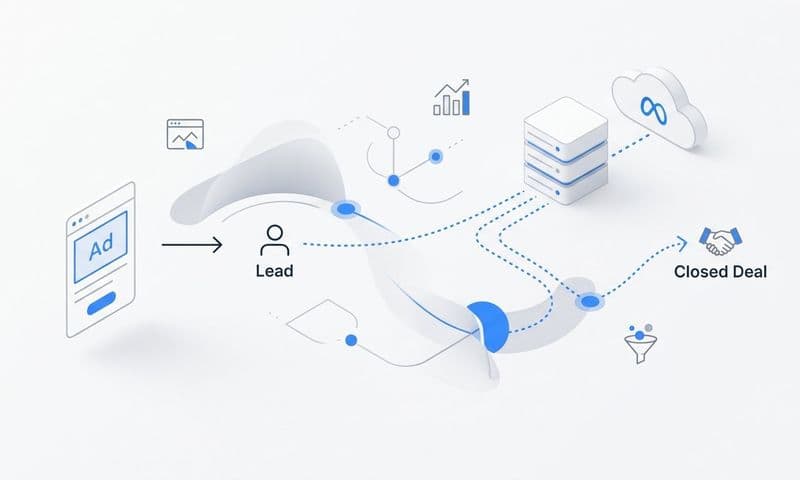
Enterprise attribution solves this by creating a unified view of the customer journey. It captures every touchpoint—from first anonymous website visit to final contract signature—and connects them to actual revenue outcomes. It breaks down data silos and gives you a single source of truth that shows which marketing investments actually work.
The shift to enterprise-level attribution isn't just about better reporting. It's about making confident, data-driven decisions at scale. When you can see the full customer journey, you stop guessing which channels deserve more budget and start knowing. You move from "this campaign generated 500 leads" to "this campaign influenced $2.3M in closed revenue."
How Enterprise Attribution Models Work
Attribution models are the rules that determine how credit gets distributed across the touchpoints in a customer journey. Think of them as the logic that answers: "When a customer interacts with five different marketing channels before converting, which ones get credit?"
The simplest models assign all credit to a single touchpoint. First-touch attribution gives 100% credit to the first interaction—the blog post that introduced someone to your brand, the LinkedIn ad they first clicked, the Google search that brought them to your site. This model helps you understand what drives initial awareness and top-of-funnel activity.
Last-touch attribution does the opposite, giving all credit to the final touchpoint before conversion. If someone attends a webinar and converts immediately after, that webinar gets full credit. This model shows you what closes deals, but it ignores everything that built awareness and consideration along the way.
Single-touch models are simple to understand and implement, but they're inadequate for enterprise marketing. When your sales cycles span months and involve dozens of interactions, crediting just one touchpoint tells an incomplete story. You need to see the full journey.
This is where multi-touch attribution becomes the enterprise standard. Linear attribution distributes credit equally across all touchpoints—if a customer had 10 interactions before converting, each gets 10% credit. It's democratic but doesn't account for the reality that some touchpoints matter more than others.
Time-decay attribution recognizes that touchpoints closer to conversion typically have more influence. It gives increasing credit to interactions as they get closer to the final conversion. An interaction one week before purchase gets more credit than one three months before. This model works well when you believe recent marketing has the strongest impact on decisions.
Position-based attribution (also called U-shaped) gives the most credit to the first and last touchpoints—typically 40% each—while distributing the remaining 20% across middle interactions. The logic: awareness and closing moments matter most, but the journey in between still deserves recognition.
Here's when each model makes sense. If you're focused on demand generation and want to understand what fills your pipeline, first-touch attribution helps. If you're optimizing for conversion efficiency and want to know what closes deals, last-touch works. If your sales cycle is relatively short (under 30 days), position-based can balance awareness and conversion insights.
But for complex B2B sales with long cycles and multiple decision-makers? The most sophisticated approach is data-driven or algorithmic attribution. These models use machine learning to analyze thousands of customer journeys and determine which touchpoints actually correlate with conversions. Instead of applying predetermined rules, they learn from your specific data which interactions matter most.
Data-driven models adapt to your business reality. If webinars consistently appear in high-value conversion paths, they get more credit. If certain content downloads predict deal closure, they're weighted accordingly. This approach requires significant data volume to work effectively, but it provides the most accurate view of marketing impact.
The key insight for enterprise teams: you shouldn't be limited to one model. Different questions require different attribution lenses. Use first-touch to understand awareness drivers, last-touch for conversion optimization, and multi-touch attribution models for comprehensive ROI analysis. The best attribution systems let you compare models side-by-side to understand marketing impact from multiple angles.
Key Components of an Enterprise Attribution System
Building enterprise attribution requires three core layers working together: data collection infrastructure, the attribution engine itself, and reporting that drives action. Each layer solves a specific challenge in connecting marketing activity to revenue outcomes.
The foundation is data collection infrastructure. This is where you capture every touchpoint across every channel a customer might interact with. At enterprise scale, this means implementing server-side tracking that bypasses browser limitations and privacy restrictions. Browser-based tracking faces increasing challenges from iOS privacy updates, cookie deprecation, and ad blockers. Server-side tracking sends data directly from your servers to your attribution platform, ensuring more complete and accurate data capture.
Your infrastructure also needs CRM integration—deep, bidirectional connections with Salesforce, HubSpot, or whatever system holds your customer and revenue data. This integration is what allows you to connect marketing touches to actual closed deals, not just lead form submissions. When a lead becomes an opportunity and eventually closes as a customer, that revenue attribution data flows back into your attribution system.
Cross-platform identity resolution is the technical challenge that makes or breaks enterprise attribution. The same person might visit your website on mobile, click an ad on desktop, attend a webinar, and download content—all before identifying themselves. Your system needs to recognize that these seemingly separate interactions belong to the same person and stitch them into a unified journey. This requires sophisticated matching logic that combines email addresses, device IDs, IP addresses, and behavioral patterns.
The second layer is the attribution engine—the logic that connects touchpoints, applies weighting rules, and calculates credit. This is where your attribution models live. The engine takes the raw data from your collection infrastructure and transforms it into attribution insights: which campaigns influenced which conversions, how much credit each touchpoint deserves, and what the complete customer journey looked like.
Advanced attribution engines also handle the complexity of B2B attribution, where multiple people from the same company interact with your marketing before a deal closes. They need to recognize that the marketing manager who downloaded your whitepaper, the director who attended your webinar, and the VP who requested a demo are all part of the same buying committee at the same target account.
The third layer is reporting and actionability—translating attribution data into decisions. Raw attribution data doesn't drive ROI; acting on that data does. Your reporting layer needs to answer what types of questions marketing attribution can answer: Which channels should get more budget? Which campaigns are driving pipeline? What's the true cost per acquisition across channels? How does marketing contribution vary by customer segment or deal size?
But here's where enterprise attribution gets truly powerful: the best systems don't just report on past performance—they feed data back to ad platforms to improve future performance. When you sync conversion data back to Meta, Google, and LinkedIn, you're giving their machine learning algorithms better information about which users actually convert. This improves targeting, optimization, and ultimately lowers your acquisition costs. You're closing the loop between attribution insights and campaign execution.
This three-layer approach—comprehensive data collection, sophisticated attribution logic, and actionable reporting—transforms marketing from a cost center making educated guesses into a revenue driver making data-informed decisions at scale.
Common Enterprise Attribution Challenges (And How to Overcome Them)
Even with the right technology, enterprise attribution comes with real challenges. Understanding these obstacles upfront helps you implement attribution successfully and avoid common pitfalls that derail initiatives.
The most fundamental challenge is data silos. Your ad platforms, CRM, marketing automation, analytics tools, and offline systems don't naturally share data. Meta tracks ad clicks but doesn't know which clicks became customers. Salesforce knows which deals closed but can't see the marketing touches that influenced them. Google Analytics monitors website behavior but loses the connection when someone moves to your CRM.
These silos create gaps in customer journey visibility. You might capture the first website visit and the final conversion, but miss the webinar attendance, email opens, and content downloads in between. Incomplete journey data leads to incomplete attribution insights.
The solution requires intentional data integration. You need a platform that connects to all your marketing and sales systems through native integrations or APIs. But integration alone isn't enough—you also need consistent tracking implementation across channels. Every campaign should include proper UTM parameters. Every landing page should have tracking pixels. Every offline touchpoint needs a way to connect back to digital identity.
Privacy changes and tracking limitations present the second major challenge. iOS updates have made mobile app tracking nearly impossible without explicit user consent. Cookie deprecation means browser-based tracking becomes less reliable. GDPR and similar regulations require consent for tracking, and many users decline.
These changes don't eliminate attribution—they just require adapting your approach. Server-side tracking bypasses many browser-based limitations. First-party data collection through forms, accounts, and CRM records becomes more valuable. Aggregate reporting and modeled conversions help fill gaps where individual-level tracking isn't possible.
The key is accepting that perfect tracking is no longer achievable and focusing on building the most complete view possible within privacy constraints. Companies that adapt their attribution strategy to this new reality maintain strong marketing visibility while respecting user privacy. Understanding the dilemma of attribution in marketing helps teams navigate these complexities more effectively.
Long B2B sales cycles create the third challenge. When someone first interacts with your marketing in January but doesn't close a deal until June, connecting those touchpoints requires persistent tracking over months. People change devices, clear cookies, and interact from multiple email addresses. Early-stage anonymous interactions need to eventually connect to known identities in your CRM.
This challenge requires robust identity resolution and patient data collection. You can't expect instant attribution insights in complex B2B environments. You need to track consistently for at least one full sales cycle before attribution data becomes reliable. Many enterprises find that attribution insights improve significantly after 6-12 months of consistent implementation as more complete customer journeys flow through the system.
Budget allocation decisions during this ramp-up period require balancing attribution data with other signals. Don't abandon channels that show weak attribution early on—they might be playing important awareness or consideration roles that take time to reveal themselves in the data.
Evaluating Enterprise Attribution Solutions
Choosing an enterprise marketing attribution platform is a critical decision that will shape your marketing operations for years. The right solution becomes your single source of truth for marketing performance. The wrong one creates more problems than it solves.
Start with must-have capabilities. Real-time tracking is non-negotiable—you need to see campaign performance and customer journeys as they happen, not days later in batch reports. Delayed data means delayed optimization and missed opportunities to adjust underperforming campaigns.
Multi-touch attribution models should be standard, not an add-on. You need the flexibility to analyze your data through different attribution lenses—first-touch for awareness insights, last-touch for conversion analysis, and data-driven models for comprehensive ROI understanding. Platforms that lock you into a single attribution model limit your analytical flexibility.
Ad platform integrations determine whether you can actually act on attribution insights. Your solution needs native connections to Meta, Google, LinkedIn, and whatever other platforms you advertise on. But integration depth matters as much as breadth. Can you import campaign data automatically? Can you sync conversion data back to improve platform algorithms? Can you activate audiences based on attribution insights?
CRM connectivity is equally critical. Your attribution platform should integrate deeply with Salesforce, HubSpot, or your CRM of choice. This means bidirectional data flow—marketing touchpoints flowing into the CRM to enrich contact records, and opportunity and revenue data flowing back to connect marketing to actual business outcomes.
When evaluating vendors, ask specific questions about data accuracy. How do they handle cross-device tracking? What's their approach to identity resolution? How do they deal with privacy limitations and tracking restrictions? What percentage of customer journeys typically have complete data versus gaps? Vendors should be transparent about their data quality and the limitations of their tracking.
Implementation complexity varies dramatically between platforms. Some require extensive custom development and months of technical work. Others offer guided setup and can be operational in weeks. Ask about typical implementation timelines, required technical resources, and what level of ongoing maintenance the platform needs. Factor in your team's technical capacity when choosing a solution.
Ongoing support matters more than most teams realize upfront. Attribution platforms are complex systems that require optimization, troubleshooting, and strategic guidance. What kind of support does the vendor provide? Do you get a dedicated account manager? Is there a community or knowledge base for self-service help? How quickly do they respond to technical issues?
Here's a capability many teams overlook but that drives significant value: the ability to feed attribution data back to ad platforms. When your attribution system identifies which users are most likely to convert based on historical patterns, can you sync that data back to Meta and Google to improve their targeting algorithms? This closed-loop approach turns attribution from a reporting tool into an optimization engine.
Finally, consider the platform's approach to AI and automation. Modern attribution solutions increasingly use machine learning to identify patterns humans would miss, recommend budget allocations, and predict which campaigns will drive the best results. These AI-powered capabilities can dramatically improve your marketing efficiency and ROI. For a deeper dive into available options, explore enterprise attribution modeling tools that fit your specific needs.
Putting Enterprise Attribution Into Practice
Implementing enterprise attribution successfully requires more than just buying software and turning it on. You need a clear strategy for what you'll do with attribution insights once you have them.
Start by defining the business questions attribution should answer. What decisions will this data inform? Are you trying to optimize budget allocation across channels? Prove marketing's revenue contribution to leadership? Identify which campaigns drive the highest-value customers? Improve sales and marketing alignment on lead quality?
Clear questions shape your implementation priorities. If budget optimization is the goal, focus first on connecting your highest-spend channels. If proving revenue contribution matters most, prioritize deep CRM integration. If campaign optimization is key, ensure you have granular tracking at the ad and keyword level.
Implementation should follow a phased approach. Connect your highest-spend channels first—these typically include paid search, paid social, and your CRM. Get attribution working reliably for your core marketing activities before expanding to every possible touchpoint. This builds confidence in the data and delivers quick wins that justify continued investment. A comprehensive enterprise attribution implementation guide can help you navigate this process systematically.
As you expand coverage, add channels based on their strategic importance, not just ease of integration. Offline touchpoints like events and direct mail are harder to track but often play crucial roles in enterprise sales. Find creative ways to capture these interactions—unique URLs for print materials, QR codes for event follow-up, dedicated phone numbers for direct mail campaigns.
The technical implementation is only half the challenge. The harder part is building a culture of attribution-informed decision making. Marketing teams need to shift from optimizing toward proxy metrics to optimizing toward attributed revenue. Sales teams need to understand that marketing touches they can't see still influenced their deals. Leadership needs to evaluate marketing performance through an attribution lens, not just lead volume.
This cultural shift requires ongoing education and change management. Share attribution insights regularly in team meetings. Create dashboards that make attribution data accessible to everyone who needs it. Celebrate wins when attribution data leads to better decisions and improved results. Over time, attribution-informed thinking becomes the default way your organization approaches marketing.
Scaling What Actually Works
Enterprise attribution isn't just about tracking—it's about scaling what works with confidence. When you can see the complete customer journey and understand which marketing investments drive actual revenue, you stop guessing and start knowing. You move from reactive budget decisions to proactive optimization based on real data.
The most successful enterprise marketing teams build their entire strategy around attribution insights. They use multi-touch models to understand the full customer journey. They connect every system—ad platforms, CRM, marketing automation—into a unified view. They feed conversion data back to ad platforms to improve algorithmic targeting and lower acquisition costs.
This is where modern attribution becomes truly powerful. It's not just reporting on past performance—it's actively improving future results. When you capture every touchpoint, identify what drives revenue, and use AI to optimize continuously, you transform marketing from a cost center into a predictable revenue engine.
Ready to elevate your marketing game with precision and confidence? Discover how Cometly's AI-driven recommendations can transform your ad strategy—Get your free demo today and start capturing every touchpoint to maximize your conversions.