You're running paid campaigns on Google, LinkedIn, and Meta simultaneously. Leads are coming in. Some deals are closing. But when someone asks which channel is actually driving revenue, you find yourself guessing. You point to last-click data, pull a platform report, and hope the numbers tell a coherent story. They rarely do.
This is the daily reality for most B2B SaaS marketing teams. Budget is spread across multiple channels, the sales cycle stretches across weeks or months, and the connection between an ad click and a closed deal is almost never a straight line. Without a structured way to track that journey, every budget decision becomes an educated guess at best.
That is exactly why attribution matters. Not as a technical reporting exercise, but as a core business capability that shapes how growth teams allocate spend, evaluate creative, and optimize campaigns. When you can trace revenue back to the touchpoints that influenced it, you stop operating on assumptions and start operating on evidence.
This article breaks down what attribution actually does, why it breaks down so often in B2B SaaS environments specifically, and how getting it right changes the way your team makes decisions at every level of the funnel.
The Gap Between Ad Spend and Revenue Clarity
Running campaigns across multiple channels at the same time is standard practice for B2B SaaS companies. You need awareness at the top of the funnel, retargeting in the middle, and conversion-focused ads when buyers are close to a decision. The problem is that each of those channels operates in its own reporting silo, and none of them naturally connect to what happens after someone becomes a lead.
Without attribution, most teams fall back on two data sources: last-click reporting and platform-native metrics. Last-click attribution gives full credit to whichever touchpoint a prospect interacted with immediately before converting. It is simple and easy to pull, but it systematically ignores every touchpoint that came before it. A prospect might have seen your LinkedIn ad three times, clicked a Google retargeting ad, read a blog post, and then converted through a branded search. Last-click credits the branded search and erases everything else.
Platform-native metrics create a different kind of distortion. Google Ads reports on Google. Meta reports on Meta. LinkedIn reports on LinkedIn. Each platform uses its own attribution window and its own conversion logic, so when you add up the conversions each platform claims, the total often exceeds the number of actual deals in your CRM. Every platform takes credit for the same conversion, and you have no neutral view of the truth.
The cost of this blind spot compounds over time. Budget flows toward channels that look productive based on surface-level metrics but may not be generating qualified pipeline. Meanwhile, channels that play a genuine role in moving deals forward, perhaps a podcast sponsorship or a top-of-funnel content campaign, get defunded because their contribution never shows up in the numbers. Understanding attribution discrepancies in your data is often the first step toward fixing this problem.
For growth teams managing real budgets, this is not a minor inconvenience. It is a structural problem that leads to misallocated spend, underperforming campaigns, and a persistent inability to answer the question that every CFO and board member eventually asks: what is our marketing actually driving?
What Attribution Actually Does for Your Marketing Data
At its core, attribution is the process of assigning credit to the touchpoints that contributed to a conversion. It takes the messy, non-linear reality of how B2B buyers actually behave and organizes it into a structured view that marketers can act on.
Think of it like this: a prospect's journey from first awareness to closed deal is rarely a single event. It is a sequence of interactions, sometimes dozens of them, spread across different channels, devices, and time periods. Attribution maps that sequence and gives you a way to evaluate which parts of it mattered most.
Different attribution models approach this mapping differently, and understanding the distinctions matters when you are choosing how to analyze your data.
First-touch attribution assigns all credit to the very first interaction a prospect had with your brand. It is useful for understanding which channels are best at generating initial awareness, but it ignores everything that happened between that first touch and the conversion. For a deeper look at how this model works in practice, see our guide to the first-touch attribution model.
Last-click attribution does the opposite, crediting only the final touchpoint before conversion. As discussed above, this tends to over-reward bottom-of-funnel channels and under-reward the awareness and nurture activities that built the relationship in the first place.
Linear attribution distributes credit equally across all touchpoints in the journey. It is more balanced than single-touch models but does not account for the fact that some touchpoints are more influential than others.
Time-decay attribution gives more credit to touchpoints that occurred closer to the conversion, on the logic that recent interactions carry more weight in a buyer's decision. This can make sense for shorter sales cycles but may undervalue early-stage awareness in longer ones.
Data-driven attribution uses algorithmic modeling to assign credit based on how different touchpoints actually correlate with conversion outcomes in your specific data set. It is the most sophisticated approach, but it requires sufficient data volume to produce reliable results.
For a deeper look at how these models compare, Cometly's breakdown of the 5 most common ad attribution models is a useful reference point.
The real value of attribution is not just knowing which channel drove a click. It is understanding which combinations of touchpoints, in which sequences, tend to produce customers who actually close. That is the insight that changes how you build campaigns and allocate budget.
Why Attribution Breaks Down in B2B SaaS Specifically
B2B SaaS attribution is genuinely harder than e-commerce attribution, and the reasons are structural rather than technical. Understanding why attribution breaks down in this context is the first step toward building a system that actually holds up.
The first challenge is the length and complexity of the sales cycle. In e-commerce, a conversion might happen in a single session. In B2B SaaS, a deal might involve months of research, multiple demo calls, procurement reviews, and stakeholder sign-offs before it closes. During that time, a single prospect might interact with your brand across dozens of touchpoints. Tracking that full journey, and connecting it to a deal that closes six months later, requires infrastructure that most teams have not built.
The second challenge is the multi-stakeholder dynamic. B2B purchases rarely involve a single decision-maker. A champion might discover your product through a LinkedIn ad. A technical evaluator might find your documentation through organic search. A CFO might see a retargeting ad before signing off. Each of these people is a separate user in your tracking systems, but they are all part of the same deal. Traditional attribution tools have no way to connect those separate journeys into a single account-level view. This is one of the core attribution challenges in marketing analytics that B2B teams consistently face.
The third challenge is platform siloing. As noted earlier, Google, Meta, LinkedIn, and other ad platforms each report through their own lens. None of them connect natively to your CRM. None of them know whether a lead that clicked your ad eventually became a paying customer. Without a layer that bridges your ad platforms, your CRM, and your website data, you are always working with an incomplete picture.
The fourth challenge is signal loss. Browser privacy changes, including Safari's Intelligent Tracking Prevention, Firefox's Enhanced Tracking Protection, and evolving privacy standards across the industry, have significantly degraded the reliability of pixel-based tracking. Add cookie restrictions and the growing use of ad blockers, and client-side tracking alone can no longer be trusted to capture every conversion event accurately.
This is why server-side tracking and Conversion API integrations have become foundational for B2B SaaS attribution. By sending event data directly from your server to ad platforms like Meta and Google, rather than relying on a browser pixel, you bypass the signal loss that degrades client-side tracking. The result is more complete data and more accurate attribution. For a full breakdown of why this approach outperforms pixel-based methods, see this guide on why server-side tracking is more accurate.
How Accurate Attribution Changes Marketing Decisions
Here is where attribution stops being a reporting exercise and starts being a growth lever. When you have reliable data connecting ad spend to pipeline and revenue, the decisions you make as a marketing team change in concrete and meaningful ways.
The most immediate impact is on budget allocation. Without attribution, budget decisions are often based on cost-per-click, impressions, or platform-reported conversions. With attribution connected to CRM and revenue data, you can see which campaigns are generating pipeline, which are producing leads that never convert, and which channels are contributing to deals that actually close. That visibility lets you shift spend toward what is working and pull back on what is not, with evidence to back up every decision. Teams that invest in marketing attribution tools for B2B SaaS consistently report stronger budget confidence as a result.
Attribution also changes how you evaluate creative and messaging. When you can see which ad types and content formats appear most frequently in the journeys of customers who eventually close, you have a data-driven basis for creative decisions. If prospects who converted after seeing a product demo ad tend to become better customers than those who converted through a generic awareness campaign, that is a signal worth acting on.
Beyond budget and creative, attribution enables a shift in how growth teams operate day to day. Without it, reporting is largely retrospective: you look at what happened last month and try to draw conclusions. With attribution connected to real-time revenue signals, you can monitor campaign performance as deals move through the pipeline and make adjustments before the end of the quarter rather than after it.
This shift from reactive reporting to proactive optimization is significant. It means your team is no longer waiting for a monthly review to course-correct. You are watching the signals in near real time and adjusting accordingly. Campaigns that are generating qualified pipeline get more budget. Campaigns that are generating clicks but no revenue get paused or restructured. The feedback loop tightens, and the compounding effect on performance over time is substantial.
Growth teams that operate with this level of attribution visibility also tend to have better conversations with leadership. Instead of defending spend with platform metrics that no one fully trusts, they can show a clear line from marketing activity to pipeline contribution to closed revenue. That changes the dynamic of budget conversations entirely.
The Role of Multi-Touch Attribution in Full-Funnel Visibility
Single-touch attribution models, whether first-touch or last-click, are simple but fundamentally limited. They force you to pick one moment in a complex journey and declare it the cause of the conversion. For B2B SaaS, where buyers interact with your brand many times before making a decision, this approach discards most of the information that would actually help you optimize. Understanding the difference between single-source and multi-touch attribution models is essential before choosing which approach fits your funnel.
Multi-touch attribution distributes credit across all the touchpoints in a customer journey. Instead of one channel getting all the credit, every interaction that contributed to the conversion gets recognized in proportion to its role. This gives you a much more accurate picture of how your channels work together rather than how they perform in isolation.
For B2B SaaS companies with complex funnels, this distinction matters enormously. Top-of-funnel channels like LinkedIn awareness campaigns or content syndication rarely generate direct conversions. But they often play a critical role in introducing prospects to your brand and priming them for the retargeting and nurture sequences that eventually push them to a demo or a trial. Single-touch models make those top-of-funnel investments look wasteful. Multi-touch models reveal their actual contribution.
The practical implication is smarter budget allocation across the entire funnel. When you can see that awareness campaigns are consistently appearing in the journeys of prospects who eventually close, you have a reason to invest in them even when they do not generate direct conversions. When you can see that a particular retargeting sequence consistently appears right before a demo request, you have a reason to prioritize it.
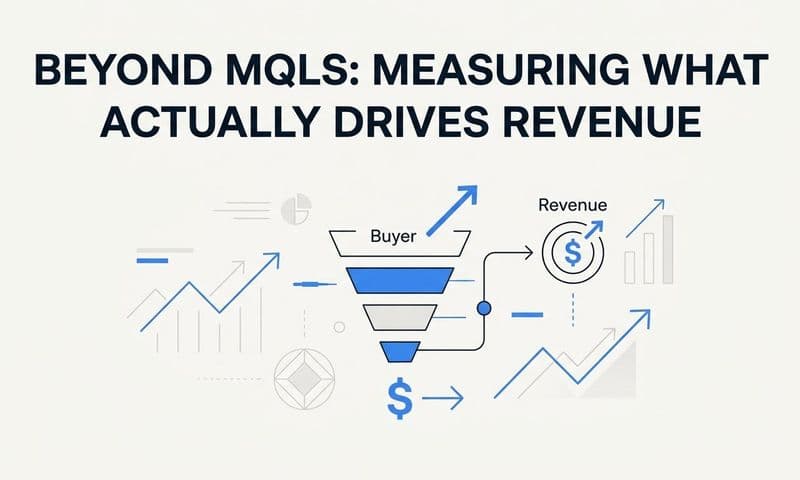
But multi-touch attribution only reaches its full potential when it is connected to revenue outcomes, not just lead generation. Many teams stop their attribution analysis at the lead level. They know which channels generated leads. They do not know which channels generated customers. Connecting attribution data to pipeline stages and closed-won revenue in your CRM is what closes that gap and turns attribution from a lead-counting exercise into a genuine B2B revenue attribution tool.
This is the distinction between surface-level tracking and true revenue attribution. One tells you where your leads came from. The other tells you where your revenue came from. For any B2B SaaS company serious about growth, only one of those answers is actually useful.
Building a Foundation for Data-Driven Growth
Understanding why attribution matters is the first step. Building the infrastructure to actually do it well is the next one, and it requires connecting systems that most marketing teams have historically kept separate.
Effective attribution starts with a unified data layer. Your ad platforms, your CRM, and your website need to be connected so that every touchpoint is captured and mapped to the same customer record. When a prospect clicks a LinkedIn ad, visits your pricing page, requests a demo, and eventually closes as a customer, every one of those events should be traceable to the same person and the same deal. Without that connection, you are always working with fragments rather than the full picture. Getting your attribution tracking setup right from the start is what makes this level of visibility possible.
Server-side tracking is no longer optional for teams that want accurate data. Client-side pixels are increasingly unreliable due to the privacy and browser changes described earlier. Server-side tracking sends event data directly from your server to your analytics and ad platforms, bypassing the browser-level signal loss that degrades pixel-based tracking. Conversion API integrations with Meta and Google are the practical implementation of this approach, and they are now a standard requirement for any team serious about attribution accuracy.
The compounding benefit of this infrastructure goes beyond reporting. When you send enriched, server-side conversion data back to ad platforms, you improve the quality of the signals those platforms use to optimize your campaigns. Meta's and Google's ad algorithms perform better when they receive accurate, complete conversion data. When you feed them high-quality signals, they get better at finding the audiences most likely to convert. Better data leads to better algorithmic targeting, which leads to better ad performance over time.
This is why attribution infrastructure is not just a reporting investment. It is a performance investment. The data you capture and the signals you send back to ad platforms directly influence how well your campaigns perform. Teams that build this foundation well create a compounding advantage that grows as their data set grows.
Platforms like Cometly are built specifically to connect these pieces for B2B SaaS teams. By integrating with your ad platforms, CRM, and website, Cometly captures every touchpoint and maps it to pipeline and revenue outcomes, giving you the unified view that fragmented reporting can never provide. With 70+ native integrations and server-side tracking built in, it handles the technical infrastructure so your team can focus on the decisions that matter.
Putting It All Together
Attribution is not a feature you add to your marketing stack when you have time. It is the foundation that makes every other marketing decision more reliable. Without it, budget allocation is guesswork, creative decisions are based on instinct, and the connection between what you spend and what you earn remains invisible.
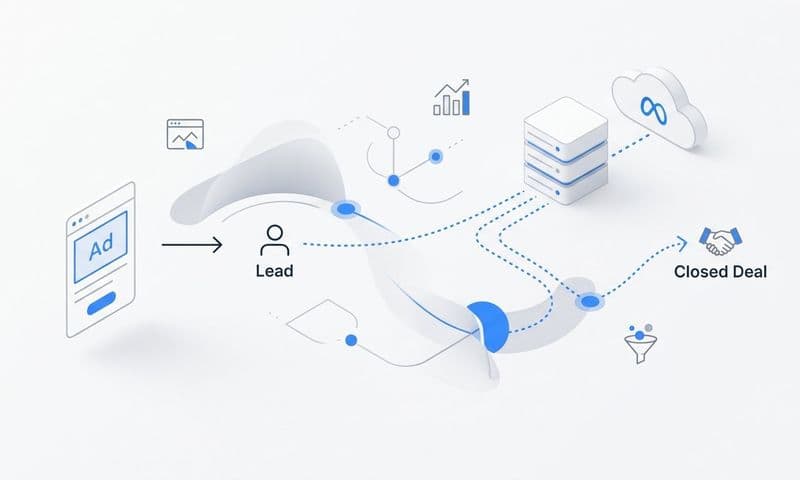
The progression from ad spend to touchpoint capture to revenue clarity is what transforms a marketing team from a cost center into a growth engine. When you can see which channels generate pipeline, which combinations of touchpoints lead to closed deals, and how your ad spend connects to actual revenue, you have the information you need to optimize with confidence rather than hope.
For B2B SaaS teams navigating long sales cycles, multiple stakeholders, and fragmented reporting, this level of clarity does not happen by accident. It requires the right infrastructure, the right attribution models, and a platform that connects everything into a single source of truth.
Cometly is built to close exactly this gap. It connects your ad platforms, CRM, and website to track every touchpoint in the customer journey, maps those touchpoints to pipeline and closed revenue, and feeds enriched conversion data back to Meta and Google to improve algorithmic performance. From first ad click to closed-won deal, every signal is captured and connected.
If your team is ready to move from fragmented reporting to real revenue attribution, Get your free demo and see how Cometly gives you the clarity to scale what is actually working.