You're running paid search, LinkedIn ads, and content campaigns simultaneously. Leads are coming in, some deals are closing, and your CFO wants to know which channels are actually working. You pull your attribution report and it tells you that last-click was responsible for most of your revenue. So you double down on bottom-of-funnel paid search and cut your LinkedIn budget. Three months later, pipeline dries up.
Sound familiar? This is the attribution trap that catches B2B SaaS marketing teams repeatedly. The problem isn't that you're measuring. The problem is that you're measuring with tools built for a simpler world, one where buyers clicked one ad, filled out one form, and converted. Modern B2B buying journeys don't work that way, and static attribution models aren't equipped to keep up.
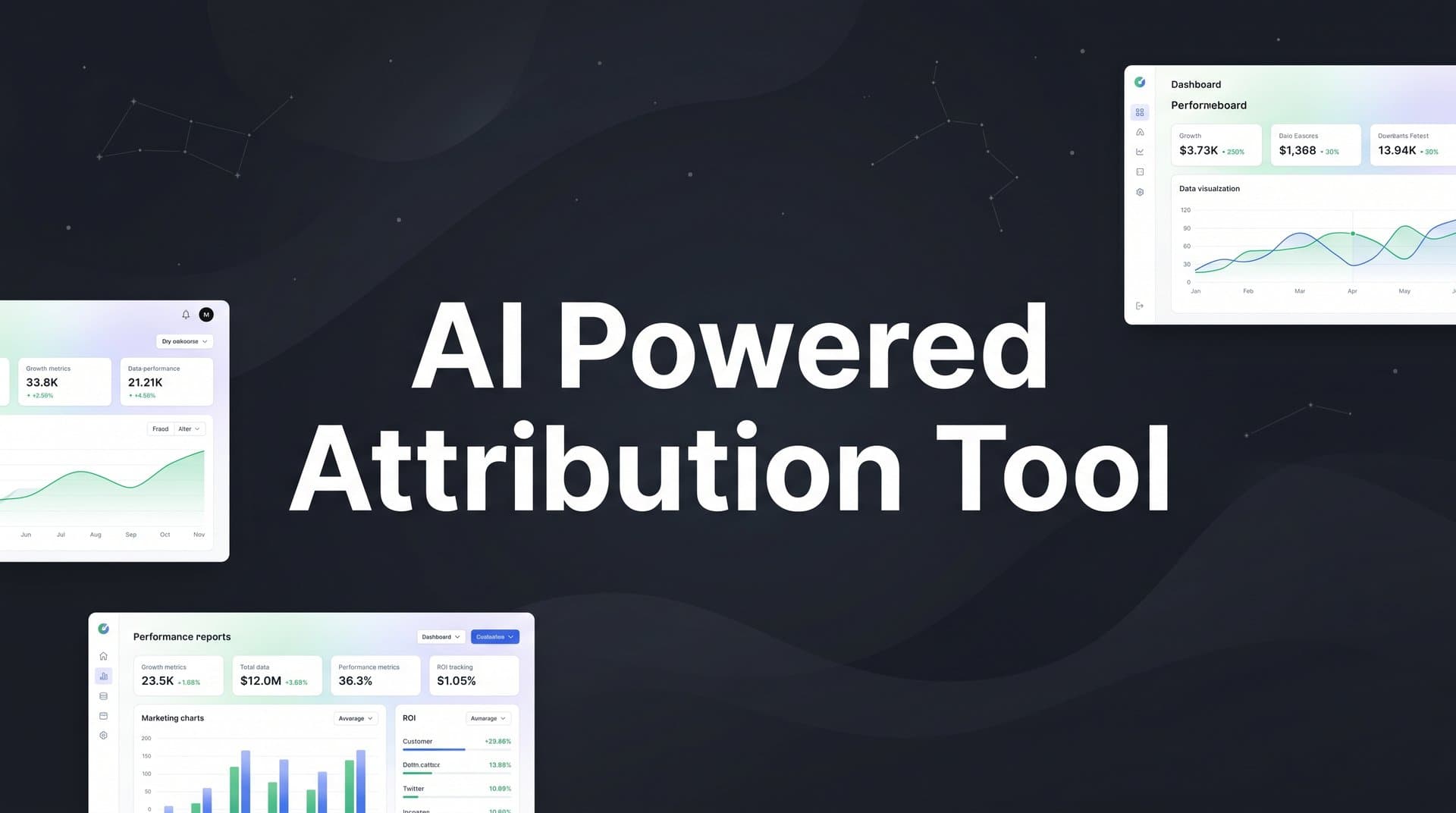
An AI powered attribution tool changes the equation entirely. Instead of assigning credit based on fixed rules, it analyzes patterns across thousands of real customer journeys and dynamically connects your ad spend to actual pipeline and revenue. In this article, we'll break down why traditional models fall short, how AI attribution actually works, why data quality is the foundation everything else depends on, and how you can use attribution intelligence to make smarter, more confident budget decisions.
Why Traditional Attribution Models Fall Short in B2B SaaS
First-touch attribution says the first ad someone clicked deserves all the credit. Last-click says the final touchpoint before conversion wins. Linear spreads credit equally across every interaction. Time-decay weights recent touchpoints more heavily. These models all share one critical flaw: they assign credit based on a predetermined rule, not based on what actually influenced the buying decision.
In B2B SaaS, this structural mismatch is particularly damaging. A typical enterprise deal might involve a VP of Marketing who first discovered your product through a LinkedIn thought leadership post, a Director of Operations who downloaded a comparison guide after a Google search, a technical evaluator who attended a webinar, and a CFO who signed off after seeing a retargeting ad. That's four stakeholders, multiple channels, and a sales cycle that could span several months.
Rule-based models aren't built to handle this complexity. First-touch would credit the LinkedIn post and ignore everything that came after. Last-click would credit the retargeting ad and ignore everything that came before. Neither gives you an accurate picture of how the deal actually developed.
The downstream consequence is budget misallocation. When your attribution model systematically over-credits one touchpoint, you pour more budget into that channel. Channels that genuinely influence pipeline but don't happen to be first or last in the sequence get defunded. Over time, you're optimizing for attribution model artifacts rather than actual revenue drivers. Understanding the difference between single-source and multi-touch attribution models is the first step toward fixing this.
This is especially costly in B2B SaaS because the stakes per deal are high. Misallocating budget across a portfolio of long-cycle, high-value deals doesn't just waste ad spend. It actively slows pipeline growth by starving the channels and content types that nurture buyers through complex evaluation processes.
The fix isn't choosing a better rule-based model. It's moving to a system that doesn't rely on rules at all, one that learns from your actual data and assigns credit based on observed conversion influence rather than a static formula.
What an AI Powered Attribution Tool Actually Does
At its core, an AI powered attribution tool uses machine learning to analyze patterns across large volumes of customer journey data. Rather than applying a fixed credit rule, it identifies which touchpoints statistically correlate with conversion and assigns probabilistic credit weights based on that analysis.
Here's what makes this fundamentally different from rule-based approaches: the model learns. As new data flows in, the algorithm updates its credit assignments to reflect current campaign performance, audience behavior, and channel mix. If your LinkedIn campaigns start driving higher-quality pipeline this quarter, the model recognizes that shift and reflects it in attribution. A static model would never catch this.
The practical capabilities of a modern AI attribution platform typically include several interconnected functions.
Multi-touch attribution: Credit is distributed across all touchpoints in a customer journey based on their measured influence on conversion, not their position in a sequence. Exploring the top multi-touch attribution tools can help you understand how different platforms approach this challenge.
Customer journey mapping: The platform visualizes the actual paths buyers take from first interaction to closed deal, surfacing which sequences and channel combinations are most effective.
Predictive lead scoring: By analyzing patterns in historical conversion data, AI can score incoming leads based on the likelihood that their journey profile matches high-value customers.
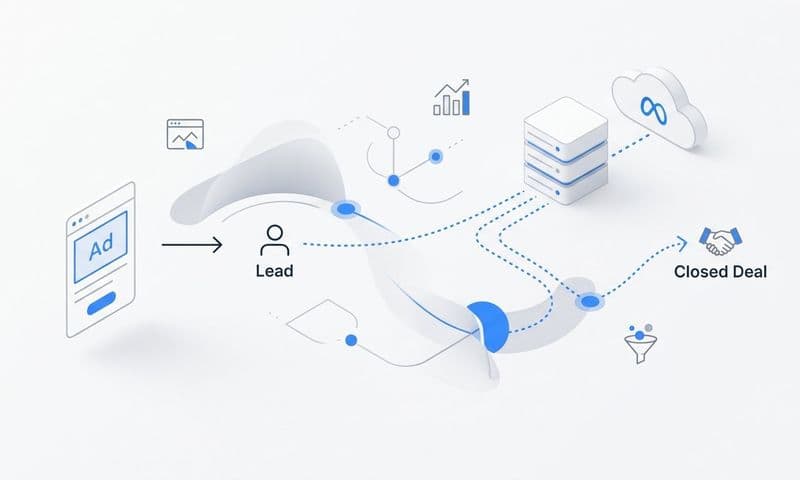
Ad platform and CRM integration: The tool connects to your paid channels, website, and CRM to pull in data from across the funnel, enabling it to trace a journey from a first ad click all the way through to closed-won revenue.
This last point is where AI attribution creates its most significant value for B2B SaaS teams. Traditional analytics tools can tell you which channels drove clicks or form fills. An AI attribution platform can tell you which channels drove customers who actually paid, retained, and expanded. That's a completely different level of insight, and it requires a completely different kind of data infrastructure to produce it.
The sophistication of the AI layer also means that the tool improves over time. Early in deployment, the model is working with limited data. As more customer journeys flow through the system, the attribution weights become more precise, the journey patterns become clearer, and the recommendations become more actionable. It's a system that compounds in value the longer you use it.
The Role of First-Party Data and Server-Side Tracking
AI attribution is only as accurate as the data feeding it. This is where many teams hit a wall they don't see coming. You can have the most sophisticated attribution model in the world, but if your underlying event data is degraded, incomplete, or unreliable, the outputs will be too.
Browser-based tracking has become significantly less reliable over the past few years. iOS privacy updates have limited cross-site tracking for a large portion of mobile users. Third-party cookies are being phased out across major browsers. Ad blockers are widely used, particularly among the technical and professional audiences that B2B SaaS companies frequently target. The result is that pixel-based tracking misses a meaningful share of conversion events, creating blind spots in your attribution data.
Server-side tracking addresses this directly. Instead of relying on a browser pixel to fire when a user takes an action, server-side tracking sends event data from your server directly to your analytics and ad platforms. It doesn't depend on browser behavior, it isn't blocked by ad blockers, and it isn't affected by cookie restrictions. The signal is cleaner, more complete, and more durable.
Conversion API integrations, such as Meta's CAPI and Google's Enhanced Conversions, extend this further by sending enriched event data directly to the ad platforms themselves. This matters for attribution because it gives the platforms more complete conversion signals to work with, improving both their own attribution models and their bidding and targeting algorithms. Teams dealing with inconsistent reporting should also learn how to fix attribution discrepancies in data before investing in more advanced tooling.
Data enrichment at the event level is the next layer. When a lead converts, attaching CRM data to that event, including the lead source, the pipeline stage, the deal size, and eventually the closed-won revenue, transforms a raw conversion signal into a revenue-connected data point. This is what allows an AI attribution tool to close the loop between a top-of-funnel ad click and a bottom-of-funnel revenue outcome.
Without this enrichment, you're attributing leads. With it, you're attributing revenue. For B2B SaaS teams operating with long sales cycles and high deal values, that distinction is the difference between optimizing for vanity metrics and optimizing for actual business growth.
Building this data infrastructure requires integrating your ad platforms, website, CRM, and billing systems into a cohesive pipeline. It's not trivial, but it is the foundation on which accurate AI attribution is built. Platforms like Cometly handle this integration layer natively, connecting your data sources and ensuring that the events flowing into the attribution model are complete, enriched, and reliable.
How AI Attribution Connects Ad Spend to Pipeline and Revenue
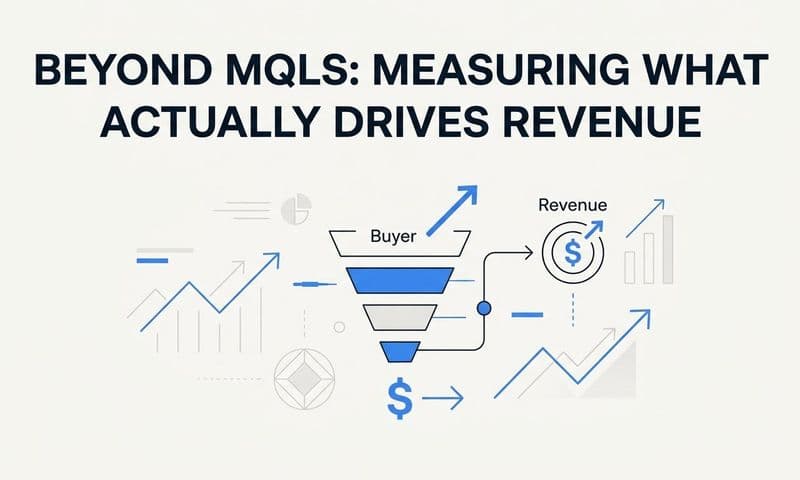
Generating leads is not the goal. Generating revenue is. This distinction sounds obvious, but most attribution setups are still optimized for lead volume rather than revenue quality. An AI powered attribution tool changes this by connecting ad spend directly to pipeline stages and closed-won deals.
The mechanism works through CRM and billing system integration. When a deal progresses through your pipeline, those stage changes are captured as events. When a deal closes, the revenue amount is recorded. By mapping these CRM events back to the original ad interactions that initiated or influenced the customer journey, the attribution platform can tell you not just which channels drove leads, but which channels drove customers. This is the core promise of B2B revenue attribution software built for modern sales cycles.
This distinction matters enormously in B2B SaaS. A paid social campaign might generate a high volume of leads at a low cost per lead, but if those leads consistently stall in the evaluation stage and rarely close, the true cost of customer acquisition from that channel is much higher than the surface metrics suggest. Conversely, a channel that generates fewer leads but with a higher close rate and larger average deal size may be significantly undervalued in a lead-centric attribution model.
Integrating with billing systems like Stripe adds another layer of precision. When subscription revenue, expansion revenue, and churn data flow into the attribution platform, you can calculate the lifetime value of customers acquired through each channel. This allows growth teams to make budget decisions based on long-term revenue contribution rather than short-term conversion volume.
Pipeline velocity is another insight that revenue-connected attribution unlocks. By tracking how quickly leads from different channels progress through the funnel, you can identify which acquisition paths produce faster-moving, more sales-ready pipeline. A channel that consistently produces leads that close in 30 days is more valuable than one that produces leads that take 120 days, even if the cost per lead is similar.
The output of this analysis is a true ROI calculation per channel, per campaign, and per creative. Not cost per click. Not cost per lead. Cost per closed-won customer, connected to actual revenue. This is the foundation of a mature B2B SaaS marketing operation, and it's only achievable with an attribution system that spans the entire funnel from first ad interaction to final revenue recognition.
Using AI Recommendations to Scale What Works
Measurement is valuable. Recommendations are actionable. The most sophisticated AI attribution tools go beyond reporting what happened and surface guidance on what to do next, which campaigns to scale, which to pause, and where incremental budget will generate the highest return.
This is where machine learning creates compounding advantages. Human analysts can review dashboards and identify obvious patterns. But AI can process the full complexity of thousands of simultaneous customer journeys and detect non-obvious signals: specific channel sequences that consistently produce high-value customers, time-to-convert windows that predict deal quality, or audience segments that show disproportionate revenue impact relative to their acquisition cost.
These are the insights that change budget strategy. When your attribution platform identifies that a particular LinkedIn audience segment consistently initiates journeys that close at twice the average rate, that's a signal to increase investment in that segment. When it identifies that a specific campaign is driving high lead volume but low pipeline conversion, that's a signal to investigate the audience targeting or the post-click experience. The best marketing attribution tools for B2B SaaS companies are specifically designed to surface these kinds of revenue-connected signals.
There's also a reinforcing loop that AI attribution creates with the ad platforms themselves. When you send enriched, attribution-ready conversion events back to Meta and Google through their Conversion APIs, you're giving their algorithms better data to optimize against. Instead of optimizing for form fills, the platforms can optimize for the conversion events that actually predict revenue. Over time, this improves ad delivery, reduces wasted spend, and increases the quality of traffic coming into your funnel.
This compounding effect is one of the most underappreciated benefits of investing in a robust attribution infrastructure. Better data into the attribution model produces better insights. Better insights inform smarter campaign decisions. Smarter campaign decisions generate higher-quality conversion events. Those events feed back into the ad platforms and improve their targeting. The cycle reinforces itself with each iteration, creating a widening performance gap between teams that operate this way and those that don't. Teams evaluating their options should review marketing attribution platforms built for accurate revenue tracking to find the right fit.
Putting It All Together: Building an Attribution-Driven Marketing Operation
An AI powered attribution tool is not a reporting layer you add on top of your existing stack. It's the operational foundation of a data-driven marketing team. It changes how you think about budget allocation, how you evaluate campaign performance, and how you communicate marketing's impact to the business.
The shift from last-click thinking to AI-driven attribution requires three things working together. First, integration: your ad platforms, CRM, website, and billing systems need to be connected into a single source of truth. Second, data quality: server-side tracking and Conversion API integrations need to ensure that the events flowing through your system are complete and enriched. Third, a commitment to acting on what the data tells you, even when it challenges assumptions about which channels are working.
This is the operating model that separates marketing teams that scale efficiently from those that grow by spending more and hoping for the best. When every budget decision is grounded in revenue-connected attribution data, you can move faster, justify investment more clearly, and identify growth opportunities before your competitors do.
Cometly is built specifically for this use case. It's a B2B SaaS attribution platform that captures every touchpoint across your customer journeys, connects ad spend to closed-won revenue through native CRM and Stripe integrations, and uses AI to surface the insights that help marketing teams scale with confidence. With support for server-side tracking, Conversion API integrations, and over 70 native platform connections, Cometly gives you the complete data infrastructure that AI attribution requires.
Whether you're trying to justify your current channel mix, identify where to invest next, or simply stop guessing about what's driving revenue, the answer starts with accurate, AI-powered attribution data. And that starts with having the right platform in place.
The Bottom Line on AI Powered Attribution
B2B SaaS buying journeys are complex, multi-stakeholder, and multi-channel. Rule-based attribution models were never designed for this reality. They assign credit based on position rather than influence, and the result is systematic misallocation of marketing budget toward the channels that look good in a last-click report rather than the ones that actually drive revenue.
AI powered attribution tools solve this by learning from your actual customer journey data, connecting every touchpoint to conversion outcomes, and dynamically updating as your campaigns and audience behavior evolve. When built on a foundation of first-party data, server-side tracking, and CRM integration, these tools give you something rule-based models never can: a clear, revenue-connected view of what's working and why.
The compounding benefits are real. Better attribution data produces better campaign decisions. Better decisions generate higher-quality conversion events. Those events improve ad platform targeting and create a reinforcing loop that widens your performance advantage over time.
If you're ready to move beyond lead-level reporting and start connecting your ad spend to pipeline and revenue, Cometly is built for exactly that. Get your free demo today and see how AI-driven attribution can transform the way your team measures, optimizes, and scales your marketing investment.